Posts Tagged ‘ancient beast’
Collective Consciousness – The Dawn of Awareness
Dreams are an expression of biological life forming a dim awareness of itself, an ill-defined awareness as it came alive in the creatures swarming on our planet. Life became conscious in that way millions of years ago. From the human point of view we do not see it as a powerful form of consciousness. But the focused self-aware consciousness of human beings feeds back into that unfocused ocean of awareness because we are a connected part of it. That fundamental awareness, or what the Australian aborigines call the Dreamtime, and what a lot of people probably mean when they use the word God, is transforming constantly through the impact of new experience. This transformation comes about through an interaction between the focused self-awareness of human beings and that fundamental awareness behind existence. That core awareness is archaic and ancient, a collective experience of everything that has lived. That core awareness is unfocused, but in that is its wonder. It doesn’t particularise. It doesn’t end up being any one thing. It remains all encompassing, a collective. Because of the interaction between physical life forms and that core awareness it is evolving all the time.
|
At times I have explored that deep ocean of unfocussed sentience, and at one time as I dropped deeply into it I had the sense, or the awareness, that life has a unified consciousness. In that consciousness life has the awareness of millions of years of experience through all its creatures. This awareness developed into a living framework, a living matrix. Life learned how to build, how to develop an integrated system. The lesson was learned slowly, but it was unfolded from the already existing building blocks or framework that formed the universe. Integration means connectivity. It means symbiosis, working together for mutual gain. It means love in its most profound sense – the giving of self to another as happens in pregnancy and child rearing; as happens in life where to survive we live on the death of other things such as when we eat plants or animals. |
 |
All that life has learned is now a great matrix of influence that continues to flow into the way things work, and who we are. This is like an enormous structure that directs things and holds them to that pattern. I suppose this could be seen as a sort of establishment – what is established. But this would not be a real insight into that collective awareness. Because all the time, in a sort of flashing newness of creativity the collective awareness constantly upgrades, it constantly experiments, it constantly tries out new things. It does this because of the factor of randomness, because an aspect of the universe and life is chaotic, and it has through that a freedom to do the unexpected. And Life integrates what it learns.
Life learned how to build, how to develop an integrated system. The lesson was learned slowly, but it was unfolded from the already existing building blocks or framework that formed the universe. Integration means connectivity. It means symbiosis, working together for mutual gain. It means love in its most profound sense – the giving of self to another as happens in pregnancy and child rearing; as happens in life where to survive we live on the death of other things such as when we eat plants or animals. All that life has learned is now a great matrix of influence that continues to flow into the way things work, and who we are. This is like an enormous structure that directs things and holds them to that pattern. I suppose this could be seen as a sort of establishment – what is established. But this would not be a real insight into that collective awareness. Because all the time, in a sort of flashing newness of creativity the collective awareness constantly upgrades, it constantly experiments, it constantly tries out new things. And it integrates what it learns.
Human society with its immense variety, it is enormous range of experience, its conflicts, its pain and challenges, is the most amazing source of experience and experiment. It constantly presents variety and opportunity to try out new things. And I saw that life is learning about energy exchange, about shifts, about not holding on. Or perhaps it has learned that and it is offering that as possible behavioural responses to us human beings. In any case, for me personally, I saw that I do not need to hold on to any particular form of relationship. One of the most powerful stances we can take is that of balance. Not holding on to the shifting experiences we meet is the balance that allows us to move and shift according to this moment, this need, this person we are dealing with now.
I saw that dreams express an archaic wisdom. They express that wisdom mentioned above that the collective awareness has gathered through unimaginable variety of life experience. It expresses the possibility of all the behavioural responses that it has learned. For instance, in human society there are all manner of relationship between the man and the woman. There are men with one wife, no wife, or many wives. There are men who never enter a relationship all their life. There are women with no husband, with one husband, with several husbands, or several partners. Of course the unusual forms of sexuality such as prostitution and homosexuality explore yet more varieties of personal experience. It isn’t that any of these are right or wrong, they are simply variations on a theme. As in music that satisfies, the theme may explore conflicts, pain, or discord as the music moves toward integration, toward synthesis and satisfaction.
It is not only genetic coding that influences us to respond to present events. There is also an experience that lies behind that coding. There are the millions of years of life experience that led to the code. The archaic in us exists because of connections. The whole matrix of life exists because of connections. Many of these are obvious as we see in the food chain, as we see in the relationship between plant life and the sun and the earth. We see these connections in the way that bacterial life and plant life and human life work together. One thing relates to and depends upon another thing. At a deep level we all acknowledge that dependence. We feel it as a sort of holiness or awe. We see it as a fundamental truth but unfortunately often ignore it.
Our tribal religions frequently, and unfortunately, get disconnected from that archaic source of life. The religion, although it states it is about the creative impulse in us all, often doesn’t help us to connect with that creative source, with that internal archaic awareness. So dreams, and the love that people have for each other, are always a more direct route to re-connection. They take us back to that wisdom, that tried and true experience. They arouse again the awareness of our connection with each other.
Some things life has learned are fundamental. Of course the collective consciousness has experience of all types of human relationship. That core experience knows that it is only out of the death of one life form that another exists. It is only by acknowledging and living our place in the scheme of things that we keep our own connection with that core of awareness open. In that way we maintain our integrity and growth. Each of us, from our forebears, from the circumstances of our birth and culture, through pain or wonder experienced, have achieved a particular shape or personality structure. Being that shape, we do not need to conform to somebody else’s shape or requirements. It is the variety that the core awareness treasures and absorbs. Our particular shape has its own qualities and weaknesses. What does need to happen though, is that we need to stand openly, as the shape we are, before that fundamental awareness. We need to bring ourselves just as we are to that connection with life so that it may experience us more fully. In that connection we share with it, and it shares with us. It savours us, and we savour it. If we feel guilty or attempt to hide parts of ourselves, then we remain unwhole. Unwhole in the sense that part of our nature is the core awareness. If we lack that we are only a fraction of what we might be. We are the odd shape we have become. With our core connection we are whole no matter what shape we are. Without that connection we remain separated and alone. See You Are a Dual Being
Certain things are holy, like motherhood, or fatherhood. They are holy because they are so fundamental to life as it expresses on our planet. Marriage is such a holy thing because it represents and is an expression of the wonder of reproduction and parenthood. This should not be confused with partnership, such as occurs in a homosexual relationship.(1) Because things such as marriage, that manifest the most primordial aspects of life, are holy we need to honour them, and perhaps kneel before them in some way. They transcend any one person’s life and experience. Because of this, things like motherhood develop into an immense archetype. In other words they become a focused collection of uncountable human experiences. All such huge areas of experience are patterns in the core awareness. They are immense patterns in the internal structure of human life. And although life itself honours them, although life itself largely flows through the patterns they are, life does not stop us making leaps right beyond the boundaries of those archetypes. In that way we make new connections new possibilities for life itself and for the environment.
() That is not to say that a homosexual relationship does not express another of the most profound aspects of life, that of love. But love should be seen as a transcending influence rather than simply a genital desire or an expression of need or dependence.
See Sorg.
Use the body to discover dream power
The brain sends impulses to all the muscles to act on the movements we are making while in the dream. This is observable when we wake ourselves by thrashing about in bed, or kicking and shouting. A part of the brain inhibits these movements while we sleep.
The important factor is that a dream is more than a set of images and emotions, it is also frequently a powerful physical activity and self expression. If we explore a dream sitting quietly talking to a friend, even if we allow emotions to surface, we may miss important aspects of our dream process. Through physical movement the dream process releases tensions and deeply buried memories that are stored in our body. These do not release and heal by simply talking about them.
It is often enough to realise this aspect of dream exploration for such spontaneous movements to emerge when necessary. By being aware of the body’s need to occasionally be involved in expression of dream content, we may catch the cues and let these develop. Frequently all you need to do is to let the body doodle or fantasise while exploring a dream. Jung suggested this technique for times when the person was stuck in intellectual speculation. To practice it you can take a dream image and let the hands spontaneously doodle, watching what is gradually mimed or expressed. When you have gained skill doing this, let the whole body take part in it. This can unfold aspects of dreams that the other approaches might no help with. A fuller description of this process is contained in my book Liberating the Body.
Bible – Its Dreams and Symbols
And He said, “Hear now my words: If there be a prophet among you, I the LORD will make myself known unto him in a vision, and will speak unto him in a dream” (Num. 12:6).
“I will pour out of My Spirit upon all flesh: and your sons and your daughters shall prophesy, and your young men shall see visions, and your old men shall dream dreams” (Acts 2:17).
“For God speaketh once, yea twice, yet man perceiveth it not. In a dream, in a vision of the night, when deep sleep falleth upon men, in slumberings upon the bed; Then He openeth the ears of men, and sealeth their instruction, That He may withdraw man from his purpose, and hide pride from man. He keepeth back his soul from the pit, and his life from perishing by the sword.” (Job 33:14- 18).
There are about 121 mentions of dreaming in the Bible and 89 mentions of sleep. (King James version.)The very first description of a dream is that in connection with Abraham.
Genesis 015:012 And when the sun was going down, a deep sleep fell upon Abram; and, lo, an horror of great darkness fell upon him. And – The Lord – he said unto Abram, Know of a surety that thy seed shall be a stranger in a land that is not theirs, and shall serve them; and they shall afflict them four hundred years; And also that nation, whom they shall serve, will I judge: and afterward shall they come out with great substance. And thou shalt go to thy fathers in peace; thou shalt be buried in a good old age. But in the fourth generation they shall come hither again: for the iniquity of the Amorites is not yet full.
From that point on dreams are mentioned openly in such phrases as ‘020:006 And God said unto him in a dream’ – or ‘020:003 But God came to Abimelech in a dream by night, and said to him’ or ‘028:012 And he dreamed’. But no dreams of women are mentioned in the Old Testament.
Most of us can understand that such dreams or visions as Abraham experienced, and later Jacob and Joseph, are not recognisable as the type most of us wake from and remember. One might say these are a ‘once in a lifetime’ kind of dream. Explaining these dreams, and criticising the modern regard for dreams, some Christians are inclined to believe that only in the past did God directly communicate with ordinary men and women, and such a relationship does not apply to us today.
It must be remembered however that these early tribal people did not emerge from a vacuum. They inherited from previous cultures views and concepts about all aspects of life including dreams. They also lived within a particular view of the world and a system of beliefs which coloured their dreams, what they expected of them, and their manner of reporting them. Therefore it is worth looking at this background to biblical dreams. But in modern terms it can still be seen that dreams come from our core self – whether we like to call that self God or Life – see Core; The Two Powers for an explanation.
The very first mention of sleep occurs when we are told that God caused Adam to fall into a deep sleep. These statements were written in Hebrew, a language whose alphabetical characters each had a symbolic meaning, much as the characters alpha and omega mean something by themselves in the Greek alphabet. The words ‘deep sleep’, when used in connection with Adam were ‘thareddemah’. The roots of this word – according to Fred Myers – are rad and dam. In the English language we use the ‘rad’ root in such words as radiate, radium, radical. The Hebrew word ‘radah’ means to rule to govern. The same root used as a ‘passive’ verb means to be insensible, to be fast asleep, or to lose consciousness and control.
The root ‘dam’ means to be connected through blood, similarity, kinship or identity. The whole word suggests a form of sleep in which the person loses self control and is directed by the will of another, perhaps as happens in hypnotic sleep.
This concept of sleep and dreams having the possibility of ones mind and experience being directed by another will, in fact the Divine will, lies at the root of the way dreams were considered in the Bible. Both Adam’s sleep, and Abraham’s vision, have to do with identity. With Adam something emerged from him that had a separate identity from himself, and which led to an awareness of self outside God. So this story is about the emerging of a personal will into an existence that had previously been linked wholly with the will of God.
If the concept of God has difficult associations we can substitute the idea of early humankind having little sense of separate identity from their environment and from their tribe. Their feeling of a collective identity with nature and their tribe we can give an overall name of God – the forces which gave them existence. A study of the Australian aborigines particularly illustrates this enormous identification with the tribal territory and with the tribe itself. With the Aborigines their sense of self was in direct relationship with the territory in which they lived, and their tribal group.
This is important because much of the story in Genesis is about a tribal people trying to attain and maintain an identity. This is true of most tribal people. The struggle to establish and maintain their identity as a group of people, and in competition with other tribes or kingdoms, explains much of their behaviour. Just as our body destroys millions of bacteria each day in its attempt to maintain its integrity, so the tribal peoples often killed their rivals as a part of establishing and maintaining their own existence, identity and territory. Belief systems such as the tribal religion were of immense importance in this. Abraham’s visionary communication with God – the overall and powerful factors underlying his existence – set a path which enabled Abraham’s people to survive as a group through experiences which could easily have disintegrated the tribal cohesion. A common religious belief acted as a social ‘glue’ and a means of establishing mutual direction and the ability to work toward a goal as a group. It was a form of agreed law which established order in the community. Anything threatening the religious belief threatened the community, just as much as bacteria that disrupt the integrated working of our body threaten our personal existence.
Looked at from this standpoint, many of the dreams reported in the Bible are about the direction an individual can take regarding the destiny of the family or nation. Such dreams were not only important to the individual, but also became landmarks and pointers for later generations. They were and still are great statements summarising the beliefs, possibilities and character of the people. They looked at possibilities from the collective viewpoint – the good of the tribe or group – and gave insights that would benefit the tribe or nation. In the book Black Elk Speaks, the American Indian Black Elk tells how many of his great visions were about the healing of tribal conflicts or uncertainties. See: Prayer And Dream Interpretation; Native American Dream Beliefs.
The vision of God, the dream in which the Divine is directly experienced within us is not isolated to any one culture. Remembering this helps one to gain a clearer picture of just what such dreams or visions are. For instance a Hindu visionary does not meet with the divine in the image of the Christian God, but with a vision of Krishna or Shiva. The Indian visionary or dreamer makes contact with their own sense of the collective via their personal cultural images of the divine. The American Indian visionary met their sense of the collective psyche or tribe through an image of their own totem animal or family spirit. If ones own identity is deeply embedded in one religious belief system, then such alien images as those belonging to another culture might be as threatening as the invasion of bacteria already mentioned. They would undermine ones sense of self based on a particular belief system.
If we can accept that as a human we have the capacity to touch parts of the mind that have the amazing ability to integrate personal and cultural information, and from it present a view of where current trends and social moods are leading, then we have an understanding from which insight into Biblical dreams and visions can arise. If it is also seen that the form of the vision is shaped by cultural ideas and feelings about divinity – the collective and underlying forces of personal existence – then many of the Biblical dreams become understandable.
As the Bible proceeds, the dreams mentioned become more linked with personal rather than social identity. Joseph’s dream of his brothers sheaves of wheat bowing down to him, and paying homage, is less to do with tribal direction than the vision of Abraham. (Genesis 37:05). But Pharaoh’s dream of the fat and thin cattle is back in the mould of a dream showing the way for his nation.
Example: 037:006 And he said unto them, Hear, I pray you, this dream which I have dreamed: For, behold, we were binding sheaves in the field, and, lo, my sheaf arose, and also stood upright; and, behold, your sheaves stood round about, and made obeisance to my sheaf. And his brethren said to him, Shalt thou indeed reign over us? or shalt thou indeed have dominion over us? And they hated him yet the more for his dreams, and for his words. And he dreamed yet another dream, and told it his brethren, and said, Behold, I have dreamed a dream more; and, behold, the sun and the moon and the eleven stars made obeisance to me.
Joseph and his family clearly understood that the sheaves of wheat in his dream represented themselves. The meaning of symbols and images was clearly understood by many ancient people. Perhaps they could not verbalise exactly what the image meant, but it was often a deeply felt part of their life. It is this aspect of the Bible which is often completely overlooked by readers today. Is the story of Adam and Eve talking about two individuals who were divinely created and walked the earth in a golden age? Is the story of Jonah and the whale literally true? Are the stories of Jesus about a historical character? Or are they wonderfully evocative images which tell of another sort of truth than that of historical fact?
This side of the Bible is incredibly rich. It stands beyond all the attempts to fix a literal and dogmatic meaning to it, and speaks of life experience which most of us can identify with and understand. If we look at the Bible as if it were a description of a dream instead of a statement of history, light shines through the stories and enlivens us.
Starting with the story of Adam and Eve, it is clearly about the beginning of life. It is about human consciousness and its beginnings. In the manner of dreams, where each part expresses some aspect of our own life and feelings, God, Adam, Eve and Eden are all aspects of the one being – the human being. In fact in Hebrew the word Adam is a plural word, not singular, so the story is talking about the human essence, not about a man and a woman.
And God said, Let us make man in our image, after our likeness: and let them have dominion over the fish of the sea, and over the fowl of the air, and over the cattle, and over all the earth, and over every creeping thing that creepeth upon the earth. See God and the Big Bang are the Same.
Notice that God is given to speak the word ‘us’ showing there are creative forces rather than one creator. Also the man who is created is referred to as ‘them’.
The Garden of Eden suggests a state of mind or a state of existence other than our present normal waking awareness. The story tells us that there was a condition humans lived in prior to their present one. This prior condition was lost. And if the descriptions in the story of the state of Eden are compared with the condition that Adam and Eve found themselves in after Eden was lost, we can see that the story suggests women and men at first had no will of their own. They responded to life out of their sense of connection with what is called God – their connection with their life process, with their innate and instinctive urges and insights.
This is not a revolutionary idea. Every one of us go through such enormous personal changes. From the condition of the womb, in which we know no language or organised thought, where there is no need to make an effort to breathe or exist, we are thrust into separation, into survival, into independent existence. But we still have no language or organised thoughts. In yet another fantastic leap, our brain takes in the programming of language and achieves self awareness and the sense of aloneness. Prior to this we had no concept of time or space.
So Adam – the human race – at first existed in a state in which there was no sense of time, without any personal identity. In an animal we would call this instinct. Instinct guides the animal without the animal needing to have any personal ideas or decisions. It doesn’t have to think, it responds. Many people have associated this life in Eden as the period we each spend in the womb, and when we are cast out of Eden that is birth. But the story has a larger picture. In fact human beings in their development have lived in a transitional period when they were guided by instinct, and later developed refined language and the ability to make personal decisions in some degree. In our growth from the womb we pass through the whole range of our developmental modes, right from the creature with gills to the air breathing life form with a developing sense of personal identity.
Reading about Eve (Aisha), and how she listened to promptings to do a deed her inner life, her habits, her instincts, forbade, the story takes us to the emergence of personal will. Interestingly, in the original Hebrew, up until this point in the story the word for mankind was always Adam. But as soon as this new being is formed the word for mankind is Aish, and the new being is Aisha. The new human being that has come about, Aish (Adam) says is ‘now bone of my bones, flesh of my flesh’ confirming that in fact the story is about one being, not two. But it is a new being with a will of its own.
Many years ago I read the true account of a Bali tribesman who had need one day to leave his tribal village. This was the first time in his life that he was going to depart from his people. As he got to the boundary of his tribal territory he fainted.
If we have been born and raised in a modern Western society, we will find it difficult to understand the enormous part the tribal group and the tribal beliefs play in the psyche of the tribesman. It is difficult for us to understand what it is like to feel so much a part of a group or a family that simply walking away from it can cause one to collapse. Developing a will of our own, learning to exist outside of our family and tribal group, has cost us a lot, and the story of Adam who becomes Aish and Aisha, sums up the price that is paid by modern humans as they meet the anxiety, the guilt, the loneliness of life as an individual. We are, like Aisha, caste out from a sense of belonging to the universe, nature, and our tribe. We have lost a feeling of being in harmony even within ourselves. We no longer have the innocence of an animal or a child. We are alone together.
The New Testament moves on and uses different symbols and images. The story of Mary’s virgin birth while married to an old man; of how a divine child is born, and how this wondrous child matures and heals others and is the way to regain heaven, is a further chapter in the story of human development.
Looking at the New Testament once more as a dream, Joseph represents the rational mind which is not capable of going beyond reason to touch any sense of personal wholeness. Only Mary, the integrated feelings and thoughts, which are capable of being virginal, without prior conception (without holding on to prior conceptions as to the nature of life as the rational mind does) can bring forth the birth of an intuition, a new response to oneself and ones environment, that transforms ones life. This is a living relationship with the mystery that underlies our life. If we generate a ‘Mary’ part of us, a part that is not held prisoner by habits of thought, stereotypes of behaviour, by habitual patterns of thinking, then we can begin to allow into consciousness what was previously impossible to know. Mary, the virginal or open state of mind and feelings, acts as a link between the identity or personality, and the deep unconscious life processes. This link allows the birth of realisations and inner change that brings healing and a possibility of experiencing the eternal aspect of oneself. This is a great boon considering the rational mind, the independent will, has closed the door to personal experience of the timeless. This experience of the transcendent, or ones own wholeness is what Christ represents. See The Inner Path of Christ.
The story of Joseph, Mary and Jesus is a continuation of the events depicted in the Old Testament. The emergent individual lost any sense of connection with the whole, and with the community of which he or she was a part. Erich Fromm, in his book Escape From Freedom, explains the recent historical events and psychological changes in people that have widened this gap between the security that was at one time felt by individuals with a sense of being part of nature, or part of a community. The shift the New Testament symbols depict is that of the individual rekindling an awareness of his/her connection with the living power of the creative power, nature and community. In fact one of the major rites of Christianity – communion – directly celebrates this. This communion is not a loss of self as portrayed in Eastern religious teachings, but a willing connection made between an aware individual and the whole.
Example: It was perhaps the dream experiences that led Saint Jerome to mistranslate the Hebrew word for witchcraft, anan, as “observing dreams” (in Latin, observo somnia) when commissioned to translate the Bible by Pope Damasus I. Anan appears ten times in the Hebrew Scriptures (the Old Testament), but Jerome translates it as “observing dreams” only three times, in such statements as, “you shall not practice augury nor observe dreams,” which more accurately reads, “you shall not practice augury or witchcraft.” These simple changes, which made the Bible appear to discourage attending to one’s dreams, significantly altered the course of how dreams were viewed for centuries.
Looked at through its symbols instead of its historical relevance, the Bible unfolds the drama not only of your personal growth toward maturity, toward an independent identity, and toward a greater realisation of your own potential, it also paints the great picture of the pathway humanity took toward personal awareness and a sense of separate identity. It depicts in its stories and characterisations, the wonder and difficulties of becoming an individual and of discovering satisfaction in ones life. See:archetype of Christ; meeting with Christ; Individuation; myths legends and fairy tales in dreams; spiritual life in dream
But remember Christianity as it is expressed today, was set in this way by the Roman Catholic church many years after Christianity started – The early Christians were name ‘Atheists Of The Ancient World’. Inhabitants of the Roman Empire had a variety of gods and goddesses, but there were people back then who would be considered early Christians. Ironically, these people were considered atheists by the ancient Romans because they didn’t pay tribute to any of the pagan gods.
Behavioural Modification Therapy
Modifying the behaviour of other human beings has a long history. Whatever can change the way we feel and act can be a means of altering behaviour. Methods as widely separate as religion, political torture and brain washing, can be thought of as behavioural modification techniques. A major demarcation can be seen in the use of such techniques with people – there are those who want them applied, and those who have them applied against their will.
As a form of therapy or aid to mental and social health, behavioural modification has been practised in every culture in all periods of history. Rituals in which individuals or groups felt more in harmony with each other, or which induced a feeling of cohesion against a common enemy, can be thought of behavioural modification.
In more recent times, although the age old techniques are still used, an enormous amount of research has been undertaken to define exactly how human beings, and of course animals, can be changed or manipulated. After all, such information is incredibly important to religious and political organisations, and to businesses that wish to induce people to buy their products. This has given rise to such varied approaches as physical and mental intimidation, brain surgery, brainwashing, electric shock therapy, drug use, subtle advertising and propaganda, the use of suggested fear to sell or induce and psychotherapy.
In modern psychology, the term behaviour modification means something specific. Ivan Pavlov developed the foundation for modern approaches through his work with conditioned reflexes in dogs. Apart from showing that a dog could be conditioned to salivate when a bell was rung, Pavlov experimented further and performed experiments in which a dog was trained to salivate when the image of a circle was projected on a screen, but when an ellipse was shown it was not trained to have any response. When this was established the shape of the circle was gradually changed toward and ellipse. As the circle was changed the dog showed signs of agitation and lost the response to salivate. The disturbance experienced by the dog was seen as an ‘experimentally induced neurosis’. See: Example under brain levels.
In 1920 these methods were tried on human beings. The American psychologists John Watson and Rosalie Rayner worked with an eleven-month-old baby who showed no fear while playing with a white laboratory rat. By producing a loud noise each time the baby touched the rat, the baby was conditioned to experience a fearful response when the rat was present.
Having learnt how to artificially create fears in children, Mary Cover Jones experimented with reducing fears already established in children. The two methods she found most effective were 1) Linking the feared object or situation with a new stimulus capable of arousing a positive response. 2) Putting the anxious child with children who showed no fear of the object or situation.
Later, people like Joseph Wolpe, Hans Eysenck, and M. Shapiro, used and developed these methods. This was mostly in connection with people with disabling fear reactions. The ideas of B. F. Skinner who led the behavioural movement in psychology, played a leading role in some approached to modifying human behaviour. Different approaches evolved, and some of these became well known enough to have particular names – systematic desensitisation; aversion therapy; and biofeedback.
There are usually five steps in behaviour modification.
- Defining what the individual needs to improve their problem.
- Putting together a method that changes undesirable behaviour and aids the development of desirable responses.
- Using the program according to the principles of behavioural modification.
- Careful observation and recording of results .
- Changing the approach if it aids improvement.
See: aversion therapy; desensitisation therapy.
The Beast in Dreams
The beast is usually an animal of extraordinary power or a creature causing great terror is a feature of many dreams or nightmares. The figure may be partly human, or an animal which has strange characteristics, or perhaps it is a figure which never quite declares itself, remaining unseen but causing or projecting great fear. In some dreams the beast takes the form of a prehistoric creature.
When explored in any depth such dream images are realised to be an expression of powerful internal emotions, responses and drives which have in most cases previously remained unconscious or repressed. The reason for this lack of expression in conscious life is varied. It may be that painful childhood experiences created a block, or fear surrounding some basic drives such as anger, sexuality or self expression. Therefore major areas of one’s potential are withheld and become symbolised by the beast. That such a beast appears threatening and aggressive, or even bent on one’s destruction, is a simple statement of the way we relate to the forces of our psyche that are bound up with it. For instance if we have been made terrified that our parents will desert us, the expression of our need for love may create this terror. So the beast, in itself, is usually not a thing of terror. The awful feelings are what we experience in connection with what it signifies.
As this terror originally occurred in early childhood at a time when our developing identity was very fragile, or during later traumatic events, the force of such feelings are often life threatening as far as our growing identity was concerned. But similar repression may surround the strength of our own sexuality or basic driving forces.
As many of us are not at ease with our emotions and irrational urges, to meet this ‘beast’ may not be easy even as an adult. This would mean feeling the intensity of our childhood emotions and fears, reappraising them, and integrating the information gathered from such an experience. The information might well include insights into why we avoided certain life situations, or why strong feelings were evoked by seemingly simple events. The example below gives some small insight into this. The information is told by a woman who helped Margaret work on her dream.
Margaret dreamt there was a whole lot of downy little feathers falling from the sky and covering her, like snow. The sky was full of them. She had been watching a baby eagle very high up in tree tops flying from tree to tree. She felt it was looking for it’s mother/ parents. Then a man had caught the baby eagle by a string around it’s leg and Margaret was appalled and said to him, ‘You can’t do that. You must let it go.’ Then the feathers started to fall and Margaret felt that any moment now the irate parent eagles would arrive. They didn’t but she was with her back to a wall sheltering as best she could.
While we explored Margaret’s feelings and memories connected with the dream symbols, she told me that her man friend prodded an old childhood pain which he didn’t know about. Margaret and her son had been with him and his mother for a good weekend camping. She told her son he could go play in the park while they packed the car and they would pick him up on the way out. They were all in the car and drove to where the son was and called him, he saw them and started to run towards them and then the man friend drove the car forward as if to make out they were leaving him behind. Margaret burst with pain and anger.
The underlying cause of this was that her own parents had split up and neither of them wanted Margaret to live with them. She had therefore been looked after by her grandparents. The event that crystallised her feelings occurred one day when her Grandfather had, on the Grandmother’s instructions, driven Margaret, who was 7 years old, to the edge of the town, told her to get out and started to drive away. This was because she wouldn’t eat her breakfast. She still carries the pain of that day. She told her father many years later and he was very angry with his own father for doing that to Margaret. She says – ‘Anyway, it came out again when we were looking at the dream. The male friend grew up with an alcoholic father who has just died, but he says he hasn’t any trauma to deal with?’
The theme of the beast is very important in women’s dreams, but may hold a slightly different theme than in men’s. This difference is illustrated by the story of Beauty and the Beast, in which a young girl meets and lives with a powerful beast. The story emphasises the girl’s relationship with her father as a counterpoint to that with the beast. It suggests that a young woman meets a different kind of love when she leaves the affection from and for her father. To become fully a woman and mother, she must discover the deeply animal urges which underlie the personality and social traits she has developed so far. These urges are not at all uncouth, but are certainly primitive. They open her to experience deep sexual longing, and the power to give herself with passion to her children and to her man. Thus she allows in herself something forbidden in her relationship with her father – an erotic and procreational love.
Overall the beast represents the forces in our personality out of which we emerge into social and intellectual life. Unless we make friends with our beast there may always be conflict in us between the rational and non-rational. We existed as a beast for millions of years before the sort of consciousness which led to personal awareness emerged. Self-awareness is still very new and vulnerable. It needs the greater depth and innate wisdom of the beast to survive. See: under animals.
Here is an extract from the dreamwork of a man exploring a dream about snakes which he feared would attack him.
As I imagine myself to be the snakes I have a distinct feeling that for millions of years I have existed as an animal. As human beings we often reject the animal in us. I see the meaning of the snakes. The snakes are so powerful. They are urges in all of us, to be felt if we are not afraid of them. The urges they depict can become a part of our everyday life. A man is somebody who has all that power there but it is under control. I have been brought up to feel one is supposed to be meek and mild or something. It was not socially acceptable to growl a bit.
I am a mixture of a beast and this awareness of self. WHY? WHY? (I feel like a wordless animal which has just got awareness). Intellect is developing and can ask these questions but there is still the powerful beast here. Why has this happened to me? Why have I woken up from being an unconscious animal and become conscious? What is this all about? It feels like it ought to be a swamp outside the window now – or a jungle.
I am a man! What is a man? What is it to be a man? I really feel this isn’t a way to be. It is too strange to be a man. I am really something odd. It is odd being a man. It is frightening. I am not like the other beasts. The other beasts haven’t got this difficulty of self awareness. The don’t carry this difficult thing – self awareness. They don’t carry the difficulty all the time. Why should I be different? I don’t like it. DON’T like it.
There is something I am looking at which is to do with how human beings got to be in the situation they are in today. Part of it is this feeling of wanting to turn back – wanting to go back to being unconscious – to being asleep. A lot of them did it. They turned back. Hundreds and hundreds turned back. That was the story of Noah. Hundreds turned back because they didn’t want to bear consciousness. Huge numbers of people attempt it today with drugs or suicide because being aware is so difficult.
Artists and Dreams
We are constantly giving meaning to a torrent of impressions that we meet through our senses and from within us. We give form to raw experience. We scan our enormous wealth of words, phrases, context, to arrive at an understanding of what is communicated verbally or in writing. If we could watch this process taking place, we would observe a constant searching and rejection of non-hits, a lining up of possibilities, and a bringing to the forefront of what we sense are highest probabilities.
Our mind/brain is a flashing loom of connections, a constantly moving wonderful network of links between billions of cells. This flashing creative network that constitutes the miraculous background to our responses, our feelings, our thoughts and spontaneous fantasies and dreams, is constantly forming patterns from the multitude of experiences we have. It constantly tries to match these patterns against what is already known or learnt. It draws out from the chaos of memory and incoming experience whatever it can liken to what was met in the past. What it can’t match it tries to put into some sort of order or to give a form to. And within all this constant activity the search for personal meaning goes on – Who or what am I? How can I survive? Is there a way ….?
Out of such a profoundly integral search for meaning, as artist, writer, musician, we may project the subtle forms of our inner meanings into the art form we use. We may create shapes, places, people, and feelings. Out of the flashing web of our own sentience we create life – our life – with its own conceptions of what it is to exist, what it is to love or hate, to strive or fail.
Even the most modern of dream theories agree that it is out of the fathomless depths of our drive to give meaning to impressions, that we create dreams. It is out of the barely formed impressions and understanding of the dreaming impulse that we create and live. In fact many artists of every discipline – and I now use the word to include musicians, painters, writers and architects – have directly drawn from their dream life.
What we cannot quite grasp – what is too vast and many sided for us to hold entirely in our thoughts, we give form to in paintings, in carvings, in sound, in piling rocks one upon another to form a monument. We may then venerate or hold as of immense value such art forms. They hold in them for us the vast dimension of the ungraspable, of the infinity of our own within. They stand before us as represent a journey of lives of the alien in our midst, in ourselves. They remind us of what we are not masters of, and what may take hold of our life. See
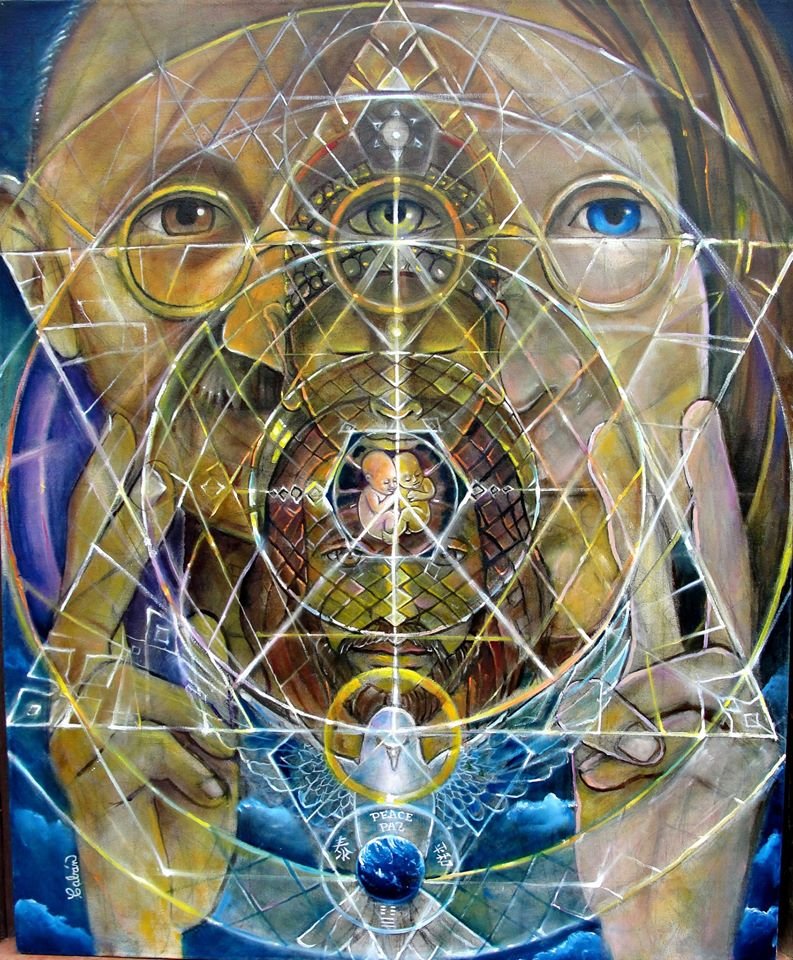 |
In past times tribal people stood in awe of their own existence. They recognised, even if it were unconsciously, the incredible journey they had made from being an unconscious animal, to the attainment of personal awareness and human society. They represented this awe-full experience in rituals, and symbolic paintings and sculptures such as the totem. They also recognised in their art the immense journey ahead, of claiming the possibilities of human life, and put this into their art. How do we deal with the powers that overwhelm us and drag us into mass murder in war and social upheaval? How do we create a personal and social world that we can be proud of? |
In writing about Symbolism In The Visual Arts, (Page 255 in Man And His Symbols, Jung)
Aniela Jaffe mentions the drawing of Klee, interestingly called The Limits of Understanding, which expresses this attempt to put into form what cannot be thought. Jung said that a true symbol appears only when there is a need to express what thought cannot think or what is only divined or felt.
The great artists of any culture give to us what we may have failed to see ourselves. They portray to us the spirit of our times, and our predicament, and perhaps even a passage through the dilemmas we face. Sometimes they manage to break through the cultural plethora and froth of everyday life and display an insight into the fundamental forces of life, renewing our own connection. To do this they face a personal death into the unconscious. They experience darkness and light that many of us may not dare to face. They live within the great forces of their dreams more intensely, more fully than those of us whose awareness is centred on the everyday surface produced by the concepts of life generally agreed upon.
When an artist manages to meet and give birth to one of the spirits of our age, whether it is a terrible demon of our times, or a healing angel, it speaks to us beyond our reasoning. It draws crowds, it holds attention. In the early part of this century the artist Kandinsky wrote that ‘The art of today embodies the spiritual matured to the point of revelation.
Something that we must recognise as an enormous shift in human awareness that has taken place in our own times, and which must influence art from here forwards, is the attainment of self-awareness we have been helped toward by the findings of modern psychotherapeutic schools. This form of self examination has enabled us to explore the wealth of pain and wonder usually forgotten in the mists of childhood. But it also lays bare the struggle, the enormity of the evolutionary movement toward consciousness, toward being human. And there is tremendous art here when it is discovered; art expressing the meeting between the social individual we try to be, and the animal we are still largely immersed in within the depths of our mind and body. In fact we are the whole spectrum of things from sub-atomic particles, through molecular survival and interactions, on into the basic living organisms and creatures up through the lizard, the mammal and the human. All these things are active in us, in harmony, in conflict, in process of becoming. Out of this weaving loom of life all art and music arise; all life experiences an expression of it.
As an example, Thomas De Quincey’s Confessions of an English Opium Eater describes his fantastic dream life over a period of years. De Quincey started to take opium as a sedative. It led to a heightened awareness of how the mind can produce powerful images and memories. He writes that ‘In the middle of 1817, this faculty became increasingly distressing to me.’ Not only did his inner visions present ‘… nightly spectacles of more than earthly splendour.’ But also ‘…. vast processions moved along continually in mournful pomp. Concurrently with this, a corresponding change took place in my dreams; a theatre seemed suddenly opened and lighted within my brain.’ Such experiences led De Quincey to feel ‘deep-seated anxiety and funereal melancholy.’ At times he might recall the ‘minutest incidents of childhood, or forgotten scenes of later years, were often revived.’ ‘I could not be said to recollect them; for, if I had been told of them waking, I should not have been able to acknowledge them as parts of my past experience.’ In his visionary state however, he says ‘I recognised them instantaneously . . . I feel assured that there is no such thing as an ultimate forgetting.’
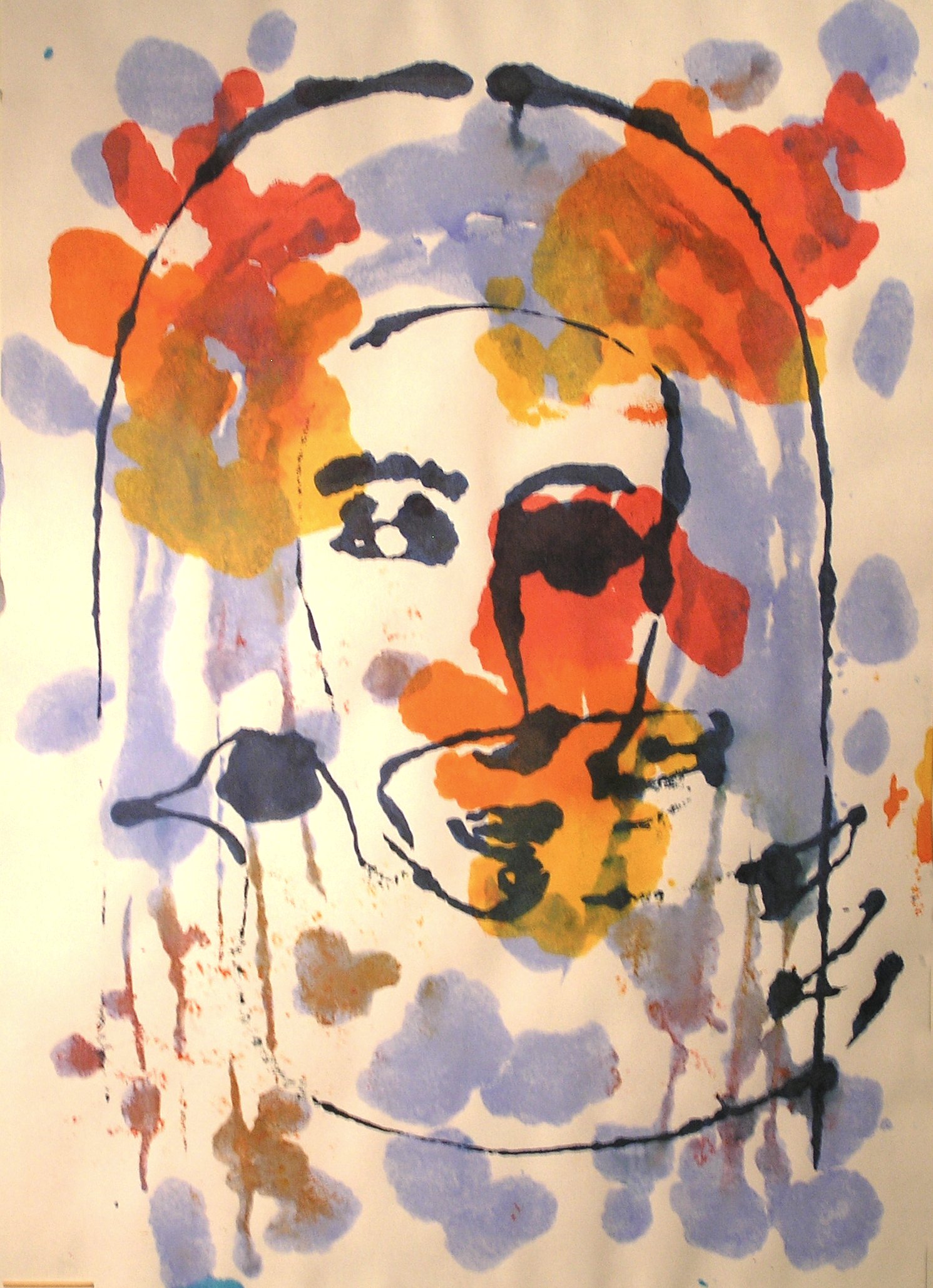 |
De Quincey’s deep seated anxiety and melancholy, in our present times, would be signs of an underlying neurosis which could have been dealt with by exploring his fantasies to their roots in his personal history – already being touched on spontaneously by him. Whether we take the example of De Quincey’s opium aided fantasies, or the visions of Christian mystics such as the temptations of St. Antony, art and religion has at least a facet of being a symbolic way of meeting a neurosis. It is only when we reach through the symbol into what it depicts about us personally, that we move from this historical symbolic form of healing and representation. |
One cannot of course limit the definition of art and dreams to that of dealing with hidden neurosis, or even of the move toward wholeness. Therefore it is interesting to remember some of the artists who directly used dreams as part of their work. William Blake for instance purposefully made use of dreams not only as sources for his art, but also for invention – his method of printing for instance. He particularly tells of the man who taught him painting in his dreams. Blake actually drew the face of this character.
In the 1950’s the painter Jasper Johns was working as a window dresser in New York. In a dream he saw himself painting an American flag. In waking he painted the flag from his vision of it in the dream. The painting became a powerful force in an American revolution in art.
Salvador Dali consistently used dreams as a basis for his paintings. He tried to preserve his dream imagery in his art, and particularly to portray the subtleties of time and space. He referred to his paintings as ‘hand painted dream photographs.’
A number of film directors also used their dreams in the art. Ingmar Bergman tried to portray episodes from his dreams as accurately as possible. He felt that dreams have the ability to help people find points of connection, to link people. Carlos Saura used fragments from his dreams to capture atmosphere and environment.
For each of us, our dreams are our own studio in which we nightly create beyond our waking talent to produce the new, the novel, the unexpected and the deeply true. We are each visionaries, artists of the night and live in another dimension than that of the body. See: archetype of the artist; compensation theory; creativity and problem solving; hallucinations and hallucinogens; hallucinations and visions.
The Archetype of the Self
The symbols of the Self are a ring; a square or square area; a great tree; Christ or other major holy figure such as Krishna or Buddha; a shining thing, being or animal; a talking animal; a strange stone or rock; symbols like the cross or mandala; a round table; God; a guru; an elephant; a crowned or shining snake.
Our conscious self or ego is only a tiny part of our totality, as is obvious when we consider how much of our memory or experience we can hold in mind at any one time. The Self, as defined by Jung, is both what we are consciously aware of, and the massive experience and potential remaining unconscious. That potential is not simply our own personal memories, but also areas of possibility beyond what we usually think of as our personal self. The Self has no known boundaries, for we do not yet know the end of what the mind is capable of, or what consciousness is, or touches, out of sight of waking.
Modern physics is making it clear to us that our concepts and words are simply our own definition of our surrounding or inner reality that is always infinitely more than the definition. A piece of our fingernail for instance, might be thought of as a part of your personal body, a little bit of yourself. It can also be examined as a product of long evolutionary and genetic processes. Another point of view on it would be its molecular and atomic structure, and even the events of its sub-atomic processes. From there you could even begin to see it as part of a cosmic process, its substance being interwoven with the substance of the stars, and the processes of our solar system and beyond – and so on. This escalation of viewpoints applies just as well to any part of us – our brain and mind also.
The mass of experience and potential which lies behind our waking awareness is like an inner factor that, apart from expressing precise information in the form of remembered facts and events, can act as a huge reference base if we listen, through intuition, feeling states, dreams or visions. When we meet this inner potential or healing principle, we may have a powerful experience of meeting Christ, Buddha, Krishna or God, or any number of figures with great powers. Gradually our meetings go beyond form and cultural imagery into a direct awareness of existing throughout all time and space; of involvement in all living and inanimate things. Dante, in his great poem The Divine comedy, describes his experience of this by saying, “I saw within Its depth how It conceives all things in a single volume bound by Love, of which the universe is the scattered leaves; substance, accident, and their relation so fused that all I say could do no more than yield a glimpse of that bright revelation.”
To glimpse that revelation of the core of self, that is at the same time the core of all existence, is to be pervaded by something you can never grasp and hold. It forever flickers and changes, yet at the same time is changeless. Dante says of this, “As I grew worthier to see, the more I looked, the more unchanging semblance appeared to change with every change in me.”
This involvement is not in the end a mystical experience, it is the recognition, sometimes with awe, sometimes with shock, of an existing reality. It is so much a part of everyday life we fail to see it – as perhaps the fish might not know it lived in water. For instance, none of us grow all our food, make our own clothes or their material, produce the energy or gas or electricity in our homes – neither do any of us form the language we exist within and which forms the very structure and self awareness we identify with as ourselves. We exist constantly as an integral and dependent part of this huge web of interactions; we cannot exist outside of it or without it – yet we may fail constantly to hold our integral existence in awareness. We may never see we are part of ONE huge organism. Dreams frequently depict this situation with such symbols as the sea, or symbols of the Self.
In short, the Self is the totality of our being, and any symbol of it within our dreams depicts some level of awareness of, and therefore contact with or communication with, our totality.
An excellent summary of the Self is give in Rudolph Steiners desciption.
“When we come to the fifth level of our awareness, we come to what is frequently called, ‘the Self.’ Here we find the matrix, not of our personal karma, but of our eternal selfhood, the divine individual we could become. It is the awareness and impulse behind all the many earth lives, and is the essence of all these lives, yet not them.
This it is that often appears to us in dreams or visions as our guardian angel or Christ, or a great spiritual being. Here is the archetype, the architectural plan, for our real self, our maturity in God. When we come to this region we see how well or badly we have realised these eternal attributes of our eternal selfhood in our physical life. We gain a view of the many past lives, and how we have again and again sought to become this being that we potentially are. A summary of the past, and a plan for the future comes into being when we measure the fruits of our life against our Self. These fruits are also seen in the light of the eternal wisdom, love and power, shining through the Self. Due to the fact the Self dies to its realm, and is nailed to matter, suffering the loss of awareness of existence in the divine, life after life, that our soul may achieve eternal life, it has a Christ like love, patience and gentleness. Here too we meet those great beings of all nations, religions and times who have trod the path before us. If we remain conscious at this stage, the wisdom and experience of these saints and masters, comes to us as fully as we can receive it.”
Below are some examples of the Self in dreams.
Example: ‘I am climbing a tree to get a stone. This stone has special powers that flower. I’m nearly there when I look down and notice that there aren’t any branches on the left side of the tree. This causes me to consider the possibility of falling and that in turn leads to a fear of climbing any higher. I wake with my heart beating strongly, but little feeling of fear.’ Alan J.
Example: I am standing in the toilet peeing into the water. This creates lots of bubbles. As I look at these bubbles I notice each one has an eye looking at me. Fascinated I bend lower to look back at these eyes. When I do so I see they are not ‘eyes’ but ‘I’s’. Each is a tiny reflection of myself looking back at me. Amused I ponder this multitude of me. Each tiny being, with its own individual sense of self, its own eyes and legs and fingers, feels it is separate from its fellows – and it is. But what they don’t realise is that their awareness, their consciousness is a reflection of me. I am their god. Out of me all have their being. Then suddenly I realise I am myself a bubble. I too have a sense of being independent, with my own eyes, fingers and legs. Yet in reality I am only a reflection of one great life – One Self existent in all diversity and multifarious forms. I felt afraid. Tony.
Example: ‘I look into the third square, it was filled with an iridescent blue colour, shining and beautiful to look at, a beautiful substance. I felt it had to do with religion, but I couldn’t quite grasp it.’ Hyone C.
Example: I watched an insect emerging from what appeared to be its chrysalis – shaped a little like a mermaid’s purse. As it emerged it was vibrant with life, movement and colour. In fact it shifted its shape so quickly I was amazed at how it moved in and out of shapes as it adjusted to its final form. It had a beautiful gold barred design on its back, like a symbol – perhaps a bit like one of the zodiacal symbols. I watched another insect doing the same thing, and began to realise how life was bursting forth in the garden. Looking up in the hedge I noticed a large pod expanding on top of a stalk. Its was visibly getting larger, like a balloon. Suddenly it opened, forming many stalks with leaves and small rose like buds. Another pod was doing the same. As I watched I noticed a young woman nearby. I called to her to witness this extraordinary explosion of growth and life – a dynamic extravagant springtime of activity. She didn’t appear to really see. I was very moved though, and stood leaning against what felt like a wall, perhaps the wall of a house, and wept at the beauty. I started to restrain my emotions, as the woman did not share them, but then thought I wouldn’t hold back because of her. Andrew.
What leads Andrew to weep is his sense of the profound wonder of the formless reality that underlies the vast ever changing world of phenomena.
The only difference was these dancing people weren’t opening to the sacred, to the spirit. So I stepped into the dance area and opened to the spirit. As I did so a most wonderful and extraordinary thing happened to me. I was taken up into the spirit, literally lifted off my feet high into the air and held there by the power and glory of what was happening. Then, still in the air, my body was spun like a top, and at the same time in a circle, until an enormous energy was built up. This energy then flashed down upon the people, entering their body and soul in a transforming way. The feeling of glory and wonder was enormous. I could see this energy, this sacred power flowing down as other people entered this condition, and I saw the transformation of people’s lives, and the change entering into the way they lived, even into the way people were farming their land. I knew that the time of quickening was upon us. But I was one of many who were receiving this power and allowing it to flow into the lives of others.
Here is a very different description of meeting the Self, also from a man’s dream.
In the dream I met my “teacher”. It was a powerful meeting of two men who respected each other. I met him because of my own independence. I recognised his greatness because of my own success and craft in life. Then I was a teacher among disciples. There were only about six. They were all capable and mature adults who were my pupils because they loved and respected me. They gave me great and practical support. One of them, a woman, came to me and said that if I ever needed to be held, I need only go to her.
In exploring the dream I uncovered a lot of emotion. I felt Christ was the teacher I met. The dream expresses qualities of Christ I had never seen clearly before. Namely that Christ is so many-sided. Christ is approachable or open to children – to fishermen – to scholars – to women in love – to the sick – to businessmen.
Also, Christ is understandable by a child. As a child one feels as if Christ is a friend who is just a few steps ahead of oneself, showing the way. But as one grows, Christ is always there, just a few steps ahead. What a wonder that is. Thank goodness there is always that presence beyond one’s best, gently calling us on to greater humanity, greater humility, greater craftsmanship in life.
But contact with the Self can be in so many forms. Here is another one.
Now a most extraordinary thing happened. I experience feelings of being made love to, but not through the genitals, but through my head right the way through my being down into my genitals. For a long time it felt as if I didn’t need to breathe, and in fact I seemed to exist without breathing for quite a long time. There was a feeling of tremendous quietness. Inside something gently moving through the openness in my head down my being, flowing to my genitals. Once there it was like it opened something. It changed something. Then, gradually, that influence of change started moving up my being. I could feel it particularly touch and change things in places like my solar plexus and my heart. When it reached my throat I could feel it tickling and opening something there. It really felt painful as it went through these places, particularly as it reached into my head. It wasn’t a physical pain, but it felt as if something deep inside me was being stretched and opened, and that stretching was painful at a subtle level. I cried out in the pain. I wept. I cried out in pleasure – the mixture of pleasure and pain, just as if I were being made love to in a wonderful and delicate and yet painful way. As it touched and passed through my head I cried out, “Why? Why?”
And here again, a real experience.
Then it was one feather tied to a twig by piece of wool, blowing in the wind – a feather blowing in the wind. This was very stable and persistent in the fantasy. Everything resolved back to the feather blowing in the wind. It seemed like a Red Indian symbol, perhaps tied to the suspended body of the dead, but I could not understand.
Then it came to me that I had to listen in deep stillness – not think, not seek to understand, not struggle, just listen. My whole being entered into silence, gently listening as one might listen to the rain falling on a lake. Then suddenly it was known – the feather blowing in the wind – the sound of one hand clapping – the essence of human existence. Open against the sky – emptiness – enormity.
This was truly an experience of enlightenment. All cares, all pain fell away from me. I had an incredible sense of freedom such as I had never experience before. Every moment of every day we were free – free to choose – free to create pain or peace – free to go or stay – free to live or die. This extraordinary experience of freedom, and of the dropping away of normal perceptions, lasted for three days. Everything looked different. I don’t mean it felt different. I mean it looked different. I remember seeing a bird flying across the sky and it was simply Bird. Maybe even that isn’t true. It was simply what it is without any name.
And here is a magic contact:
I had struggled so long to find a realistic experience of God. After years of effort, meditation and discipline I realised that I didn’t know what to do. So I sat every day without any direction or effort and waited. I did this for an hour each day. I felt that if there is any real thing it would be like me waiting on a street corner for a friend to come. If he or she came I would feel a touch on my shoulder and would know it for real, and not as a sort of imaginary or emotional thing.
Then one evening I had got out of bed to go to the toilet, and just as I was approaching my bed to get back in I heard a voice very clearly saying, “You have asked what are the results of God’s activity upon one – now watch closely.” Within days I was led into a direct experience of that touch. It was a very powerful experience of the spirit cleansing me and growing me toward the stature we can all attain, and it carried on week after week. It was like an initiation into the Mother Church – an experience of where all beliefs have sprung from.
Awareness of the Self is important. It contains what is our own personal wisdom and insight regarding life in general and particular. It is not full of creeds and dogmas and conflict as are organised attempts to express the spiritual. But it does have its dark side. To grasp the stone with special powers; understand the significance of the iridescent blue square; or realise we are a bubble, as these dreams depict, we need a clear rational mind which allows intuition and feeling but is not relinquished or lost in the immensity of the Self. Touching the vastness of our being we may ourselves feel vast, all knowing, a guru, the great world leader, Christ or Buddha. In this state Jung says a person may lose all sense of humour and drop ordinary human contacts. One is then lost in the archetype, possessed by it in some degree.
Negative relations with this archetype might be that as a defence against meeting our pain and childhood trauma as we enter this vast storehouse of our being. As a way of escaping the self responsibility for our difficult human condition we might fly off into feelings of loving all things, of knowing the mystery of it all, of being the Buddha. The problem is that while it might be true we are in essence the Christ, or have wisdom, these realisations are distorted by the undealt with childhood traumas and longings. See: aura; first example under archetypes; compensation theory; mandala; ring; spiritual life in dreams; yoga and dreams.
Useful Questions and Hints:
In what way have I ever touched this wonder that underlies all things?
Have I ever opened myself to its possibility, or am I locked into the prevalent belief system that sees the body as the only reality?
Do I still see Christ or Buddha as belonging to particular organisations or dogmas, or have I moved to realising they are more than that, and represent the core of myself?
It might help reading The Keyboard Condition – Individuation – Methods of Awakening
Animal Phobias
Some research suggests that our dream animal may represent a conscious phobia, and that left handed people, or those from a family in which left-handedness is frequent, may suffer phobia more frequently than people who are right handed. This is thought to arise out of the way the two brain hemispheres inter-relate. For instance the left hemisphere deals with rational thought and verbal concepts; the right deals with non-verbal ideas and feeling responses.
In most men and in right-handed people, the division of activity between the brain hemispheres is marked. In these cases the two hemispheres are said to be ‘lateralised.’ But in women and people who are left-handed, the brain’s hemispheres share many functions and are not so segregated, and the hemispheres are less lateralised.
In studying the frequency of animal phobias in left-handed people, the psychologist Paul Chemtob, found that left-handedness occurred in twenty percent of phobics whose problem was bad enough for them to seek treatment. Chemtob believes that where the lateralisation of the brain is high, the rational left side of the brain inhibits the action of the feeling responses in the right. In left-handed people however, this inhibiting action is not so pronounced, so the feeling reactions arising in the right brain hemisphere more readily break through into consciousness. This may explain why ninety five percent of phobic sufferers are women, and many of the men are left handed.
Connecting this with the animals we dream about, waking animal phobias, unless rooted in an actual encounter with an animal – for instance being bitten by a dog – may still represent our personal struggle with and fear of our own instinctive reactions and feelings. It is also probably true that all of us, left-handed or not, experience deeply moving feeling reactions such as anxiety in response to many events of our everyday life. But as Chemtob’s findings suggest, some people are physiologically, and thus also psychologically, better equipped to deal with such high levels of impulse than others. This can be thought of as a stronger or more resistant threshold for impulses such as fear or aggression to pass through before they impact upon the conscious personality. Therefore, in some people, such as women in general, and the left-handed in particular, their ‘animal’ is a much more insistent beast in their life.
Animals in Your Dreams
The animals we dream of express the wealth of our own feelings and depth of our unconscious understanding of life.
Few of the things we do as an individual in today’s world are uniquely human. Like other animals we build dwellings, we eat, sleep and reproduce. We care for our young with the same passion and self sacrifice seen in other mammals. We follow leaders and develop hierarchy as do wolves and primates. Above all else, we share with our fellow creatures our existence in a physical body we have inherited from a long line of forebears and pre-human animals. From this long past we carry traits and urges, fears and dispositions that underpin our self aware human personality. In dreams, these largely unconscious responses to what we face in life are shown as animals. See Animals in your Brain
For instance some of these traits we know as the flight, fight or freeze response; as the new born baby’s instinct to suckle and bond with its parent; as our urge to find a partner and mate; and particularly we see it in the drive to survive and thrive. But there are many more subtle aspects of the animal inheritance we carry with us. Some of these we see in our social behaviour, as when we shrewdly asses a person’s character, or discover what we call the ‘chemistry’ that exists between us and another person. Such things arise largely from our unconscious intuitions and senses. Such senses and responses were developed over millions of years by our animal forbears. In fact we are like a small face on top of a long line of beautiful animals.
This ancient heritage that dreams portray as our animal is not simply a psychological belief. It is built into our body and is very evident in the fact that we have three interwoven brains. The most ancient brain, one we share with reptiles and birds is called the R complex – R for reptilian. This part of your brain deals with deeply instinctive behaviour such as flight or fight, swallowing, automatic reflexes, inbuilt mating behaviour, territorial defence and aggression. This R complex developed about 200 million years ago and is still an underpinning part of what influences your behaviour today. Dreams often portray these urges in you as snakes or lizards.
The second part of your brain is called the Limbic System. This is wrapped around the R complex, and is something we share with other mammals such as cats, dogs and horses. It developed about 60 million years ago and deals with your emotions, feelings responses to people and events, the subtler inner life you feel in love and sex, and it provides a deep wisdom about social and individual relationships. Dreams often use mammals or apes to portray the influence in your life of this part of your unconscious drives and intuitions.
Many people are frightened or terrified of their dream animals. That is rather like being terrified of a picture on a cinema screen, for dreams are nothing more than moving images on the screen four sleeping mind. Like a computer game you can be attacked or even killed many times but you are still whole and unhurt. Face up to the animals in your dreams and make friends of them, because they are really helpful assets to have. See Inner World
Useful questions:
Is there any concern about the animal’s health?
The third part of your brain is the Cortex. This is unique to humans and takes up five sixths of the brain mass. It deals with all the things that are distinctly human, such as logical thought, writing, analysis, self awareness and conscious movements.
An American advertising company, describing these three brains in its instructions to planning advertising campaigns says, “Our Reptilian Brain is more powerful than the Limbic (emotional) Brain, which in turn is more powerful that the Cortex (thinking) Brain. It is best to take all three brains into account when planning a marketing/branding campaign.” See Animals.
Meeting your dream animals
What has been said about your three brains and what sort of dream arises from them is of course a generalisation. When you are looking at your own animal dreams you want to know specifically how they refer to you. So we will move from the general to the specific in looking at the dream meanings of animals such as a dog, cat, snake, horse, tiger and elephant. Those are mentioned because they are, in the order given, the most frequently dreamed of animals.
As explained in an earlier chapter, these are not to be thought of as symbols. They are more like computer desktop icons that if you connect with them lead you to awareness of, and ability to work with, what are usually unconscious processes in you. To gain even the beginnings of insight into your dream animals, you first need to remember that you as a person are a tiny spark of consciousness. You are a little bit of self awareness riding an incredibly ancient animal you call your body. Remember that your body has formed from cells and genetic information that has gradually developed over millions of years. It holds that information in it unconsciously. To actually make a living connection with your dream animals see Acting in your Dream
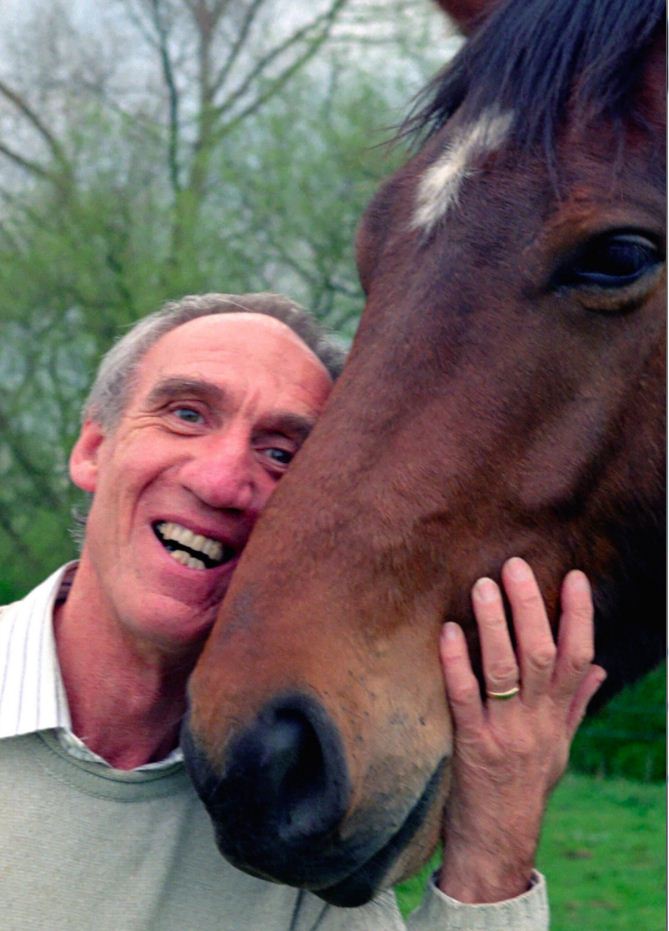 |
To gain an understanding of your dream animals, it is helpful to imagine that you are the keeper of a prehistoric type of human being. As such you would need to be aware what the correct diet is for this big creature; what type of dwelling it needs; what are its sexual and emotional needs; what frightens it or causes it stress; what amount of exercise keeps it healthy, what its stages of growth are and how it can best develop through those stages; and what satisfies it in relationships with others of its kind? Your animal dreams are showing you exactly those issues. They are giving you insight into how to care for the instinctive, the spontaneous and natural in you. |
Therefore ask yourself the following questions about your animal dreams, and write down any responses. If the answer is no to a question, move on the next one:
Is your dream animal struggling to survive?
Survival is the most powerful and fundamental drive in your body and personality. Survival skills today are often linked with managing to remain alive in difficult terrain or harsh countryside, but we all live in the midst of challenges even in civilised surroundings. Your everyday social, work and political environments confront you with enormous difficulties. Also, every cell in your being is trying to survive. Your body and its systems are constantly involved in maintaining balance amidst powerful counter influences, or even against your own bad habits. Understanding what difficulties you face in surviving, and what resources you have to handle them is a huge step toward a better life. If you had the reptilian brain and the mammalian brains removed you would not function.
Therefore define if you can what your dream animal is struggling with or against in its efforts to survive. Look for connections with your everyday life. In doing so remember that the dream is putting into graphic form, perhaps like a mime, something that needs to be lifted into everyday words and perceptions.
We all have so many aspects to what we need in life to survive as a whole person. We might be doing very well in work or social recognition, but our need for warmth and love might be struggling. So it is helpful to list the facets of your own life, such as physical health, mental health and vitality, emotional needs, finance, acclaim, and so on, and asses their survival rating.
Is the animal domesticated or wild?
This illustrates the difference between urges within yourself that you have completely socialised or learned to cooperate with, and those that are in conflict with your conscious actions or what other people expect of you. An example of this can be seen in youthful rebellion, and in the difference between what is instinctive and spontaneous in a young person, such as aggression or fear, and what is expected of them by others. The rebellious youth might allow their unsocialised urges to express as criminal acts, or disruptive social behaviour. On the other hand they might express it in the form of music or art that, while it is still anti establishment, is rewarded, as with the Rolling Stones.
So the need here is to recognise what of your feelings or urges are involved, and ask yourself if the wild is healthy as it is, or does it need a better relationship with your social or work activities? On the other hand, sometimes social restraints or needs deaden the spontaneous and natural in oneself, and so need to be reduced for greater personal harmony.
- Is there any concern about the animal’s health?
- Is there an indication the animal has been injured?
- Does love, caring or affection enter into the dream?
We have inherited and enlarged the great tenderness and care seen in other mammals.
- Are sexual feelings involved?
- Does the animal show unusual intelligence or ability to speak?
- Is the animal giving advice or showing you something?
- Are baby animals involved?
- Is the animal attacking or being attacked?
- Is there a herd or group of these animals?
- Has the animal been neglected or mutilated?
- Are you trapped by or running away from an animal?