Posts Tagged ‘meaning’
Dream Symbols – What Do They Mean
By John Hodgson
Readers sometimes ask why the Dream Dictionary gives so many possible meanings for the imagery we find in dreams, and why many of the meanings are tentative and depend on the context of the specific dream. Old-fashioned dream dictionaries often give each symbol an exact meaning, and it would be reassuring – but misleading – to suggest that this is the way dreams work. But dream signs and symbols operate in the same way as signs and symbols in waking life. Their meaning depends on the way they are put together by the dreamer. Each of us combines signs and symbols in our own way, and it is by understanding this that we can come to an understanding of a dream.
The Swiss linguist Ferdinand de Saussure (1857-1913) was the first person to study systematically the way in which signs work. He called this new study semiotics, or the study of signs. He postulated that experiencing the world is a matter of interpreting a language, or code. It is easy to see this in terms of traffic lights, where we obviously have to learn the meaning of red and green. De Saussure, however, went further, and suggested that everything we experience is a series of signs that we learn to “read”. The expression on our partner’s face, the clothes our neighbour wears, the shape of the door on a building – all these are a language. De Saussure prophesised that, just as we have a grammar of spoken and written language, it would eventually be possible to construct a grammar of signs, of which conventional language would be only a sub-set.
This has not come to pass, and it seems unlikely that it will ever happen. This is because de Saussure assumed that each sign has one essential meaning: what is sometimes called its denotation. Thus we all know a barking domestic animal denotes a dog. Yet, as Roland Barthes pointed out, in many cases the most important meanings of a sign are its connotations – the cluster of meanings that any sign has. These meanings are partly socially constructed, partly personal. For example, an Asian Indian village child and a British child in a middle-class suburb are likely to have different associations when they see a dog in the road: the Indian is more likely to see it as a source of danger and disease.
De Saussure’s structuralist account, which hoped to systematise the whole world of experience into an enormous dictionary of signs, has been succeeded by a post-structuralist view, in which the meaning of any sign is shifting, contingent, and highly dependent on its context. Does this mean, then, that creating a dictionary of dream symbols is a hopeless task? The answer is no, for two reasons. One is that every human culture combines signs (denotations and connotations) into what Barthes called myths – “stories” (true or false) that are meaningful for that culture. So the image of a gunfighter has connotations, in western (particularly north American) culture, that bring up associations of the frontier and the conquest of the American west. Most members of a culture will share many of the associations of a sign, and so interpretation is possible. The second reason is Jung’s theory of archetypes. This suggests that humanity carries certain archetypes in its collective unconscious – a common repository of signs and meanings that may transcend culture. Thus every sign and symbol contains meaning for the individual and for humanity at large. De Saussure was right to point out the affinity of signs and language. Both are at the same time personal and social, and both can be interpreted in the same way – by understanding what an individual’s combination of words, signs or symbols has to say about that person’s life.
The following is quoted from David Lodge’s novel Nice Work – It can be found at http://www.aber.ac.uk/media/Documents/S4B/sem07.html
A typical instance of this was the furious argument they had about the Silk Cut advertisement… Every few miles, it seemed, they passed the same huge poster on roadside hoardings, a photographic depiction of a rippling expanse of purple silk in which there was a single slit, as if the material had been slashed with a razor. There were no words in the advertisement, except for the Government Health Warning about smoking. This ubiquitous image, flashing past at regular intervals, both irritated and intrigued Robyn, and she began to do her semiotic stuff on the deep structure hidden beneath its bland surface.
It was in the first instance a kind of riddle. That is to say, in order to decode it, you had to know that there was a brand of cigarettes called Silk Cut. The poster was the iconic representation of a missing name, like a rebus. But the icon was also a metaphor. The shimmering silk, with its voluptuous curves and sensuous texture, obviously symbolized the female body, and the elliptical slit, foregrounded by a lighter colour showing through, was still more obviously a vagina. The advert thus appealed to both sensual and sadistic impulses, the desire to mutilate as well as penetrate the female body.
Vic Wilcox spluttered with outraged derision as he expounded this interpretation. He smoked a different brand himself, but it was as if he felt his whole philosophy of life was threatened by Robyn’s analysis of the advert. ‘You must have a twisted mind to see all that in a perfectly harmless bit of cloth,’ he said.
‘What’s the point of it, then?’ Robyn challenged him. ‘Why use cloth to advertise cigarettes?’
‘Well, that’s the name of ’em, isn’t it? Silk Cut. It’s a picture of the name. Nothing more or less.’
‘Suppose they’d used a picture of a roll of silk cut in half – would that do just as well?’
‘I suppose so. Yes, why not?’
‘Because it would look like a penis cut in half, that’s why.’
He forced a laugh to cover his embarrassment. ‘Why can’t you people take things at their face value?’
‘What people are you referring to?’
‘Highbrows. Intellectuals. You’re always trying to find hidden meanings in things. Why? A cigarette is a cigarette. A piece of silk is a piece of silk. Why not leave it at that?
‘When they’re represented they acquire additional meanings,’ said Robyn. ‘Signs are never innocent. Semiotics teaches us that.’
‘Semi-what?’
‘Semiotics. The study of signs.’
‘It teaches us to have dirty minds, if you ask me.’
‘Why do you think the wretched cigarettes were called Silk Cut in the first place?’
‘I dunno. It’s just a name, as good as any other.’
“Cut” has something to do with the tobacco, doesn’t it? The way the tobacco leaf is cut. Like “Player’s Navy Cut” – my uncle Walter used to smoke them.’
‘Well, what if it does?’ Vic said warily.
‘But silk has nothing to do with tobacco. It’s a metaphor, a metaphor that means something like, “smooth as silk”. Somebody in an advertising agency dreamt up the name “Silk Cut” to suggest a cigarette that wouldn’t give you a sore throat or a hacking cough or lung cancer. But after a while the public got used to the name, the word “Silk” ceased to signify, so they decided to have an advertising campaign to give the brand a high profile again. Some bright spark in the agency came up with the idea of rippling silk with a cut in it. The original metaphor is now represented literally. Whether they consciously intended or not doesn’t really matter. It’s a good example of the perpetual sliding of the signified under a signifier, actually.’
Wilcox chewed on this for a while, then said, ‘Why do women smoke them, then, eh?’ his triumphant expression showed that he thought this was a knock-down argument. ‘If smoking Silk Cut is a form of aggravated rape, as you try to make out, how come women smoke ’em too?’
‘Many women are masochistic by temperament,’ said Robyn. ‘They’ve learnt what’s expected of them in a patriarchical society.’
‘Ha!’ Wilcox exclaimed, tossing back his head. ‘I might have known you’d have some daft answer.’
‘I don’t know why you’re so worked up,’ Said Robyn. ‘It’s not as if you smoke Silk Cut yourself.’
‘No, I smoke Marlboros. Funnily enough, I smoke them because I like the taste.’
‘They’re the ones that have the lone cowboy ads, aren’t they?’
‘I suppose that makes me a repressed homosexual, does it?’
‘No, it’s a very straightforward metonymic message.’
‘Metawhat?’
‘Metonymic. One of the fundamental tools of semiotics is the distinction between metaphor and metonymy. D’you want me to explain it to you?’
‘It’ll pass the time,’ he said.
‘Metaphor is a figure of speech based on similarity, whereas metonymy is based on contiguity. In metaphor you substitute something like the thing you mean for the thing itself, whereas in metonymy you substitute some attribute or cause or effect of the thing for the thing itself’.
‘I don’t understand a word you’re saying.’
‘Well, take one of your moulds. The bottom bit is called the drag because it’s dragged across the floor and the top bit is called the cope because it covers the bottom bit.’
‘I told you that.’
‘Yes, I know. What you didn’t tell me was that “drag” is a metonymy and “cope” is a metaphor.’
Vic grunted. ‘What difference does it make?’
‘It’s just a question of understanding how language works. I thought you were interested in how things work.’
‘I don’t see what it’s got to do with cigarettes.’
‘In the case of the Silk Cut poster, the picture signifies the female body metaphorically: the slit in the silk is like a vagina -‘
Vic flinched at the word. ‘So you say.’
‘All holes, hollow places, fissures and folds represent the female genitals.’
‘Prove it.’
‘Freud proved it, by his successful analysis of dreams,’ said Robyn. ‘But the Marlboro ads don’t use any metaphors. That’s probably why you smoke them, actually.’
‘What d’you mean?’ he said suspiciously.
‘You don’t have any sympathy with the metaphorical way of looking at things. A cigarette is a cigarette as far as you are concerned.’
‘Right.’
‘The Marlboro ad doesn’t disturb that naive faith in the stability of the signified. It establishes a metonymic connection – completely spurious of course, but realistically plausible – between smoking that particular brand and the healthy, heroic, outdoor life of the cowboy. Buy the cigarette and you buy the lifestyle, or the fantasy of living it.’
‘Rubbish!’ said Wilcox. ‘I hate the country and the open air. I’m scared to go into a field with a cow in it.’
‘Well then, maybe it’s the solitariness of the cowboy in the ads that appeals to you. Self-reliant, independent, very macho.’
‘I’ve never heard such a lot of balls in all my life,’ said Vic Wilcox, which was strong language coming from him.
‘Balls – now that’s an interesting expression…’ Robyn mused.
‘Oh no!’ he groaned.
‘When you say a man “has balls”, approvingly, it’s a metonymy, whereas if you say something is a “lot of balls”, or “a balls-up”, it’s a sort of metaphor. The metonymy attributes value to the testicles whereas the metaphor uses them to degrade something else.’
‘I can’t take any more of this,’ said Vic. ‘D’you mind if I smoke? Just a plain, ordinary cigarette?’
|
John Hodgson |
Artists and Dreams
We are constantly giving meaning to a torrent of impressions that we meet through our senses and from within us. We give form to raw experience. We scan our enormous wealth of words, phrases, context, to arrive at an understanding of what is communicated verbally or in writing. If we could watch this process taking place, we would observe a constant searching and rejection of non-hits, a lining up of possibilities, and a bringing to the forefront of what we sense are highest probabilities.
Our mind/brain is a flashing loom of connections, a constantly moving wonderful network of links between billions of cells. This flashing creative network that constitutes the miraculous background to our responses, our feelings, our thoughts and spontaneous fantasies and dreams, is constantly forming patterns from the multitude of experiences we have. It constantly tries to match these patterns against what is already known or learnt. It draws out from the chaos of memory and incoming experience whatever it can liken to what was met in the past. What it can’t match it tries to put into some sort of order or to give a form to. And within all this constant activity the search for personal meaning goes on – Who or what am I? How can I survive? Is there a way ….?
Out of such a profoundly integral search for meaning, as artist, writer, musician, we may project the subtle forms of our inner meanings into the art form we use. We may create shapes, places, people, and feelings. Out of the flashing web of our own sentience we create life – our life – with its own conceptions of what it is to exist, what it is to love or hate, to strive or fail.
Even the most modern of dream theories agree that it is out of the fathomless depths of our drive to give meaning to impressions, that we create dreams. It is out of the barely formed impressions and understanding of the dreaming impulse that we create and live. In fact many artists of every discipline – and I now use the word to include musicians, painters, writers and architects – have directly drawn from their dream life.
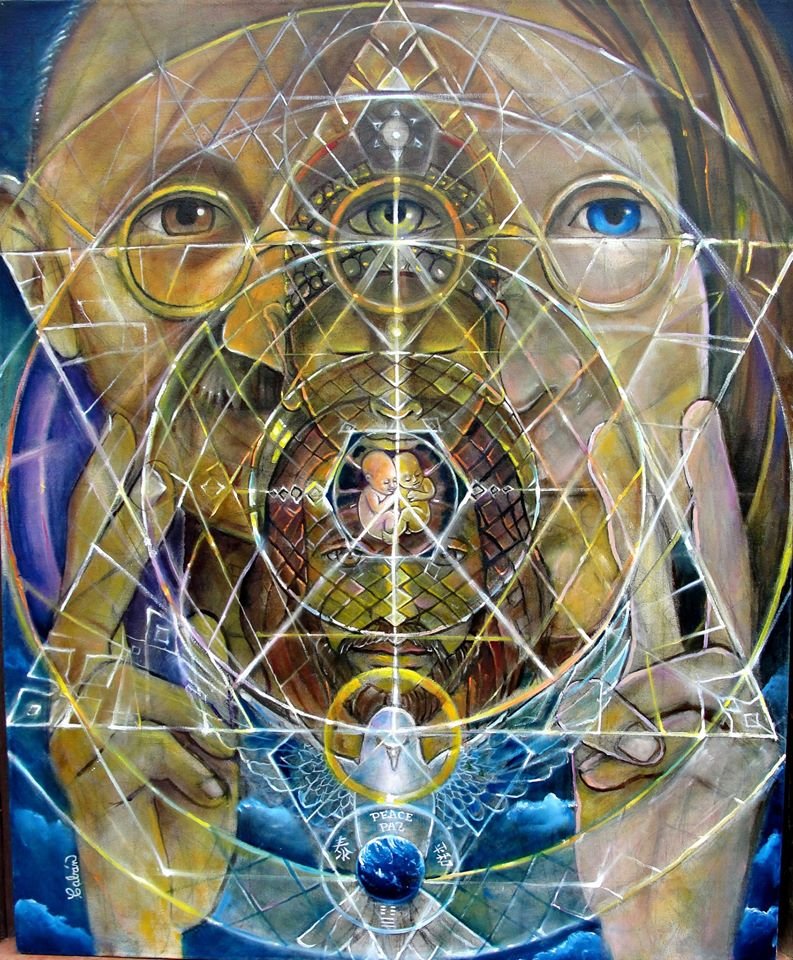
What we cannot quite grasp – what is too vast and many sided for us to hold entirely in our thoughts, we give form to in paintings, in carvings, in sound, in piling rocks one upon another to form a monument. We may then venerate or hold as of immense value such art forms. They hold in them for us the vast dimension of the ungraspable, of the infinity of our own within. They stand before us as represent a journey of lives of the alien in our midst, in ourselves. They remind us of what we are not masters of, and what may take hold of our life. See
 |
In past times tribal people stood in awe of their own existence. They recognised, even if it were unconsciously, the incredible journey they had made from being an unconscious animal, to the attainment of personal awareness and human society. They represented this awe-full experience in rituals, and symbolic paintings and sculptures such as the totem. They also recognised in their art the immense journey ahead, of claiming the possibilities of human life, and put this into their art. How do we deal with the powers that overwhelm us and drag us into mass murder in war and social upheaval? How do we create a personal and social world that we can be proud of? |
In writing about Symbolism In The Visual Arts, (Page 255 in Man And His Symbols, Jung)
Aniela Jaffe mentions the drawing of Klee, interestingly called The Limits of Understanding, which expresses this attempt to put into form what cannot be thought. Jung said that a true symbol appears only when there is a need to express what thought cannot think or what is only divined or felt.
The great artists of any culture give to us what we may have failed to see ourselves. They portray to us the spirit of our times, and our predicament, and perhaps even a passage through the dilemmas we face. Sometimes they manage to break through the cultural plethora and froth of everyday life and display an insight into the fundamental forces of life, renewing our own connection. To do this they face a personal death into the unconscious. They experience darkness and light that many of us may not dare to face. They live within the great forces of their dreams more intensely, more fully than those of us whose awareness is centred on the everyday surface produced by the concepts of life generally agreed upon.
When an artist manages to meet and give birth to one of the spirits of our age, whether it is a terrible demon of our times, or a healing angel, it speaks to us beyond our reasoning. It draws crowds, it holds attention. In the early part of this century the artist Kandinsky wrote that ‘The art of today embodies the spiritual matured to the point of revelation.
Something that we must recognise as an enormous shift in human awareness that has taken place in our own times, and which must influence art from here forwards, is the attainment of self-awareness we have been helped toward by the findings of modern psychotherapeutic schools. This form of self examination has enabled us to explore the wealth of pain and wonder usually forgotten in the mists of childhood. But it also lays bare the struggle, the enormity of the evolutionary movement toward consciousness, toward being human. And there is tremendous art here when it is discovered; art expressing the meeting between the social individual we try to be, and the animal we are still largely immersed in within the depths of our mind and body. In fact we are the whole spectrum of things from sub-atomic particles, through molecular survival and interactions, on into the basic living organisms and creatures up through the lizard, the mammal and the human. All these things are active in us, in harmony, in conflict, in process of becoming. Out of this weaving loom of life all art and music arise; all life experiences an expression of it.
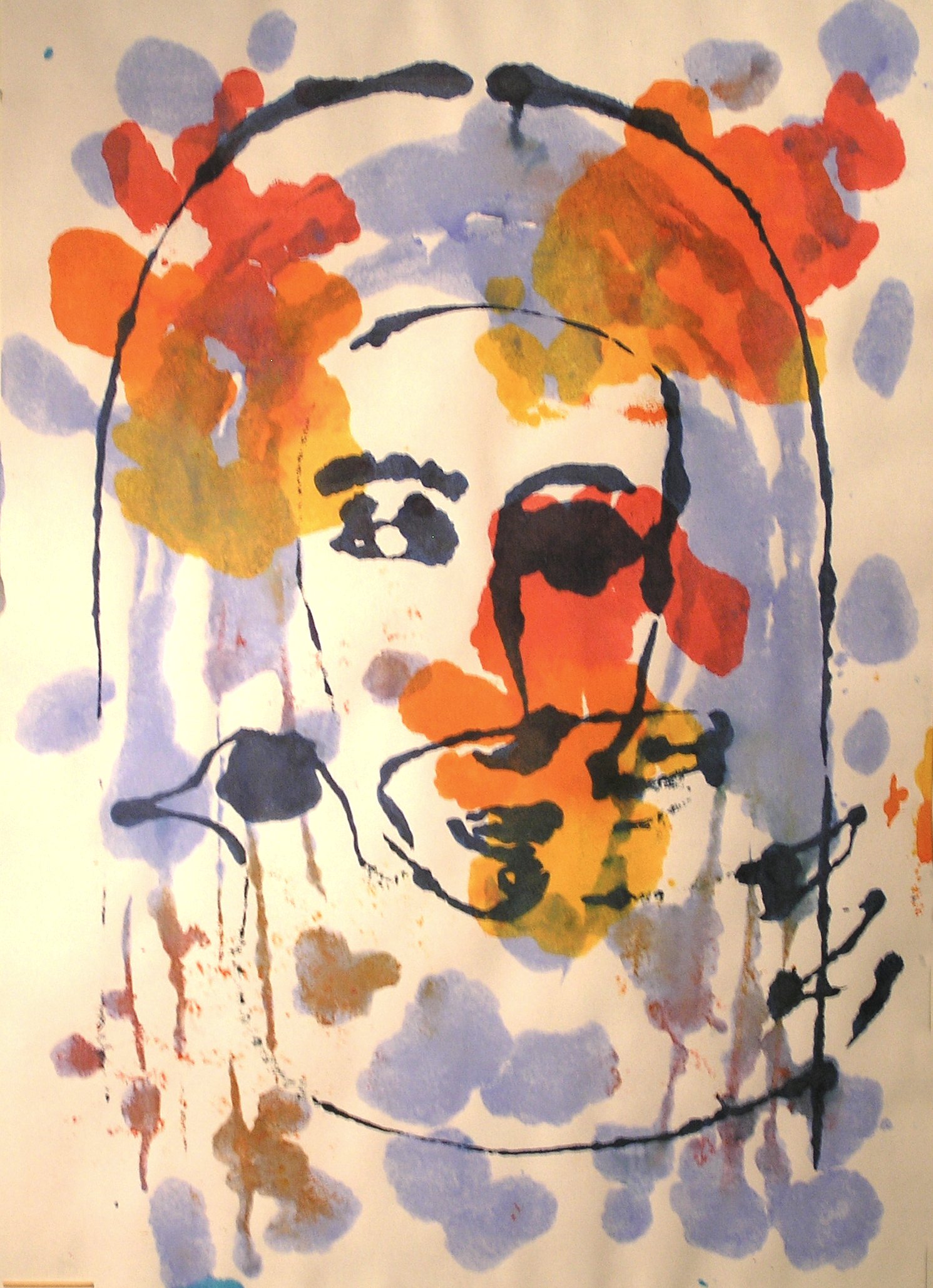
As an example, Thomas De Quincey’s Confessions of an English Opium Eater describes his fantastic dream life over a period of years. De Quincey started to take opium as a sedative. It led to a heightened awareness of how the mind can produce powerful images and memories. He writes that ‘In the middle of 1817, this faculty became increasingly distressing to me.’ Not only did his inner visions present ‘… nightly spectacles of more than earthly splendour.’ But also ‘…. vast processions moved along continually in mournful pomp. Concurrently with this, a corresponding change took place in my dreams; a theatre seemed suddenly opened and lighted within my brain.’ Such experiences led De Quincey to feel ‘deep-seated anxiety and funereal melancholy.’ At times he might recall the ‘minutest incidents of childhood, or forgotten scenes of later years, were often revived.’ ‘I could not be said to recollect them; for, if I had been told of them waking, I should not have been able to acknowledge them as parts of my past experience.’ In his visionary state however, he says ‘I recognised them instantaneously . . . I feel assured that there is no such thing as an ultimate forgetting.’
 |
De Quincey’s deep seated anxiety and melancholy, in our present times, would be signs of an underlying neurosis which could have been dealt with by exploring his fantasies to their roots in his personal history – already being touched on spontaneously by him. Whether we take the example of De Quincey’s opium aided fantasies, or the visions of Christian mystics such as the temptations of St. Antony, art and religion has at least a facet of being a symbolic way of meeting a neurosis. It is only when we reach through the symbol into what it depicts about us personally, that we move from this historical symbolic form of healing and representation. |
One cannot of course limit the definition of art and dreams to that of dealing with hidden neurosis, or even of the move toward wholeness. Therefore it is interesting to remember some of the artists who directly used dreams as part of their work. William Blake for instance purposefully made use of dreams not only as sources for his art, but also for invention – his method of printing for instance. He particularly tells of the man who taught him painting in his dreams. Blake actually drew the face of this character.
In the 1950’s the painter Jasper Johns was working as a window dresser in New York. In a dream he saw himself painting an American flag. In waking he painted the flag from his vision of it in the dream. The painting became a powerful force in an American revolution in art.
Salvador Dali consistently used dreams as a basis for his paintings. He tried to preserve his dream imagery in his art, and particularly to portray the subtleties of time and space. He referred to his paintings as ‘hand painted dream photographs.’
A number of film directors also used their dreams in the art. Ingmar Bergman tried to portray episodes from his dreams as accurately as possible. He felt that dreams have the ability to help people find points of connection, to link people. Carlos Saura used fragments from his dreams to capture atmosphere and environment.
For each of us, our dreams are our own studio in which we nightly create beyond our waking talent to produce the new, the novel, the unexpected and the deeply true. We are each visionaries, artists of the night and live in another dimension than that of the body. See: archetype of the artist; compensation theory; creativity and problem solving; hallucinations and hallucinogens; hallucinations and visions.