Posts Tagged ‘neurosis’
Artists and Dreams
We are constantly giving meaning to a torrent of impressions that we meet through our senses and from within us. We give form to raw experience. We scan our enormous wealth of words, phrases, context, to arrive at an understanding of what is communicated verbally or in writing. If we could watch this process taking place, we would observe a constant searching and rejection of non-hits, a lining up of possibilities, and a bringing to the forefront of what we sense are highest probabilities.
Our mind/brain is a flashing loom of connections, a constantly moving wonderful network of links between billions of cells. This flashing creative network that constitutes the miraculous background to our responses, our feelings, our thoughts and spontaneous fantasies and dreams, is constantly forming patterns from the multitude of experiences we have. It constantly tries to match these patterns against what is already known or learnt. It draws out from the chaos of memory and incoming experience whatever it can liken to what was met in the past. What it can’t match it tries to put into some sort of order or to give a form to. And within all this constant activity the search for personal meaning goes on – Who or what am I? How can I survive? Is there a way ….?
Out of such a profoundly integral search for meaning, as artist, writer, musician, we may project the subtle forms of our inner meanings into the art form we use. We may create shapes, places, people, and feelings. Out of the flashing web of our own sentience we create life – our life – with its own conceptions of what it is to exist, what it is to love or hate, to strive or fail.
Even the most modern of dream theories agree that it is out of the fathomless depths of our drive to give meaning to impressions, that we create dreams. It is out of the barely formed impressions and understanding of the dreaming impulse that we create and live. In fact many artists of every discipline – and I now use the word to include musicians, painters, writers and architects – have directly drawn from their dream life.
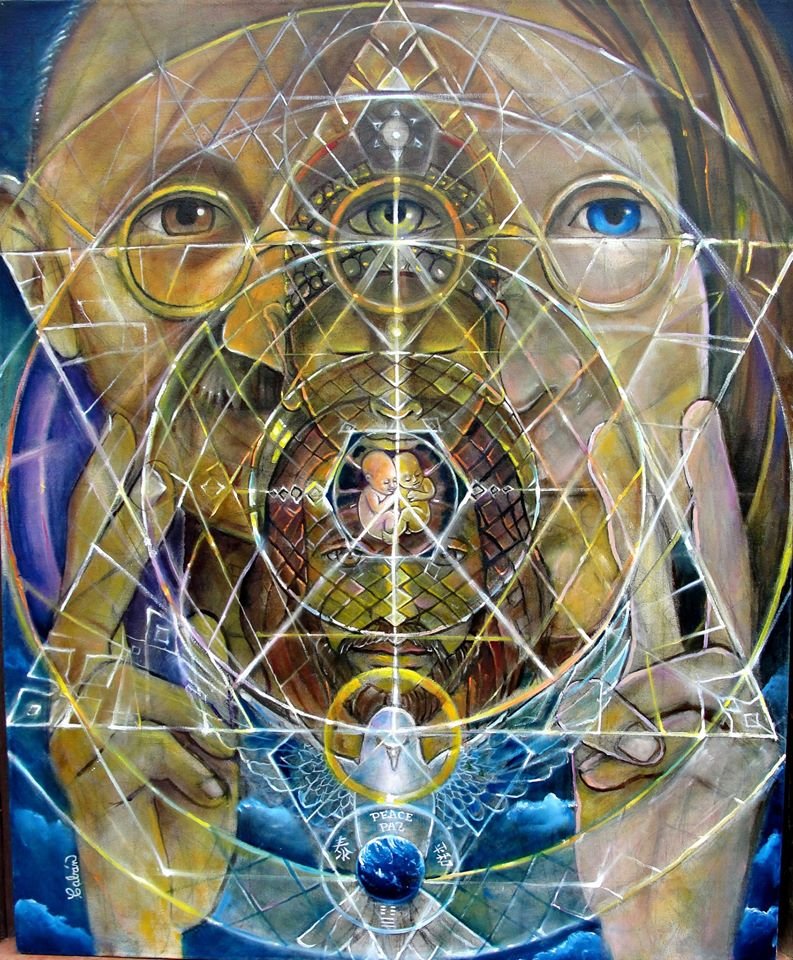
What we cannot quite grasp – what is too vast and many sided for us to hold entirely in our thoughts, we give form to in paintings, in carvings, in sound, in piling rocks one upon another to form a monument. We may then venerate or hold as of immense value such art forms. They hold in them for us the vast dimension of the ungraspable, of the infinity of our own within. They stand before us as represent a journey of lives of the alien in our midst, in ourselves. They remind us of what we are not masters of, and what may take hold of our life. See
 |
In past times tribal people stood in awe of their own existence. They recognised, even if it were unconsciously, the incredible journey they had made from being an unconscious animal, to the attainment of personal awareness and human society. They represented this awe-full experience in rituals, and symbolic paintings and sculptures such as the totem. They also recognised in their art the immense journey ahead, of claiming the possibilities of human life, and put this into their art. How do we deal with the powers that overwhelm us and drag us into mass murder in war and social upheaval? How do we create a personal and social world that we can be proud of? |
In writing about Symbolism In The Visual Arts, (Page 255 in Man And His Symbols, Jung)
Aniela Jaffe mentions the drawing of Klee, interestingly called The Limits of Understanding, which expresses this attempt to put into form what cannot be thought. Jung said that a true symbol appears only when there is a need to express what thought cannot think or what is only divined or felt.
The great artists of any culture give to us what we may have failed to see ourselves. They portray to us the spirit of our times, and our predicament, and perhaps even a passage through the dilemmas we face. Sometimes they manage to break through the cultural plethora and froth of everyday life and display an insight into the fundamental forces of life, renewing our own connection. To do this they face a personal death into the unconscious. They experience darkness and light that many of us may not dare to face. They live within the great forces of their dreams more intensely, more fully than those of us whose awareness is centred on the everyday surface produced by the concepts of life generally agreed upon.
When an artist manages to meet and give birth to one of the spirits of our age, whether it is a terrible demon of our times, or a healing angel, it speaks to us beyond our reasoning. It draws crowds, it holds attention. In the early part of this century the artist Kandinsky wrote that ‘The art of today embodies the spiritual matured to the point of revelation.
Something that we must recognise as an enormous shift in human awareness that has taken place in our own times, and which must influence art from here forwards, is the attainment of self-awareness we have been helped toward by the findings of modern psychotherapeutic schools. This form of self examination has enabled us to explore the wealth of pain and wonder usually forgotten in the mists of childhood. But it also lays bare the struggle, the enormity of the evolutionary movement toward consciousness, toward being human. And there is tremendous art here when it is discovered; art expressing the meeting between the social individual we try to be, and the animal we are still largely immersed in within the depths of our mind and body. In fact we are the whole spectrum of things from sub-atomic particles, through molecular survival and interactions, on into the basic living organisms and creatures up through the lizard, the mammal and the human. All these things are active in us, in harmony, in conflict, in process of becoming. Out of this weaving loom of life all art and music arise; all life experiences an expression of it.
As an example, Thomas De Quincey’s Confessions of an English Opium Eater describes his fantastic dream life over a period of years. De Quincey started to take opium as a sedative. It led to a heightened awareness of how the mind can produce powerful images and memories. He writes that ‘In the middle of 1817, this faculty became increasingly distressing to me.’ Not only did his inner visions present ‘… nightly spectacles of more than earthly splendour.’ But also ‘…. vast processions moved along continually in mournful pomp. Concurrently with this, a corresponding change took place in my dreams; a theatre seemed suddenly opened and lighted within my brain.’ Such experiences led De Quincey to feel ‘deep-seated anxiety and funereal melancholy.’ At times he might recall the ‘minutest incidents of childhood, or forgotten scenes of later years, were often revived.’ ‘I could not be said to recollect them; for, if I had been told of them waking, I should not have been able to acknowledge them as parts of my past experience.’ In his visionary state however, he says ‘I recognised them instantaneously . . . I feel assured that there is no such thing as an ultimate forgetting.’
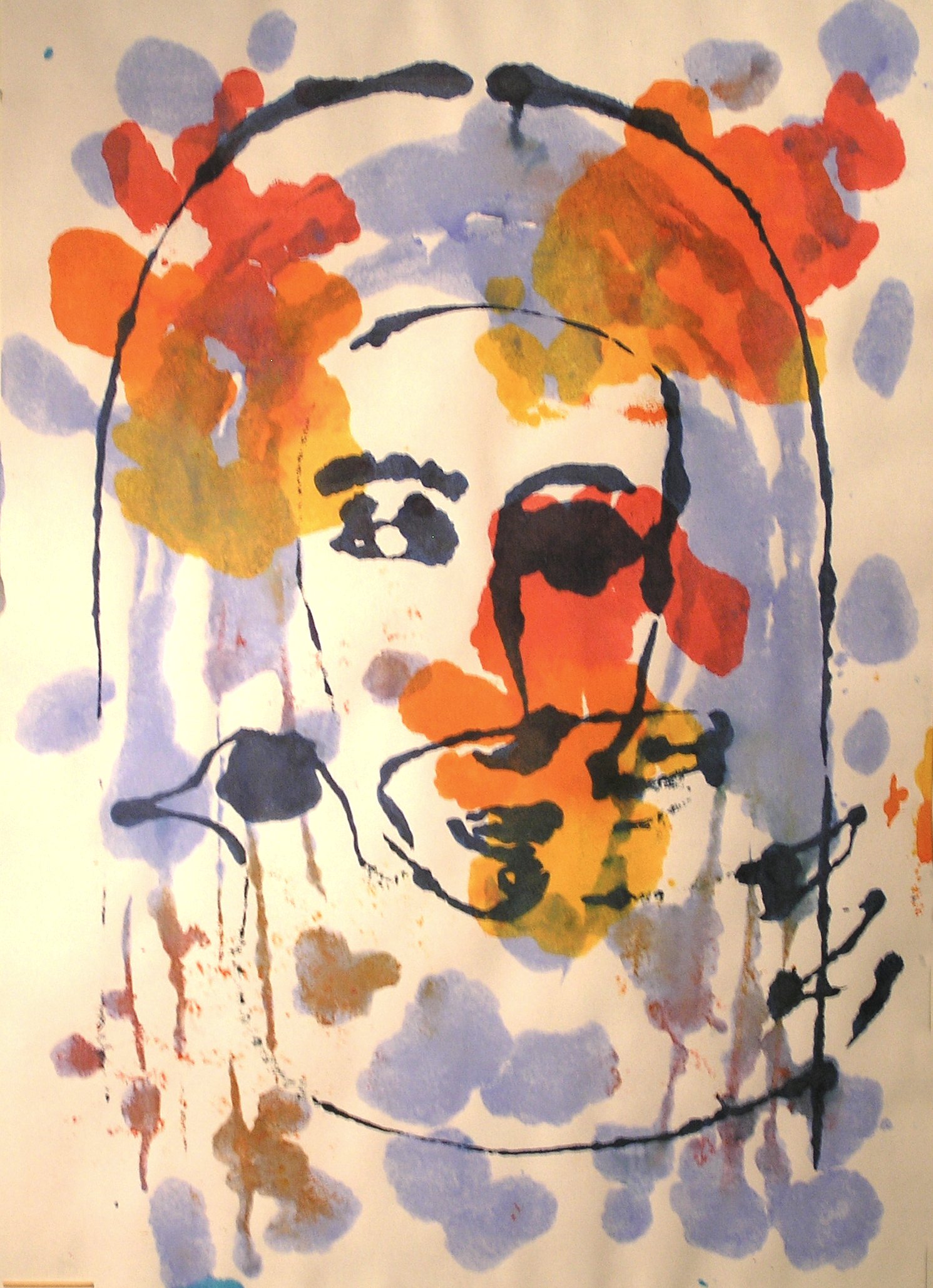 |
De Quincey’s deep seated anxiety and melancholy, in our present times, would be signs of an underlying neurosis which could have been dealt with by exploring his fantasies to their roots in his personal history – already being touched on spontaneously by him. Whether we take the example of De Quincey’s opium aided fantasies, or the visions of Christian mystics such as the temptations of St. Antony, art and religion has at least a facet of being a symbolic way of meeting a neurosis. It is only when we reach through the symbol into what it depicts about us personally, that we move from this historical symbolic form of healing and representation. |
One cannot of course limit the definition of art and dreams to that of dealing with hidden neurosis, or even of the move toward wholeness. Therefore it is interesting to remember some of the artists who directly used dreams as part of their work. William Blake for instance purposefully made use of dreams not only as sources for his art, but also for invention – his method of printing for instance. He particularly tells of the man who taught him painting in his dreams. Blake actually drew the face of this character.
In the 1950’s the painter Jasper Johns was working as a window dresser in New York. In a dream he saw himself painting an American flag. In waking he painted the flag from his vision of it in the dream. The painting became a powerful force in an American revolution in art.
Salvador Dali consistently used dreams as a basis for his paintings. He tried to preserve his dream imagery in his art, and particularly to portray the subtleties of time and space. He referred to his paintings as ‘hand painted dream photographs.’
A number of film directors also used their dreams in the art. Ingmar Bergman tried to portray episodes from his dreams as accurately as possible. He felt that dreams have the ability to help people find points of connection, to link people. Carlos Saura used fragments from his dreams to capture atmosphere and environment.
For each of us, our dreams are our own studio in which we nightly create beyond our waking talent to produce the new, the novel, the unexpected and the deeply true. We are each visionaries, artists of the night and live in another dimension than that of the body. See: archetype of the artist; compensation theory; creativity and problem solving; hallucinations and hallucinogens; hallucinations and visions.
The Archetype of the Shadow
The shadow archetype is depicted as a shadowy figure, often the same sex as dreamer but inferior; a zombie or walking dead; a dark shape; an unseen ‘Thing’; someone or something we feel uneasy about or in some measure repelled by or frightened of; drug addict; pervert; what is behind one in a dream; anything dark or threatening; sometimes a younger brother or sister; a junior colleague; a foreigner; a servant; a gypsy; a prostitute; a burglar; a sinister figure in the dark, a person or thing that we can see but not put a face or defined form to. Usually there is an air of disrepute about the person, or of danger. In literature we find the negative aspect of the shadow depicted in such stories as Dr Jekyll and Mr. Hyde; Frankenstein’s monster or Lurch; Wilde’s The Picture of Dorian Gray; Hesse’s Steppenwolf, and in many stories about werewolves or haunting. Ackroyd, in his Dictionary of Dream Symbols, even points to Cinderella as a shadow figure, as she is seen as inferior by her socially accepted sisters, and is kept shut in the house, thus repressed.
But as usual we all live a dual or many sided life. So there is what Carl Jung called our ‘Golden Shadow’; this is the creative, loving and powerful side of our nature that we also tend to keep hidden, repress or do not believe we are worthy of. Many, many people hold themselves back maybe because their sense of themselves arises out of your personal misery, out of depression or emotional pain. Is that how you see yourself? Is that the limit of what you know yourself to be? Is that the lie that you have taken to be the truth? If that is so it is a tragedy. It is from that painful, tiny and limited world that you are rescued by the action of the core. When you recognise that it enables you to transcend the prison bars of those limitations. See Opening to Life
In occult literature the Shadow is called The Guardian of the Threshold. It is described as a great – subjective – figure we meet at a certain stage of growth. The Guardian holds in it all the negative and positive actions and deeds that have been repressed aspects of self committed or developed in the past, even in past lives, which must be met and transformed or allowed to grow more fully. See: guardian of the threshold.
The Shadow is any part of ourselves that we reject, and so do not allow sufficient expression in our life. We may so dislike aspects of our nature we fail to recognise them altogether and instead see them in other people and criticise them. Nations as well as individuals do this. The Nazis projected all problems onto the Jews. The Americans have not wished to see their own social sickness, and looked instead at the Russians. No doubt the Irish blame the English, and the English use the class system, with its projections between employee and employer. It is easier than looking at one’s own shadow. The foreigner is one of the favourite shadow projections. This may be because through living in our culture we develop certain likes and dislikes, certain value judgements and ways of doing things. In other cultures their normal and acceptable values and ways of living may be vastly different. In dealing with the foreigner we therefore meet our own unconscious potential for living in a different way. Many individuals who worked in the British Commonwealth in vastly different cultures to their own, started out loathing the native customs, and then changed their life to live within the new culture. In the English language it was called ‘going native’.
The shadow develops in us, according to Jolande Jacobi, because as we grow and absorb our culture, we naturally repress parts of our nature as they are not acceptable to ourselves and/or society. These grow and mature in just the way our conscious personality does, through experience and further information – except the shadow has a life under the surface – in the darkness – like any socially unacceptable organisation, criminal activity or individual. But often it is the functions or instincts in us that date from prehistory, when present day social and sexual restraints did not have survival value, that make up a large part of the shadow.
If you can think of the characteristics you loathe in others, that is a fair picture of what you repress in yourself. The great ‘ladies man’ may hide a shadow which feels inadequate sexually. The loving Christian mother might meet a shadow full of resentment and anger at how she has been taken for granted. The rigid heterosexual might hide homosexual tendencies. Meeting the shadow through our dreams is a meeting with our own reality, which in turn enables us to look at the world realistically. If the shadow can be met it leads to wholeness.
Example: During his analysis of women patients, sexual advance or assault by the woman’s father was often revealed. Freud struggled with this, wondering whether the assault was memory of an actual event, or a psychic reproduction of it. He eventually came to the conclusion that hysterical and neurotic behaviour was often due to the trauma caused by an early sexual assault by the parent. Where there was not evidence of physical assault, then he saw the neurosis as due to sexual conflict or a trauma caused by some other event. This led to Freud being rejected by university colleagues, fellow doctors, and even by patients.
This an excellency example of the shadow working in individual and society. People refused and still do refuse to see the awful side of the repressed side of ourselves and others. Fraser Boa tells the story of a man who told his analyst he had dreamt of Red Rooster – a cartoon character used in American national parks. Red Rooster is bossy and tells people to keep their litter and cigarettes and not to make a mess. The analyst asked the man if he recognised Red Rooster in himself. After some thought he said no, he couldn’t see he was like that. The analyst suggested he go ask his wife if she could see Red Rooster in him. He did this and was astonished when she said she could. After a few minutes of his attempts to suggest she was mistaken, she suggested he ask each of his three children. He took each one aside and was amazed when each said that of course they could see Red Rooster in him. He was always bossing people around and being authoritative. Red Rooster was his shadow.
A main feature of many archetypal figures, and particularly of the shadow, is their autonomous activity in us. This is called an autonomous complex, or in some schools ‘sub personality’. We experience this as an influence to act in particular ways that have a lot of feeling and motivation in them, but may be very different to our image of ourselves. For instance we may deeply criticise a man for leaving his wife for another woman, only to find later that we have the same urge, and have been denying it. Therefore, when we detest something in another person, our dislike for them is very strong and often unreasonable in its degree. So much so that we cannot stop mentioning them or criticising them. See: autonomous complex; sub-personality.
P. W. Martin says the shadow is ‘something which comes between a person and their fulfillment: his laziness, his fecklessness, his tendency to let things slide or to over-do things, his cowardice, his rashness, his self-indulgence, his carping and envious nature, his murkiness.’ It is all the negatives which we prefer not to see about ourselves.
Example: Before I started my serious yoga practice I had dreamt my wife and I had been talking about whether there were any ghosts in the house. On going to bed I sat in bed and challenged any ghosts to show themselves, certain I could handle them. There was no response, and feeling rather smug I lay down to go to sleep. Just then the door creaked open, and in walked two black men who looked as if they had climbed out of an old grave. Their flesh was falling off them and they were blank eyed. I was terrified and made the sign of the cross and said a few holy words to ward them off. It worked and they went, but not for long. This time all my signs and prayers didn’t get rid of them and they put their dead hands around my throat strangling me. I woke screaming and frightened. Some years later I dreamt of these two black men again, this time on an underground train. They were no longer zombies and were well dressed. One of them still went for my throat though. I caught his hands and wrestled with him, pulling his hands down, overpowering him. As I did so I realised this was what yoga had done – given me the strength to meet this attack. After another long period of time another dream came in which I was sitting with this black man in a circle with other people meditating. We were all opening ourselves to the spiritual power. Suddenly the power took hold of my whole body and moved me around the room, along with the chair I was sitting in. Then I experienced it moving my mouth and vocal organs, speaking through me. The word flowed through me talking to the group about the spiritual life. Afterward the black man came to me and asked if I had really been moved, or was I acting. I said as far as I knew it had been spontaneous, not acted. He said he would like to surrender to that same influence with me. What I gathered from these dreams was that originally I had repressed parts of my own natural sexual feelings, shown as the black men. They were dead because I had killed this part of myself as a teenager. But I was deeply frightened of these sexual urges because of what had happened in adolescence. Therefore, in my meditation, in trying to enter more fully into myself, I always turned back through fear, because in meeting more of myself, I met these black men – my own sexual urges. My practice of yoga had gradually helped me find strength in meeting this part of myself, show in the second dream. There was also a change going on in my unconscious – the underground train – as the men were healthy and well dressed.
However, because the shadow is the ‘out of sight’ area of our psyche, it also holds in it great treasure through its connection with our unconscious potential. In fact a great deal of our energy is involved in our ‘negatives’. When we meet our shadow or our fears, we are enormously more energised. Meeting the shadow and unfolding the possibilities held unexpressed is our life’s work. Without it we may never become the mature and full person we are capable of. As Prospero says of Caliban, we need to say ‘this thing of darkness I acknowledge mine’. Through this we gain not only our own greatness, whatever that might be, but also the acceptance of our common connection with humanity. Jung says that if we could fully meet our shadow, we would be immune to any moral or verbal insinuations. We would already have seen this for ourselves. Finding this sort of transformation to a state beyond guilt is a task for the hero/ine who has the strength to descend into the underworld and wrestle dark creatures; to open Pandora’s Jar and deal with what is revealed. See: black person; black under colour; shadow.
Useful Questions and Hints:
What do I hate in others – and what can I gather from that about what I repress in myself?
Where is my shadow appearing in my dreams – and what happens if I explore its qualities?
For help doing this see Talking As and Processing Dreams. If I observe what I think and feel, can I catch myself editing/deleting certain thoughts or feelings?