Posts Tagged ‘search for self’
Artists and Dreams
We are constantly giving meaning to a torrent of impressions that we meet through our senses and from within us. We give form to raw experience. We scan our enormous wealth of words, phrases, context, to arrive at an understanding of what is communicated verbally or in writing. If we could watch this process taking place, we would observe a constant searching and rejection of non-hits, a lining up of possibilities, and a bringing to the forefront of what we sense are highest probabilities.
Our mind/brain is a flashing loom of connections, a constantly moving wonderful network of links between billions of cells. This flashing creative network that constitutes the miraculous background to our responses, our feelings, our thoughts and spontaneous fantasies and dreams, is constantly forming patterns from the multitude of experiences we have. It constantly tries to match these patterns against what is already known or learnt. It draws out from the chaos of memory and incoming experience whatever it can liken to what was met in the past. What it can’t match it tries to put into some sort of order or to give a form to. And within all this constant activity the search for personal meaning goes on – Who or what am I? How can I survive? Is there a way ….?
Out of such a profoundly integral search for meaning, as artist, writer, musician, we may project the subtle forms of our inner meanings into the art form we use. We may create shapes, places, people, and feelings. Out of the flashing web of our own sentience we create life – our life – with its own conceptions of what it is to exist, what it is to love or hate, to strive or fail.
Even the most modern of dream theories agree that it is out of the fathomless depths of our drive to give meaning to impressions, that we create dreams. It is out of the barely formed impressions and understanding of the dreaming impulse that we create and live. In fact many artists of every discipline – and I now use the word to include musicians, painters, writers and architects – have directly drawn from their dream life.
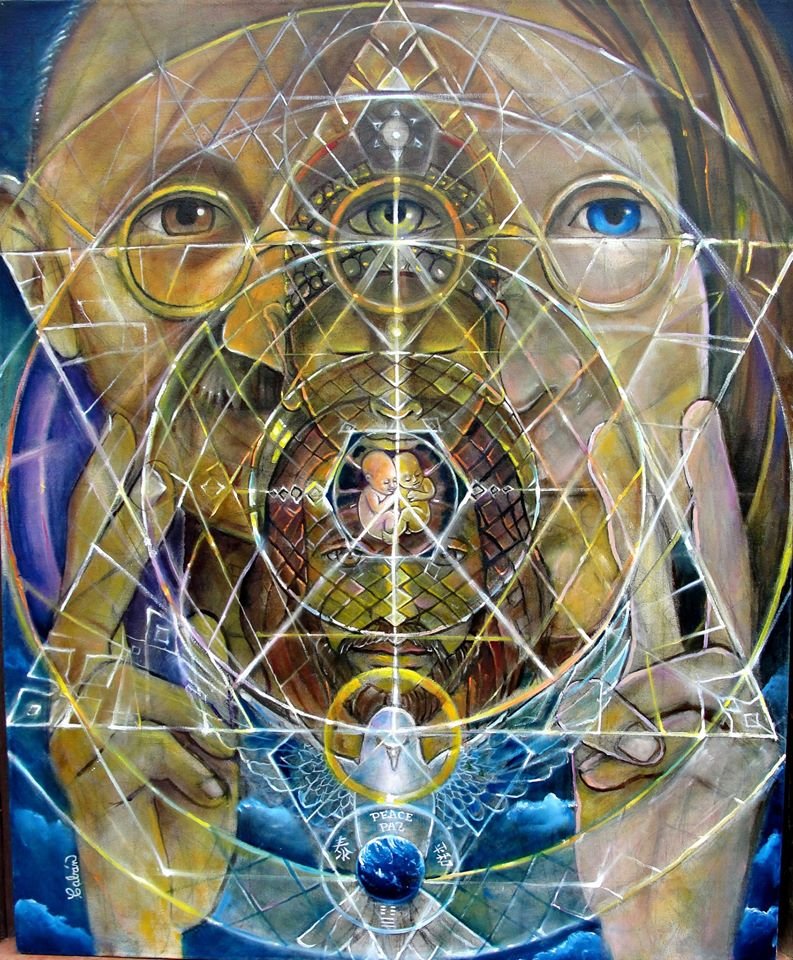
What we cannot quite grasp – what is too vast and many sided for us to hold entirely in our thoughts, we give form to in paintings, in carvings, in sound, in piling rocks one upon another to form a monument. We may then venerate or hold as of immense value such art forms. They hold in them for us the vast dimension of the ungraspable, of the infinity of our own within. They stand before us as represent a journey of lives of the alien in our midst, in ourselves. They remind us of what we are not masters of, and what may take hold of our life. See
 |
In past times tribal people stood in awe of their own existence. They recognised, even if it were unconsciously, the incredible journey they had made from being an unconscious animal, to the attainment of personal awareness and human society. They represented this awe-full experience in rituals, and symbolic paintings and sculptures such as the totem. They also recognised in their art the immense journey ahead, of claiming the possibilities of human life, and put this into their art. How do we deal with the powers that overwhelm us and drag us into mass murder in war and social upheaval? How do we create a personal and social world that we can be proud of? |
In writing about Symbolism In The Visual Arts, (Page 255 in Man And His Symbols, Jung)
Aniela Jaffe mentions the drawing of Klee, interestingly called The Limits of Understanding, which expresses this attempt to put into form what cannot be thought. Jung said that a true symbol appears only when there is a need to express what thought cannot think or what is only divined or felt.
The great artists of any culture give to us what we may have failed to see ourselves. They portray to us the spirit of our times, and our predicament, and perhaps even a passage through the dilemmas we face. Sometimes they manage to break through the cultural plethora and froth of everyday life and display an insight into the fundamental forces of life, renewing our own connection. To do this they face a personal death into the unconscious. They experience darkness and light that many of us may not dare to face. They live within the great forces of their dreams more intensely, more fully than those of us whose awareness is centred on the everyday surface produced by the concepts of life generally agreed upon.
When an artist manages to meet and give birth to one of the spirits of our age, whether it is a terrible demon of our times, or a healing angel, it speaks to us beyond our reasoning. It draws crowds, it holds attention. In the early part of this century the artist Kandinsky wrote that ‘The art of today embodies the spiritual matured to the point of revelation.
Something that we must recognise as an enormous shift in human awareness that has taken place in our own times, and which must influence art from here forwards, is the attainment of self-awareness we have been helped toward by the findings of modern psychotherapeutic schools. This form of self examination has enabled us to explore the wealth of pain and wonder usually forgotten in the mists of childhood. But it also lays bare the struggle, the enormity of the evolutionary movement toward consciousness, toward being human. And there is tremendous art here when it is discovered; art expressing the meeting between the social individual we try to be, and the animal we are still largely immersed in within the depths of our mind and body. In fact we are the whole spectrum of things from sub-atomic particles, through molecular survival and interactions, on into the basic living organisms and creatures up through the lizard, the mammal and the human. All these things are active in us, in harmony, in conflict, in process of becoming. Out of this weaving loom of life all art and music arise; all life experiences an expression of it.
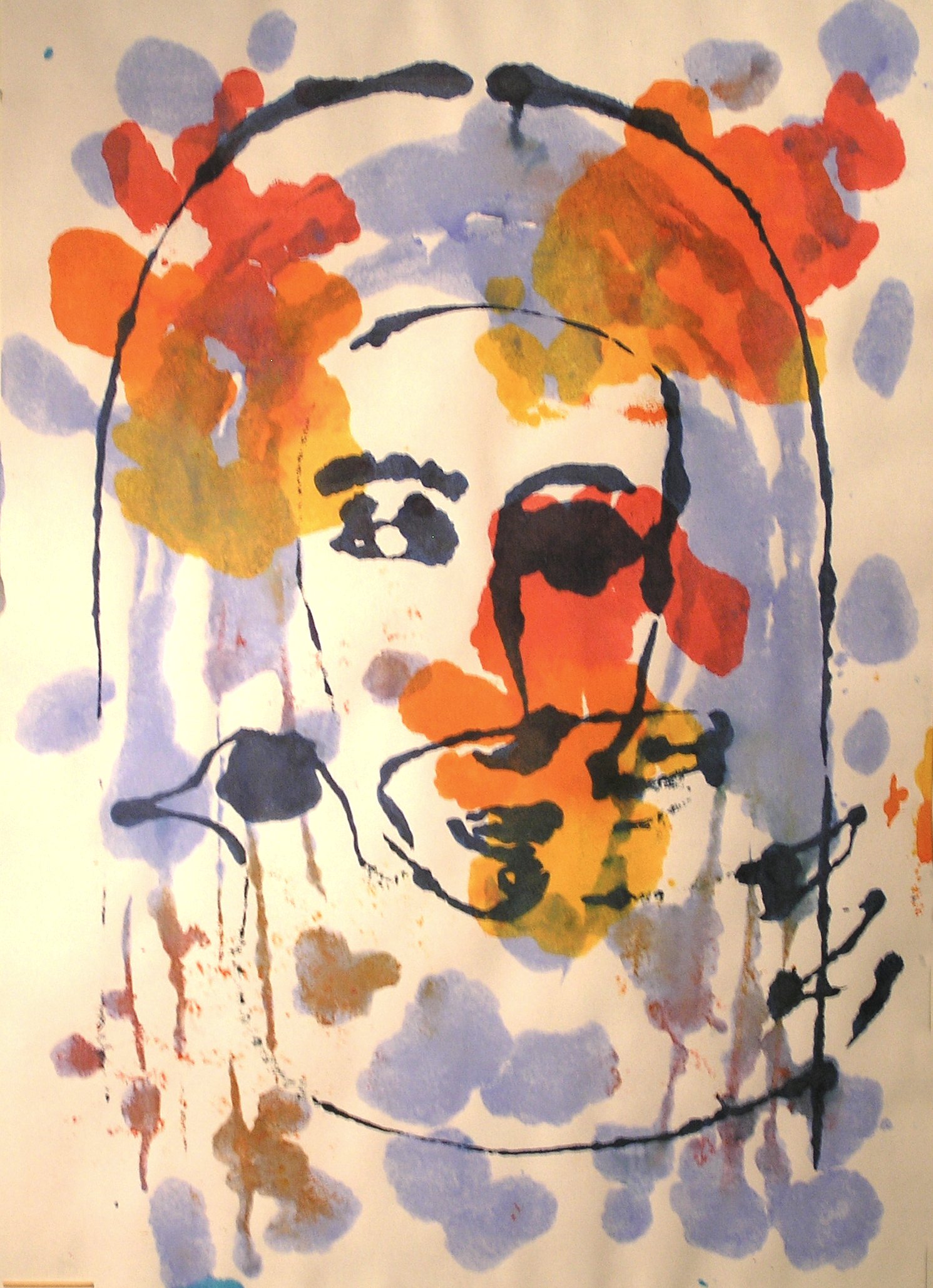
As an example, Thomas De Quincey’s Confessions of an English Opium Eater describes his fantastic dream life over a period of years. De Quincey started to take opium as a sedative. It led to a heightened awareness of how the mind can produce powerful images and memories. He writes that ‘In the middle of 1817, this faculty became increasingly distressing to me.’ Not only did his inner visions present ‘… nightly spectacles of more than earthly splendour.’ But also ‘…. vast processions moved along continually in mournful pomp. Concurrently with this, a corresponding change took place in my dreams; a theatre seemed suddenly opened and lighted within my brain.’ Such experiences led De Quincey to feel ‘deep-seated anxiety and funereal melancholy.’ At times he might recall the ‘minutest incidents of childhood, or forgotten scenes of later years, were often revived.’ ‘I could not be said to recollect them; for, if I had been told of them waking, I should not have been able to acknowledge them as parts of my past experience.’ In his visionary state however, he says ‘I recognised them instantaneously . . . I feel assured that there is no such thing as an ultimate forgetting.’
 |
De Quincey’s deep seated anxiety and melancholy, in our present times, would be signs of an underlying neurosis which could have been dealt with by exploring his fantasies to their roots in his personal history – already being touched on spontaneously by him. Whether we take the example of De Quincey’s opium aided fantasies, or the visions of Christian mystics such as the temptations of St. Antony, art and religion has at least a facet of being a symbolic way of meeting a neurosis. It is only when we reach through the symbol into what it depicts about us personally, that we move from this historical symbolic form of healing and representation. |
One cannot of course limit the definition of art and dreams to that of dealing with hidden neurosis, or even of the move toward wholeness. Therefore it is interesting to remember some of the artists who directly used dreams as part of their work. William Blake for instance purposefully made use of dreams not only as sources for his art, but also for invention – his method of printing for instance. He particularly tells of the man who taught him painting in his dreams. Blake actually drew the face of this character.
In the 1950’s the painter Jasper Johns was working as a window dresser in New York. In a dream he saw himself painting an American flag. In waking he painted the flag from his vision of it in the dream. The painting became a powerful force in an American revolution in art.
Salvador Dali consistently used dreams as a basis for his paintings. He tried to preserve his dream imagery in his art, and particularly to portray the subtleties of time and space. He referred to his paintings as ‘hand painted dream photographs.’
A number of film directors also used their dreams in the art. Ingmar Bergman tried to portray episodes from his dreams as accurately as possible. He felt that dreams have the ability to help people find points of connection, to link people. Carlos Saura used fragments from his dreams to capture atmosphere and environment.
For each of us, our dreams are our own studio in which we nightly create beyond our waking talent to produce the new, the novel, the unexpected and the deeply true. We are each visionaries, artists of the night and live in another dimension than that of the body. See: archetype of the artist; compensation theory; creativity and problem solving; hallucinations and hallucinogens; hallucinations and visions.
Archetype of the Void
Fundamental to all experience are the opposites of emptiness and fullness, space and substance, sound and silence, something and nothing, female and male, light and darkness. We not only meet these polarities at every moment in such things as hearing a sound that is only apparent because it is surrounded by silence – the silence between the sounds – but also all people and objects are only individually identifiable because they exist in empty space. But more important than that in understanding the archetype of the void is that each day we cycle through the alternating experience of existing and not existing – of having focussed personal awareness and then meeting the loss of it in sleep. The midway point between these polarities is dreams.
In dropping into this experience of sleep where there is a void or loss of personal awareness, we lose any sense of self and body and so the transition from waking self awareness to the void is easy. But the archetype of the void is about meeting it with awareness. For many people this can be a difficult or frightening thing. We tend to think of the void as a huge nothingness, a vacuum in which the human personality will disappear. This can seem very frightening, that behind everything is a sort of nothingness. The amusing thing is that this is an everyday human experience. In sleep we have dropped into that void. Our personality has indeed, as far as we are concerned, melted away and disappeared. Yet the next morning we awake and all is well. We have survived.
When people think of the void they usually see it as a destruction of everything – a death of self. But the nothingness of the void is part of the paradox of existence – for the nothingness is at the same time everything. But everything is all inclusive. As such it cannot have any defined characteristics or shape, otherwise it wouldn’t be everything. This is because if you were to say what a beach is, you could not say the sea was the beach, or the sky, or the land. None of them separately is the beach. The beach is the indefinable amalgam of them all. In just that way the Nothing is the indefinable everything that underlies the particulars of life. The Next Step.
The conscious meeting with the void is part of the gradual expanding of personal awareness. It is akin to, or the same as, going to sleep with full awareness. When we sleep our body and brain enter into a very different state; we lose awareness of sight, hearing, taste, smell and touch; our voluntary muscles are paralysed, and our experience is internalised. So, consciously entering sleep is a journey into a very strange world completely unlike our waking life. Part of that world is the full surround virtual reality of dreams, but there are dimensions beyond imagery, beyond form, beyond the opposites, beyond personal separated existence. This is the void, and to confront it consciously is a transformative experience.
Seeking the void is at the heart of the Buddhist way of life, as it is also at the heart of Christian mysticism. See Dimensions of Human Experience; Cloud of Unknowing; buddhism and dreams; void; yoga and dreams.
The void may be depicted in a dream by a shimmering haze, a transparent wall into which you can walk and become absorbed. At times it might be shown as the ocean, falling into space with just points of light, or a huge abyss’ or a massive hole. At other times it might be met as an ordinary scene or object that yet is seen as infinite space or complete liberation or a wonderful or threatening emptiness. Meeting such imagery or experiences in any degree produces powerful personal change. It produces a new sense of oneself; one no longer focussed on the ego or body personality – the self we consider ourselves to be through our body shape, gender, beauty or ugliness, or through our social position, our wealth, work or acclaim. It is, as the Buddhists name it, liberation. Meeting it is part of what Jung calls individuation. See: example under void.
Example: To my amazement a huge living and wondrous circle appeared on the wall. It was full of movement, everything dancing in time to music. At the very centre of the circle was emptiness, nothing, a void. Yet out of this nothingness all things emerged. There were plants, animals, people, hills, rivers and mountains all coming to birth. They danced out in their own individual movement, yet each unknowingly was part of the whole wonderful and intricate dance which made a great pattern and movement in the body of the circle. All danced to the periphery and there turned and moved, still in their ballet, back to the centre. At that centre they plunged into its oblivion again. But at that very moment new life sprang from it to dance once more.
When we do meet it however, the strange thing is that what appeared as an absence or denial of oneself is actually an addition. Suddenly we see that everything has been added, and nothing taken away.
The negative aspect of this archetypal experience is the loss of any personal meaning or motivation, the feeling of melting and perhaps even death. The positive side is of tremendous opportunity to live beyond previous limitations and boundaries; the realisation of ones own core existence in timelessness and infinite potential, along with the meaninglessness of prevalent views of death.
Useful Questions and Hints:
What do I feel about the nothingness that constantly surrounds me?
Am I scared of the idea of that at base I might not exist in the same way I usually see myself?
Can I let go of all that is involved in the little me and surrender to the vast me?
It might be helpful to read Individuation and Methods of Awakening.
The Archetype of the Self
The symbols of the Self are a ring; a square or square area; a great tree; Christ or other major holy figure such as Krishna or Buddha; a shining thing, being or animal; a talking animal; a strange stone or rock; symbols like the cross or mandala; a round table; God; a guru; an elephant; a crowned or shining snake.
Our conscious self or ego is only a tiny part of our totality, as is obvious when we consider how much of our memory or experience we can hold in mind at any one time. The Self, as defined by Jung, is both what we are consciously aware of, and the massive experience and potential remaining unconscious. That potential is not simply our own personal memories, but also areas of possibility beyond what we usually think of as our personal self. The Self has no known boundaries, for we do not yet know the end of what the mind is capable of, or what consciousness is, or touches, out of sight of waking.
Modern physics is making it clear to us that our concepts and words are simply our own definition of our surrounding or inner reality that is always infinitely more than the definition. A piece of our fingernail for instance, might be thought of as a part of your personal body, a little bit of yourself. It can also be examined as a product of long evolutionary and genetic processes. Another point of view on it would be its molecular and atomic structure, and even the events of its sub-atomic processes. From there you could even begin to see it as part of a cosmic process, its substance being interwoven with the substance of the stars, and the processes of our solar system and beyond – and so on. This escalation of viewpoints applies just as well to any part of us – our brain and mind also.
The mass of experience and potential which lies behind our waking awareness is like an inner factor that, apart from expressing precise information in the form of remembered facts and events, can act as a huge reference base if we listen, through intuition, feeling states, dreams or visions. When we meet this inner potential or healing principle, we may have a powerful experience of meeting Christ, Buddha, Krishna or God, or any number of figures with great powers. Gradually our meetings go beyond form and cultural imagery into a direct awareness of existing throughout all time and space; of involvement in all living and inanimate things. Dante, in his great poem The Divine comedy, describes his experience of this by saying, “I saw within Its depth how It conceives all things in a single volume bound by Love, of which the universe is the scattered leaves; substance, accident, and their relation so fused that all I say could do no more than yield a glimpse of that bright revelation.”
To glimpse that revelation of the core of self, that is at the same time the core of all existence, is to be pervaded by something you can never grasp and hold. It forever flickers and changes, yet at the same time is changeless. Dante says of this, “As I grew worthier to see, the more I looked, the more unchanging semblance appeared to change with every change in me.”
This involvement is not in the end a mystical experience, it is the recognition, sometimes with awe, sometimes with shock, of an existing reality. It is so much a part of everyday life we fail to see it – as perhaps the fish might not know it lived in water. For instance, none of us grow all our food, make our own clothes or their material, produce the energy or gas or electricity in our homes – neither do any of us form the language we exist within and which forms the very structure and self awareness we identify with as ourselves. We exist constantly as an integral and dependent part of this huge web of interactions; we cannot exist outside of it or without it – yet we may fail constantly to hold our integral existence in awareness. We may never see we are part of ONE huge organism. Dreams frequently depict this situation with such symbols as the sea, or symbols of the Self.
In short, the Self is the totality of our being, and any symbol of it within our dreams depicts some level of awareness of, and therefore contact with or communication with, our totality.
An excellent summary of the Self is give in Rudolph Steiners desciption.
“When we come to the fifth level of our awareness, we come to what is frequently called, ‘the Self.’ Here we find the matrix, not of our personal karma, but of our eternal selfhood, the divine individual we could become. It is the awareness and impulse behind all the many earth lives, and is the essence of all these lives, yet not them.
This it is that often appears to us in dreams or visions as our guardian angel or Christ, or a great spiritual being. Here is the archetype, the architectural plan, for our real self, our maturity in God. When we come to this region we see how well or badly we have realised these eternal attributes of our eternal selfhood in our physical life. We gain a view of the many past lives, and how we have again and again sought to become this being that we potentially are. A summary of the past, and a plan for the future comes into being when we measure the fruits of our life against our Self. These fruits are also seen in the light of the eternal wisdom, love and power, shining through the Self. Due to the fact the Self dies to its realm, and is nailed to matter, suffering the loss of awareness of existence in the divine, life after life, that our soul may achieve eternal life, it has a Christ like love, patience and gentleness. Here too we meet those great beings of all nations, religions and times who have trod the path before us. If we remain conscious at this stage, the wisdom and experience of these saints and masters, comes to us as fully as we can receive it.”
Below are some examples of the Self in dreams.
Example: ‘I am climbing a tree to get a stone. This stone has special powers that flower. I’m nearly there when I look down and notice that there aren’t any branches on the left side of the tree. This causes me to consider the possibility of falling and that in turn leads to a fear of climbing any higher. I wake with my heart beating strongly, but little feeling of fear.’ Alan J.
Example: I am standing in the toilet peeing into the water. This creates lots of bubbles. As I look at these bubbles I notice each one has an eye looking at me. Fascinated I bend lower to look back at these eyes. When I do so I see they are not ‘eyes’ but ‘I’s’. Each is a tiny reflection of myself looking back at me. Amused I ponder this multitude of me. Each tiny being, with its own individual sense of self, its own eyes and legs and fingers, feels it is separate from its fellows – and it is. But what they don’t realise is that their awareness, their consciousness is a reflection of me. I am their god. Out of me all have their being. Then suddenly I realise I am myself a bubble. I too have a sense of being independent, with my own eyes, fingers and legs. Yet in reality I am only a reflection of one great life – One Self existent in all diversity and multifarious forms. I felt afraid. Tony.
Example: ‘I look into the third square, it was filled with an iridescent blue colour, shining and beautiful to look at, a beautiful substance. I felt it had to do with religion, but I couldn’t quite grasp it.’ Hyone C.
Example: I watched an insect emerging from what appeared to be its chrysalis – shaped a little like a mermaid’s purse. As it emerged it was vibrant with life, movement and colour. In fact it shifted its shape so quickly I was amazed at how it moved in and out of shapes as it adjusted to its final form. It had a beautiful gold barred design on its back, like a symbol – perhaps a bit like one of the zodiacal symbols. I watched another insect doing the same thing, and began to realise how life was bursting forth in the garden. Looking up in the hedge I noticed a large pod expanding on top of a stalk. Its was visibly getting larger, like a balloon. Suddenly it opened, forming many stalks with leaves and small rose like buds. Another pod was doing the same. As I watched I noticed a young woman nearby. I called to her to witness this extraordinary explosion of growth and life – a dynamic extravagant springtime of activity. She didn’t appear to really see. I was very moved though, and stood leaning against what felt like a wall, perhaps the wall of a house, and wept at the beauty. I started to restrain my emotions, as the woman did not share them, but then thought I wouldn’t hold back because of her. Andrew.
What leads Andrew to weep is his sense of the profound wonder of the formless reality that underlies the vast ever changing world of phenomena.
The only difference was these dancing people weren’t opening to the sacred, to the spirit. So I stepped into the dance area and opened to the spirit. As I did so a most wonderful and extraordinary thing happened to me. I was taken up into the spirit, literally lifted off my feet high into the air and held there by the power and glory of what was happening. Then, still in the air, my body was spun like a top, and at the same time in a circle, until an enormous energy was built up. This energy then flashed down upon the people, entering their body and soul in a transforming way. The feeling of glory and wonder was enormous. I could see this energy, this sacred power flowing down as other people entered this condition, and I saw the transformation of people’s lives, and the change entering into the way they lived, even into the way people were farming their land. I knew that the time of quickening was upon us. But I was one of many who were receiving this power and allowing it to flow into the lives of others.
Here is a very different description of meeting the Self, also from a man’s dream.
In the dream I met my “teacher”. It was a powerful meeting of two men who respected each other. I met him because of my own independence. I recognised his greatness because of my own success and craft in life. Then I was a teacher among disciples. There were only about six. They were all capable and mature adults who were my pupils because they loved and respected me. They gave me great and practical support. One of them, a woman, came to me and said that if I ever needed to be held, I need only go to her.
In exploring the dream I uncovered a lot of emotion. I felt Christ was the teacher I met. The dream expresses qualities of Christ I had never seen clearly before. Namely that Christ is so many-sided. Christ is approachable or open to children – to fishermen – to scholars – to women in love – to the sick – to businessmen.
Also, Christ is understandable by a child. As a child one feels as if Christ is a friend who is just a few steps ahead of oneself, showing the way. But as one grows, Christ is always there, just a few steps ahead. What a wonder that is. Thank goodness there is always that presence beyond one’s best, gently calling us on to greater humanity, greater humility, greater craftsmanship in life.
But contact with the Self can be in so many forms. Here is another one.
Now a most extraordinary thing happened. I experience feelings of being made love to, but not through the genitals, but through my head right the way through my being down into my genitals. For a long time it felt as if I didn’t need to breathe, and in fact I seemed to exist without breathing for quite a long time. There was a feeling of tremendous quietness. Inside something gently moving through the openness in my head down my being, flowing to my genitals. Once there it was like it opened something. It changed something. Then, gradually, that influence of change started moving up my being. I could feel it particularly touch and change things in places like my solar plexus and my heart. When it reached my throat I could feel it tickling and opening something there. It really felt painful as it went through these places, particularly as it reached into my head. It wasn’t a physical pain, but it felt as if something deep inside me was being stretched and opened, and that stretching was painful at a subtle level. I cried out in the pain. I wept. I cried out in pleasure – the mixture of pleasure and pain, just as if I were being made love to in a wonderful and delicate and yet painful way. As it touched and passed through my head I cried out, “Why? Why?”
And here again, a real experience.
Then it was one feather tied to a twig by piece of wool, blowing in the wind – a feather blowing in the wind. This was very stable and persistent in the fantasy. Everything resolved back to the feather blowing in the wind. It seemed like a Red Indian symbol, perhaps tied to the suspended body of the dead, but I could not understand.
Then it came to me that I had to listen in deep stillness – not think, not seek to understand, not struggle, just listen. My whole being entered into silence, gently listening as one might listen to the rain falling on a lake. Then suddenly it was known – the feather blowing in the wind – the sound of one hand clapping – the essence of human existence. Open against the sky – emptiness – enormity.
This was truly an experience of enlightenment. All cares, all pain fell away from me. I had an incredible sense of freedom such as I had never experience before. Every moment of every day we were free – free to choose – free to create pain or peace – free to go or stay – free to live or die. This extraordinary experience of freedom, and of the dropping away of normal perceptions, lasted for three days. Everything looked different. I don’t mean it felt different. I mean it looked different. I remember seeing a bird flying across the sky and it was simply Bird. Maybe even that isn’t true. It was simply what it is without any name.
And here is a magic contact:
I had struggled so long to find a realistic experience of God. After years of effort, meditation and discipline I realised that I didn’t know what to do. So I sat every day without any direction or effort and waited. I did this for an hour each day. I felt that if there is any real thing it would be like me waiting on a street corner for a friend to come. If he or she came I would feel a touch on my shoulder and would know it for real, and not as a sort of imaginary or emotional thing.
Then one evening I had got out of bed to go to the toilet, and just as I was approaching my bed to get back in I heard a voice very clearly saying, “You have asked what are the results of God’s activity upon one – now watch closely.” Within days I was led into a direct experience of that touch. It was a very powerful experience of the spirit cleansing me and growing me toward the stature we can all attain, and it carried on week after week. It was like an initiation into the Mother Church – an experience of where all beliefs have sprung from.
Awareness of the Self is important. It contains what is our own personal wisdom and insight regarding life in general and particular. It is not full of creeds and dogmas and conflict as are organised attempts to express the spiritual. But it does have its dark side. To grasp the stone with special powers; understand the significance of the iridescent blue square; or realise we are a bubble, as these dreams depict, we need a clear rational mind which allows intuition and feeling but is not relinquished or lost in the immensity of the Self. Touching the vastness of our being we may ourselves feel vast, all knowing, a guru, the great world leader, Christ or Buddha. In this state Jung says a person may lose all sense of humour and drop ordinary human contacts. One is then lost in the archetype, possessed by it in some degree.
Negative relations with this archetype might be that as a defence against meeting our pain and childhood trauma as we enter this vast storehouse of our being. As a way of escaping the self responsibility for our difficult human condition we might fly off into feelings of loving all things, of knowing the mystery of it all, of being the Buddha. The problem is that while it might be true we are in essence the Christ, or have wisdom, these realisations are distorted by the undealt with childhood traumas and longings. See: aura; first example under archetypes; compensation theory; mandala; ring; spiritual life in dreams; yoga and dreams.
Useful Questions and Hints:
In what way have I ever touched this wonder that underlies all things?
Have I ever opened myself to its possibility, or am I locked into the prevalent belief system that sees the body as the only reality?
Do I still see Christ or Buddha as belonging to particular organisations or dogmas, or have I moved to realising they are more than that, and represent the core of myself?
It might help reading The Keyboard Condition – Individuation – Methods of Awakening
Archetype of the Ascetic/Hermit
In his book Sex – Death – Enlightenment Mark Matousek tells how his direction in life was completely turned around when he saw signs of the Aid’s virus in a close friend, and realised he might have the virus himself. From someone totally immersed in the world of competitive New York work, sex and money making, he became more of an ascetic and hermit. Illness, loss, death, often turn people around to meet an aspect of themselves which is an archetypal form of behaviour – that of the person whose awareness is turned toward the non-material, toward realising themselves as part of something universal, toward the possibility of meeting a deathless self, toward a withdrawal or even avoidance of social life and involvement with others.
The archetype of the ascetic or monk is latent in each of us. As a form of human behaviour it has an immensely long history and is seen in all cultures. It may even be that some animals exhibit it, as in many chimpanzee groups, there is a ‘monk’ who lives alone and refrains from the activities of his group. In dreams and visions, the ascetic links us with experience that comes from beyond our personal life and memories. It arises out of a sense of connection with something that unites all the separate people, creatures and objects in the universe. Our relationship with the ascetic or monk depicts our involvement with the rest of life and with this sense of the Whole. In action it may point to a turning of the energies usually expressed in outward action and ambition in a new direction, usually inward toward self exploration or understanding. Perhaps the newly directed energy now goes toward self transformation. Part of this new direction is often the discipline of the mind, emotions and even sexuality.
The monk can also depict turning away from everyday life, the rejection of what the world offers, or a fear of or sense of inadequacy in connection with external life and society and sex. Difficulties with or withdrawal from sex frequently play some part in this drawing back from life. Sometimes this arises out of feelings of pain or alienation of some sort, or rejection of the sexual roles.
Withdrawal does not of course always mean ineffectiveness. Monks have in the past, and in some countries still do, form very large parts of a community, and have been and are great and effective workers in certain areas.
At a personal level the ascetic may connect with feelings of pain or failure in our experience of how we relate to sex or society. Through such pains we may have withdrawn our enthusiasm or involvement in what life offers. Positively it represents an internal question we may be unconsciously asking – what is the value of worldly goods, of worldly activities? What or who am I? Am I anything other than this changing body and constantly shifting emotions and thoughts? The denial of personal urges and hungers can lead to strength and ability to stand independently of the needs that control most people. It can also be an expression of fear and weakness, as when a person becomes anorexic through denial of their need to eat. The redirection of our energy can flow in two major directions. Negatively it can bring to life all the neuroses latent in the personal make-up. Or the can use the energy like a wonder tool to meet and transform the neuroses into more available energy and break through into a wider world of possibilities. See archetype of the outsider.
Useful Questions and Hints:
Is the ascetic influencing the way you relate to the world and people?
Are there difficulties I experience relating to sex or relationship – or do I feel repulsed by either of these?
Is my ascetic one that leads me to an awareness of unity and the world of mind beyond the limitations of my waking personality?
What if anything have I gained from my ascetic?
To explore more fully the meaning of your dream see Processing Dreams.
The Archetype of the Buddha
The archetype of the Buddha has a long history, longer than that of the Christian Christ. It has a different emphasis than Christ however, although there are similarities. In general the Buddha depicts the going beyond self into the void, the letting go of ego into the reality of what lies beyond it, rather than the movement toward a belief system or a historical character, or the survival of death.
Also, because of his life story, a story that is confirmed, unlike the Christian myths surrounding Jesus, tells of how Siddhartha sets out on a search for a way beyond pain and death. The search is long but he finds what is sought in enlightenment and becomes the Buddha. In a similar way Jesus becomes the Christ at baptism.
Therefore the Buddha archetype holds in it the strength, persistence and way of searching for and finding a way beyond the limitations of self. The archetype is enormously powerful and can be seen as active in countless people’s lives living today.
The negative side of the archetype is that it sets up a goal called enlightenment. In this mode a person might spend fruitless years searching for something that is not a goal, but an absence of action, a letting go of ego goals. On the positive side the archetype holds in it power to transcend and let go of the limiting factors of ones personal life, instinctive drives and socially imprinted behaviours. Because a religious figure such as Christ and Buddha have many similarities in their social and personal impact, it is worth reading the christ entry below. See: void.
‘I was sitting opposite someone during an enlightenment intensive workshop. We had been posing the question for days – “Who are you?” Suddenly I realised that it was a silly question, because I was the answer. All thought stopped and I existed as the answer. My being had always been this. In this state there was an awareness of being connected with everything around me, in the beginning of creation. This was the first day. While in the state of simple existence I was able to observe many things I am usually not aware of. For instance while I simply existed, my usual pattern of behaviour and thought went through contortions to be the centre of awareness again. I could see them almost like habits, systems, that have life, like a body does, and they were dying and twitching in their death throes. Also I saw that I knew that all thought is like a mimic, so all our thinking is like photocopies, without any real life. Also as I saw this I had an image of a monkey that was actually my normal thinking self running alongside my every motion and trying to mimic it. It was almost as if as I as a person walked along, another mechanical person ran alongside trying to keep up and mimicking everything I did in an attempt to be alive and real. Yet thought can never be life.’
Another person says, ‘Unexpectedly everything changed and my fundamental self was something that existed throughout all time. It didn’t have a beginning or end. There was no goal to achieve. I am.’
Useful Questions and Hints:
Have I been confronted by an influence that I feel threatens to take away much of what I consider to be vitally me?
Has the Buddha archetype touched me and opened an experience of unconditional freedom and bliss?
Am I using this archetype as a goal that I am desperate to reach?
Try Being the Person of Thing.