Posts Tagged ‘self-healing’
Secrets the Body Knows
Liberating the Body
Chapter One
The Beginnings of Inner-Directed Movement
Life is movement and is the sign that you are alive, and you already know of how to relax enough to allow the beginnings of allowing your body to make its own spontaneous movements. As examples of this yawning and sneezing are the side of this process you can already allow. Also if you breathe in harmful dust your body makes the spontaneous movement of sneezing to protect the lungs and rid itself of the dust. Other similar movements are coughing, shivering when you are cold, and watering of your eyes. In these ways your body self-regulates and protects itself. But this is just the tip of the iceberg in regard to what you are capable of if you understand and learn to work with this process. It is the very edge of what you innately know about your own mental and physical needs and how to satisfy them.
It may seem strange I am suggesting that the process behind something as ordinary as yawning can have a potential which can revolutionise the way you feel about yourself, can improve the mobility and well-being of your body and mind, and can reveal your intuition and creativity. But that is what I have witnessed in helping people use inner-directed movement. Not only do you know, through inner-directed movement, just what your body needs to keep it functioning healthily, but also you know how to keep the feelings and mind mobile and healthy too. An intuitive function opens within yourself that can inform you wisely on important areas of your life.
This is understandable if certain facts are remembered. To grow physically, and psychologically your being moves and directs itself from its own unconscious resources. You see this in everyday things such as your heartbeat, digestive movements, perspiration, and even your ability to speak without searching for every word or worrying about what gestures you make. The important processes of your being, such as breathing, nearly all express as inner-directed movement – that is, movements you do not have to consciously think about or copy from outside. They are movements that arise from your unconscious mental and physical life. The difference between a dead body and a live one is movement. All the gross and most subtle aspects of your life are expressed as movement. Laughter, crying, lovemaking are all powerful movements, largely inner-directed. Such movements integrate the different aspects of yourself. For instance love making is not just a physical activity, but blends emotions, personal needs, as well as deeper instinctive drives. In fact you, as a living being, are a master of expressive movement, but you may be holding yourself back. Having no self confidence doesn’t remove your skill. I have discovered that even shy people, as they learn to relax deeply, have a world of splendid expressive movement inside them waiting to become known.
The organising principle that regulates the growth and shape of your body expresses through inner-directed movement. It is the unconscious self-regulating process of life in you. Its action continues working night and day. It is common to all of us, but few of us know how to work with it consciously to allow its magic to unfold more fully. This is possible through inner-directed movement.
In helping people to learn how to relax enough to allow such simple movements as yawning to extend into fuller spontaneous movement I witnessed people discovering the wide range of exercises, mimes and feelings their body could express unexpectedly. As people learnt to really relax they opened the door to abilities within their body and mind that had previously remained unconscious. For those who made this discovery it was rather like the dream some people experience in which they have lived in a house for years, then one day they find a door leading to a whole wing of the building they have never known before.
When they open to inner-directed movement, people find it is:-
1 – A fuller expression of the natural power that regulates the body and mind. This can lead to physical and mental health. The contact is sensed as an awareness of the essence of life active in them.
2 – An inbuilt and spontaneous urge to move and express the parts of oneself inhibited by the specialised environment of family, society or work. This is an urge toward wholeness. Wholeness because when the concentration upon a limited area of yourself such as thoughts or emotions is relaxed, then a greater symphony of expression between mind body and spirit occurs.
3 – Creative and intuitive abilities of the mind. This is frequently experienced as spontaneous visualisation.
4 – You are being taught how to learn the immense force of transformation in your life – Self Regulation/Homeostasis – See Self Regulation
Your Unconscious Source of Life and Growth
To get an even clearer picture of what it is you tap during inner-directed movement, it is helpful to consider how you might see yourself if a film were made of you like those showing speeded-up plant growth. On such films you see the plant moving and growing with incredible vigour. Its leaves and flowers open with powerful movement. If the film showed you from conception onwards, you would see amazing change and expansion. An extraordinary process would be seen causing your body and mind to unfold. You would observe incredible amounts of movement, many of them spontaneous. The movements in the womb, in babyhood and even in your adult sleep, you would see as inner-directed, and powerful. You would notice that as you gradually matured, conscious control of movement became more prevalent. But still your sleep movements, breathing, yawning, stretching, laughter and tears kept you in touch with the incredibly wise process which directs your overall growth and survival. It is the often forgotten, but very real process underlying your original growth and continued existence, that you allow into a new level of expression when you relax fully.
Inner-directed movements, occurring as spontaneous movements, they do when you relax deeply, arise from the unconscious processes that control your existence and growth. It a fuller expression of what lies behind the growth of your body and mind. It is what enables you to maintain a stable existence amidst the ever moving forces of your environment. It holds all the systems of your being integrated in common purpose and is the foundation of consciousness. It is not something distant or separate from you, but is innately in everything you are and do.
Freedom To Be Yourself
One of the first person’s I taught inner-directed movement to was a woman in her sixties. Maria was married, had a lovely country cottage, but had not been outdoors for months. She was suffering from aches and pains in her arms, felt life had lost its interest, and asked for help. Maria quickly learned to relax enough to allow her body freedom to express without inhibiting self criticism. Her movements were slow and tentative at first but soon included her whole body, producing feelings of pleasure. To allow such movements Maria had to learn how to give her body and feelings time in which to explore unplanned movement – movement arising from her own subtle body impulses. Such subtle urges are often overlooked, or are crowded out by ones thoughts of what one ought to be doing, or what is appropriate in the circumstances. So Maria created a mood, and gave herself time, in which she could allow irrational movement – movement that had not been thought-out beforehand, or given by someone else. Such movements are usually quite different to the sort of things one finds recommended in exercise books. The reason being that they are often unique mixtures of exercise, dance, mime, and generally letting oneself go enough to do what might have otherwise be seen as ridiculous. Nevertheless, such irrational expression is very satisfying. In Maria’s case she started with slow arm movements. Gradually the rest of her body was included in an expression of pleasure and sensual enjoyment in which she rolled and squirmed on the floor – movements and feelings that surprised Maria.
Within three weeks Maria went out with her husband, and bought new clothes, something she hadn’t done for years. She told me she realised she had been holding back all her pleasure, all her positive drive and feelings. In fact Maria had unconsciously been holding back HERSELF. In liberating her body and emotions she had liberated herself from the prison of her own depression. Frequently depression or lack of enthusiasm for life occurs through the suppression of our own feelings – the stagnation of our urge to move and live.
The freedom and release which arises from inner-directed movement is also evident in what happened to Jim. A group using inner-directed movement started in Bristol. Jim, an unmarried gas fitter, bored with his work and life, joined the group. Within a couple of weeks Jim had learnt to give his body and feelings freedom to move. He was amazed at how fertile an imagination he had when he stopped holding himself back. His movements were creative and deeply felt. Less than two months had passed before Jim had given up his job, found a woman whom he married, and together they started working in a Steiner School for children. Jim also had been holding himself back.
Both of these examples show that inner-directed movement is basically a way of allowing what is already innate in oneself to be expressed more fully or easily. Put in the simplest of terms, by restraining the way you express in movement and voice, you may be inhibiting important parts of your physical or psychological nature.
How Do You Learn Inner-Directed Movement?
Learning inner-directed movement is in part learning how to drop the inhibitions and physical tensions you may be applying to yourself unconsciously. So the first stages are a series of physical and mental exercises that help you drop unnecessary inhibitions enough to let your body, emotions and voice express in ways you may previously have restrained because of social or personal expectations. As you learn to allow yourself to express more freely, then you will learn how to work with the emerging inner-directed movements in various ways.
What Will Happen If I Really Let Go?
For most of us to ‘let go’ or deeply relax enough to allow inner-directed movement is a learnt skill. To learn anything new means you tread new ground, you open yourself to new experience. This is certainly true of inner-directed movement. What you learn is largely non intellectual. It is something you experience rather than think. Because it involves movement it opens you to the realm of what you sense and perceive through body postures and feelings. This is an extraordinarily rich area, much overlooked in general schooling. In his book The Turning Point, Fritjof Capra, writing about the tendency in Western culture to overemphasis the intellectual capacity of the mind to the point where we see the universe and earth as mechanical systems, says, “Retreating into our minds, we have forgotten how to ‘think’ with our bodies, how to use them as agents of knowing.” Later, describing the effect the intellectual and mechanistic view has had on modern medicine and the lay person’s approach to their body, he says we are led to see our body as a machine “which is prone to constant failure unless supervised by doctors and treated with medication. The notion of the organism’s inherent healing power is not communicated, and trust in ones own organism not promoted.” See Super Heroes and Mythical Creatures
This ‘knowing’ through your body and heart has many dimensions of experience. Some of the possibilities of what you might find can be illustrated from my own and other people’s experiences. When my friends Sheila Johns, Mike Tanner and I first realised the possibilities of spontaneous movement in 1972, we created an environment in which we could explore. This meant dropping our usual expectations of behaviour, and allowing ourselves great freedom of possible self expression. We took time to listen to how our body and emotions wanted to announce themselves. We let ourselves move in ways we had not preconceived. We followed the usually unacknowledged impulses in our body and soul. I was amazed over and over again by what emerged from us.
One of the earliest experiences for me was that while sitting quietly one day, my head began to move backwards. It was a gentle movement and I could have stopped it at any point. In fact I was so interested in it I tried to help it – tried to make it happen, and the movement stopped. Later, when I learnt to remain in a more relaxed state while my body moved, the spontaneous motion started again and my body re-enacted having my tonsils out as a six year old. Tensions had remained in my neck for all the years between six and thirty four, and now that I had actually relaxed in the right way, my body could discharge the inner disturbance. Just prior to starting inner-directed movement my neck tension had got so bad that as I lay down to sleep at night my head pulled backwards painfully. After the release during inner-directed movement the pain never recurred.
Less specifically I remember that at first I would repeat really peculiar movements, what seemed an endless number of times. I felt that my body was working at freeing itself from habitual postures, attitudes and the results of past experience as well as massaging internal organs. Gradually my movements became freer and more mobile – although since my teens I had exercised and stretched regularly. Also the movements became mobility of my feelings as well as my body. For the first time in my life I realised that my soul, my psyche, had also been tense and stiff, and was being gently made more responsive, alive and whole.
This mobilising of my psyche was effected by lots of movements in which I expressed powerful feelings. For instance I remember once doing a forceful stamping dance in which I felt like a Japanese warrior. My voice also came into full play with such dances and movements. I need to stress that I had never danced before in my life, and I found such movements surprising. So apart from the purely physical movements during inner-directed movement, there is also as aspect some people experience in which there is a fuller experience of inner feelings.
Because of such encounters, and there were dozens of them, I felt I was allowing myself to experience something extraordinary. The experiences arising spontaneously from within created a sense of wonder in me. I recognised I was touching a secret which existed in everyone. The secret is that we are much more than we usually suspect. We are capable of more than we dare imagine, and have access to internal founts of healing, adventure and wisdom, and experience that can enlarge and liberate us, not only physically but in our psyche as well. Our unconscious is full of creativity and splendid experience.
Voice As Well As Body
As already suggested, the voice is also one of the important aspects of inner-directed movement. It is one of the areas of our life in which many inhibiting factors may occur. When sound and movement combine, as they do in this practice, a huge realm of experience and healing is possible. This is described by Joan as follows. “Nothing else I have ever done is comparable to my experiences with inner-directed movement. When I began attending the group I honestly envied some people their ability to let-go and say through their voice and body what was obviously deeply important to them and just as deeply satisfying. Seeing myself today I realise I have reached that sort of freedom and enjoyment.
Friends ask me just what it is I do in the group. I just say I let my body express freely and they nearly always have a look of puzzlement. As far as they are concerned they already relax their body, but it doesn’t dance or sing like mine. I don’t even bother to explain as I know from experience they will not understand unless they do it themselves. All I know is that I have experienced all manner of magical things. I have felt the joyous abandonment of a baby and the fire of my body’s power and sexuality. More than anything else though, I have discovered I am a much wider and deeper person than I ever knew before.”
Because I have not simply been a teacher, but have practised inner-directed movement myself, I am just as much an enthusiast as Joan. I have no difficulty at all in being positive about what has come into my life from the practice. I look back from my mid fifties, to when I began at thirty four, and see that my body is far more mobile now. It is unbelievable to consider the attitudes and moral rigidity I lived with in my early thirties, and how tired I felt constantly, as well as how depressed. The dark cloud I lived under, or in, has gone. Of course I had to meet some of the difficult emotions I had stored inside myself. Gradually ‘blue sky’ peeped through as the clouds I had unwittingly created in my life cleared. Also, because inner-directed movement puts you in touch with your creative centre, after twenty years I am not through, I am still learning from the process.
Liberating The Body Is More Than Avoidance Of Tension
Learning how to promote inner-directed movement is learning to trust yourself in a new way. It is also a way of learning how to use areas of your potential not previously employed, and to keep in contact with yourself and other people in a more enriching manner. But perhaps the most important fact about learning to allow inner-directed movement concerns liberation.
The difficulty is not that of saying or being what is innately yourself, it is in doing so in a manner which does not conflict with the needs of others. The liberation you can find through inner-directed movement is very complete. It is not something you do to someone else or inflict on the world. It is yours to experience in your own physical and emotional privacy. Just as when we dream we can have the most intimate and complete experiences without involving anyone else, so we can relax and find full self expression without anyone else present.
Therefore liberating your body through inner-directed movement releases reserves of energy and enthusiasm which might have been subdued by attempts to live within the boundaries of social or interpersonal demands. For many people, it is this enormous freedom which is the most important feature of the practice. Many people using inner-directed movement have told me they never before felt such freedom, even in childhood. They either had never been allowed it by parents or teachers, or they had never allowed it to themselves.
How Does It Happen?
Earlier in this century Dr. Wilhelm Reich observed the process of spontaneous movement during relaxation and wrote about it, becoming the father of modern body oriented therapy. Adding to the basic biological statement that a function of life is movement, he studied the frequency in living organisms of particular types of movement. He saw movements such as contraction and expansion, and the sexual pelvic movement as fundamental life movements, and connected with personal wholeness. He found that if such movements were inhibited, frustration or illness of some sort resulted. But his work was still prior to the publication of information arising from research into sleep and dreams, which has thrown such extraordinary light on how our body and mind work together. In particular, the observation that one’s eyes always move rapidly during dreaming gives insight into how movements can arise without consciously attempting them. The brain produces all the impulses to the muscles during the dreamt movements, that it would during waking activity. So the variety of experience occurring when we relax and allow our movements to become inner-directed, may be arising from the same source as our dreams. I make this connection because the powerful mimes and experiences, such as that in which I danced, have an intensity and reality akin to dreams. Inner-directed movement and dreams arise out of a relaxed condition. Both produce spontaneous movements and dramatic experience or fantasy.
Laboratory tests in which subjects were prevented from dreaming show that those tested developed symptoms of great stress and decreased mental efficiency. The conclusion was that the process underlying dreaming is of critical importance in keeping the mind and body functioning properly. If we remember that dreams do this by releasing spontaneous drama, movement and emotions, then the spontaneity of inner-directed movement can be see as linking with the important release and balancing action of the dream process.
The evidence showing dreaming as critical to mental and physical health suggests that dreams may be a last ditch stand against the inhibition of some of the most important aspects of yourself. There may therefore be a connection between the expression of subtle needs and emotions in dreams, and the uninhibited expression of your body and feelings during inner-directed movement. People also find that inner-directed movement enhances their personal growth and intuition.
The Experience of Inner-Directed Movement
A female student once said to me, ‘I have relaxed thousands of times and no unwilled movements have happened, so why will it be different this time?’ She went on to say, ‘I don’t believe there is anything in me to create the sort of experience you are talking about anyway!’
Her question and statement have behind them viewpoints and attitudes that in fact make it difficult to understand just what inner-directed movement is, and how it can happen. They imply that there is nothing about oneself to experience beyond what is already known – that after years of life, surely if there were dimensions of oneself full of rich experience you would have had hints of them – and also perhaps that the body is dumb flesh, largely mechanical and lacking deep intelligence.
Nevertheless, laboratory tests have shown that the most materialistic people, while they are in the relaxed state of sleep, develop spontaneous fantasies, accompanied by body movements, emotions and speech. Namely they dream, even if they do not remember. The spontaneous movements we make in sleep, and the deeply moving feelings and dramas we experience in connection with them, are usually not strong enough to break through to conscious life except in a few cases. To work with this process which is vital to your well-being, you need to be receptive and create the right mood and environment. The body and mind are not disconnected. The wisdom that keeps the body-heat at the correct level, the intelligence that keeps millions of various cells interacting in an integrated way, though unconscious, unknown, untouched by yourself in everyday life, can begin to bubble up into awareness and self realisation when you listen by letting it express in its own way.
That is the theory. The experience is that if you do take time to let this subtle action have a space in waking life, you will first learn to let your body be free enough to move to delicate impulses. This will lead to movements that at first you may not know whether you are making them up, or they are occurring by themselves. As they strengthen through learning to trust yourself in letting-go, the movements will follow certain themes. Perhaps at the end of the session you will see your body has been exercising and loosening. Or maybe you have made dance like movements that have a theme such as emerging from restrictions and growing. You may see this relates to how you feel in everyday life. In this way you will see for yourself that the unconscious resources of body regulation usually only expressing at the level of blood pressure or temperature control, are manifesting at a new level because you are learning to work with them. You will see that the creative imagination of dream life is clarified and showing itself to you while you are awake.
It’s An Old Truth In A New Form
The view that you do not need to practise disciplined or energetic given exercises to keep physically and psychologically healthy may be new to you. Everything from PE. at school, Aerobics at the fitness gym, and Yoga, suggest series of given movements or postures. And you must perform them correctly to get the benefits. Inner-directed movement is not a new practice though. Because it is a basic human function, and an extension of movements like yawning, it has been frequently used in the past. In fact it has a history of many thousands of years, different cultures giving it different names and explanations.
While I was teaching inner-directed movement in Japan I was introduced to an almost identical practice called Seitai. The founder of Seitai, Haruchika Noguchi, is said to have modernised an older practice which was a part of Buddhist traditional technique.
I had the pleasure of meeting several Seitai practitioners who taught me their approach to inner-directed movement. My wife Hyone and I were also able to attend group practices. Seitai is popular in Japan with the sort of popularity that causes articles about it to appear in high class women’s magazines. But its practitioners come from a wide age range and are equally represented by both sexes. The ongoing group we attended had about thirty people in it. There were teenagers, married couples, young and old, and lots of single people. In this group each person is encouraged to allow their spontaneous movements, such as their desire to stretch. They all practise at once, so each person does their own personal movements at their own pace.
Seitai’s appeal is probably due to Noguchi’s practical and down to earth approach. Through Seitai many people in Japan have improved their physical and psychological health using this very simple practice. What I learnt from the people who shared Seitai with me was how much fun it can be. Before my stay I had thought the Japanese would be very serious people. In the street and in formal social gatherings this is perhaps true, but individually or in informal groups they are very playful. Several times I watched groups of people decide, during a break in activity on a conference, to practice yuki, a form of Seitai in which two people practise together. Within minutes it had developed into active dance like movements which included lots of laughter and playfulness. In the following chapters some of Seitai’s approaches will be explained.
In India the use of inner-directed movement is called Shaktipat. It has a different approach to Seitai, contact with a teacher or Guru being recommended though not seen as indispensable. Individuals in most of these approaches practice both alone or in groups.
While working in Australia I was told by Jack Thompson the Australian film star who had been taught Tai Chi by a Chinese teacher, that for three years the teacher had him perform the given movements. Then one day he said to Jack “Now I will show you the real Tai Chi.” He then encouraged Jack to allow spontaneous movement – inner-directed movement.
Tai Chi is a stylised series of movements from China used for health and harmonising ones being. While in Hong Kong I saw hundreds of people in the early morning practising Tai Chi in Kowloon Park. Hyone and I joined in and it was a great pleasure to have the freedom to openly explore movement in public. Also originating in China there is a more direct approach to spontaneous movement called Qi Gong. As in Seitai the individual or group directly wait for spontaneous movement.
These Eastern approaches see the movements as expressing a subtle energy called Chi or Ki. This energy is seen as the creative, body forming, energy of life. Therefore the practice is considered to balance and harmonise the way this energy expresses in oneself.
The West has its traditional approaches to inner-directed movement also. Apart from groups such as the Quakers and Shakers, who gave inner-direction a religious orientation connected with the spontaneous movements of the original Pentecost, Anton Mesmer founded a form of group practice three hundred years ago. He was probably one of the first to attempt a scientific evaluation of the process. Without the recent findings which have arisen from psychological and neurological research however, his explanations were still based on older ideas.
In Hawaii there is a form of spontaneous movement that is allowed to express as dance. Ancient tribal healing or decision making frequently involved spontaneous movements and vocal expression. These are often linked to what is today known as Shamanism. It is a way ancient people found wholeness and healing, or sought intuitive information vital to their existence.
A more recent practice that started in Indonesia is called Subud. It has a format that has allowed it to become world-wide, although unlike Seitai, it has an element of religious feeling because of the culture and character of its founder, Pak Subuh. In Subud, groups of people meet twice a week. Someone in the group says, ‘Begin’, and the members allow spontaneous expression of body and voice.
Although all these approaches have a very similar core in that practitioners are asked to let go of their self-willed activity, the explanations of the practice, and the details may vary. For instance, in Seitai there is not very much vocal expression. The men women and children can all practice together, and there is no religious connection. In Subud the men and women are segregated. There is a lot of vocal expression, and there is a cultural religious connection.
The Best of Self-Help and Spiritual Adventure
The techniques described in the following pages have been developed from an acquaintance with approaches used in the past by other cultures, from study and practice of traditional and recent Western methods, and from my own twenty years of experience of personal use and teaching inner-directed movement internationally. From this I know that the aims of self-help and self responsible health, aimed at by alternative forms of healing, are available through inner-directed
movement. I find the practice combines the energy balancing of acupuncture, the release and personal growth of psychotherapy, and the inner adventure of meditation or dream work.
*********************************
Link to Chapter two – Link to Chapter List
Movement to Wholeness
Liberating the Body
Chapter Three
MOVEMENT TO WHOLENESS
Discovering Your Power of Growth
Although another approach to inner-directed movement will be described below, this is not a suggestion to avoid using the previous approaches. Using the water movements or yawning, even if employed dozens of times, will still bring new facets and freshness. Each approach does produce slightly different results however. This is what was meant above by the dimensions of experience. The yawning method of starting for instance, appears to lead more to release of physical tension – the water method leads more to expression of feelings. The latter aids in expressing yourself in movement and harmonising your body and feelings. It is no exaggeration to say the next method, if used a number of times, helps you to fuller self expression. It brings to the surface qualities and energy that may have been sleeping in you.
To make this clear, it is easy to see that an acorn has within itself the potential of a full grown oak tree. Even if the acorn is planted and the emerging tree is a metre high, you can still believe there is a lot more to emerge. As a human being, even though you are physically mature, there may still be a great deal more of yourself which has not yet become realised externally.
The Seed
Create your environment again, with sufficient space, clothing allowing mobility – loose and soft if possible, without tight undergarments. This time you will need music played quite softly. Again it should be music that does not grab the attention too much. Warm up with two or three of the movements already described. Give yourself up to three-quarters of an hour for the whole session.
The important thing about the ‘seed’ practice is that you are purposely not imagining a specific movement for your body to follow. You are only holding an idea, an outline, and to follow it your body and feelings must move into the unknown and play creatively with the idea of the seed to produce any result. So let your body feel its way slowly into finding its posture or movement. Don’t get frustrated if in this first practise little happens. Remember that inner-directed movement is a learnt skill, and you are still learning.
Not only is this an exercise for your feeling sense, but it is also a way the process of inner-directed movement can express. You can consider it a success if some aspect of what arises is spontaneous or unexpected. So at first it doesn’t matter if the session feels mechanical and contrived. Having those feelings mean you are sensing what is happening, and you can thereby refine your technique with their help. By letting go of the controlling urge, you can let the spontaneous and creative part of you express.
1 – Stand in the centre of your space and raise your arms above your head. Hold them so they are quite extended.
2 – With eyes closed, bring to mind the idea or image of an unplanted seed. It can be any sort of seed.
3 – Notice whether your body in its present posture feels as if it is expressing the form and condition of the seed. The aim is to consider how you and your body feel in relationship to the idea and sense you have of the seed. Many people find, for instance, that having the arms extended does not `feel’ like an unplanted seed. Don’t struggle with this. It is just an experiment, play with it, have fun.
4 – If you do not notice such feelings of difference between your extended posture and the idea of a seed, try another approach. Remember the experiment in which, after raising your arms above your head several times, you let your arms find their own way to move. Once more follow the subtle urges of your being. Play with the feelings of what it would be like to have the shape of the seed; to be waiting for the right conditions to grow and express all your hidden potential of leaves and flowers. Let your body play with these ideas or feelings, just as you let it move when you allowed your arms to find their own way upwards. Do not make this an intellectual inquiry. Use your body and feelings, even if this is a new for you. Explore in this way until you feel you have found a position that is satisfying. Take your time. Notice whether the arms and head are right. Would a seed that is not growing feel alert, sleeping, or waiting? See if you can find an inner mood which for you feels like a seed. Do not attempt to think the whole thing out or consider it scientifically. Let whatever feeling sense you have guide you.
5 – When you find a position and inner feeling that suit you, take the next step by letting yourself explore, with body movements, postures, and awareness of your feelings, what might happen when you as the seed are planted in warm moist soil and begin to grow. Continue your feeling exploration to find what will occur when you as the seed grow, put out leaves, blossoms and fulfil your cycle. Explore the whole cycle of the seed’s expression. Don’t hold a rigid idea of what the growth of the seed means. What you are looking for is that you explore your own feeling sense in regard to the seed’s growth.
6 – It might be that as the seed you feel very strongly you do not want to grow. In which case remain in the form of the seed until you feel a change and an urge to grow, or until your session time is finished.
7 – When you sense the experience has finished, rest quietly for about five minutes and end the session.
The following quote from a letter I received gives an idea of the wide range of experience which can arise from this exercise. Judith describes her use of this ‘seed’ approach to inner-directed movement as follows:
“I am a trainee yoga teacher and have been teaching for three years. I have a small class of fourteen students who are keen and attend regularly. I decided to have my students try the seed approach to see how they would react. I explained it as well as I could, and the feedback I got was as follows – A man in his thirties said, `I felt I was in a womb. It was very comfortable, cosy and dark. I wanted to stay there. I didn’t want to come away – it was so peaceful. I have never experienced anything like it before’. He was very impressed.
“A woman in her thirties felt like throwing her arms around and kicking her legs. `I felt I wanted to give birth and was about to deliver’. She didn’t fling herself about, but held back. I think it was a pity she didn’t let go. Perhaps I didn’t explain the whole procedure clearly enough for them to understand that it was entirely free movements. The majority acted out being flowers. Only one in the class thought it was a lot of `bloody rubbish’, her words. She didn’t even try. She thought she would feel stupid acting out a seed.
“I was surprised at the outcome, that so much should happen first time. I personally felt as if I became the bud of a crocus. I seemed to be slowly unfolding with difficulty. Not until I fully opened did I feel a great relief. The results of this have made me feel very positive in my outlook, and far happier.”
Experiencing your growth as the seed is enjoyable without any concern about what it might do or be beneficial for. Its possibilities are worth understanding though. Judith’s experience of feeling difficulty in opening, and great relief when opened, typifies its action.
What this means is made clear by the experience of a man, Graham, whom I worked with personally. He found that while being the seed he had no urge whatsoever to grow. He lay on the ground for the whole period and felt how wonderful it was that he didn’t have to actively express.
When we talked this over Graham told me he could easily see the connection this had with his life. He said that although he was energetic, and as a male nurse had to deal actively with people all day, he never felt he was really present as himself. As a person he hid behind his role as a nurse and seldom exposed his real feelings with other people. In fact he wondered if he had ever really expressed in activity what he felt or believed.
Graham then used the seed approach again. This time he felt the urge to grow and emerge from his non expression. He gradually opened out from a curled up position and slowly moved, with hesitations, to a kneeling position. At that point he stopped. He explained that standing up – being present with his own feelings and potential with other people – was so new to him, that the half way position was as far as he could grow at that time. Nevertheless, it gave him an exultant feeling to be at last, for what he felt as the first time in his life, daring to go into the world as a real human being. He felt sure that in following sessions of the seed approach he would progressively emerge more fully.
The seed approach deals specifically with your growth as a person. It helps you work out, through creative movement, any restriction in expressing your potential and your physical energy. People who have not lived out their own inner needs, or are unexpressive physically, will find this helpful.
The Seed Group
Part of the pleasure of inner-directed movement is sharing it with others. I still enjoy seeing how much pleasure people who have used inner-directed movement for the first time have when they see what wonderful experience they create with their movements. Because it is a pleasure, and because there is support and a more powerful atmosphere or ‘space’ is created when sharing, it is worth considering whether a friend or friends would join with you.
The seed approach can also be used with others. If so, one person is the seed, the supporting people – two to three at the most – can be earth and water. The aim is to support the growth of whoever is the seed by physical and emotional contact.
If you want to use this, whoever is the Seed starts by standing in the middle of the others, who take time to make contact with her/him. They allow time to find an attitude that enables them to get closer physically and emotionally than in usual social roles. So without forcing or acting mechanically, the members touch and draw near to the Seed. When this is established the Seed curls up on a prepared space – with blanket or cushions – on the floor. The members draw near and make contact again. Get close, cover the Seed’s body with yours, penetrate with your touch, as does earth and water.
Liberating the Body – Phase Four
The approaches to inner-directed movement described in the first three phases, although different, all revolve around the allowing of spontaneous movement. Through the use of these varied approaches you gain direct experience of your own creativity in working with your body and discovering its links with your language of posture, gesture and movement. You begin to discover the emergence also of spontaneous creative fantasy. It is creative because each of the approaches allow expression of something slightly different – and each session is itself unique in some way.
The next approach to be described is the cornerstone of inner-directed movement. It is presented as the fourth because through the other approaches you will have become more practised in the technique. This enables you now to use the great simplicity of the ‘open’ approach. With the previous approaches there was either a physical activity or theme, such as water, which gave direction for the practice. These structures are absent in the next approach.
The Open Approach
Most of the great traditional approaches, such as Shaktipat, Seitai, Qi Gong or Subud use this open approach, though they each explain it differently. Its special quality is that it reduces limitations. The other approaches, because they have more structure, direct what arises for you in some measure. It is like walking into a library and saying, ‘I am looking for some information on my health’ or ‘I am looking for something about personal growth’. That would limit your search. If you walked into the library with the attitude – ‘I am open to discovering anything relevant to my life’ – then the limitations are fewer.
The open approach is an access to your whole self. Because much of yourself still awaits discovery, is still unknown to you, it is impossible to know just where to look to find your own wholeness and health. You are unique. You have a different background in family or cultural traditions than many others. You have personal and particular life experiences and different personal qualities of mind and body which make your needs distinctive. Allowing your being freedom of expression during inner-directed movement empowers your ability to work at and express your own special needs.
Despite the fact that virtually all the healing or helping professions or techniques attempt to apply cures or methods to our being, it is obvious that we know our own needs and are largely self-righting or self-regulating. This is meant in the most down to earth and observable manner. Expressed in its simplest form, if you are hungry you have an urge to eat. Beliefs or fears may degrade that pure urge into other forms. Worries about weight gain; ideas about what is healthy food; habits perverted by trying to be ‘one of the boys – or girls’ – at business / club dinners, may achieve this degrading process.
By opening to inner-directed movement without structure you allow your being to gradually shed such degradations and return to an expression and recognition of your real needs. Because you are always feeling your own personal needs – as in the example of hunger – the open approach to inner-directed movement helps the dropping of preconceived ideas and social pressures. There may even be a process of clearing out the habits, fears and pains that have stood in the way of your own healthy self. Then comes the experience of meeting and accepting the real you. The you that is both ordinary and extraordinary.
The adventure of truly integrating the culture you have taken in, and forming it into your own personal and living self takes time. It is not going to happen in just four or five sessions of inner-directed movement. But if used for an hour once or twice a week for a year, very real changes will be seen.
Movement Toward Wholeness
Although use of the voice was mentioned, and exercises given in Phase One, it is worth remembering the healing value of this. Your voice, your body and your emotions are linked. Restraint in one restrains the others. So working with the voice can help free and mobilise the body and emotions. Tense or rigid emotions are just as difficult to live with as a tense and rigid body. Just as physical pain and restriction arises from muscular tension, emotional pain and limitation derives from emotional blocks.
If there are changes in pace during the period of practice, allow them. The range of possible movements and forms of expression are so enormous it would be boring to list them. They include all tones of feeling from angry to loving and exalted – all vocal expressions from deep crying to imitation of the sound and feeling of foreign languages – all types of movement from the most exquisite stillness to frantic tribal dancing. These are some of the spectrum of inner qualities you are healthily capable of as a whole human being. Sometimes people say ‘I have never expressed myself like this before, I wonder if I am bizarre’. The answer is that only whole human beings are capable of a wide range of expression which they can choose to end at any moment. It is the unhealthy person who is locked into compulsive and limited patterns of behaviour. Liberation of the body is a sign of health.
1 – Prepare your environment of space, clothing, mood and music.
2 – Put on some music which has energy but does not grab your attention too much. Use a couple of warm up movements to get your circulation more active and your body loosened.
3 – Stand in the middle of your space with feet about shoulder width apart. For a few moments hold the thought and feeling that for the next half hour you are giving up your own conscious efforts. You are allowing your being to express its own needs in its own way by opening to the WHOLE you.
4 – Get the ‘keyboard’ feeling in yourself. In other words give yourself permission to allow spontaneous or unexpected movements of body and mind – don’t forget to leave yourself open to vocal expression too.
5 – Allow spontaneous movements to develop. Take an open, observing state of mind.
6 – If movements are tardy in emerging, start by slowly circling the arms. Make the circles cross the front of the body. This will mean the right hand will cross in front of your pelvis as it moves left and upwards above your head.
7 – When you have the arms moving with ease, become aware of the shapes your finger tips are carving in space. Stay with this observation for a few moments, then notice whether your hands and fingers have any urge to create their own shapes in space. It may feel as if delicate magnetic pulls are directing your hands. If so, follow these delicate urges by letting your arms be moved by them. Let your hands and arms discover any movements or speed which satisfies you. Permit your whole body and voice to become involved if there is a tendency toward this.
8 – When you are ready to finish the session, stop the movements and relax on the floor or in an easy chair for a few minutes. There is often a natural sense of an end of the theme that has arisen.
Using the open approach you will experience movements, themes, emotional expression and insights particular to your personal bodily, mental and spiritual needs. The more fully you express the more you learn to command the whole of your being. Liberating the body is movement to wholeness.
*******************************
Link to Chapter four – Link to Chapter List
Biological Dream Theory
In his book Dreams and Nightmares, (Pelican 1954) J. A. Hadfield puts forward what he calls a Biological Theory of Dreams. He says the function of dreams is that by reproducing difficult or unsolved life situations or experiences, the dream aids towards a solving or resolution of the problems. He gives the example of a man climbing a cliff who slips fractionally. He then may dream of actually falling and waking terrified. Subsequently the dream recurs, but in each the dreamer tries out a different behaviour, such as clasping for a branch, until he manages to act appropriately to avert the disaster. Hadfield sums up by saying dreams stand in the place of experience. They make us relive areas of anxious or difficult experience. They thus help problem solving. But they not only look back at past behaviour, they act just like thinking in considering future plans and needs.
Adrian Morrison’s findings with animal dreams, (see movements during sleep) opens the possibility that practicing and developing skills and strategies may be the function dreams performed in early animals. They may enable us to economically learn from experience, and to play with experience in untidy or irrational ways. This ‘untidiness’ enables experience to be juxtapositioned in so many ways that it enables useful new behaviour to arise from the occasional creative juxtapositioning. See: Evans, Christopher.
Hadfield also emphasises a slightly different aspect of the compensatory process in dreams than Jung, although there is great similarity. He writes in Dreams and Nightmares, ‘If a branch of a tree is cut, new shoots spring out; if you injure your hand, all the forces of the blood are mobilised until that wound is healed and you are made whole. It is a law of nature. So it is psychologically: every individual has potentialities in his nature, all of which are not merely seeking their own individual ends, but each and all of which serve the functions of the personality as a whole. Our personality as a whole, like every organism, is working towards its own fulfilment.’
He connects this even more directly with the overall self-regulatory physical processes in saying ‘There is in the psyche an automatic movement toward readjustment, towards an equilibrium, toward a restoration of the balance of our personality. This automatic adaptation of the organism is one of the main functions of the dream as indeed it is of bodily functions and of the personality as a whole. This idea need not cause us much concern for this automatic self-regulating process is a well known phenomenon in Physics and Physiology. The function of compensation which Jung has emphasised appears to be one of the means by which this automatic adaptation takes place, for the expression of repressed tendencies has the effect of getting rid of conflict in the personality. For the time being, it is true, the release may make the conflict more acute as the repressed emotions emerge, and we have violent dreams from which we wake with a start. But by this means, the balance of our personality is restored.’
The difference between Jung and Hadfield is that Hadfield is saying the dream is not merely ‘compensating’ for something the conscious personality is doing but is being purposive in pushing toward healing or growth. As with the physical process of self-regulation, which overall supports growth and stability, this psychological process in dreams appears to have much the same function. See Life’s Little Secrets and LifeStream.
One might argue that any growth arising from the self-regulatory process might come spontaneously from the integration of experience. Caron Kent, in his book The Puzzled Body, argues that in fact the internal process of adjustment presses for growth. I believe that the unexpressed potential for growth is both physical and psychological, and if it is not fulfilled, manifests as an internal sense of dissatisfaction. The body and the mind therefore drive to find a fuller measure of satisfaction as well as they can. Because the area of dreams is so plastic and formative, this is exactly the area that these often subtle and deeply unconscious urges toward growth can manifest. See: compensation theory; self-regulation and fantasy.
Artists and Dreams
We are constantly giving meaning to a torrent of impressions that we meet through our senses and from within us. We give form to raw experience. We scan our enormous wealth of words, phrases, context, to arrive at an understanding of what is communicated verbally or in writing. If we could watch this process taking place, we would observe a constant searching and rejection of non-hits, a lining up of possibilities, and a bringing to the forefront of what we sense are highest probabilities.
Our mind/brain is a flashing loom of connections, a constantly moving wonderful network of links between billions of cells. This flashing creative network that constitutes the miraculous background to our responses, our feelings, our thoughts and spontaneous fantasies and dreams, is constantly forming patterns from the multitude of experiences we have. It constantly tries to match these patterns against what is already known or learnt. It draws out from the chaos of memory and incoming experience whatever it can liken to what was met in the past. What it can’t match it tries to put into some sort of order or to give a form to. And within all this constant activity the search for personal meaning goes on – Who or what am I? How can I survive? Is there a way ….?
Out of such a profoundly integral search for meaning, as artist, writer, musician, we may project the subtle forms of our inner meanings into the art form we use. We may create shapes, places, people, and feelings. Out of the flashing web of our own sentience we create life – our life – with its own conceptions of what it is to exist, what it is to love or hate, to strive or fail.
Even the most modern of dream theories agree that it is out of the fathomless depths of our drive to give meaning to impressions, that we create dreams. It is out of the barely formed impressions and understanding of the dreaming impulse that we create and live. In fact many artists of every discipline – and I now use the word to include musicians, painters, writers and architects – have directly drawn from their dream life.
What we cannot quite grasp – what is too vast and many sided for us to hold entirely in our thoughts, we give form to in paintings, in carvings, in sound, in piling rocks one upon another to form a monument. We may then venerate or hold as of immense value such art forms. They hold in them for us the vast dimension of the ungraspable, of the infinity of our own within. They stand before us as represent a journey of lives of the alien in our midst, in ourselves. They remind us of what we are not masters of, and what may take hold of our life. See
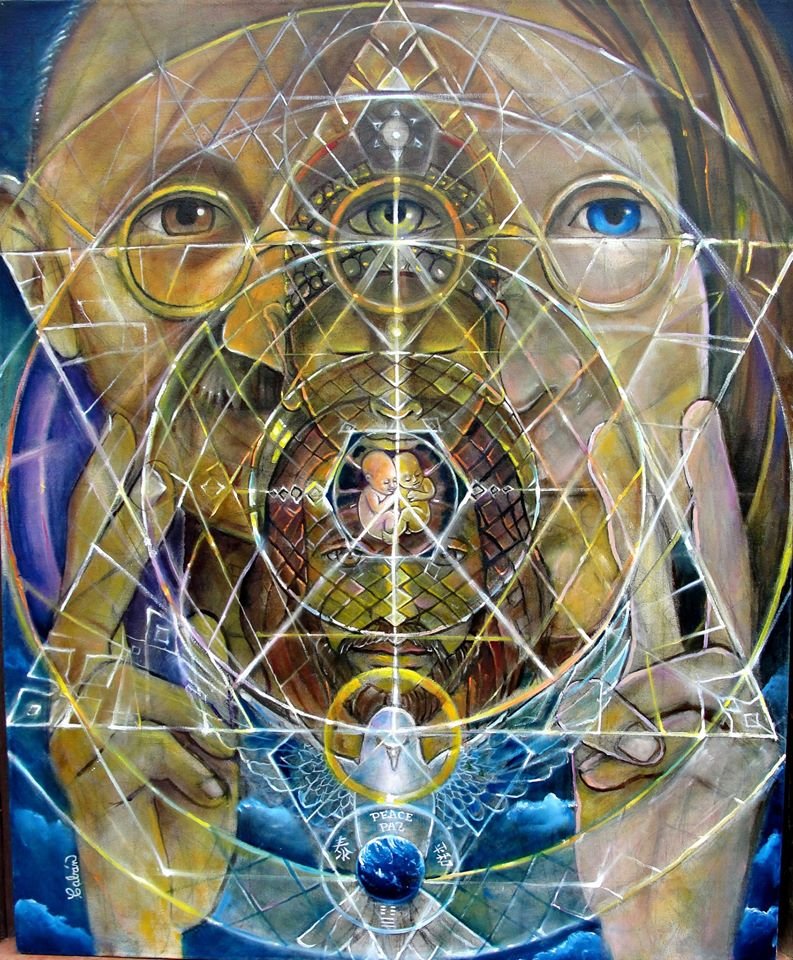 |
In past times tribal people stood in awe of their own existence. They recognised, even if it were unconsciously, the incredible journey they had made from being an unconscious animal, to the attainment of personal awareness and human society. They represented this awe-full experience in rituals, and symbolic paintings and sculptures such as the totem. They also recognised in their art the immense journey ahead, of claiming the possibilities of human life, and put this into their art. How do we deal with the powers that overwhelm us and drag us into mass murder in war and social upheaval? How do we create a personal and social world that we can be proud of? |
In writing about Symbolism In The Visual Arts, (Page 255 in Man And His Symbols, Jung)
Aniela Jaffe mentions the drawing of Klee, interestingly called The Limits of Understanding, which expresses this attempt to put into form what cannot be thought. Jung said that a true symbol appears only when there is a need to express what thought cannot think or what is only divined or felt.
The great artists of any culture give to us what we may have failed to see ourselves. They portray to us the spirit of our times, and our predicament, and perhaps even a passage through the dilemmas we face. Sometimes they manage to break through the cultural plethora and froth of everyday life and display an insight into the fundamental forces of life, renewing our own connection. To do this they face a personal death into the unconscious. They experience darkness and light that many of us may not dare to face. They live within the great forces of their dreams more intensely, more fully than those of us whose awareness is centred on the everyday surface produced by the concepts of life generally agreed upon.
When an artist manages to meet and give birth to one of the spirits of our age, whether it is a terrible demon of our times, or a healing angel, it speaks to us beyond our reasoning. It draws crowds, it holds attention. In the early part of this century the artist Kandinsky wrote that ‘The art of today embodies the spiritual matured to the point of revelation.
Something that we must recognise as an enormous shift in human awareness that has taken place in our own times, and which must influence art from here forwards, is the attainment of self-awareness we have been helped toward by the findings of modern psychotherapeutic schools. This form of self examination has enabled us to explore the wealth of pain and wonder usually forgotten in the mists of childhood. But it also lays bare the struggle, the enormity of the evolutionary movement toward consciousness, toward being human. And there is tremendous art here when it is discovered; art expressing the meeting between the social individual we try to be, and the animal we are still largely immersed in within the depths of our mind and body. In fact we are the whole spectrum of things from sub-atomic particles, through molecular survival and interactions, on into the basic living organisms and creatures up through the lizard, the mammal and the human. All these things are active in us, in harmony, in conflict, in process of becoming. Out of this weaving loom of life all art and music arise; all life experiences an expression of it.
As an example, Thomas De Quincey’s Confessions of an English Opium Eater describes his fantastic dream life over a period of years. De Quincey started to take opium as a sedative. It led to a heightened awareness of how the mind can produce powerful images and memories. He writes that ‘In the middle of 1817, this faculty became increasingly distressing to me.’ Not only did his inner visions present ‘… nightly spectacles of more than earthly splendour.’ But also ‘…. vast processions moved along continually in mournful pomp. Concurrently with this, a corresponding change took place in my dreams; a theatre seemed suddenly opened and lighted within my brain.’ Such experiences led De Quincey to feel ‘deep-seated anxiety and funereal melancholy.’ At times he might recall the ‘minutest incidents of childhood, or forgotten scenes of later years, were often revived.’ ‘I could not be said to recollect them; for, if I had been told of them waking, I should not have been able to acknowledge them as parts of my past experience.’ In his visionary state however, he says ‘I recognised them instantaneously . . . I feel assured that there is no such thing as an ultimate forgetting.’
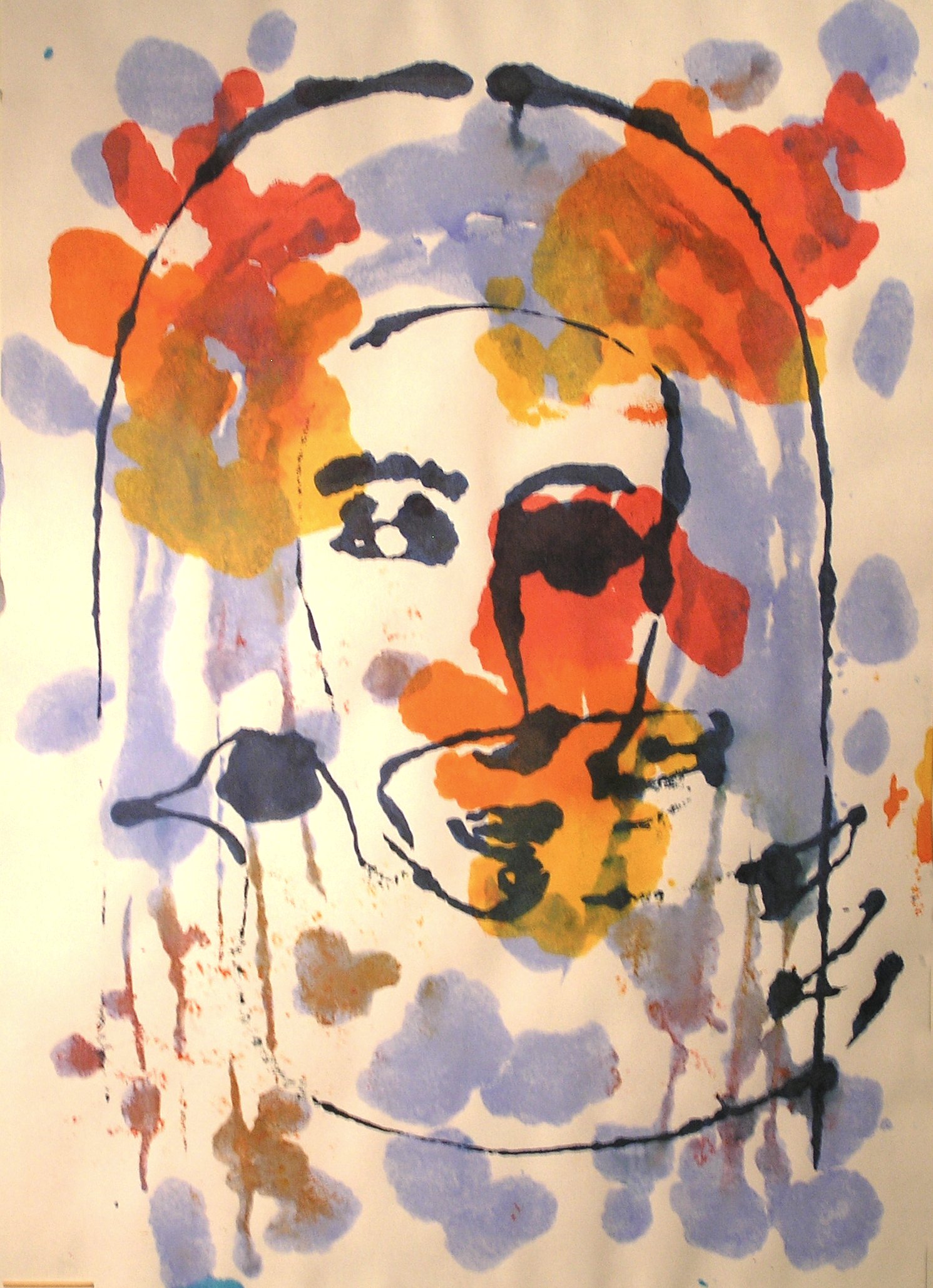 |
De Quincey’s deep seated anxiety and melancholy, in our present times, would be signs of an underlying neurosis which could have been dealt with by exploring his fantasies to their roots in his personal history – already being touched on spontaneously by him. Whether we take the example of De Quincey’s opium aided fantasies, or the visions of Christian mystics such as the temptations of St. Antony, art and religion has at least a facet of being a symbolic way of meeting a neurosis. It is only when we reach through the symbol into what it depicts about us personally, that we move from this historical symbolic form of healing and representation. |
One cannot of course limit the definition of art and dreams to that of dealing with hidden neurosis, or even of the move toward wholeness. Therefore it is interesting to remember some of the artists who directly used dreams as part of their work. William Blake for instance purposefully made use of dreams not only as sources for his art, but also for invention – his method of printing for instance. He particularly tells of the man who taught him painting in his dreams. Blake actually drew the face of this character.
In the 1950’s the painter Jasper Johns was working as a window dresser in New York. In a dream he saw himself painting an American flag. In waking he painted the flag from his vision of it in the dream. The painting became a powerful force in an American revolution in art.
Salvador Dali consistently used dreams as a basis for his paintings. He tried to preserve his dream imagery in his art, and particularly to portray the subtleties of time and space. He referred to his paintings as ‘hand painted dream photographs.’
A number of film directors also used their dreams in the art. Ingmar Bergman tried to portray episodes from his dreams as accurately as possible. He felt that dreams have the ability to help people find points of connection, to link people. Carlos Saura used fragments from his dreams to capture atmosphere and environment.
For each of us, our dreams are our own studio in which we nightly create beyond our waking talent to produce the new, the novel, the unexpected and the deeply true. We are each visionaries, artists of the night and live in another dimension than that of the body. See: archetype of the artist; compensation theory; creativity and problem solving; hallucinations and hallucinogens; hallucinations and visions.