Posts Tagged ‘self help’
Movement to Wholeness
Liberating the Body
Chapter Three
MOVEMENT TO WHOLENESS
Discovering Your Power of Growth
Although another approach to inner-directed movement will be described below, this is not a suggestion to avoid using the previous approaches. Using the water movements or yawning, even if employed dozens of times, will still bring new facets and freshness. Each approach does produce slightly different results however. This is what was meant above by the dimensions of experience. The yawning method of starting for instance, appears to lead more to release of physical tension – the water method leads more to expression of feelings. The latter aids in expressing yourself in movement and harmonising your body and feelings. It is no exaggeration to say the next method, if used a number of times, helps you to fuller self expression. It brings to the surface qualities and energy that may have been sleeping in you.
To make this clear, it is easy to see that an acorn has within itself the potential of a full grown oak tree. Even if the acorn is planted and the emerging tree is a metre high, you can still believe there is a lot more to emerge. As a human being, even though you are physically mature, there may still be a great deal more of yourself which has not yet become realised externally.
The Seed
Create your environment again, with sufficient space, clothing allowing mobility – loose and soft if possible, without tight undergarments. This time you will need music played quite softly. Again it should be music that does not grab the attention too much. Warm up with two or three of the movements already described. Give yourself up to three-quarters of an hour for the whole session.
The important thing about the ‘seed’ practice is that you are purposely not imagining a specific movement for your body to follow. You are only holding an idea, an outline, and to follow it your body and feelings must move into the unknown and play creatively with the idea of the seed to produce any result. So let your body feel its way slowly into finding its posture or movement. Don’t get frustrated if in this first practise little happens. Remember that inner-directed movement is a learnt skill, and you are still learning.
Not only is this an exercise for your feeling sense, but it is also a way the process of inner-directed movement can express. You can consider it a success if some aspect of what arises is spontaneous or unexpected. So at first it doesn’t matter if the session feels mechanical and contrived. Having those feelings mean you are sensing what is happening, and you can thereby refine your technique with their help. By letting go of the controlling urge, you can let the spontaneous and creative part of you express.
1 – Stand in the centre of your space and raise your arms above your head. Hold them so they are quite extended.
2 – With eyes closed, bring to mind the idea or image of an unplanted seed. It can be any sort of seed.
3 – Notice whether your body in its present posture feels as if it is expressing the form and condition of the seed. The aim is to consider how you and your body feel in relationship to the idea and sense you have of the seed. Many people find, for instance, that having the arms extended does not `feel’ like an unplanted seed. Don’t struggle with this. It is just an experiment, play with it, have fun.
4 – If you do not notice such feelings of difference between your extended posture and the idea of a seed, try another approach. Remember the experiment in which, after raising your arms above your head several times, you let your arms find their own way to move. Once more follow the subtle urges of your being. Play with the feelings of what it would be like to have the shape of the seed; to be waiting for the right conditions to grow and express all your hidden potential of leaves and flowers. Let your body play with these ideas or feelings, just as you let it move when you allowed your arms to find their own way upwards. Do not make this an intellectual inquiry. Use your body and feelings, even if this is a new for you. Explore in this way until you feel you have found a position that is satisfying. Take your time. Notice whether the arms and head are right. Would a seed that is not growing feel alert, sleeping, or waiting? See if you can find an inner mood which for you feels like a seed. Do not attempt to think the whole thing out or consider it scientifically. Let whatever feeling sense you have guide you.
5 – When you find a position and inner feeling that suit you, take the next step by letting yourself explore, with body movements, postures, and awareness of your feelings, what might happen when you as the seed are planted in warm moist soil and begin to grow. Continue your feeling exploration to find what will occur when you as the seed grow, put out leaves, blossoms and fulfil your cycle. Explore the whole cycle of the seed’s expression. Don’t hold a rigid idea of what the growth of the seed means. What you are looking for is that you explore your own feeling sense in regard to the seed’s growth.
6 – It might be that as the seed you feel very strongly you do not want to grow. In which case remain in the form of the seed until you feel a change and an urge to grow, or until your session time is finished.
7 – When you sense the experience has finished, rest quietly for about five minutes and end the session.
The following quote from a letter I received gives an idea of the wide range of experience which can arise from this exercise. Judith describes her use of this ‘seed’ approach to inner-directed movement as follows:
“I am a trainee yoga teacher and have been teaching for three years. I have a small class of fourteen students who are keen and attend regularly. I decided to have my students try the seed approach to see how they would react. I explained it as well as I could, and the feedback I got was as follows – A man in his thirties said, `I felt I was in a womb. It was very comfortable, cosy and dark. I wanted to stay there. I didn’t want to come away – it was so peaceful. I have never experienced anything like it before’. He was very impressed.
“A woman in her thirties felt like throwing her arms around and kicking her legs. `I felt I wanted to give birth and was about to deliver’. She didn’t fling herself about, but held back. I think it was a pity she didn’t let go. Perhaps I didn’t explain the whole procedure clearly enough for them to understand that it was entirely free movements. The majority acted out being flowers. Only one in the class thought it was a lot of `bloody rubbish’, her words. She didn’t even try. She thought she would feel stupid acting out a seed.
“I was surprised at the outcome, that so much should happen first time. I personally felt as if I became the bud of a crocus. I seemed to be slowly unfolding with difficulty. Not until I fully opened did I feel a great relief. The results of this have made me feel very positive in my outlook, and far happier.”
Experiencing your growth as the seed is enjoyable without any concern about what it might do or be beneficial for. Its possibilities are worth understanding though. Judith’s experience of feeling difficulty in opening, and great relief when opened, typifies its action.
What this means is made clear by the experience of a man, Graham, whom I worked with personally. He found that while being the seed he had no urge whatsoever to grow. He lay on the ground for the whole period and felt how wonderful it was that he didn’t have to actively express.
When we talked this over Graham told me he could easily see the connection this had with his life. He said that although he was energetic, and as a male nurse had to deal actively with people all day, he never felt he was really present as himself. As a person he hid behind his role as a nurse and seldom exposed his real feelings with other people. In fact he wondered if he had ever really expressed in activity what he felt or believed.
Graham then used the seed approach again. This time he felt the urge to grow and emerge from his non expression. He gradually opened out from a curled up position and slowly moved, with hesitations, to a kneeling position. At that point he stopped. He explained that standing up – being present with his own feelings and potential with other people – was so new to him, that the half way position was as far as he could grow at that time. Nevertheless, it gave him an exultant feeling to be at last, for what he felt as the first time in his life, daring to go into the world as a real human being. He felt sure that in following sessions of the seed approach he would progressively emerge more fully.
The seed approach deals specifically with your growth as a person. It helps you work out, through creative movement, any restriction in expressing your potential and your physical energy. People who have not lived out their own inner needs, or are unexpressive physically, will find this helpful.
The Seed Group
Part of the pleasure of inner-directed movement is sharing it with others. I still enjoy seeing how much pleasure people who have used inner-directed movement for the first time have when they see what wonderful experience they create with their movements. Because it is a pleasure, and because there is support and a more powerful atmosphere or ‘space’ is created when sharing, it is worth considering whether a friend or friends would join with you.
The seed approach can also be used with others. If so, one person is the seed, the supporting people – two to three at the most – can be earth and water. The aim is to support the growth of whoever is the seed by physical and emotional contact.
If you want to use this, whoever is the Seed starts by standing in the middle of the others, who take time to make contact with her/him. They allow time to find an attitude that enables them to get closer physically and emotionally than in usual social roles. So without forcing or acting mechanically, the members touch and draw near to the Seed. When this is established the Seed curls up on a prepared space – with blanket or cushions – on the floor. The members draw near and make contact again. Get close, cover the Seed’s body with yours, penetrate with your touch, as does earth and water.
Liberating the Body – Phase Four
The approaches to inner-directed movement described in the first three phases, although different, all revolve around the allowing of spontaneous movement. Through the use of these varied approaches you gain direct experience of your own creativity in working with your body and discovering its links with your language of posture, gesture and movement. You begin to discover the emergence also of spontaneous creative fantasy. It is creative because each of the approaches allow expression of something slightly different – and each session is itself unique in some way.
The next approach to be described is the cornerstone of inner-directed movement. It is presented as the fourth because through the other approaches you will have become more practised in the technique. This enables you now to use the great simplicity of the ‘open’ approach. With the previous approaches there was either a physical activity or theme, such as water, which gave direction for the practice. These structures are absent in the next approach.
The Open Approach
Most of the great traditional approaches, such as Shaktipat, Seitai, Qi Gong or Subud use this open approach, though they each explain it differently. Its special quality is that it reduces limitations. The other approaches, because they have more structure, direct what arises for you in some measure. It is like walking into a library and saying, ‘I am looking for some information on my health’ or ‘I am looking for something about personal growth’. That would limit your search. If you walked into the library with the attitude – ‘I am open to discovering anything relevant to my life’ – then the limitations are fewer.
The open approach is an access to your whole self. Because much of yourself still awaits discovery, is still unknown to you, it is impossible to know just where to look to find your own wholeness and health. You are unique. You have a different background in family or cultural traditions than many others. You have personal and particular life experiences and different personal qualities of mind and body which make your needs distinctive. Allowing your being freedom of expression during inner-directed movement empowers your ability to work at and express your own special needs.
Despite the fact that virtually all the healing or helping professions or techniques attempt to apply cures or methods to our being, it is obvious that we know our own needs and are largely self-righting or self-regulating. This is meant in the most down to earth and observable manner. Expressed in its simplest form, if you are hungry you have an urge to eat. Beliefs or fears may degrade that pure urge into other forms. Worries about weight gain; ideas about what is healthy food; habits perverted by trying to be ‘one of the boys – or girls’ – at business / club dinners, may achieve this degrading process.
By opening to inner-directed movement without structure you allow your being to gradually shed such degradations and return to an expression and recognition of your real needs. Because you are always feeling your own personal needs – as in the example of hunger – the open approach to inner-directed movement helps the dropping of preconceived ideas and social pressures. There may even be a process of clearing out the habits, fears and pains that have stood in the way of your own healthy self. Then comes the experience of meeting and accepting the real you. The you that is both ordinary and extraordinary.
The adventure of truly integrating the culture you have taken in, and forming it into your own personal and living self takes time. It is not going to happen in just four or five sessions of inner-directed movement. But if used for an hour once or twice a week for a year, very real changes will be seen.
Movement Toward Wholeness
Although use of the voice was mentioned, and exercises given in Phase One, it is worth remembering the healing value of this. Your voice, your body and your emotions are linked. Restraint in one restrains the others. So working with the voice can help free and mobilise the body and emotions. Tense or rigid emotions are just as difficult to live with as a tense and rigid body. Just as physical pain and restriction arises from muscular tension, emotional pain and limitation derives from emotional blocks.
If there are changes in pace during the period of practice, allow them. The range of possible movements and forms of expression are so enormous it would be boring to list them. They include all tones of feeling from angry to loving and exalted – all vocal expressions from deep crying to imitation of the sound and feeling of foreign languages – all types of movement from the most exquisite stillness to frantic tribal dancing. These are some of the spectrum of inner qualities you are healthily capable of as a whole human being. Sometimes people say ‘I have never expressed myself like this before, I wonder if I am bizarre’. The answer is that only whole human beings are capable of a wide range of expression which they can choose to end at any moment. It is the unhealthy person who is locked into compulsive and limited patterns of behaviour. Liberation of the body is a sign of health.
1 – Prepare your environment of space, clothing, mood and music.
2 – Put on some music which has energy but does not grab your attention too much. Use a couple of warm up movements to get your circulation more active and your body loosened.
3 – Stand in the middle of your space with feet about shoulder width apart. For a few moments hold the thought and feeling that for the next half hour you are giving up your own conscious efforts. You are allowing your being to express its own needs in its own way by opening to the WHOLE you.
4 – Get the ‘keyboard’ feeling in yourself. In other words give yourself permission to allow spontaneous or unexpected movements of body and mind – don’t forget to leave yourself open to vocal expression too.
5 – Allow spontaneous movements to develop. Take an open, observing state of mind.
6 – If movements are tardy in emerging, start by slowly circling the arms. Make the circles cross the front of the body. This will mean the right hand will cross in front of your pelvis as it moves left and upwards above your head.
7 – When you have the arms moving with ease, become aware of the shapes your finger tips are carving in space. Stay with this observation for a few moments, then notice whether your hands and fingers have any urge to create their own shapes in space. It may feel as if delicate magnetic pulls are directing your hands. If so, follow these delicate urges by letting your arms be moved by them. Let your hands and arms discover any movements or speed which satisfies you. Permit your whole body and voice to become involved if there is a tendency toward this.
8 – When you are ready to finish the session, stop the movements and relax on the floor or in an easy chair for a few minutes. There is often a natural sense of an end of the theme that has arisen.
Using the open approach you will experience movements, themes, emotional expression and insights particular to your personal bodily, mental and spiritual needs. The more fully you express the more you learn to command the whole of your being. Liberating the body is movement to wholeness.
*******************************
Link to Chapter four – Link to Chapter List
I Ching Example two – John
This second example involves John, whose main working tool is a computer. He needed to upgrade, and after a lot of consideration purchased an expensive model from a firm he had not dealt with before. This due to the fact he had only recently moved to a new home abroad, and had no experience of the manufacturers in that country. From the outset there were problems with the computer. It was returned to base three times. As he did not know the company John was very anxious about the outcome and wondered if the best thing was to ask for a refund. He thought perhaps he had purchased a dud machine. Here is his I Ching consultation after asking the question – ‘What is sage advice for me regarding the computer and its purchase?’
His throws defined hexagram 3 with the two moving lines – 1 and 4 – giving a transformed hexagram of 45.
Hexagram Three – Chun / Initial Difficulty
Hexagram Three
Chun (Pro: Jwên – vowel so short as to be almost non-existent ) – Initial Difficulty
Turmoil.
Order and growth can arise out of confusion.
The difficulties you face can lead to power and success. Choose your direction with careful awareness. Then persist to reach your reward, not in a new direction but in strengthening the old.
The symbol of this hexagram is a blade of grass emerging from the soil and pushing against an obstacle as it grows. Therefore, although the difficulty in regard to the question is real, the obstacle can be overcome and success attained, despite difficulty at the outcome.
Do not be overly impatient in this issue, as this may hinder rather than help the progress toward resolution. Gradually bring order out of the tangle. Aim for a solution rather than for a deepening of the difficulty.
This is akin to an illness that seizes the body. But the body is not helpless to fight back. Its inner strength emerges and regains health. Therefore trust the internal power of regaining balance and moving on toward the positive.
But it is truer to see it as something coming to birth that has initial hindrances which are only temporary. Remember that what is being dealt with is still in its early stages and vulnerable. So care for the situation until it strengthens. This may take some diplomacy or care because of heightened feelings.
The Moving Lines
1 – Although uncertainty has arisen at the very start of the endeavour, do not make rash judgements or moves. Press on to consolidate the position. Keep to ones best.
4 – What is sought will not come quickly. But it can be attained with a period of waiting. Do not, however, give up the urge to get what you want.
Hexagram Forty Five – Ts’ui/Congregating
Hexagram Forty Five
Ts’ui (Pro: Tsway) – Congregating
It is a time to bring people and resources together for a cause. The man stands before the woman honouring her.
So one may stand in a temple or church in congregation, giving charitably and honouring the collective good.
While recognising dependence upon others, be firm in your goals and aid the unity of the assembly. A time of good fortune.
There is a need to recognise and support your relationship with the groups most important to you. This may refer to the family group, society, business, or a religious or political group.
The suggestion is that willing acceptance of our role in the group is necessary. Personal sacrifi
ce in this role is called for, leading to great good fortune.
If you are the central figure in the group, recognise the need for acting as a cohesive and uniting power. If you are not in this role, give support to whoever has this power.
Taking care to provide for the unforeseen in this brings success.
John felt the first hexagram, with its mention of trouble at the outset that could be overcome with diplomacy, really spoke to him. He relaxed and worked through the difficulties with the company, realising that with modern machines there are often initial problems due to configuration. The difficulties were in fact resolved.
The main difference between this new interpretation and most others is its flowing language and translation of symbols into clear meaning. In the old style expression many symbolical phrases are used, leaving the reader uncertain. As an example of this, here is a quote from the traditional way of expressing one of the Hexagrams:-
Hexagram Forty: Hsieh / Liberation
A Thunderous Cloudburst shatters the oppressive humidity: The Superior Person knows the release in forgiveness, pardoning the faults of others and dealing gently with those who sin against him.
It pays to accept things as they are for now. If there is nothing else to be gained, a return brings good fortune. If there is something yet to be gained, act on it at once.
Hexagram Forty/Line One: There has been no mistake. You are not at fault.
Hexagram Forty/Line Two: He kills three foxes in the hunt and wins the golden arrow. Great fortune if you follow this course.
Hexagram Forty/Line Two: He kills three foxes in the hunt and wins the golden arrow. Great fortune if you follow this course.
Hexagram Forty/Line Three: The porter carries his burden in a gilded carriage well beyond his means. This attracts not only the resentment of his peers, but bandits as well. Injury and humiliation ahead.
Hexagram Forty/Line Four: Free yourself from this useless dependence. A new and trustworthy companion will appear.
Hexagram Forty/Line Five: He escapes the traps set by inferior men, then treats the conspirators as comrades. By making them friends, he rids himself of enemies.
Hexagram Forty/Line Six: He calmly lifts his bow and picks off a falcon atop a distant tower. Such prowess breaks the spirit of his challengers. Nothing but good fortune from this point.
~~~~~~~~~~~~~~~~~~~~~~~~~~~~~~~~~~~~~~~~~~~~~~~~~
Now here is an example of the same Hexagram in flowing language with symbols interpreted:-
Hexagram Forty – Hsieh/Releasing
Hexagram Forty
Hsieh (Pro: Shee-ay; the second vowel rhymes with ‘Hay’) – Releasing
Tension has developed. Now is the time to discharge it. Recognise its source, and as with thunder clouds and rain, stay under cover to enjoy its benefits.
A period of difficulty and obstacles is in process of going. But do not enter into relationships or schemes requiring new adjustments or changes. Return to what is established and working well. As if one were released from a prison cell, return to the strength of the ordinary life. But it is not a time for inactivity. Strength is needed.
If advance is imperative hasten to the goal. When you achieve the release there is much to be gained.
If the situation is extremely fraught, and any rescue from it seems unlikely, stay on your guard, but a last minute reprieve is on the way. Deliverance from the tension that has existed is imminent.
In the release, as with falling rain, wash the slate clean. Let go of the attitudes that built up. This is a low point you must take time to rebuild from. Forgiveness may be a part of this. Many mistakes and regretful things may be done in a time of crisis. Recognise this and pass over.
If this can be handled successfully, there is great fruitfulness in the situation that follows. It can be a time of regeneration and a period of much growth.
Key words: Obstacles are melting. An enlivening energy arises and brings release. Let go of the darkness
active in the past.
1 – The crisis is past. Do not take to heart what has happened. Such feelings held within only produce withdrawal, when what is needed now is to actively cultivate the fertile situation arising.
2 – There has been a skilful dealing with several things or people being predatory or cunning in regard to the issue. This removes much of the danger that threatened, and brings recognition. Take a balanced responsibility now.
3 – Acting as if you were a lord or lady brings predatory interest which could prove unfortunate. Better not to continue in this.
4 – Be ready to leave a circle of people circumstances pushed you into. Now the situation has changed, move on to your natural circle, or else lose trust.
5 – Release from what is inferior in your life is not assured. Only by earnestly leaving behind what constrained you from past difficulties, can you deliver yourself. This will gain the confidence of the opposition, but may still be a lonely path.
6 – Great skill brings triumph in the situation, perhaps against an powerful opponent. Being in command means riding the ungovernable forces of life like a good horseman. Predators are dispatched. All is favourable.
Dream Books – Bibliography
This feature is an excerpt from The New Dream Dictionary by Tony Crisp, published by Little Brown, UK. It is therefore copyright material.
Aaronson and Osmond. “Psychedelics”. Doubleday, 1970.
Adler, Gerhard. Studies in Analytical Psychology. International Universities Press 1967. Adler’s view of dreams. To see book click here
Ackroyd, Eric. A Dictionary Of Dream Symbols. Blandford, 1993. To see book click here
Alex, William. Dreams, the Unconscious and Analytical Therapy. C. D. Jung Institute of San Francisco, 1992. To see book click here
Anch A. and others. Sleep: A Scientific Perspective. Prentice Hall 1988. To see this book click here.
Anon. The Universal Interpreter of Dreams and Visions. Baltimore, USA, 1795.
Antrobus, John. The Mind In Sleep. Hillsdale. 1978.
Arthos, John. Shakespeare’s Use of Dream And Vision. Bowes and Bowes, London, 1977.
Barclay, David and Therese Marie. UFO’s The Final Answer? Blandford, 1993. Has a great deal about dreams, the mind, and environmental influence on the mind and hallucinations. To ssee this book click here.
Becker, Raymond De. The Understanding of Dreams – And Their Influence On The History Of Man. Hawthorn 1968.
Bogart, Greg. Dreamwork and Self Healing – Unfolding the Symbols of the Unconscious. Karnac Books Ltd. This is a very readable book giving a great many insights into the dreaming process, how dreams can heal, and how to work and understand one’s dreams. It does this by giving masses of people’s dreams with some commentary and insights from the dreamer, and also from Bogart’s long experience working with people on their dreams. There are chapters giving a client’s dreams and seeing how they worked through to a healing experience. But there are other chapters such as a wonderful list of archetypes and their meaning. The work owes a lot to Jung’s influence.
As some other reviewers say: “This is a book on dreams like no other”. “This book will be a beacon for anyone seeking the guidance that comes from the mystery within.” “That Jungian dream work can advance psychological healing is convincingly illustrated in this book.”
Bogart, Greg. Dreamwork in Holistic Psychotherapy of Depression – An Underground Stream that Guides and Heals. Published by Karnac Books Ltd This book describes how dreamwork can help alleviate depression, in both long-term and time-limited psychotherapy, and in self-treatment. The author shows how dreams shed light on issues contributing to depression—including drug and alcohol abuse, divorce, death and bereavement, conflicts about sex, health and body image, parenting, workplace stress and burnout, and ancestral, intergenerational trauma.
Bonime, Walter. The Clinical Use Of Dreams. Da Capo Press. 1983. To see this book click here.
Bro, Harmon. Edgar Cayce On Dreams. Warner Books 1970.
Bro, Harmon. Edgar Cayce – Seer Out Of Season. Aquarian 1990. Biography of Edgar Cayce. To see book
Bro, Harmon. Dreams In The Life of Prayer. Harper And Row, New York 1970. To See this book .
Brook, Stephen. The Oxford Book of Dreams. Oxford University Press 1983. A dream anthology, from pre-Christian to present times. To see this book click here.
Brooks, Janice (with Jay Vogelsong and J. Allan Hobon). The Conscious Exploration of Dreaming: Discovering How We Create and Control Our Dreams. Published by Unknown, ISBN: 1585005398.
Bunker, Dusty. Dream Cycles. Para Research, 1981. To See this book click here.
Burroughs, William S. My Education: A Book of Dreams. First published Viking Press, U.S.A. 1995. Also Picador, London, 1996. To See this book click here.
Caldwell, W. V. LSD Psychotherapy. Grove Press, 1969. Caldwell travelled widely in the USA and Europe visiting and studying results in the practices or clinics of psychiatrists using LSD as a psychotherapeutic tool. In the book he gives an excellent synthesis of the mass of information and experience gathered. In doing so he maps the heights, depths and fantasies of the human psyche, in a way that is beyond any particular school of thought. Such a map is of great use to anyone seriously investigating dreams.
Campbell, Joseph. Myths To Live By. Paladin 1988. Wonderful reading, although not directly about dreams. Campbell shows how human beings create certain myths, no matter what their culture or historic period. This myth creating faculty is obviously linked with dreaming, and portrays life and death as the unconscious sees them. To see book click here.
Campbell, Joseph. The Portable Jung. The Viking Press, 1974. To See this book click heree.
Cannegeiter, Dr. C. A. Around The Dreamworld. Vantage Press, USA, 1985. To See this book click here.
Capacchione, Lucia. The Creative Journal. Newcastle Pub. Co. 1993. To See this book click here.
Caprio and Hedberg. At a Dream Workshop. Paulist Press, 1988. See this book click here.
Carskadon, Mary A. Encyclopedia of Sleep and Dreaming. Macmillan, 1992. To See this book click here.
Cartwright, Rosalind. A Primer On Sleep And Dreaming. Addison Wesley. 1978.To See this book click here
Cayce, Edgar – For all books about Edgar’s work see ARE Press
Cartwright, Rosalind. Crisis Dreaming. Aquarian Press. 1993.
Cerminara, Gina. Many Mansions: The Edgar Cayce Story on Reincarnation. An affirmation of the age-old belief in reincarnation, a profile of the legendary psychic reveals Cayce’s remarkable healing abilities and prophecies and examines the legacy of his work in terms of such issues as past life regression, hypnosis, parapsychology, karma, and more.
Chetwynd, Tom. Dictionary for Dreamers. Paladin 1974. Good dictionary.
Circlot, J.E. A Dictionary of Symbols. Routledge and Kegan Paul, 1962.
Clift, J.D. and W. Symbols Of Transformation.
Cooper, J.C. The Illustrated Encyclopaedia of Traditional Symbols. Thames and Hudson, 1993. To See this book click here.
Corriere, Karle. Dreaming and Waking. Peace Press 1980. Exploring the idea of whether, if we meet the feeling content of dreams, they gradually cease to be symbolic. A landmark in dream theory.
Cotterell, Arthur. A Dictionary of World Mythology. OUP, 1986. To see book click here.
Coxhead and Hiller. Dreams – Visions of the Night. Thames And Hudson 1981. To See this book click here.
Crisp, Tony. Do You Dream. Spearman, 1971.
Crisp, Tony. The Instant Dream Book. C. W. Daniel Co. Ltd. 1984. Explains techniques which can be used to transform the fears and emotions of dreams without analysing them. It also considers the different areas of dream activity, such as body dreams, problem solving, extra sensory, sexual dreams, etc. To see book click here.
Crisp, Tony. Mind and Movement. C.W. Daniel Co. Ltd. 1987. Considers the problem solving or self-regulating psychological and physiological process underlying dreaming. It also considers how the process which produces dreams underlies many other puzzling phenomena such as ESP, abreaction, flashbacks to past events, etc.
Crisp, Tony. Dream Dictionary. Macdonald, Optima. 1990. Revised version as . Little Brown, 1994. One of the most comprehensive and researched of dream dictionaries. To see this book click here.
Crisp, Tony. Liberating The Body. Aquarian. 1992. Using the dream process to use resources of the unconscious for health and intuition. An update of Mind and Movement.
Crisp, Tony. Dreams and Dreaming. London House. 1999. To see book Click here.
Crisp – For all 40 odd of Tony Crisp’s books see My Books
Cunningham, Scott. Sacred Sleep: Dreams and the Divine. Crossing Press, 1992.
Dee, Nerys. Your Dreams and What They Mean. Aquarian 1984. To See this book click here.
David-Neel. The Secret Oral Teachings of The Tibetan Buddhist Sects. Published by Martino Fine Books (February 14, 2017. “This is the most direct, no-nonsense, and down-to-earth explanation of Mahayana Buddhism that has been written. Specifically, it is a wonderfully lucid account of the Middle Way method of enlightenment worked out by the great Indian sage Nagarjuna.” —Alan Watts,
Delaney, Gayle. New Directions In Dream Interpretation. State University Press. 1983. To See this book click here.
Delaney, Gayle. Living Your Dreams. Harper and Row, 1988. To see book click here.
Delaney, Gayle. Breakthrough Dreaming. Bantam. 1991. To See this book click here.
Delaney, Gayle. Sexual Dreams. Piatkus 1994. To See this book click here.
Diamond, Edwin. The Science of Dreams. Eyre and Spottiswoode 1962. A fascinating collection of researched information on dreams.
Edinger, Edward. Ego and Archetype. Shambhala, 1991. To See this book click here.
Eliade, Mircea. Yoga Immortality and Freedom. Princeton University Press, 1970.
Empson, Jacob. Sleeping and Dreaming. Faber and Faber, 1989.
English, Jane. Different Doorway: Adventures of a Caesarean Birth. Description of dreams and work leading up to Jane’s memory of her caesarean birth and its influence on her life. To see book .
Evans, Christopher. Landscapes of the Night. Victor Gollancz 1983. The computer theory of dreaming, with excellent survey of other theories. To See this book click here.
Fagan and Shepherd. Gestalt Therapy Now. Harper Colophon 1970. Contains an explanation of Fritz Perls approach to achieving insight into ones dreams.
Faraday, Ann. Dream Power. Hodder and Stoughton, 1972. Good basic textbook, written for lay people, but intelligently. To see the book click here.
Faraday, Ann. The Dream Game. Harper and Row, 1974.
Fay, Maria. The Dream Guide. Centre For The Healing Arts. 1978.
Flanagan, Owen J. Dreaming Souls: Sleep, Dreams, and the Evolution of Mind. Publisehd by Oxford Univ Pr (Trade); ISBN: 0195126874.
Fordham, Freida. Introduction To Jung’s Psychology. Penguin Books, 1972.
von Franz, Marie-Louise. On Death and Dreams. To See this book click here.
von Franz, Marie-Louise. The Way Of The Dream. Windrose 1988. Recorded conversations with von Franz taken by Frazer Boa – a transcript of the film The Way Of The Dream.
Freud, Sigmund. The Interpretation of Dreams. Allen and Unwin 1955. The first of all modern dream books.
Fromm, Erich. The Forgotten Language. George Allen and Unwin 1952. This is subtitled – An introduction to dreams, fairy tales and myths. To see the book click here.
Fromm, Erich, The Art of Loving’
Fromm, Erich, The Art of Being
Fromm, Erich, The Fear of Freedom
Garfield, Patricia. Creative Dreaming. Ballantine 1974 – 81 edition. Clear description of taking dreams to satisfaction. To see the book click here.
Garfield, Patricia. Pathway to Ecstacy. Holt, Rhinehart and Winston, 1979.
Garfield, Patricia. Your Child’s Dreams. Ballantine, 1984.
Gaskell. G.A. Dictionary of All Scriptures and Myths. Crown, 1960. To See this book click here.
Gendlin, Eugene. Let Your Body Interpret Your Dreams. Chiron, 1986. To See this book click here.
Gnuse, Robert Karl. The Dream Theophany of Samuel: Its Structure in Relation to Ancient Near Eastern Dreams and Its Theological Significance. University Press of America, 1984. To See this book click here.
Green, Celia. Lucid Dreams. IPR 1968. The foundation research on Lucidity in dreams. To See this book click here.
Green, Celia. (With Charles McCreery)Lucid Dreaming : The Paradox of Consciousness During Sleep. Publisehd by Routledge; ISBN: 0415112397.
Grof, Stanislav. Realms of the Human Unconscious. All Grof’s books are incredible because he was involved in exploring the unconscious and the different dimensions of human experience for years. An excellent book.
Hadfield, J. A. Dreams and Nightmares. Penguin 1954. Hadfield proposes a biological theory of dreams, which stands between Freud, Jung, and more modern theories. It is also an interesting book.
Hall, Calvin S. The Meaning of Dreams. Harper and Row 1953. Hall worked a lot with series of dreams, and with content analysis. This is the result of his research, written in easily readable form.
Hall, Calvin S. Jungian Dream Interpretation: A Handbook of Theory and Practice. To See this book click here.
Hamilton, Edith. Mythology. Re-issue. New American Library, 1991. To See this book click here.
Hannah, Barbara. Encounters With The Soul: Active Imagination. SIGO, 1981. To See this book click here.
Harary, Keith. Lucid Dreams In 30 Days. Aquarian. 1990. To See this book click here.
Harding, M. Ester. The I and the Not I. Princeton UP, 1965.
Harris, Thomas. I’m OK – You’re OK. Pan books, 1975.
Hartmann, Ernest. The Nightmare. Basic Books. 1984.
Hearne, Dr. Keith. Visions Of The Future. Aquarian, 1989. An investigation of premonitions.
Heyer, G. R. Organism of The Mind. Kegan Paul, 1933. Although Heyer is not writing directly about dreams, the book is an interesting commentary on what was being discovered by Analytical Psychology in the early part of the 20th century.
Hillman, James. Re-Visioning Psychology. Harper, 1975.
Hobson, J. Allan. The Dreaming Brain. Penguin, 1990. Latest information on research into dreams and the brain. A good section on understanding dreams – not as things with hidden meanings, but as straightforward expressions of our own unique self. To See this book click here.
Hobson, J. Allan. Dreaming As Delirium : How the Brain Goes Out of Its Mind. Publishsed by MIT Press; ISBN: 0262581795.
Hodgson and Miller. Self Watching. Published by Century Publishing Co. 1982.
Holbech, Soozi. The Power Of Your Dreams. Piatkus. 1991.
Hubbard, Ron. Dianetics. Bridge 1985. To See this book click here.
Hunt, Harry. The Multiplicity of Dreams. Yale University Press. 1991. To See this book click here.
Jacobi, Jolande. The Way Of Individuation. Hodder and Stoughton 1967. Explanation of Jung’s concept of the stages in becoming a person.
Jobes, Gertrude. Dictionary of Mythology Folklore and Symbols, Parts 1 and 2. Scarecrow, 1962. To See this book click here.
Johnson, Robert A. Inner Work: Using Dreams and Active Imagination for Personal Growth. Harper and Row, 1986. To See this book click here.
Jouvet, Michael. The Paradox of Sleep: The Story of Dreaming. Publisshed by MIT Press; ISBN: 0262100800.
Jung, Carl. Dreams. Ark Paperbacks 1986. Very technical consideration of the subject. To See this book click here.
Jung, Carl. Mandala Symbolism. Princeton University Press 1972.
Jung, Carl. Man and His Symbols. Aldus 1964. The breadth and depth of dreams. It is in paperback, excellent reading. To see the book click here.
Jung, Carl. Memories Dreams Reflections. Collins and Routledge and Kegan Paul, 1963. To see the book click here.
Jung, Carl. Modern Man in Search of a Soul. Kegan Paul 1933. To See this book click here.
Jung, Carl. On The Nature Of Dreams. Princeton University Press, 1974.
Jung, Carl. The Portable Jung. Edited with an interpretive introduction, chronolgy, notes and bibliography by Joseph Campbell. The Viking Press, 1971. To See this book click here.
Jung, Carl. Secret of the Golden Flower. Kegan Paul 1942. Jung’s commentary on this ancient Chinese book on meditation, is wonderful reading for those seriously interested in their own inner life. To See this book click here.
Karagulla, Dr. Shafica, an international neurologist, has explored the professional use of intuition in her book Breakthrough to Creativity
Kelsey, Morton. Dreams – A Way to Listen To God. Paulist, P, US, 1978. To See this book click here.
Kent, Caron. The Enigma Of The Body. An unpublished mss.
Kent, Caron. The Puzzled Body. Vision Press, 1969. A voyage of discovery of how the mond and body interact leading tyo depression and human problems. To See this book click here.
Kleitman, Nathaniel, Sleep And Wakefulness. Chicago, London: University of Chicago Press, revised edition 1963. To See this book click here.
Kluger, Yechezkel. Dreams and Other Manifestations of the Unconscious.
Krippner, Stanley. Dreamtime and Dreamwork. Jeremy Tarcher. 1990. To See this book click here.
Krippner, Stanley. Dreamworking. Bearly. 1988. To See this book click here.
LaBerge, Stephen. Lucid Dreaming. Ballantine Books, 1985. To see the book click here.
LaBerge, Stephen and Rheingold, Howard. Exploring The World of Lucid Dreaming. Ballantine Books, 1990.
Langs, Robert. Decoding Your Dreams. Unwin Hyman, 1989. A good basic handbook on learning to discover the wealth of information and wisdom in ones own dreams. To See this book click here.
Layard, John. The Lady Of The Hare. Faber and Faber 1944.
Leach, Maria. Standard Dictionary of Folklore Mythology and Legend. As author, 1949.
Lee, S.G.M. and Mayes, A.R. – Editors. Dreams and Dreaming. Penguin 1973.
Lincoln, J. S. The Dream in Primitive Cultures. The Cresset Press, 1935.
Ling and Buckman. “Lysergic Acid and Ritalin in The Cure of Neurosis”. Published by Lambarde Press, 1964.
Linn, Denise. A Pocketful of Dreams. Piatkus. 1993.
MacKenzie, Norman. Dreams And Dreaming. Bloomsbury Books 1989.
Macmillan, Willian John. The Reluctant Healer, Gollancz 1952. An extraordinary autobiography of an equally extraordinary healer.
Mahoney, Maria. The Meaning in Dreams And Dreaming. Citadel Press, US, 1987.
Martin, P. W. Experiment in Depth. Routledge and Kegan Paul 1964. Martin was one of the early pioneers, along with Rev. Leslie Weatherhead, who started helping people to adequately explore their own dreams – i.e. without the psychiatrist.
Mathews, Boris. The Herder Symbol Dictionary. Chiron Publications, US, 1993. .
Mattoon, Mary Ann. Understanding Dreams.
Maybruck, Patricia. Romantic Dreams. Pocket Books. 1991.
Meddis, Dr. Ray. The Sleep Instinct. Routledge and kegan Paul, 1977.
Mindell, Arnold. Dreambody: The Body’s Role in Revealing The Self. Sigo Press, 1982. To See this book click here.
Mindell, Arnold. Working With The Dreaming Body, 1984.
Moffitt, Alan. The Function of Dreaming. State University Press. 1993.
Monroe, Robert. . Journeys Out Of The Body Anchor Press, 1975. Monroe describes his experiences of leaving his physical body in sleep.
Moody, Raymond A. . Life After Life. Mockingbird Books, 1975. The wonderful description of research into near death expereinces.
Moorcroft, William. . Sleep, Dreaming and Sleep Disorders, University Press America. 1994. To See this book .
Moon, Sheila. Dreams of A Woman. Sigo P, US, 1991.
Morse, Dr Melvin. Closer to the Light. Ivy Books, 1991. An investigation into Near Death Experiences.
Murray, Alexander. Who’s Who in Mythology. Studio, 1992.
Natterson, Joseph. The Dream In Clinical Practice. Jason Aronson. 1994.
Neihardt, John G. Black Elk Speaks. University of Nebraska press, 1979. The story of an American Indian Holy Man. To See this book .
Newland, Constance. Myself and I. Frederick Muller Ltd, 1963. Suffering frigidity, Constance Newland successfully underwent a number of psycho-analytical sessions using the drug LSD. The connection with dreaming is the enormously rich and potent fantasies she met and dealt with during her analysis. The book is therefore a powerful description of the world one meets in dreams, and the personal fears and forces which underlie the strange imagery of the unconscious. She also spontaneously understood some of her dreams.
Noone, Robert – and Holman, D. In Search of The Dream People. William Morow, 1972.
O’Conner, Peter. Dreams And The Search For Meaning.
Oldis, Daniel. Lucid Dream Manifesto. iUniverse Inc. 2006.
Oswald, Ian. Sleep. Penguin 1966. The great landmark in researched basis of sleep and dreams.
Ousby, William J. When I was 15 he taught me a method that changed my life. See his book – Theory and Practice of Hypnotism.
Parker, Julia. The Secret World of Your Dreams. Piatkus. 1990.
Partridge, Eric. Origins. Routledge and Kegan Paul, 1966.
Patanjali, Bhagwan Shri. Aphorisms of Yoga. With commentary by Shree Purohit Swami and introduction by W. B. Yeats. Published by Faber and Faber Ltd., 1938. There are many modern translations and commentaries still in print. To See this book click here.
Perls, Fritz. The Gestalt Approach. Science and Behaviour. 1989. To See this book click here.
Priestley, J. B. Man And Time. Aldus Books London, 1964.
Rainer, Tristine. The New Diary. Angus and Robertson, 1980.
Rawson, Wyatt. The Way Within. Vincent Stuart 1965. Interesting results of a dream group working together over some years. Arising from the work of P.W. Martin.
Reed, Henry. Getting Help From Your Dreams. Inner Vision.
Reich, Wilhelm. The Function of the Orgasm. The Noonday Press, 1961. A landmark in the perception of psychological stress as it works in the body and mind. .
Rennick, Teresa. Inner Journeys. Turnstone Press, 1984. Handbook on the use of visualisation and fantasy in problem solving and personal growth. It is useful to work with dream images in this way, especially in taking the dream forward toward satisfaction.
Rossi, Ernest. Dreams And The Growth Of The Personality. Pergamon Press, 1972.
Russo, Richard. Dreams Are Wiser Than Men. North American Books 1987. To See this book click here.
Rycroft, Charles. The Innocence of Dreams. Hograth Press. 1991. To See this book click here.
Rycroft, Charles. Anxiety and Neurosis. Penguin Books. 1968. To See this book click here.
Sanford, John A. Dreams And Healing. Paulist P., US, 1978.
Sanford, John A. Dreams – God’s Forgotten Language, Lippencott, 1968. To See this book click here.
Seafield, Frank – (Alexander Grant) The Literature and Curiosities of Dreams. 1865.
Sechrist, Elsie. Dreams – Your Magic Mirror. Cowles 1968. Expressive of the Edgar Cayce view of dreams. To see the book click here.
Shohet, Robin. Dream Sharing. Thorson, 1985. Working as a dream group.
Sparrow, Gregory Scott. Lucid Dreaming – Dawning of The Clear Light. A.R.E. Press, 1976.
Stafford and Golightly. “LSD – The Problem Solving Drug.” Published by Award and Tandem Books.
Stevens, William Oliver. The Mystery of Dreams. George Allen and Unwin 1950. Examples of different types of dreams.
Sugrue, Thomas. There Is A River. Dell. The extraordinary life of Edgar Cayce. If you read no other book about the possibilities of human life, read this. To See this book click here.
Talbot, Michael. The Holographic Universe. Grafton Press, 1991. Not directly about dreams, but fascinating reading for those trying to understand the dimension out of which dreams occur, and occasionally reach beyond the normal. To See this book click here.
Tart, Charles. Altered States of Consciousness. Doubleday Anchor 1969. Has a whole section on dreaming and self induced dreams.
Taylor, Jeremy. Dreamwork. Paulist Press 1983.
Ullman, Montague. Working With Dreams. Delacourte, 1979.
Ullman and Krippner, Dream Telepathy. Turnstone 1973. Researched results of telepathy during dreaming.
Ullman And Limmer. The Variety Of Dream Experiences. Delacorte, 1979.
Ullman and Zimmerman. Working With Dreams. Crucible, 1989.
Van de Castle, Robert L. Our Dreaming Mind. Aquarian. London 1994. Too see the book .
deVries, Ad. Dictionary of Symbols and Imagery. North Holland Pub. Co., 1974. To See this book click here.
Walker, Barbara G. The Woman’s Encyclopedia of Myths and Secrets. Harper and Row, 1983. To See this book click here.
Weaver, Rix. The Old Wise Woman. Vincent Stuart Ltd. 1964. To See this book click here.
Weatherhead, Leslie. Psychology In Service Of The Soul. Epworth Press (Sharp). 1929.
Webb, W. B. Sleep, The Gentle Tyrant, Prentice Hall, 1975.
West, Katherine L. Crystallising Children’s Dreams.
Whitmont and Perera. Dreams: A Portal to the Source. Routledge, 1991. To See this book click here.
Williams, Strephon K. Jungian-Senoi Dreamwork Manual. Aquarian Press, 1991. See: Dreamwork 2000
Wiseman, Ann Sayre. Nightmare Help.
Zeller, Max. The Dream, The Vision Of The Night. Sigo, 1990. To See this book click here.
Zimbardo, Philip. “Psychology and Life.” Published by Scott, Foresman and Company, U.S.A. Harper Collins, 1992. Excellent summary of psychology today. To See this book click here.
Zweig, Stefan. Mental Healers. (Contains a chapter on Anton Mesmer.) Cassell, 1933.
For any of these books that are out-of-print, try Used Booksearch. They trade in UK and in USA.
The Fundamental Process
During my 20s I experienced a lot of depression and emotional pain. At times I felt suicidal, but having children and believing that life had some purpose, I never did take the step of attempting to kill myself.
What I did do was to see if there were ways in which I could help myself or heal my condition. I read every possible book I could, not just the orthodox ones but also alternatives and crazy books. Fortunately I have one of those minds, or perhaps it’s my attitude, that doesn’t take what people say for granted. I don’t have a great respect for authority, so although I listen I do not necessarily think they know what they are talking about.
Also I seem to be able to just pull out of the immense amount of stuff that I read, the things that are relevant. Or maybe it is the skill of putting various bits of information together and seeing what they mean. But I didn’t stop at reading. I tried many approaches as well – meditation; relaxation; hours of prayer; diet; exercise; yoga; dream work and psychotherapy.

Tony reading every thing he could find about Life
Realisations
Gradually I began to see that throughout the ages, in the different religions and traditional practices of East and West, there was a certain similarity. This was not apparent unless you could see right through to what the fundamental essence of the practices were. For instance one of the books I read was about Anton Mesmer, the father in the West of what has become hypnotism. What Mesmer stumbled upon was that, while experimenting with magnets on patients who had some physical or psychological problem, they began to tremble or experience spontaneous movements and often relived the source of their trauma and arrived at a cure. (The book was Mental Healers).
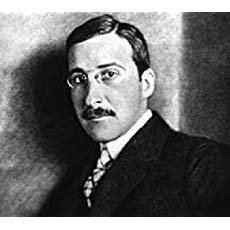
Stefan Zweig
When I put this together with the description of the Christian Pentecost or the practice of Seitai in Japan, I saw that fundamentally they were the same. With Mesmer he thought at first it was the magnets producing the release, but later discarded the idea and thought that perhaps it was his own personal magnetism. But when I compare that with what happened at Pentecost, and other similar practices East and West, I saw that fundamentally it was about the person relaxing and allowing what ever was spontaneous to arise.
In fact Carl Jung said outright, “Do nothing but let things happen.”
So the Christian disciples, in their words, surrendered to God. Mesmer’s patients surrendered because they trusted him. In Indonesia the practice of Subud had the same principles. The people came together in a group, surrendered their conscious will, and allowed spontaneous movements, sounds and fantasies to arise. In all of these practices people were gradually transformed and healed.
The Secret
I felt there was a great secret here and tried to see if I could access it myself. But I gradually found a way through dreams, and also using T. S. Elliot’s advice to, “… be still and wait without hope For hope would be hope for the wrong thing; wait without love For love would be love of the wrong thing;”
I was never able to be have that wonderful influx of something other than my conscious self taking over and producing healing experiences. But one day it happened. I was with friends with whom I felt completely relaxed, my body started shaking and I lay down and allowed it to happen. In doing so I re-experienced a tonsil operation I had at six years old that had produced a very powerful neck tension and also some psychological fears. After that experience, the neck tension that had troubled me for ages disappeared, along with some emotional difficulties also. From then on I could simply surrender and the process would continue to work. The process as it unfolded led me through some of the most amazing and wonderful experiences I have ever met. Also I was healed of long standing depression and sexual problems. See People Experiences Using It
Over the years I have gradually put together some ideas that I believe explain the fundamentals of how this amazing thing can happen. My search for meaning arose because over a period of time enormous transformation occurred in me through allowing the spontaneous to break through into my waking life. And recently I tried to arrive at a simpler and more compact expression of what I have learned about what lies behind these experiences, and wrote the following.
Fundamental to what I experienced and what was behind Pentecost and the other approaches mentioned, is, I believe, the process of self-regulation. Self-regulation is another term for what in physiology is called homeostasis. This is a name for the processes in our body and mind that all the time keep a balance amid the immense changes we meet physically and psychologically – changes such as temperature, stillness or rapid movement, stress or ease, growth or ageing.
Physical examples of self-regulation (SR) are of vomiting, sneezing or trembling. Vomiting occurs when we have taken something poisonous or irritating into our body. Sneezing when our body is trying to get rid of an irritant or infection. Trembling can occur when we are cold, and is an attempt to bring our temperature up. See Psychological Vomiting
Psychological examples of SR are crying after a shock, reliving a past traumatic event, or a dream in which past fears or traumas are met, as when we experience a nightmare. But it goes on after the difficulties and traumas are healed and begins the process of leading you to a life without emotional pain, mental illness and changes your life to something better.
Overall the process of SR is an attempt to bring us back to balance after our environment, or events, have in some way unbalanced us or interfered with our healthy functioning physically or psychologically. It also underlies the process of growth that takes us from conception through to adulthood and beyond.
Dr. Peter Knapp, Professor of psychiatry at Boston University School of Medicine was asked the question as to why some people come through a crisis such as bereavement or ill health better than others. His reply was, ‘I believe that the ones who stay healthy actively grieve. They allow themselves to feel and express their emotions.’ If you lock feelings away, it seems your body mourns for you by becoming sick. Very often we unconsciously work against these processes in us, whether they manifest physically or psychologically. We are thereby attempting to block the self-regulatory activity that is trying to get rid of dangerous things we have taken into ourselves and to move on to growth and creativity.
The reasons we block the action is the same reason some people repress vomiting or a sneeze. They don’t like the discomfort or even pain. It is also the same as when we pull our hand back from something hot. In other words there is an inbuilt urge to draw away from pain, whether physical or emotional. Discharging old pains, grief or trauma is uncomfortable as it emerges, but an enormous relief and healing when allowed. So one of the things we need to learn in order for the action of SR to take place is to allow the uncomfortable. If we do it is not painful at all as it emerges. All the pain is involved in repressing the poisonous or traumatic emotions and physical tensions.
The Secret of Dreams
Dreams are one of the major ways our inner process tries to do this old housework of cleaning up our inner problems or conflicts. But because we resist it the process cannot complete itself even though we are asleep. Think of nightmares for instance. They are the major way the dream tries to present us with things that have really disturbed us, and most people wake trying to distance themselves from such feelings as fast as they can.
SR which as a practice I call LifeStream is not simply about the action behind healing hurts. It is also part of the process of our physical and psychological growth, or the emergence of our potential. Our creative potential cannot unfold while there are still locked in childhood pains or conflicts, or adult traumas that are blocking the process. In fact this natural process lies behind our growth even from the beginning of conception. It has opened us up from that tiny seed, directing and organising our growth. It is a profound influence in our life, and continues to attempt further unfoldment.
But there is a way we can cooperate with it. A way of speeding up our healing and growth. Its first step lies in recognising how the processes of our growth and healing declare themselves – how LifeStream emerges into conscious life and how we block it.
When we consider that the self-regulatory process in regard to perspiring, breathing or vomiting, they are all spontaneous movements or functions from within, one can see that personally we are all the time immersed in processes which we have not willed into action. Learning to work with LifeStream is a way of relating constructively to these spontaneous activities. These self-regulatory activities and your relationship with them are seen very clearly in the dream process.
If you have observed a cat, a dog, or a human being while they sleep, their limbs can often be seen to twitch or move. Perhaps you can see their eyes moving and they may even make sounds. If you could see the images of the dream they are experiencing, then you would see the movements and speech as expressions of the dream. All this happens when their conscious self is relaxed and surrendered in sleep. Perhaps the dog or person are completely unaware of the powerful sounds or movements being made, so that if asked about them on waking, they would have no memory. Some people move to the extent of sleepwalking without later memory. The movements, the strong feelings, the speech, are all done without conscious volition. They are emerging from a level of oneself that we call the unconscious or the dream process. The important thing to recognise here is that you have two levels of will – your conscious will, and what I have names the ‘Life Will’ that moves and acts in dreams. It is this unconscious or Life Will that LifeStream is govern by. See Life Will and Conscious Will
The Way In
From this it can be seen that when LifeStream is working it produces – if not interfered with by conscious volition, fears or decisions – spontaneous movements, emotions, fantasy (dreams), speech and drama. In its action it can be seen to produce a totally real full surround virtual reality that we call a dream. This includes all of the things mentioned above, full emotion, sexual experience, sounds such as other people’s voice, physical movement, and realistic surroundings. Not only is that active in sleep and dreams, but it can occur while awake, and people call it a vision or an hallucination. It is the same process though. Anything that blocks that is blocking LifeStream in some measure. So for most people only a fraction of the power of LifeStream ever manages to function because as individuals and society we are taught to inhibit anything other than our conscious and rational self expression. People are taught to be frightened of hallucinations, visions or voices talking to them as if it were a sickness. Recently I came across the following news item. See Hallucinations and Hallucinogens
A University of Manchester investigation follows a Dutch study that found many healthy members of the population in that nation regularly hear voices in their heads. Although hearing voices has traditionally been viewed as abnormal and a symptom of mental illness, the Dutch findings suggest it’s more widespread than thought, estimating about 4 percent of the population could be affected.
Manchester Researcher Aylish Campbell said: “We know many members of the general population hear voices, but have never felt the need to access mental health services; some experts even claim that more people hear voices and don’t seek psychiatric help than those who do. “In fact, many of those affected describe their voices as being a positive influence in their lives, comforting or inspiring them as they go about their daily business.”
In most social settings we usually restrain everything except what may be acceptable to others, expedient in the situation, or judged as correct. This means that we may not give ourselves the freedom to allow our own creative imagination – our body to discharge tension through movement – experience our intuitive process – and our full range of feeling responses. In this way we gradually diminish ourselves, blocking out much of ourselves that is not of immediate use in everyday affairs. We may in fact diminish our relationship with life itself.
Can you therefore imagine a situation in which while you are still awake, you allow a state of mind and body in which active decisions, judgements and purposive aims are dropped for a while? This is the necessary step you take in approaching the experience of SR. You take on a quiet, accepting attitude, then the sleep/dream process can begin to function even though you are wide awake. SR can work with your cooperation instead of against your inhibitions. The process doesn’t need you to be asleep, only to stop interfering, judging, deciding what you ought or should be doing. If you can stop forever interfering with your process, and for a time at least, listen and allow, then the self-regulatory action, the creative response from full experience and the other functions usually only found in dreams, can emerge into waking consciousness. See Waking Lucid Dreaming
Accessing Lifestream
Therefore to access LifeStream you can explore your dreams while awake, using such as approach as described under Techniques for Exploring your Dreams, or you can give yourself free space and the permission to experience spontaneous movement, feelings and vocalisation. This needs to be done at least twice a week, alone or preferably with one or more partners. To learn to do it see: Arm Circling Meditation.
Your personality is dependent upon the deepest cellular and organic processes of your body. These processes are directed and kept healthy by homeostasis. Usually we hold onto the idea that somehow we are the prime mover, or that life is meaningless and mechanistic. But your body has an integrity that it defends moment by moment against the assaults of temperature change, against bacterial invasion, against the rubbish and poisons we take in from our atmosphere and food and also traumas we experience and the crazy information we take in daily. This integrity and its potential want to unfold. It cannot while we are not working with it. Even when it tries we sometimes feel it as an assault. “I am having strange fantasies; my body is moving spontaneously, I talk in my sleep – am I going mad?”
No, just your being trying to heal and grow. (For fuller description see What Is The Unconscious – Life’s Little Secrets – Opening to Life.)