Posts Tagged ‘unconscioius animal’
I The Animal
The animal in us all, including the story of the Wolf Boy and Frankenstein.
by Tony Crisp
This feature originally appeared in the Australian magazine SIN
Frankenstein
The story of Frankenstein is in part at least depicting a person suddenly awakening as a full adult, with all the difficulties of adapting to who they are and what the world does with them and they with it. In this situation, the preparation and de-briefing of childhood never took place, so the wonder and shock were deep.
Another sort of awakening is played out in Dr Jekyll and Mr Hyde, where the civilised doctor is confronted by a violent animal-self running out of control. It is a classic story because it depicts something we all meet in one form or another – the animal within! Considering that one of the great animal urges is to fight over territory, modern warfare as irrational as it is, makes one realise how important it is to meet the animal within and ease it into our ‘civilised’ self.
But there is an even older story in which an animal wakes up and realises it is a human. This story is portrayed in its incredibly varied forms by the animal headed gods of many ancient cultures, and in the animal bodied gods of mythology. The drama of such stories lie in the pain and confusion arising from having self awareness while still remaining an animal.
I believe this is one of the greatest well kept secrets, the pain we went through in early childhood when we were artificially woken up to self awareness – you know, having an ego with all the conflict and eternal anxiety, fear of death, pain of love, that goes with it. And what I mean by artificially woken up is that children never exposed to language do not attain self awareness. They remain in a guilt free world of a present day Eden where there is no right or wrong, evil or good. Apparently not even time ruins that unspoilt place of the soul.
The Wolf Boy
A headline in the Daily Star on April 17 1991, at the time the film Dances With Wolves was popular reads: “TRAGIC BOY’S DANCE IN WOLF’S LAIR.” It goes on to say:
A tragic orphan brought up by a pack of wild wolves will never be able to live like a normal man, say doctors. The boy who REALLY danced with the wolves was aged about seven when he was found 29 years ago in the wastes of Southern Russia by a team of oil explorers. He howled like a wolf and savagely bit one of the oil men who christened him Djuma – the Wolf Boy.
Professor Rufat Kazirbayev said doctors had battled to re-educate him to act like a normal human being – but failed.
So where is the being who existed before we learnt to talk? Does it hide in dark corners of our mind keeping out of sight? Perhaps it only comes out at night when we dream. In fact most of us meet this animal not only in the dark hours of our sleep, but also when events surprise us and for moments we drop the circus training we went through as a child. Even if the meeting is wonderful as in the following dream, it is still difficult to accept our own potent untamed self. Maybe because it wants us to be so honest and passionate.
When the horse saw me it ran to me and become very excited and loving, rubbing against me and licking me with a very long tongue. I was both pleased and slightly threatened. Threatened because it was so intense. At one point though we rubbed against each other with a degree of sexual pleasure.
The Many Brains
Some recent studies of the brain by Paul Maclean suggest that anatomically we have in fact more than one animal in us. Our brain, like an ancient dwelling that has been added to over the millennia, has three levels. The oldest, the brain stem (medulla), is like the brain of very ancient creatures, the reptiles. In us it deals with just what it does in them – flight and flight, reproduction, territory and ritual behaviour. From this comes rigid behavioural response to an event. Next is the part of the brain we share with other mammals such as cats and rats, the limbic system (cerebellum). Maclean sees this as dealing with the fine sense of caring for young, social relationships such as heirarchy in animal groups and fine survival skills. Overlying these two like a mantle is the cerebrum, the large part of the brain that gives us the potential for human characteristics such as highly developed language and reasoning skills.
The skills and information linked with the cerebrum add to and extend the impulses from the other two ‘older’ animal brains we have. So usually we modify and augment our internal animal. But occasionally the cerebral influence gets distracted or knocked out by drugs, such as alcohol, or exhaustion. Then our animal can live through us again without having to hide in the obscurity of sleep. At such a time we might make love for the first time in our life with total passion, sensation and abandonment of guilt. A sudden extra awareness as if with sharpened senses might arise, enabling us to precisely read another persons body language and non-verbal communication.
But there is a darker side too. A young man of usually gentle behaviour, whose work in his home town in USA, was to spray peoples lawn with a powerful weedkiller, abruptly murdered one of his clients. He had suddenly, and quite out of character, wanted to urinate while working. Instead of finding a toilet he had peed in the customer’s garden. She had come out and complained to him, whereupon he killed her.
Findings show that one of the chemicals in the weedkiller produce a diuretic effect making one want to urinate. It also acts on the brain, and possibly inhibits the cerebrum and cerebellum. If that is so, what the young gardener was left with was his reptilian responses without moral judgement.
So if you want to say hello to your natural self, better not walk alone into that garden of Eden where it dwells, free of morals, words and time. Better take your cerebrum with you.
Artists and Dreams
We are constantly giving meaning to a torrent of impressions that we meet through our senses and from within us. We give form to raw experience. We scan our enormous wealth of words, phrases, context, to arrive at an understanding of what is communicated verbally or in writing. If we could watch this process taking place, we would observe a constant searching and rejection of non-hits, a lining up of possibilities, and a bringing to the forefront of what we sense are highest probabilities.
Our mind/brain is a flashing loom of connections, a constantly moving wonderful network of links between billions of cells. This flashing creative network that constitutes the miraculous background to our responses, our feelings, our thoughts and spontaneous fantasies and dreams, is constantly forming patterns from the multitude of experiences we have. It constantly tries to match these patterns against what is already known or learnt. It draws out from the chaos of memory and incoming experience whatever it can liken to what was met in the past. What it can’t match it tries to put into some sort of order or to give a form to. And within all this constant activity the search for personal meaning goes on – Who or what am I? How can I survive? Is there a way ….?
Out of such a profoundly integral search for meaning, as artist, writer, musician, we may project the subtle forms of our inner meanings into the art form we use. We may create shapes, places, people, and feelings. Out of the flashing web of our own sentience we create life – our life – with its own conceptions of what it is to exist, what it is to love or hate, to strive or fail.
Even the most modern of dream theories agree that it is out of the fathomless depths of our drive to give meaning to impressions, that we create dreams. It is out of the barely formed impressions and understanding of the dreaming impulse that we create and live. In fact many artists of every discipline – and I now use the word to include musicians, painters, writers and architects – have directly drawn from their dream life.
What we cannot quite grasp – what is too vast and many sided for us to hold entirely in our thoughts, we give form to in paintings, in carvings, in sound, in piling rocks one upon another to form a monument. We may then venerate or hold as of immense value such art forms. They hold in them for us the vast dimension of the ungraspable, of the infinity of our own within. They stand before us as represent a journey of lives of the alien in our midst, in ourselves. They remind us of what we are not masters of, and what may take hold of our life. See
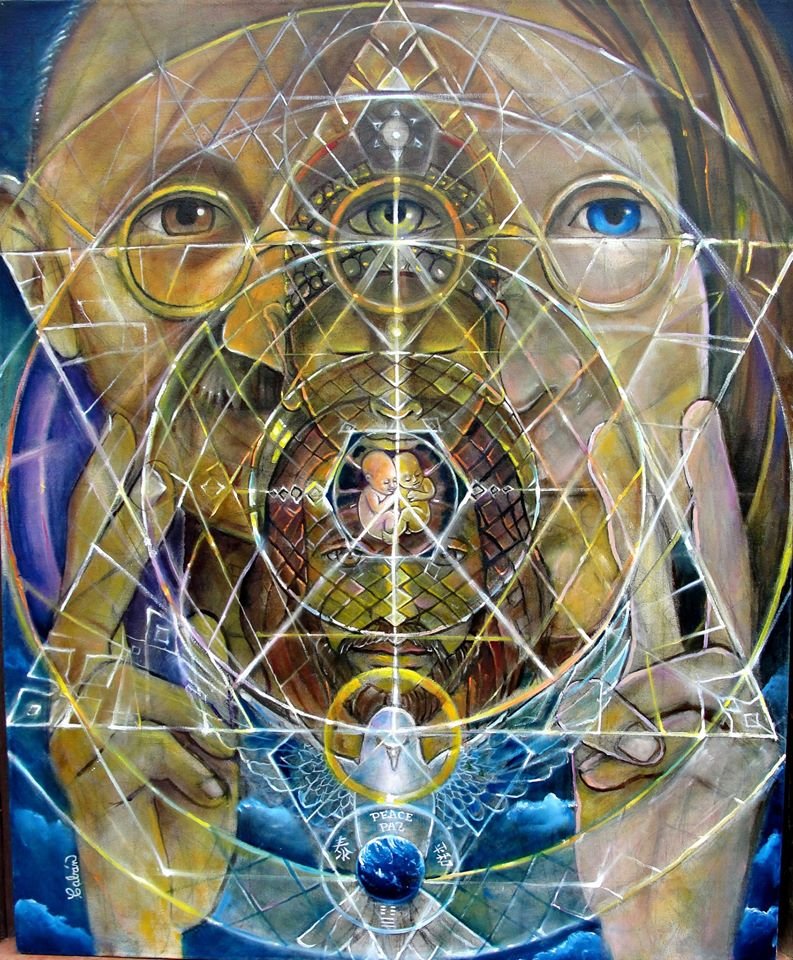 |
In past times tribal people stood in awe of their own existence. They recognised, even if it were unconsciously, the incredible journey they had made from being an unconscious animal, to the attainment of personal awareness and human society. They represented this awe-full experience in rituals, and symbolic paintings and sculptures such as the totem. They also recognised in their art the immense journey ahead, of claiming the possibilities of human life, and put this into their art. How do we deal with the powers that overwhelm us and drag us into mass murder in war and social upheaval? How do we create a personal and social world that we can be proud of? |
In writing about Symbolism In The Visual Arts, (Page 255 in Man And His Symbols, Jung)
Aniela Jaffe mentions the drawing of Klee, interestingly called The Limits of Understanding, which expresses this attempt to put into form what cannot be thought. Jung said that a true symbol appears only when there is a need to express what thought cannot think or what is only divined or felt.
The great artists of any culture give to us what we may have failed to see ourselves. They portray to us the spirit of our times, and our predicament, and perhaps even a passage through the dilemmas we face. Sometimes they manage to break through the cultural plethora and froth of everyday life and display an insight into the fundamental forces of life, renewing our own connection. To do this they face a personal death into the unconscious. They experience darkness and light that many of us may not dare to face. They live within the great forces of their dreams more intensely, more fully than those of us whose awareness is centred on the everyday surface produced by the concepts of life generally agreed upon.
When an artist manages to meet and give birth to one of the spirits of our age, whether it is a terrible demon of our times, or a healing angel, it speaks to us beyond our reasoning. It draws crowds, it holds attention. In the early part of this century the artist Kandinsky wrote that ‘The art of today embodies the spiritual matured to the point of revelation.
Something that we must recognise as an enormous shift in human awareness that has taken place in our own times, and which must influence art from here forwards, is the attainment of self-awareness we have been helped toward by the findings of modern psychotherapeutic schools. This form of self examination has enabled us to explore the wealth of pain and wonder usually forgotten in the mists of childhood. But it also lays bare the struggle, the enormity of the evolutionary movement toward consciousness, toward being human. And there is tremendous art here when it is discovered; art expressing the meeting between the social individual we try to be, and the animal we are still largely immersed in within the depths of our mind and body. In fact we are the whole spectrum of things from sub-atomic particles, through molecular survival and interactions, on into the basic living organisms and creatures up through the lizard, the mammal and the human. All these things are active in us, in harmony, in conflict, in process of becoming. Out of this weaving loom of life all art and music arise; all life experiences an expression of it.
As an example, Thomas De Quincey’s Confessions of an English Opium Eater describes his fantastic dream life over a period of years. De Quincey started to take opium as a sedative. It led to a heightened awareness of how the mind can produce powerful images and memories. He writes that ‘In the middle of 1817, this faculty became increasingly distressing to me.’ Not only did his inner visions present ‘… nightly spectacles of more than earthly splendour.’ But also ‘…. vast processions moved along continually in mournful pomp. Concurrently with this, a corresponding change took place in my dreams; a theatre seemed suddenly opened and lighted within my brain.’ Such experiences led De Quincey to feel ‘deep-seated anxiety and funereal melancholy.’ At times he might recall the ‘minutest incidents of childhood, or forgotten scenes of later years, were often revived.’ ‘I could not be said to recollect them; for, if I had been told of them waking, I should not have been able to acknowledge them as parts of my past experience.’ In his visionary state however, he says ‘I recognised them instantaneously . . . I feel assured that there is no such thing as an ultimate forgetting.’
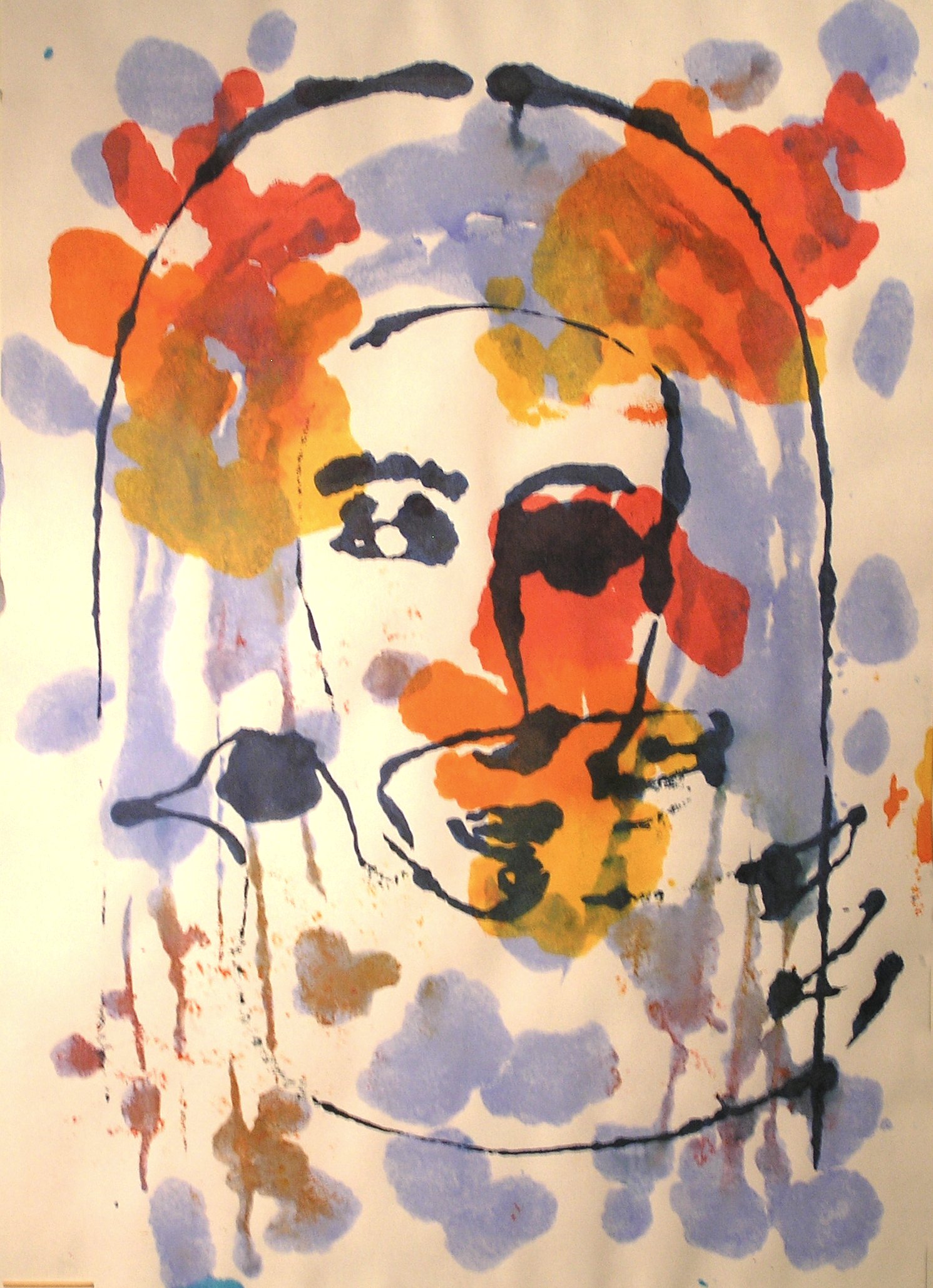 |
De Quincey’s deep seated anxiety and melancholy, in our present times, would be signs of an underlying neurosis which could have been dealt with by exploring his fantasies to their roots in his personal history – already being touched on spontaneously by him. Whether we take the example of De Quincey’s opium aided fantasies, or the visions of Christian mystics such as the temptations of St. Antony, art and religion has at least a facet of being a symbolic way of meeting a neurosis. It is only when we reach through the symbol into what it depicts about us personally, that we move from this historical symbolic form of healing and representation. |
One cannot of course limit the definition of art and dreams to that of dealing with hidden neurosis, or even of the move toward wholeness. Therefore it is interesting to remember some of the artists who directly used dreams as part of their work. William Blake for instance purposefully made use of dreams not only as sources for his art, but also for invention – his method of printing for instance. He particularly tells of the man who taught him painting in his dreams. Blake actually drew the face of this character.
In the 1950’s the painter Jasper Johns was working as a window dresser in New York. In a dream he saw himself painting an American flag. In waking he painted the flag from his vision of it in the dream. The painting became a powerful force in an American revolution in art.
Salvador Dali consistently used dreams as a basis for his paintings. He tried to preserve his dream imagery in his art, and particularly to portray the subtleties of time and space. He referred to his paintings as ‘hand painted dream photographs.’
A number of film directors also used their dreams in the art. Ingmar Bergman tried to portray episodes from his dreams as accurately as possible. He felt that dreams have the ability to help people find points of connection, to link people. Carlos Saura used fragments from his dreams to capture atmosphere and environment.
For each of us, our dreams are our own studio in which we nightly create beyond our waking talent to produce the new, the novel, the unexpected and the deeply true. We are each visionaries, artists of the night and live in another dimension than that of the body. See: archetype of the artist; compensation theory; creativity and problem solving; hallucinations and hallucinogens; hallucinations and visions.