Posts Tagged ‘wild animal’
Dumb Animals?
Animals are amazing, and these true stories prove they are not so dumb as some people make out
Bravery in humans is regarded as one of the most noble things a man or woman can accomplish. Our history books are full of the brave deeds that people have done to make our present life possible. Yet our history books seldom tell us that nature has heroes too!
The Caring Crane
A crane, having caught an especially large fish in one of Florida’s lakes, carried it out of the water. He gracefully walked up the bank away from the lake, and settled himself some forty feet from the edge. Cranes, like many other birds, do not chew their food, they simply swallow it whole. But the crane’s eyes had been too big for its swallow so to speak. Try as it might, the fish was too big, and it couldn’t swallow it So after several unsuccessful attempts, it dropped the fish and walked away.
After walking some sixty feet from its catch however, it stopped, looked back, and then returned to the fish. Receiving a quick peck the fish tried to flop away. The crane, on seeing it was still alive, picked it up in its bill, and carried it all the way back to the lake. It dropped it into the shallows, and then pushed it out into the deeper water-to safety!
It would be difficult to call that crane a “dumb animal” in the sense of it being unintelligent. One could hardly call its action instinct either. Rather, it is the sort of action one would associate with an intelligent human.
In recent years, scientists have begun to believe that wherever there is life, there is some sort of intelligence. The more we study animals the more one is convinced that this is true.
Ants Raise Mushrooms and have Chemical Warfare
Did you know, for instance, that ants can do many of the things that men can do? They raise mushrooms, have slaves to wait on them, have a form of chemical warfare, weave, keep small flies-aphids which they milk like cows, and they work as we do, probably harder. Unlike the action of the crane how-ever, this can all be called instinct.
Ants use a variety of cues to navigate, such as sun position, polarised light patterns, visual panoramas, gradient of odours, wind direction, slope, ground texture, step-counting … and more. Indeed, the list of cues ants can utilise for navigation is probably greater than for humans.
Ants use a variety of cues to navigate, such as sun position, polarised light patterns, visual panoramas, gradient of odours, wind direction, slope, ground texture, step-counting … and more. Indeed, the list of cues ants can utilise for navigation is probably greater than for humans.
Animal Instincts
Instinct, you see, is something an animal or man does without having to think about it. For instance, animals, without having to he taught, know which food is good for them that is instinct. Ants, since the dawn of time, have been doing just as they do today. Intelligence, however, is the ability to solve an unusual problem that is uncommon to the particular animal.
In the province of Ontario, Canada, there is a large game reserve called Algonquin Park. Within the boundaries of the park it is not permitted to kill animals. In Canada the deer hunting season begins in late autumn. For some years, it has been noticed that every November, large numbers of deer move into the protection of Algonquin Park. How do you suppose the deer knew where they were safe?
The Digger Wasp Innovator
A famous zoologist tells how a digger wasp amazed him with its intelligence. He had been walking by a small river, when he noticed the wasp. It had stung and paralysed an enormous spider. Digger wasps bury such food with their eggs, so that when they hatch, the grubs will have food to eat. The wasp was trying very hard to drag the spider back to its burrow. The load was too heavy to fly with, and as there were so many barriers even dragging was impossible. The wasp wasn’t beaten however. Deciding on a new course of action he managed to pull the spider down to the river. Here, taking a firm hold, the wasp floated its kill out onto the stream. With wings buzzing at top speed, it slowly manoeuvred its strange craft seventy yards down the stream. Then, pulling the spider ashore, it dragged it the remaining few inches to its burrow.
Instinct or intelligence? To the zoologist it was an unforgettable experience. Even insects “have their Columbuses and Galileos,” he said.
The Heroic Wolf
Mr. Lyman Jackes was out with the ranger of a large national park in America, when they noticed a number of deer frantically running. Climbing a small hill they saw the reason. Across a nearby swamp, eleven wolves were carefully making their way over the treacherous footing. As part of the ranger’s work was to keep the wolf population down to a suitable number, he took careful aim with his rifle, and fired the only five bullets he had with him. One by one, five wolves fell as he shot, the others retracing their steps as fast as possible. Both men picked up a stout piece of wood to act as a club, and began to descend the hill to examine their kill. As they did so, however, a large she wolf, somehow sensing that they were out of ammunition, came toward them snarling and showing her fangs. At twenty feet from them she stopped, but continued her menacing snarls. Mr. Jackes and the ranger raised their clubs and tried to advance, but the wolf held her ground as much as she dared, effectively barring their way to the swamp.
For half an hour the she wolf stood her ground against them, and then suddenly, without warning, turned and ran as quickly as possible across the floating islands of the swamp. After the delay, search as they might, the two men could find no other trace of the shot wolves than here and there a few spots of blood.
Was that instinct, to so quickly realise that given time the wounded wolves could drag themselves away and hide? If it had been a human, it would have been called “quick thinking,” and an “act of bravery and intelligence.” I for one am sure it was with the she wolf, too.
Pigs are Smart Too
Most people just think of pigs are bacon sources, but new research shows we really need to rethink our relationships with these portly animals. Pigs are some of the smartest creatures on Earth, with intelligence on par with chimpanzees, dogs, and even 3-year-old children.
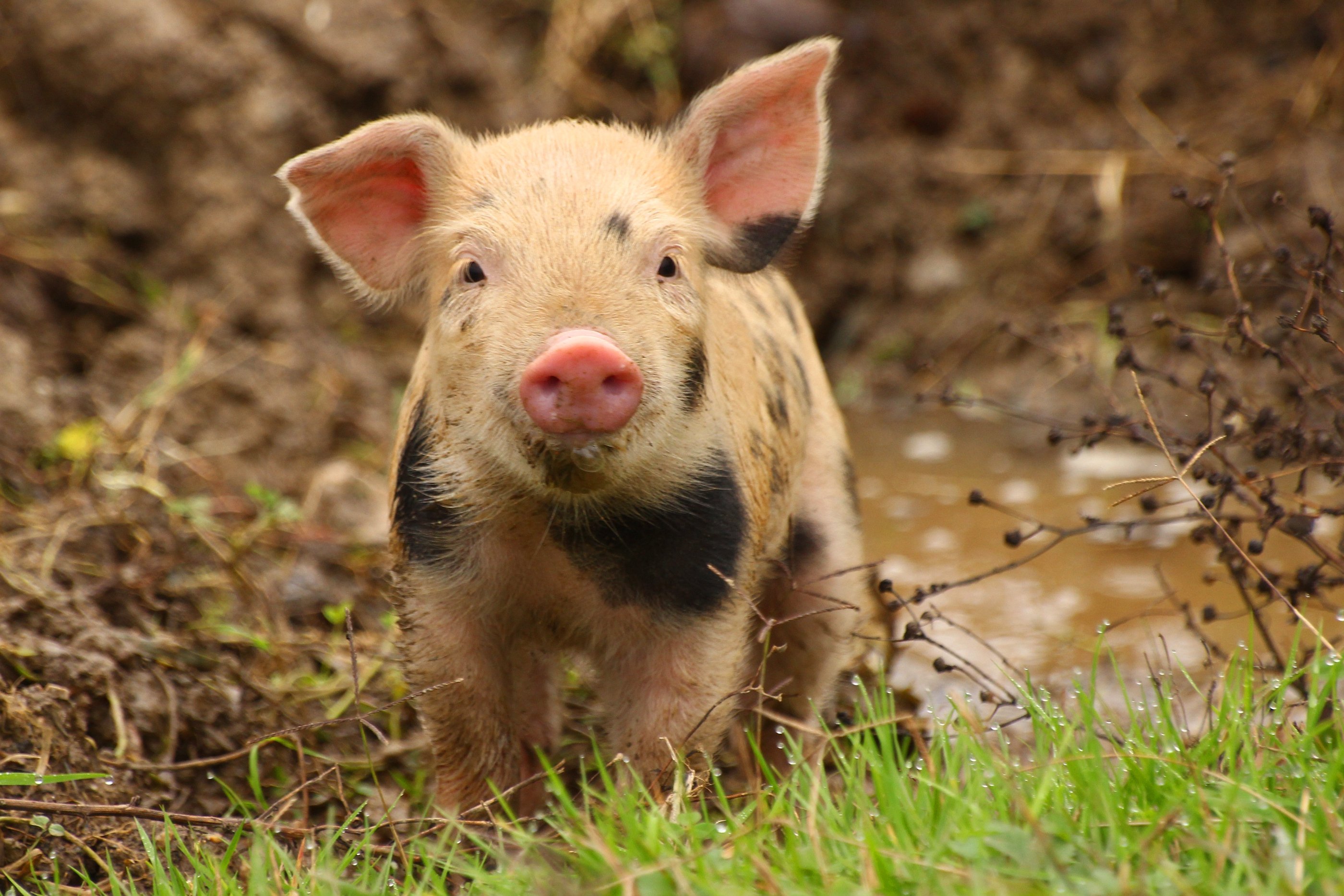
The of results of research were surprising. Pigs form relationships just like we do, with a society focused around the relationships between parents and offspring. Pigs recognize other pigs as individuals, can understand symbolic language, have amazing long-term memories, and form close bonds with familiar humans.
Probably the most human-like trait they have developed is that, like countless teenagers, pigs love wasting their time playing video games. Researchers have developed games for pigs that let them move color lights to targets on touch screens. They will even play the game against a human player and do better than dogs do at comparable games. It’s only a matter of time before they learn Call of Duty, so maybe it’s time to rethink pigs.
The Future
In millions of years, when humans have destroyed themselves or moved on to another planet, it will be up to animals to take over the Earth. But never mind the distant future: some animals alive now have already developed intelligence that rivals our own. They’ll probably be the next sentient race.
Whales and dolphins are known as cetaceans, which means “big fish” in Latin, even though they aren’t fish. Bravely triumphing over this horrible misnomer, cetaceans have evolved into amazing creatures that are super smart. But their intelligence isn’t just doing cool tricks. They have made their own pictorial language.
Cetaceans produce sound to find out how far away things are, like sonar. It’s a skill not just used for navigation but also as a language completely unlike our own. Cetaceans can learn the shape of a creature or object and then project that sound profile to other members of their species. For example, a dolphin can learn what image a fish makes when they bounce sound off of it. Then, if the dolphin wants to tell another dolphin that it saw a super rad-looking fish that it just has to tell a friend about, it can project that sound profile to its dolphin buddy.
It works really well, and cetaceans have developed complex social structures using communication. Researchers are still trying to figure out how complex cetacean language is, but we probably aren’t too far off from them figuring out how to talk to us and tell us, “So long, and thanks for all the fish.”
Elephants mourn their dead
Nature doesn’t care about emotions. We watch lions just tearing up gazelles willy-nilly and animals just leaving their dead to rot. But a few animals have developed at least a little bit of feeling (or a lot of feelings, as we are reminded whenever we are around moody teenagers). Shockingly, elephants have led the charge on this, mourning for their dead and even holding funeral practices.
Researchers have long suspected that elephants do this but find it nearly impossible to get any video footage of it. Elephant funerals are really exclusive affairs evidently, and they aren’t fans of humans showing up to film. Frankly, after all the poaching, we wouldn’t trust humans either if we were elephants. However, really sneaky researchers have watched elephants bury their dead under foliage. Researchers have even discovered elephant cemeteries. Some elephant families go through the effort of burying all their dead in the same place.
We also know that when a member of their family dies, elephants become more stressed and depressed. How they developed a respect for the dead is still a mystery, but it’s a fascinating example of how animals can feel in ways similar to humans. Knowing that, it makes the ivory trade even sadder.
Octopi are surprisingly mischievous
If we had to make a list of animals that were the most different from humans, octopi would find themselves pretty close to the top. They’re super weird-looking and have evolved in totally different ways from humans, but they’re one of the few creatures that has near-human intelligence. Researchers have observed octopi doing really intelligent things like showing self-awareness, complex defensive strategies for their homes, and being really stingy with their friend groups. Those are impressive, but what freaks us out is that they use their big brains to troll their human counterparts.
In Germany, an octopus named Otto got sick of the lights above its aquarium. Wanting to do some redecorating, Otto shot water at the lights, knocking them out one by one. The aquarium staff had trained him to shoot waters at guests, and Otto turned that skill back around to destroy lights and cause mayhem for the staff. Across the ocean in California, another octopus figured out how to dismantle the plumbing in his tank and flooded a whole aquarium, just because he could. With this sort of mayhem, Cthulhu is probably very proud.
Eurasian Magpies are Self-Aware
Self-awareness is a trait only a few animals have. Most animals, when shown a reflection of themselves in a mirror, don’t realize the reflection is themselves but think it’s an anim al of the same species. Hilariously, sometimes, animals like parrots will befriend their own reflections. Only the smartest animals can identify a reflection of themselves as themselves. Only one bird can. As smart as crows and parrots are, that achievement belongs to the Eurasian magpie.
To test magpie self-awareness, researchers stuck little stickers on the magpie and put them it in front of a mirror. As soon as they did, the magpie got super agitated and started trying to pull off the sticker, probably because it was a color that didn’t match its eyes or something. Oddly, the magpie didn’t mind the feeling of having the sticker on its neck, it just freaked out when it saw the sticker in the reflection.
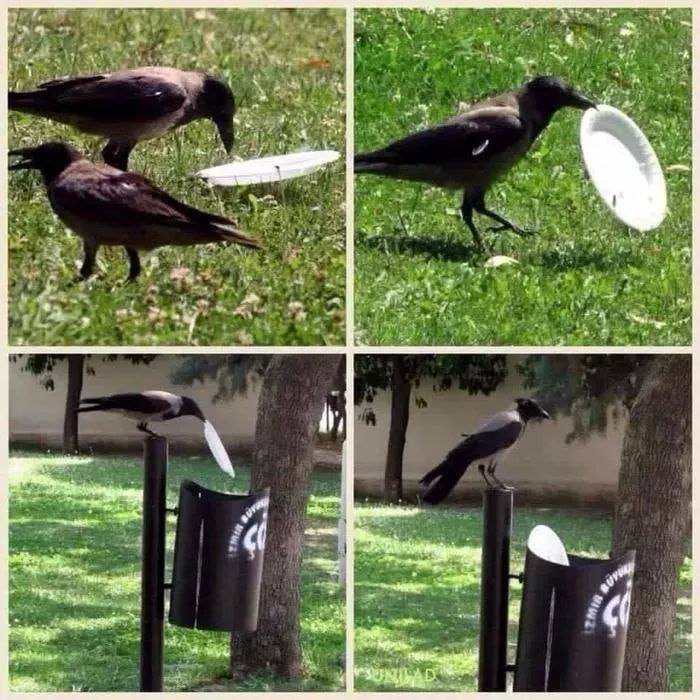
What is really weird about the results is that for years, biologists have thought that self-awareness resides in the part of the brain called the neocortex. But birds don’t have one. Magpies aren’t really animals that people pay too much attention to, but it turns out they’re a big mystery for animal researchers.
I believe that intelligence is in every living thing – for we are all creatures of the amazing and miraculous universe.
Animals in Your Dreams
The animals we dream of express the wealth of our own feelings and depth of our unconscious understanding of life.
Few of the things we do as an individual in today’s world are uniquely human. Like other animals we build dwellings, we eat, sleep and reproduce. We care for our young with the same passion and self sacrifice seen in other mammals. We follow leaders and develop hierarchy as do wolves and primates. Above all else, we share with our fellow creatures our existence in a physical body we have inherited from a long line of forebears and pre-human animals. From this long past we carry traits and urges, fears and dispositions that underpin our self aware human personality. In dreams, these largely unconscious responses to what we face in life are shown as animals. See Animals in your Brain
For instance some of these traits we know as the flight, fight or freeze response; as the new born baby’s instinct to suckle and bond with its parent; as our urge to find a partner and mate; and particularly we see it in the drive to survive and thrive. But there are many more subtle aspects of the animal inheritance we carry with us. Some of these we see in our social behaviour, as when we shrewdly asses a person’s character, or discover what we call the ‘chemistry’ that exists between us and another person. Such things arise largely from our unconscious intuitions and senses. Such senses and responses were developed over millions of years by our animal forbears. In fact we are like a small face on top of a long line of beautiful animals.
This ancient heritage that dreams portray as our animal is not simply a psychological belief. It is built into our body and is very evident in the fact that we have three interwoven brains. The most ancient brain, one we share with reptiles and birds is called the R complex – R for reptilian. This part of your brain deals with deeply instinctive behaviour such as flight or fight, swallowing, automatic reflexes, inbuilt mating behaviour, territorial defence and aggression. This R complex developed about 200 million years ago and is still an underpinning part of what influences your behaviour today. Dreams often portray these urges in you as snakes or lizards.
The second part of your brain is called the Limbic System. This is wrapped around the R complex, and is something we share with other mammals such as cats, dogs and horses. It developed about 60 million years ago and deals with your emotions, feelings responses to people and events, the subtler inner life you feel in love and sex, and it provides a deep wisdom about social and individual relationships. Dreams often use mammals or apes to portray the influence in your life of this part of your unconscious drives and intuitions.
Many people are frightened or terrified of their dream animals. That is rather like being terrified of a picture on a cinema screen, for dreams are nothing more than moving images on the screen four sleeping mind. Like a computer game you can be attacked or even killed many times but you are still whole and unhurt. Face up to the animals in your dreams and make friends of them, because they are really helpful assets to have. See Inner World
Useful questions:
Is there any concern about the animal’s health?
The third part of your brain is the Cortex. This is unique to humans and takes up five sixths of the brain mass. It deals with all the things that are distinctly human, such as logical thought, writing, analysis, self awareness and conscious movements.
An American advertising company, describing these three brains in its instructions to planning advertising campaigns says, “Our Reptilian Brain is more powerful than the Limbic (emotional) Brain, which in turn is more powerful that the Cortex (thinking) Brain. It is best to take all three brains into account when planning a marketing/branding campaign.” See Animals.
Meeting your dream animals
What has been said about your three brains and what sort of dream arises from them is of course a generalisation. When you are looking at your own animal dreams you want to know specifically how they refer to you. So we will move from the general to the specific in looking at the dream meanings of animals such as a dog, cat, snake, horse, tiger and elephant. Those are mentioned because they are, in the order given, the most frequently dreamed of animals.
As explained in an earlier chapter, these are not to be thought of as symbols. They are more like computer desktop icons that if you connect with them lead you to awareness of, and ability to work with, what are usually unconscious processes in you. To gain even the beginnings of insight into your dream animals, you first need to remember that you as a person are a tiny spark of consciousness. You are a little bit of self awareness riding an incredibly ancient animal you call your body. Remember that your body has formed from cells and genetic information that has gradually developed over millions of years. It holds that information in it unconsciously. To actually make a living connection with your dream animals see Acting in your Dream
 |
To gain an understanding of your dream animals, it is helpful to imagine that you are the keeper of a prehistoric type of human being. As such you would need to be aware what the correct diet is for this big creature; what type of dwelling it needs; what are its sexual and emotional needs; what frightens it or causes it stress; what amount of exercise keeps it healthy, what its stages of growth are and how it can best develop through those stages; and what satisfies it in relationships with others of its kind? Your animal dreams are showing you exactly those issues. They are giving you insight into how to care for the instinctive, the spontaneous and natural in you. |
Therefore ask yourself the following questions about your animal dreams, and write down any responses. If the answer is no to a question, move on the next one:
Is your dream animal struggling to survive?
Survival is the most powerful and fundamental drive in your body and personality. Survival skills today are often linked with managing to remain alive in difficult terrain or harsh countryside, but we all live in the midst of challenges even in civilised surroundings. Your everyday social, work and political environments confront you with enormous difficulties. Also, every cell in your being is trying to survive. Your body and its systems are constantly involved in maintaining balance amidst powerful counter influences, or even against your own bad habits. Understanding what difficulties you face in surviving, and what resources you have to handle them is a huge step toward a better life. If you had the reptilian brain and the mammalian brains removed you would not function.
Therefore define if you can what your dream animal is struggling with or against in its efforts to survive. Look for connections with your everyday life. In doing so remember that the dream is putting into graphic form, perhaps like a mime, something that needs to be lifted into everyday words and perceptions.
We all have so many aspects to what we need in life to survive as a whole person. We might be doing very well in work or social recognition, but our need for warmth and love might be struggling. So it is helpful to list the facets of your own life, such as physical health, mental health and vitality, emotional needs, finance, acclaim, and so on, and asses their survival rating.
Is the animal domesticated or wild?
This illustrates the difference between urges within yourself that you have completely socialised or learned to cooperate with, and those that are in conflict with your conscious actions or what other people expect of you. An example of this can be seen in youthful rebellion, and in the difference between what is instinctive and spontaneous in a young person, such as aggression or fear, and what is expected of them by others. The rebellious youth might allow their unsocialised urges to express as criminal acts, or disruptive social behaviour. On the other hand they might express it in the form of music or art that, while it is still anti establishment, is rewarded, as with the Rolling Stones.
So the need here is to recognise what of your feelings or urges are involved, and ask yourself if the wild is healthy as it is, or does it need a better relationship with your social or work activities? On the other hand, sometimes social restraints or needs deaden the spontaneous and natural in oneself, and so need to be reduced for greater personal harmony.
- Is there any concern about the animal’s health?
- Is there an indication the animal has been injured?
- Does love, caring or affection enter into the dream?
We have inherited and enlarged the great tenderness and care seen in other mammals.
- Are sexual feelings involved?
- Does the animal show unusual intelligence or ability to speak?
- Is the animal giving advice or showing you something?
- Are baby animals involved?
- Is the animal attacking or being attacked?
- Is there a herd or group of these animals?
- Has the animal been neglected or mutilated?
- Are you trapped by or running away from an animal?
Animals as Dream Figures
Like any other animal, human beings have developed certain physical and behavioural traits. Some of these traits, such as a new born baby attempting to suckle the breast, and attempting to bond with its mother, are rooted in millions of years of past experience and can be thought of as instinctive. To be abandoned by ones mother, even for a short time, was a life threatening danger in the past, and is still felt as such today by an infant because of the millions of years of imprinted experience.
We can observe such instinctive traits in a dog in such behaviour as cocking of the leg in male dogs. We can see some of our own traits in such things as the human desire to elect leaders. Many of these habits are psycho-biological or social. In our dreams we represent these drives or habits in the form of various animals. Our restrained sex drive or aggression may be shown in our dream as a dog on a lead. The power of drives such as the urge to parenthood via sex might be shown as a horse which we are trying to control. More than anything else though, our dream animal represents our powerful feeling reactions to situations – reactions developed through centuries of human experience in frequently terrible situations. This aspect of ourselves is rooted in the older portions of the brain. The feeling reactions indicated are those such as the fight or flight reaction; the drive to protect property or territory even to the point of killing another human being; the urge, often not accepted in its naked power, to find a mate and to have sex in order to procreate; the desire to have standing and recognition in ones social group; the drive for dominance – or the resulting depression or sickness if no recognition or place in the group is found. See: animals in our brain.
Because dreams exhibit a powerfully precise way of using symbols, there is a difference in meaning between the wild animals and the domesticated animals we dream of. In general the domesticated animal such as a cat or horse represent urges we have more conscious control over and are therefore less threatening to our conscious desire to be in charge. The wild animals in our dreams often pose a much greater threat to our ego, but nevertheless offer rich rewards if we can develop a working relationship with them. After all they are aspects of ourselves, so the relationship can release more of our usable potential.
Example: I am sitting in the hotel staff room eating lunch at a large dining table. One by one I am joined by perhaps a dozen women. The atmosphere is pleasant, easy and light hearted. I enjoy the feeling of being the only male among a dozen attractive women. Then I notice a strange thing. One by one all the girls around me turn into cats, but carry on laughing and talking as if nothing is happening. I find this interesting and not alarming. I am aware each girl turns into the sort of cat that is right for her – a vivacious redhead becomes a purring orange tabby; an aloof, slightly superior lady becomes a Siamese; the only ex-girlfriend of mine present becomes a black witches familiar.
I remember turning to my left and asking: ‘Tell me Rebecca, how did you do this?’ The Rebecca cat giggles with a human voice and says: ‘He doesn’t have a clue, does he?’ As I look at the Rebecca cat I realise she still has her human eyes. This I realise is true of all the cats, they have human eyes in feline faces. As I realise this one says: ‘I think he’s beginning to understand now’ and laughs. Paul C. Teletext.
This graphic dream so well illustrates how our human personality exists within our animal drives and urges.
The animal in our dreams has commonly been seen only as the sex drive. A careful examination of animal dreams shows this to be untrue. The animal represents all aspects of sexuality and relationship. If this wider sexuality in an individual is damaged or traumatised, the person might become a parent who has lost the natural bonding and care for their child; an individual who has no sense of social status or responsibility; is criminally violent; or someone with disturbed and misplaced sexuality, a person unable to love or care for someone else. See: what does the animal in my dream mean.
Dominating or attempting to kill the animal in us can cause tension, depression and illness. The escape into dry intellectualism that might occur if the ‘animal’ aspect of oneself is denied, can be a cause of internal conflict. Complete permissiveness is no answer either. Our higher brain functions need expression also. So one of the challenges of maturing is how to meet and relate to our ‘animals’, and perhaps bring them into expression in a satisfying way. Such drives are fundamentally a push toward LIFE. Our dreams are selective in what animal is used to portray our situation. For instance a dog or horse are creatures that have been socialised for thousands of years, whereas a dinosaur has no history of socialisation. These different animals – domesticated or wild – can therefore be used to represent the socialised or untrained elements of ourselves.
In considering what our dream animal communicates to us, consider how you feel about that animal, what view you have of it, whether it excites, disgusts or frightens you. Is it funny because it exhibits some aspect of human nature so openly, like monkeys making love in public? Is it to be envied because it is so honest, like the dog growling at someone it doesn’t like or is frightened of, and giving obvious affection to someone it has a link with? With such straightforward questions we can arrive at what our dream animals represents to us personally.