Posts Tagged ‘baby’
Cot Deaths
I dreamt that an enormous amount of my energy was in-turned into seeking states of mind – seeking my own womb condition. I came across an interesting piece of research in the dream, the possibility that cot death babies die when they dream about being in the womb. The reason being that the body follows the dream and in the womb there is no need to breath, so they stop. This reminds me of my own experiences of finding a ‘mystical’ state when my breath stops, and how in yoga practice there is a need to slow and stop the breath to reach altered states of consciousness.
Inner Baby and Child
Please understand that the baby, the child and the adult are three very different creatures with enormously different mind sets, world views and responses. We recognise this slightly when we say she or he is like a baby, or someone acts like a child. But because most of cannot remember our babyhood or even childhood we do not really know what we are dealing with.
The baby is a little animal with basic instinctive reactions and enormously responsive. Their main drive is to survive and to do so they need to bond deeply with a mothering person, who like animal mothers gives themselves totally to the baby. A headline in the newspaper Daily Star on April 17 1991, helps to understand this. It reads: “TRAGIC BOY’S DANCE IN WOLF’S LAIR.” It goes on to say: A tragic orphan brought up by a pack of wild wolves will never be able to live like a normal man, say doctors. The reason is that we are born animals and we are not innately human and unless fed the amazing computer like program we call language at an early age, then we never become humans. Many of us believe we are ourselves and have a personality because we were born human. Not so. We are carefully fed programs and we are what we are by being taught it. We are programmed – and of course we can learn to recognise that programming and hopefully grow beyond it. See Programmed
The baby lives in a timeless world, and they also lack any feeling of personal identity, and they feel connected with other animals and nature. Their real needs are to be held close to the mothers naked body – i.e. flesh to flesh – with full time access to the breast. They are wonderful learning creatures, learning not by words but by reactions and actions, as mammals do. They are thus learning the good or awful survival methods of the adults – or animals raising them.
A child who has been exposed to language and adult humans is a half way creature between human and animal. The young child learning language does not have the intricate social code and morals that adults use. But they too are wonderful copiers/learners. Here is a description of a child’s view of a short walk:
As a young girl I had walked from the back door of my house, along the garden path, across a footpath behind the houses, into the field. As I looked through her eyes and feelings, I realised what a long journey it was for me to get into the field. Not a long journey physically in distance, but an enormous journey within myself. To be able to go from the door to the field, I had gone through the long process of learning to walk; I had learned the confidence to be alone; through language and understanding what my parents had passed to me, I had found out how to avoid stinging nettles, and how not to be overcome by my fears of them and of the huge creatures that I knew as cows. This had all taken ages, and so walking into the field was an enormous achievement, especially as I was doing it by myself. Learning to walk itself had taken a tremendous practice and perseverance. Learning to be independent of my mother was also something I had had to learn. I had made the inner journey of acquiring an immense stock of information and conditioning regarding the external environment I was facing too. I had slowly learned survival responses to nettles, walking alone, nests, birds, the sun, trees, spiders, stone’s, the wind, children, adults, worms, leaves on the trees, cars, etc, etc, etc, etc, and so on.
There are many ways in which we might come face to face with our inner baby or child. These might include the arising in your daily life of inappropriate responses to situations. In a warm and loving relationship you experience only pain instead of pleasure; you feel terror that your partner will abandon you; you hit out emotionally or even physically at the person who is actually closest to you; you withdraw from the world or lack any motivation to be a part of society or be in contact with others; you feel enormous longing to find love, but it never seems to be there when you relate to someone.
Those are signs of the undealt with emotions and pains of childhood, but there are many others. But one of the clearest indicators of the hurt baby or child within is from your dreams. Examples of dreams showing the damaged inner baby and child are as follows:
Example: I am with my wife, taking a short cut through hospital grounds, but we are seen and reprimanded. “You must not take short cuts through hospital grounds.” Then I am in a strange old house. Under the floorboards I find many babies. They are abortions from previous girls living there. As I watch, one dried up baby body begins to fill up with blood. I can see its intestines.
Example: A war was on. I was in London and bombs had blasted buildings. A baby had been injured, along with an elderly man with black hair.
Example: I was in a hospital. A nurse passing by looked at my baby son and then suddenly looked again and said, “Did you know there is something wrong with your baby?” I told her I didn’t. She said she would prefer not to tell me, and to ask the sister. I knew this was because what she had seen was a serious illness.
Each of the dreams shows very clearly the image of an injured or sick baby. Two of them also take place in a hospital, linking the baby with the need for healing. In the first dream there is also the reprimand that no short cuts should be taken in the healing process. The second dream indicates real conflict and injury from the bombs, and also brings in the dark haired man – the dreamer’s father had black hair. The last dream again suggests the baby is in a serious condition, but in this dream the dreamer is not himself aware of it and must seek to find out what it is.
To meet these hurts and deal with them as an adult takes persistence, determination and some courage. In general people do not connect their current pains and behaviour with their childhood. Very often it is simply called depression, or the other medical and psychological labels that pathologise the situation. Drug treatment is usually the treatment used. Psychotherapy is another path some people take, those who do not want to cover their pain with drugs, alcohol or the other anodynes used in our culture. But this is only occasionally useful because to face the real pains of childhood takes more that talking over ones feelings with another person. It takes the willingness and ability to let what lies behind the pain and distortions of our present experience to surface. This is not an intellectual verbal process. The baby doesn’t think. Its feelings are not expressed in words. Its experience was one that involved it in total body sensations and passionate and all consuming hungers and emotions.
‘From the moment of birth,’ Laing wrote in 1967, ‘the baby is subjected to these forces of violence, called love, as its mother and father have been, and their parents and their parents before them. These forces are mainly concerned with destroying most of its potentialities. This enterprise is on the whole successful.’
Laing theorised that insanity could be understood as a reaction to the divided self. Instead of arising as a purely medical disease, schizophrenia was thus the result of wrestling with two identities: the identity defined for us by our families and our authentic identity, as we experience ourselves to be. When the two are fundamentally different, it triggers an internal fracturing of the self.
As I have said elsewhere, we do not understand the experience of swimming by talking about it. We only really understand it and the fears and feelings we might have in relationship with it by getting into the water and moving beyond the shallow water. So it is with the experiences we still hold in us from birth, infancy and childhood. To give an example of what this might be like I us a quote used in the feature on active imagination.
As I enter into the dream I connect with the child. She says she has got up from her ‘bed of pain’. I wonder what that means – The Bed of Pain. What does it mean – to me personally whose dream this is – that she was a malformed and tortured child? Without hesitation I begin to feel my connection with another person. I experience that being connected with another person is a fundamental part of life and procreation. If something threatens that connection, then life itself is threatened – the reason being, I am in the womb! To lose my connection threatens my life. But my life is threatened. I am expelled from the womb before my body and soul are mature enough or ready to be separated, ready enough to undertake life disconnected from the placenta. I was actually born two months premature. As I experience this I feel incredibly vulnerable. Each sound, whether a bird singing or a car going by, is a possible threat to my existence. I had been physically and psychically attached to my mother. Now the bond is broken.
I realise as I observe what is being felt that the broken bond, the feeling of life threatening isolation, enormously increased my sensitivity to threats as a child and as an adult. It set me up for what happened at three when I was placed in a hospital and was deeply traumatised, feeling I had been abandoned. In itself the short absence of my mother was not as potentially traumatising as it turned out to be. But because of the birth experience I was already traumatised regarding abandonment. To be hit by it again increased the volume of it enormously.
Because I was born two months prematurely I wasn’t properly formed, so it was very traumatic to be separated as a baby. There was no intensive care unit in hospitals at the time. So I had to either survive or die, and I felt I was dying. I am trying to heal this huge wound at the moment. I feel the struggle of resisting what has happened to me. I cry out now as the adult with the feelings I am meeting from my baby self, that I don’t want to be born. I am not ready. I feel deeply alone. There is in me a sense that tells me I shouldn’t be alone. It is like something that pushes me to seek not to be alone. I feel lost. I’m not ready for this world. I’m feeling awful. My whole body feels strange and collapsed in some way.
In fact I do feel awful, like I am ill and can barely move, or move only with effort and concentration. I go on to cry out that I have felt awful most of my fucking life. I can see from the feelings I am meeting how my premature birth contributed to my lifelong feelings of being lost and cut off – alone. I have always called it independence, and perhaps seen the positive side of it more than the negative. But it has been a source of restlessness and a spur to seeking a bonding with someone. Of course I want to find the security of the womb. I want to know someone is deeply committed and bonded to me.
I am so alone. Even when someone loves me I can’t feel it. I want to change. I don’t want to keep hurting my wife by living like she isn’t there at an emotional level. But that is the feeling world I have lived in – who is there for me? I was part of something and I lost it. I was part of something that was good, and I lost it. I was a part of a woman and I lost her. I was rejected before I was ready to be independent physically or emotionally. Now I face this struggle just to exist, just to breath, just to be. This feeling of life being a terrible struggle just to keep going has pervaded me all my life. I’ve got to struggle to exist, just to keep alive. Got to struggle just to keep alive! GOT TO STRUGGLE TO EXIST – JUST TO KEEP ALIVE! GOT TO STRUGGLE BECAUSE THERE’S NOTHING THERE. I WANT SOMETHING TO HOLD ONTO. I’VE GOT TO STRUGGLE JUST TO KEEP ALIVE.
I cry like a baby. The question burns in me – Why is life like this? I cry again. Then I realise that at first when I was born I was too small and undeveloped even to be able to cry properly, so I couldn’t let out my misery. It is such a relief to cry now and be understood, to have it known what I felt at that terrible time.
I am aware that my connection with my stream of life has been broken – the umbilical cord. What I realise as the adult watching this, is that because of its proximity to the genitals, there is an unconscious connection made between the genitals and the link I seek to sustain my life. So even as a baby I am reaching for that connection with my genitals. I want to be fed. I attempt to reconnect through my genitals, but the pain of the separation is so acute even when I do try in adulthood, the pain of the separation turns me back. This is the story of the Garden of Eden. I was in the garden and was cast out. Now when I attempt to return, an angel with a burning sword turns me back. Not only was it painful every time I attempted reconnection, but I had the unconscious expectation to be fed, to be nourished. Instead of that every time I had sex I felt cheated, deceived and betrayed. I was not fed, but deeply sucked dry of what small nourishment I had managed to build up. I wasn’t fed, it seemed to me I was fed upon by a predator. Each sexual act was a betrayal, a predation, and a torturous pain. Yet I had to find my way to the garden again, because there lay the secret of my genesis and myself. So I would return, to be wounded once more. Thus the imagery of the spider who will kill. It is even painful to look back on those years of misery now. Why is life so painful?
It has to be said that paradoxically the meeting of ones infant self is not in itself painful. It is deeply emotional and powerfully active. Why many people fail to connect with what they carry within them of their infant and child is because they avoid, or do not know how, to feel deeply, to let their body express and discharge that degree of emotion, bodily movement and excitation. See Learning to Allow Yourself
The miraculous or holy child is a symbol of your whole self – your waking self and the parts of you that you never have been aware of – Jung calls it the Self. This Whole Self as always is both benevolent and malefic; like life it is both the light and the darkness, male and female, creative and destructive – but the Whole the balance between the opposites and is often shown ans the sun, or Christ – the cosmic man. But man in these cases refers always to mankind, both female and male.
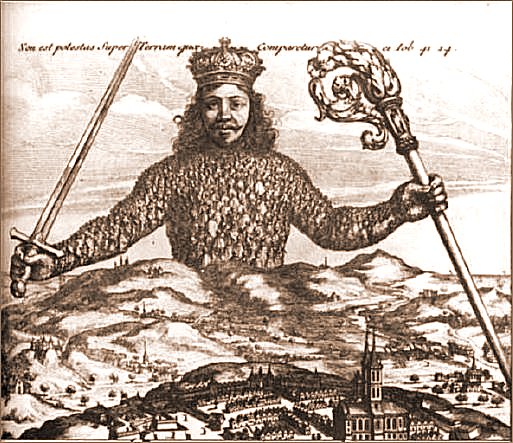 The image is made up of all human life
Here is a modern image of the same huge being. It depicts the meeting of the one individual with what lies behind it – the cosmic mind. Again made up of the many, all human lives.

Juliana Brown and Richard Mowbray, in their paper on Primal Integration describe this ‘regression’ as follows:
The ‘regression’ that we facilitate in Primal Integration is not about going back in time, but rather about becoming aware of your existing state of regression – about realising that parts of you have not grown up and moved forward into the present. In our view, most people are living in two time-scales simultaneously – past and present. Part of them will be living in the here and now. Other parts of them will be reacting to present events as though they were still ‘back then’, thereby confusing aspects of the present with the past.
Uncovering the ‘past’ that is still with you here in the ‘present’ takes real work and needs dedication over a fairly long period of time. It is a work that is desperately needed in the world and in society. Very few people, even those in high positions of government or society, have actually grown up in the full sense. They are still operating in the world either from promptings and fears from their earliest babyhood, or from social conditioning that is out of date and needs upgrading.
There are two major ways of dealing with our past negative heritage. The one most used is to go to a professional who is trained in helping you to access and release these packets of high emotion and energy, thereby experiencing them, understanding them and integrating them into your life of today. To find therapists who work in that way you could try looking up primal integration or holotropic breathwork on the internet. To follow through on that direction you will need to invest a fair amount of time and money in the work, and a lot of your own motivation.
Another direction, one the author took and knows well, is that of self help. In some exceptional circumstances this can be undertaken alone, but usually needs at least one other person to be a co-worker with. Better still it is enormously helpful to gather several people to work as a group.
Fundamental to this approach is the understanding that there is innate in you the process that is already trying to lead toward the experiences that can release the past you are still carrying. It is constantly trying to bring old hurts and injuries to awareness, but we block its action. It is important to understand this, and a description of this process and the basics of working with it can be found at The Fundamental Process. Perhaps the simplest and gentlest way of finding transformation and growth is through exploring your dreams. This should not be simply talking about your dreams, but actually exploring them and being ready to feel the emotions and past impressions involved in them. A method to do this is described under peer dream work and Life’s Little Secrets.
If you had all the patience of a wonderful student, then the very best approach to meeting the depths and heights of your inner life would be as follows. These steps should not be undertaken all at once, but one at a time.
- Learn to recognise that whatever you think is never comprehensive, and so can never ever be true in the fullest sense. When you think about anything you are only considering a tiny fragment of information. In fact thinking os dealing with photocopies of the real – when you think of a person it is never them, just a copy of them. Only if you could hold all of the world’s knowledge, insight into all of the universe, might you arrive at any degree of truth. Therefore taking seriously your thoughts about success or failure, or who and what you are is ridiculous. Thinking is simply a handy tool helping us to move around in and deal with the tiny world of social and personal experience we live in.
- Learn to recognise emotions as survival responses developed over millions of years. They are signals that need to be checked out, not absolute signals of truth. An emotion is not YOU. It is something YOU experience that in a few moments can swing into something quite different. Some feelings or emotions stay for long periods of time, but that is only because something is stuck inside us – such as an early childhood painful event. Depression is the shadows cast by lumps of past pain still stuck in our being.
- Learn to relax. This does not mean learning to take time off from work to have ‘quality time’. It means learning to be aware of your habitual ways of relating to your body, inner feelings and attitudes. Learning to physically tense your body and then drop the tension is just a first step. Such relaxing of surface tension is just that – surface relaxation. It doesn’t touch the unconscious tensions. But it is a step on the way. Part of the deeper stages of relaxation require you to learn how to quieten your inner life, perhaps with breath control. See: The Slow Breath.
- The situation of being a victim is a central and key point so time will be taken with it. We are all born victims of circumstance. But we need not remain a victim. Therefore it is wise to be able to recognize that these are habits of reaction to events. We might say we are victims or the world or life. But we can alter it by learning how to change our habits. And it started for me a long time ago, because I had to learn things without which no change could have taken place. I do not mean book learning, but learning by living it. The first thing I remember learning was that I could change habits. Fortunately it was a simple habit. I noticed that as I walked through the building I worked in I left the doors open. I believe I had read somewhere that the only difference between a criminal and a successful person was their habits. So whenever I left a door open I would close it – even if I had forgotten and walked on, I turned around and closed it. Within a short time it became a new habit to close doors, all done now without effort. So that was the first thing I learned, and then moved into greater challenges with my psychological habits. These were hard because many of them were unconscious and I had to dig deep to find them. See http://dreamhawk.com/approaches-to-being/lifes-little-secrets/.
- The next thing I needed to learn was that we are all victims, but we do not admit it. What I mean is that we are all victims of beliefs, convictions, words people say, what people or parents have told us or hit us about – and I am not talking about traumas. We are all born victims of circumstance. But we need not remain a victim. Your natural response to your environment is to be influenced by it. A disturbing event would stimulate you to feel fear, a calming event to feel pleasure. Your moods are usually influenced by what happens to you. So being in prison would be more depressing than being free. Being rejected would cause more pain than being admired or loved. Our emotions and feelings about ourselves are like a keyboard that is played upon by people and events. If we are praised or rewarded our self confidence and therefore performance will usually be enhanced. That is fine except it means we will usually depend upon the world to create our moods and our sense of our own value. This makes us victims. We may not be dependent on a drug, but on praise, success, being admired or wanted. Without them we may experience the lows the drug user does on withdrawal. So we need to see how events, words, our own thoughts are playing on our own victimisation. If you learn these two you are taking steps toward your own wellbeing. Change the habit of being a victim.
- Become aware of how you are editing what you let yourself think, feel or do. Learn to let things happen. This doesn’t mean inflicting yourself on other people, but it does mean acknowledging what is in you, light and dark.
- Observe what your response to deep emotions is. Are you suppressing any real depth of feelings? Can you allow yourself to sob uncontrollably or to laugh out loud and jump up and down like a child? If not what do you use to control yourself.
- Develop a time and place where you are completely free to allow the irrational side of your nature. This is a sacred temple in which you can heal and grow. See: LifeStream.
- A description of what it is like to meet your child in adulthood has already been given above, but that was a meeting with the experience of a premature birth. Meeting the child can be different in many way. Here is a description from a man in his early forties.
I married again when I was 41. Up until then I had never been in love, although I had been previously married and fathered children. In fact I had not been capable of love in the usually described way of really connecting with my partner. But I had been using my dreams to work through my childhood miseries and had begun to undo something that had caused me to cut off all emotional ties with my mother when I was about five. This had caused me to lack any growth in my relationship with a woman. I remained at the age of five emotionally. So when I did fall in love I did so with the emotional maturity of a five year old.
Fortunately I had some insight into what was happening as I experienced all the drama of feelings a child feels in relationship with its mother. I met intense feelings that drove me to want to be near my wife all the time. I would follow her from room to room like a dog for fear of losing her – not only had I cut off from my mother, but she had sowed the seed of terror that she would abandon me. Also for the first time in my life I felt intense jealousy and would turn up unexpectedly at the house to see if my new wife was with another man. The tricks of survival I had learned in childhood also surfaced. The main one was to shut down emotionally and distance myself if there were any threat to the relationship. And so with all of these and other powerful feelings I had to learn to recognise them as childhood feelings that were not good to have in my adult relationship and encourage the growing part of me to move beyond them. Of course that meant moving into and through emotional adolescence. Believe me, none of it was easy on my wife. Our poor partner gets hit by all the miseries of childhood we meet in our growth.
See: child under archetypes.
Temple for Lost Babies
While in Japan in the 80’s, and wandering through many side roads, I came across a little temple that intrigued me and I entered. I was fascinated by all the clothing and mementos of babies, and was told it was a temple dedicated to lost babies and prostitutes. The latter because of the plight of women and the babies they gave birth to.
I was very moved by this and felt it was an awful thing that we did not acknowledge it in the west. So here is a place for the memory of the precious child or children we have lost. It is a place to leave mementos of such babies, and to remember them with love.
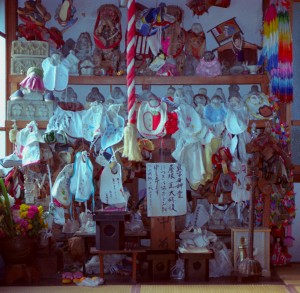 |
Hopefully we can builtthis temple together |
Birth Dreams and ones Natal Experience
Few people who have not re-experienced it for themselves, can believe, or comprehend, the enormous influence ones birth has upon personal development and adult behaviour and feelings. Many images in dreams link directly to the influences/memories still alive within us relating to our birth. Being in a tight place and struggling to escape, being under water without breathing, being strangled, crawling through a tunnel, coming out of a pool of water, difficulty in breathing – may all relate to birth experiences. See: active imagination.
The experience of being in the womb and of being born lie at the very foundation of all we learn and accomplish in the further years of our growth. The way we react to that earliest of life dramas defines the way we react to later situations. I am not saying such reactions emerge from a self-aware centre in the baby – far from it, but like any other mammal or living creature, we as a baby can learn conditioned reflexes to given situations. We can and do make a sort of ‘life decision’ about things, a decision in the form of a massive feeling response.
So, if for instance the emergence into life outside the womb is difficult and without any compensation of loving contact and welcome, we might very well have a deep feeling of withdrawal, of not wanting to be ‘here’ in the external world. In later life this will be experienced as difficulty in wanting to be involved in everyday life or other people.
The psychoanalyst Nandor Fodor has written extensively about the subject of birth dreams, and gives the example of a woman who was born with the umbilical cord wrapped around her neck, and in adult life frequently dreamt of being strangled. Also an example is quoted of a person who received a head injury during birth, and in adult life frequently dreamt of being scalped.
Such stories are of course not definite evidence for the influence of birth experience in later life. But I believe it is something that is very important to consider in any attempt to understand ones adult behaviour or tendencies. I myself was born two months premature, at a time when there was no intensive care in hospitals for such babies. My recovered memories of that experience, gained from working with dreams, are intense and have convinced me that enormous personal difficulties regarding relationship with people and with meeting opportunity in life, have their roots in my premature birth. My memories revealed to me that being born so early left me feeling physically and psychologically inadequate to relate to and deal with independent life. My digestive system was immature, as were my breathing organs. My vulnerability caused my mother anxiety, leading to a lack of bonding between us. In my condition I needed months of being held close to her body and bathed in feelings of confidence and care. Instead of that I felt deeply anxious and alone. My lack of psychological readiness to be in the world also meant that I had an inner feeling of not being as capable as most of my peers. The constant desire to be back in the womb remained into adult life. I didn’t know that my interest in meditation and the unconscious was in fact a desire to find the ‘heaven’ of life in the womb again. This fixation of delving deeper into my inner life also caused a lack of understanding of motives that led other people to grasp opportunity in external life. In fact external life didn’t mean much at all to me. The disruption this caused in achievement and in feeling a part of everyday social interaction has been enormous. Now, seeing the extraordinarily premature babies who are kept alive, I cannot help but feel pity for what they will face as adults.
Whatever it is we may have lost during our birth, or whatever gained in the way of painful or disruptive decisions and conditioned reflexes, our dreams try to lead us back to the Garden of Eden that was our life in the womb. They try to recreate the scene of the expulsion from Eden, so we can understand and perhaps grow beyond the afflictions gained at that time. To lead us back to this recovery of our lost selfhood or wholeness, our dreams represent our story in symbols or in a sort of personal mythology. As I have explained in the feature active imagination, finding ones way through the imagery back to direct meeting with oneself as the baby, needs certain skills to be learnt and practised. Without these skills, or the help of someone who can introduce us to the skills, we may become lost in the shifting world or imagery and imagination, where resistances to meeting our pain play with us in a shadow world of truths disguised in dream landscapes and imagery.
Van de Castle quotes the description of Jane English, a physicist who writes about her dreams and how they helped her uncover the influence of her caesarean birth on her life – (her book is Different Doorway: Adventures of a Caesarean Birth.) Jane’s dreams were not direct expressions of a birth situation, but held within the symbols the feelings and sense of being overwhelmed that when met and allowed more fully into consciousness, led to the direct insights into her birth.
There appear to be several reason why dreams do not directly represent such early experiences and experience resistances. One is that they have never been thought about, or been a part of the refined imagery and concepts which arise as we learn language. Another is that they are usually intense body and feelings experiences, and to truly remember or represent them, needs us to actually feel emotions and physical sensation at that intensity again – something few adults are willing to do. Such memories are not neatly separated off from our personality and labelled ‘birth memories’. They usually arise as intense emotional reactions which we fully identify with and do not necessarily see as having to do with anything more than present experience. Many a relationship has foundered because the powerful emotional response in a marriage has not been seen as relevant to birth rather than to a problem in the marriage.
A report of a man experiencing the trauma of premature birth
The man was born prematurely in the 1930’s, before great efforts were made to care for such babies.
so this premature baby was thrown aside after its umbilical cord was cut and the baby was not breathing. This led to the infant meeting death, but fortunately his grandmother took hold of his body and bathed it in hit and cold water and his breathing started.
“I am so alone. Even when someone loves me I can’t feel it. I want to change. I don’t want to keep hurting. My wife feels like she is feeling like she isn’t there at an emotional level. But that is the feeling world I have lived in – who is there for me? I was part of something and I lost it. I was part of something that was good, and I lost it. I was a part of a woman and I lost her. I was rejected. Now I face this struggle just to exist, just to breath, just to be. This feeling of life being a terrible struggle just to keep going has pervaded me all my life. I’ve got to struggle to exist just to keep alive. Got to struggle just to keep alive! GOT TO STRUGGLE TO EXIST – JUST TO KEEP ALIVE! GOT TO STRUGGLE BECAUSE THERE’S NOTHING THERE. I WANT SOMETHING TO HOLD ONTO. I’VE GOT TO STRUGGLE JUST TO KEEP ALIVE.
I cry like a baby. The question burns in me – Why is life like this? I cry again. Then I realise that at first when I was born I was too small and undeveloped even to be able to cry properly, so I couldn’t let out my misery. It is such a relief to cry now and be understood, to have known what I felt at that terrible time.
I am aware of my connection with my stream of life having been broken – the umbilical cord. What I realise as the adult watching this, is that because of its proximity to the genitals, there is an unconscious connection made between the genitals and the connection I seek to sustain my life. So even as a baby I am reaching for that connection with my genitals. I want to be fed. I attempt to reconnect through my genitals, but the pain of the separation is so acute even when I do try in adulthood through sex, the pain of the separation turns me back. This is the story of the Garden of Eden. I was in the garden and was cast out. Now when I attempt to return, an angel with a burning sword turns me back. Not only was it painful every time I attempted reconnection/sex, but I had the unconscious expectation to be fed, to be nourished. Instead of that every time I had sex I felt cheated, deceived and betrayed. I was not fed, but deeply sucked dry of what small nourishment I had managed to build up. I wasn’t fed, I was fed upon by a predator. Each sexual act was a betrayal, a predation, and a torturous pain. Yet I had to find my way to the garden again, because there lay the secret of my genesis and myself. So, I would return, to be wounded once more. It is even painful to look back on those years of misery now. Why is life so painful?”
When you experiences a dream which may relate to your birth, one of the most helpful tool’s to use in exploring the deeper levels of the dream associations is fantasy or active imagination. Skill in using fantasy can help you create an environment in which the spontaneous processes of the psyche are set free, enough at least to move beyond the boundaries of common experience and present the strange, awful, wonderful world of babyhood. See Processing Dreams – Opening to Life
In doing this certain basic psycho-physical facts are worth remembering.
Firstly the self regulatory process underlying the fact that your body and mind are still functioning without your conscious effort, holds in it the continuous move to heal whatever hurts you experienced. It does this by pushing those experiences toward your conscious awareness in any way it can. The depressed feelings, psychosomatic body pains, irrational reaction we have to some situations, and of course the strange and sometimes frightening dreams we experience, are all ways this process attempts to make conscious what was hidden.
Secondly, the difficulties we need to deal with are all lined up just beneath conscious awareness, like a queue behind a closed door waiting to come through.
Thirdly, the reason things do not surface, become known and resolved is because we resist them. These resistances are obvious and need to be meet for healing to take place. Dreamers wake with terror from a nightmare for instance and desire nothing more than to blot it out from their feelings. The nightmare is an attempt to make conscious the intense feelings from a trauma, but we resist this because we have not learned the ability to witness such feelings and personal emotions without fear. Another resistance is the automatic withdrawal from pain. Just as we automatically draw our hand away from a hot surface, so we draw our awareness away from a painful memory. The methods we use are many – using redirected attention, as when we rush to entertainment, alcohol, talking with friends, nicotine, breath holding, and so on.
Such resistances are the main reason we do not find healing through dreaming, even though dreams are constantly trying to heal us. Of course another one seen in massive number of dreams is fear. Fear acts just like pain to make us avoid/resist the action of dreams.
So recognising these processes in oneself is the first step to self discovery. See: Integration – Meeting yourself – active imagination; self regulation fantasy and dreaming; Life’s Little Secrets; fundamental processes; self regulation; lifestream – A Psychotherapeutic Experience of Premature Birth
.
The Baby In Your Dream
Your dream baby is very special to you. It doesn’t matter that perhaps the baby in your dream is the child of another woman, it is still the baby of your dream. Like any baby, it is something new and vulnerable that has come to life – come to your life. The important question is, what is it that is new and growing in your love, in your work, or in yourself? Or perhaps it is about vulnerability. Therefore the answers you give to the following questions are important in helping you discover the truth about your dream baby.
Example: I have had 2 dreams now where I am pregnant and there are 3 possibilities for the dad! 3. And usually its a pair of brothers (different each time) and another person (cant remember exactly who, once it was my ex bf I think). Weird right? Why would I have this dream? I am married and had a baby over a year ago.
Your dream baby is very special to you. Like any baby, it is something new and vulnerable that has come to life – come to your life. The important question is, what is it that is new and growing in your love, in your work, or in yourself? Such a baby is a new part of yourself that you have formed out of your life experiences and so is enlarging you. Take care of it and see what it adds to your life.
However, if you are pregnant or hoping for a baby at the time of the dream, your dream baby may be reflecting your hopes, fears or intuitions about pregnancy. Many pregnant women have very anxious or strange dreams about their baby. So do not feel that such dreams are predictions. They are often ways of releasing anxiety or of expressing hopes regarding your unborn child.
If you have given birth to a baby in a dream, it can represent a new phase of life; a new idea; new activity – as when we say someone has a new baby, meaning a new project or business. This ‘baby’ might be part of you that did not have a chance to be ‘born’ or express before. Or it may be things learned in a rich life that you could not put into practice because of circumstances. The baby in this aspect is the ‘you’ that could have been if you had been free from problems and past hurts.
How would you describe the condition or situation of the baby?
The baby in your dream might be hungry or ill. It might be wonderfully advanced and already able to speak. Whatever the condition, this is a description of what is happening with the newly emerging or vulnerable part of you. Therefore try to put into words what you see or feel the condition of the baby is.
As an example of this, here is a fragment from a man’s dream: ‘I am responsible for bringing up a baby boy. I feel very happy about it and feel committed to it.’ So in this case the condition of the baby is that of being loved and cared for.
What does it mean when I give birth to a dream baby without a father?
If you have given birth without any man involved, it suggests it is a virgin birth – i.e. no male partner was involved at the time.
So the dream baby born to you in this way a wonderful creative act between you and Life. It is a new part of you that if you let it gradually grow into your waking life as a new force, a new way of feeling about life and acting. Being pregnant like that is very important. Obviously you are not going to give birth to a physical baby, but dream babies are important too.
Many women dream of giving birth without any man involved. Virgin birth is normal part of dreaming. It means that the woman or young girl has conceived as a process of Life. Being a virgin represents the human soul or psyche and its possibility of dropping pre-conceptions, thus attaining an inner virginity and through that being receptive to the unseen or unconscious side of self. Joseph Campbell in his book “Myths To Live By” says – “There are myths and legends of the Virgin Birth, of Incarnations, Deaths and Resurrections; Second Comings, Judgements and the rest, in all the great traditions. And since such images stem from the psyche (from you and your dreams), they refer to the psyche. They tell us of its structure, its order, and its forces, in symbolic terms.”
For instance, the story and events surrounding the virgin birth, when looked as if a dream are not about a biological miracle, but about how as ordinary people, we can drop our preconceptions, our fixed ideas and beliefs and allow an entirely new and creative impulse into our life. This truth has been so venerated that we find virgin figures all over the world such as Maya the mother of Buddha born 500 BC; the virgin mother of Osiris, and of course the story told of Mary.
Being a virgin in this case is about having a mind free from previous ‘conceptions’ and so being open to Life itself fertilising you for a new and precious thing being born. If you are not a virgin because you have had children, that is not what virgin birth is about. It is about conceiving without any mental preconceptions, having an open and receptive mind or soul. it is about a wonderful human possibility.
Only a ‘virgin birth’ can bring forth the birth of an intuition, a new response to oneself and ones environment, that transforms ones life. This is a living relationship with the mystery which underlies our life. If we generate a child in this way, we are not held prisoner by habits of thought, stereotypes of behaviour, then we can begin to allow into our waking life what was previously impossible to know. This open state of mind and feelings, acts as a link between the identity or personality, and the deep unconscious life processes. This link allows a birth of realisations and inner change that brings healing and a possibility of experiencing the aspect of oneself that is our core self. Here is an example of a man giving birth to the wonderful child.
“Was in a basement where my wife and a woman I loved was giving birth to a baby, but I was somehow the one who gave birth to it without a doctor being there. It was a lovely boy. Its lower face was covered by a tight caul, but I pulled this off and it began to breathe. It opened its eyes and looked about, fully conscious; then said something about Jesus, and, “It is gone!” I asked what had gone, and it replied, “The other ego; where has it gone?” I explained that the spirit self it knew before birth was now gone so it could live in the body. The baby was then taken upstairs, and I felt it was a holy and wonderful baby. I was going to rest from the rigours of the birth, but on looking around saw how dusty and dirty the basement was. I began to clean it, and felt I would go upstairs and rest afterwards.”
This was a dream marking a real change in the man’s life. The man did work at cleaning his basement/unconscious and then began to go upstairs to his wider awareness.
Example: “I had a baby girl, but I had no idea who the father was. I’m dating someone now, so I figured it was his, but she didn’t look like him at all. I remember I started going through this list of men I’d been with recently”.
A way to understand this dream is that you have given birth to a new part of yourself and your inner male is the father. This is said because of your uncertainty about who the father was, and that your baby girl did not look like the present partner. /so this makes it more certain that your baby was a creation with you and the processes of life in you, your inner male – or animus – which is a synthesis of all your male contacts.
See http://dreamhawk.com/dream-encyclopedia/archetype-of-the-animus-jungs-view-of-the-male-in-the-female/
What are your feelings or thoughts about the baby as it appears in the dream?
What you feel and think about the baby gives an indication of how you are relating to the new or vulnerable part of yourself, or what worries you are discharging. Clarify them to recognise what may be helping or hindering this new experience in your life.
An example of this: I had a dream that I had a child and had to cancel a test because I had to take care of the baby. I was breast feeding the baby, because it is healthier to breast feed than to give formula from a bottle. The person that I had been seeing wanted to know what I thought I was doing. The question was in an accusatory manner, like I had no business breast feeding my own baby. Then I left the baby with my friends and left. When I came back, they were feeding the baby Tabasco sauce because they ran out of milk. This shocked me because I thought my friends were more responsible than that.
So there are two issues here. The first is the struggle and strength to oppose what is felt to be right in the face of other people’s opinions. The second is that other people can injure your vulnerable and growing self if you let them take over your decisions. In either case it is clear that you have the intuitive knowledge to see what is the best way to nurture your baby.
Is the dream baby my own child?
If we are parents we often dream about our own children. Occasionally such dreams express concerns we have about our own child. We have noticed something ‘out of the corner of our eye’, and the dream puts this into focus. But often such dreams use the child to illustrate a developing part of you. This is because your actual child has characteristics unique to itself. They may be adventurous, playful, thoughtful or highly verbal. To understand your dream you need to define how you see and feel about your child.
For instance a woman dreamt she was sitting on a window sill and was frightened of falling. So much so she couldn’t move. Then she reached out and took her small son’s hand and climbed into the building away from danger. In describing how she felt about her son, she said he was courageous and confident. So her dream was showing how, by reaching out for her own confidence and courage, however immature, she could overcome her anxiety about falling/failing. Her child calls out her inner strength to meet the situation and overcome the danger.
Can I help the baby in any way?
This is an important question to answer because your dreams often present you with opportunities to change or to grow. If the dream is dealing with an emerging part of your nature, or a new love or project, protecting and helping this new dimension of your life is important. So, for instance, if your baby needs feeding or affection, sit quietly and imagine yourself feeding the baby, or giving it affection. Do whatever you feel is needed to help it. See Secrets of Power Dreaming
Is this an intuition about a baby’s or my baby’s situation?
Quite often we dream about awful events in connection with our baby or child. Because these can be incredibly disturbing it is important to understand their meaning. As a first step there are at least two types of dreams that deal with disturbing events. The first type of dream is called ‘representative’. And the following is an example of it.
I am on a country walk with my wife and small son. I look back to see my son fall down a deep hole. I rush back to see him drowning, and wonder whether I should jump down to help him. Then suddenly he is okay and with me again.
The father was incredibly worried that it showed a bad situation for his son. But as we explored it we realised that the son represented his marriage. He had a terrible row with his wife the day before, and he was frightened that it was the end of their life together. The son in this dream was the result of their marriage, what they had created together. So if the son had died it would have shown the father feeling their marriage had no hope of a future. But the dream showed the son fully recovered, showing that even when he was feeling bad, his dream showed him a different outcome. So it represented the father’s intense feelings and the possible outcome.
The other type of dream can be called direct insight or prophetic. Such dreams are usually not in any way symbolic and are highly uncommon. They do not include such things as are in the above dream which quickly switches from danger to ease. The following dream is an example.
One morning my wife woke and told me she had dreamt about the baby of two of our friends. The friends, a man and wife, were living about 200 miles from us. We knew the wife was pregnant, and about a week or so before the dream we had received a short letter saying their baby, a boy, had been born. We were not on the telephone at the time, so the letter was our only means of communication.
In the dream my wife saw the baby and a voice from behind her told her the child was ill. Its illness, she was given to understand, was serious, and would need to be treated with a drug taken every day of the child’s life. The reason for this illness and the drug use, she was told, was because in a past life the person now born as the baby had committed suicide using a drug.
In this dream very definite information was given that could be checked. I didn’t take the dream seriously, thinking it was some sort of personally symbolic dream. The dream was sent to the couple, and about a week later a letter from them said that the letter and dream had crystallised their already existing anxiety about the baby. It had not been feeding well and was fretful. On taking it to the doctor nothing definite could be found but special tests were made in hospital. From these it was discovered the baby was dying. It lacked an enzyme which was needed to digest calcium. To compensate it was given a drug, which it has had to take every day of its life to make up for the lacking enzyme.
The dream did not represent a situation, it described it clearly. Also it could easily be checked. So if you are uncertain, always go for the representative dream, as prophetic dreams are extremely rare.
So the questions to ask are: Is this dream making a direct statement? If so can I check it for accuracy? If it is a representative dream, ask yourself what it represents symbolically, and go through the questions above.
Summing Up
From the answers you have given to the questions see if you can recognise what new thing has come into, or is emerging, in your life. What do you feel vulnerable about? Is it to do with someone you love? Is it a new attitude you have to the way you express yourself? Or perhaps it is a new project you have undertaken.
When you can connect the dream with your everyday experience, consider what the dream is depicting in its drama. Is it saying the baby is healthy and strong? Does your baby need support? Is it nourished? Whatever you have discovered from looking at your dream baby, try to use the insights in your everyday life. Build them into the way you feel and think, and watch your baby grow.
See Being the Person or Thing; Inner Baby and Child; also baby babies.
Inducing Breastmilk – with or without pregnancy – men too.
By Lenore Goldfarb, B. Comm, B. Sc., LE, IBCLC and Jack Newman, MD, FRCPC
Based on the Original Induced Lactation Protocol conceived and published by Jack Newman, MD
A Word About This Guide
This guide to maximizing breastmilk production came about as a result of Lenore’s own experience with induced lactation. In 1999, she set about trying to find a way to bring in a milk supply for her son who was to be born via gestational surrogacy. Lenore contacted Dr. Newman as soon as she learned that her son was on the way, and together they set upon a journey that enabled Lenore to successfully breastfeed her son, who was born 2 months prematurely, from his second day of life. Lenore was able, with Dr. Newman’s help, to bring in an astonishing 32 oz per day without a pregnancy. Dr. Newman published the protocol that Lenore followed in a book he published in 2000. The protocols that follow in this guide were developed from ongoing research based on the original protocol that Dr. Newman conceived. Together, they have helped over 250 adoptive, relactating, and intended mothers to bring in substantial milk supplies. This guide has been through several revisions and they expect to continue to refine the protocols as more information becomes available to them through their research.
Introduction
If a mother is committed to relactating, or breastfeeding her adopted baby or her baby born via surrogacy, she can do it. Any amount of breastmilk she is able to provide for her baby is a precious gift. Many women have induced lactation. In fact, in some traditional cultures, the baby’s grandmother induced lactation routinely in case the mother experienced problems. Lenore personally induced lactation and we are aware of at least 350 other mothers who were successful at inducing lactation. Induced lactation is also known as “adoptive breastfeeding” and refers to the ability for a woman to breastfeed without going through a pregnancy.
The information and recommendations that follow are derived from Lenore’s own experience with induced lactation and that of (to date) 350 other mothers that she and /or Dr. Newman have followed. They highly recommend that every mother who is inducing lactation consult her physician. If the mother’s physician is not yet comfortable with this process, a good lactation consultant familiar with induced lactation can be an invaluable aid. There is a website at www.iblce.org that has both a national and international registry where one can locate an International Board Certified Lactation Consultant (IBCLC).
The information contained in this guide should be forwarded to the mother’s physician and lactation consultant so that needed medications as well as follow-up medical and technical support will be available. The hospital where the baby is to be born should be notified in writing and verbally that that the adoptive or intended mother is planning to breastfeed. The hospital or birthing centre may have a lactation consultant who can help. Make copies of this information to give to any family members, friends, or medical staff, who may be unfamiliar with induced lactation and who may try to discourage the mother from giving her baby this precious gift.
The Biology of Induced Lactation in a Nutshell
It is not necessary to have been pregnant in order to breastfeed. During pregnancy a woman’s body produces increasing amounts of progesterone and estrogen (via the placenta) and prolactin (via the pituitary). These hormones ready the breasts for breastfeeding. Once the pregnancy is completed, progesterone and estrogen levels drop and prolactin levels increase resulting in lactation 2. The protocols outlined later in this document are designed to mimic what happens during and after pregnancy. See the “Introduction to the Protocols” for more information about hormones.
Once the milk supply is established it works on a “supply and demand” basis under the baby’s control if the mother is breastfeeding and under the mother’s control if she is pumping. The more often and the more efficiently the baby withdraws milk from the breast (or the mother pumps), the more milk will be produced by the breast. As the baby suckles at the breast (or the suction from the pump begins), a signal is sent to the brain from the breast that causes the release of oxytocin initiating the milk ejection or let down reflex (MER) causing the milk to flow. The release of oxytocin coupled with the draining of milk from the breast, causes the breast to produce more milk 3. This is one of the reasons for the use of the hospital grade double electric breast pump during the protocols. Stimulation by the double pump further increases prolactin and oxytocin levels, thus increasing milk supply.
Should the medical practitioner be concerned about the quality or composition of the mother’s breastmilk, the MICAM test may be performed to assess the various stages of the mother’s milk 4. Testing of the composition of the mother’s breastmilk may be done at a local laboratory. Studies have shown that if the breastmilk of a mother who has induced lactation is compared to that of a birth mother’s breastmilk at 10 days postpartum, there is virtually no difference 5.
Introduction to the Protocols for Induced Lactation
The protocols that follow are designed to prepare the mother’s breasts for making breastmilk, just as occurs during pregnancy. Until recently, the typical advice that lactation consultants and members of the medical profession suggested to women who were interested in adoptive breastfeeding was to either pump and stimulate the breasts or do nothing before the baby arrives, just put the baby to the breast when the baby arrives and in a while the mother may or may not have breastmilk. The option of pumping alone requires serious dedication and commitment to pumping and breast stimulation many times per day for several months.
Many mothers may prefer to go the route of putting the baby to the breast and waiting to see what happens, not using any preparation at all or any medication. This is a legitimate option but one that will much less likely produce significant amounts of breastmilk.
There is more to breastfeeding than breastmilk but if it is possible to breastfeed AND bring in the breastmilk…why not do it?
There is a concern on the part of many lactation consultants and medical practitioners about the use of the birth control pill. It takes some getting used to…the notion of using a birth control pill to bring in a milk supply when we in the “lactation field” are told that the combination birth control pill (estrogen and progesterone) is BAD for milk supply. The thing to remember is that these mothers are not lactating YET. The use of the birth control pill and domperidone enables us to provide 3 of the 4 necessary hormones to simulate pregnancy and induce lactation. The forth one being human placental lactogen which is only available with a pregnancy. The birth control pill can be started at any time in a woman’s cycle because she is taking it for her breasts not her uterus. In fact, her uterus and ovaries do not need to be present at all in order for her to induce lactation. Many mothers question the need to take birth control pills when they have had a hysterectomy. These mothers require assistance to understand that the birth control pill is not for contraception, it’s for her breasts.
Typically, patients undergoing in-vitro fertilization procedures are given the equivalent of 200 mg progesterone (vaginal suppositories) to help support and maintain their pregnancies while it only takes 1-2 mg progesterone (oral) to induce lactation. Another thing to remember is that these protocol are for the most part short term (less than 1 year).
Many have asked how we arrived at the current protocols. We followed a series of deductions:
a) Ladies on the birth control pill experience breast changes but they do not lactate. They can be on the birth control pill for YEARS and nothing happens after the initial increased
breast size if any.
b) Some ladies on the domperidone for upper GI dysfunction did experience, as a side effect, lactation depending on the dosage taken…so did men.
c) Combining the birth control pill with domperidone is similar to making water boil. The birth control pill is the water (breast changes) and the domperidone is the salt (prolactin) that makes the water boil (milk production) much faster.
d) Add the breast pump or the baby at the breast and the result is copious breastmilk production.
e) Add the herbs, oatmeal and water and we have the recipe for increased milk supply.
It’s as simple as that.
The protocols that follow involve the use of medications and herbs. There is the Regular Protocol, the Accelerated Protocol, and the Menopause Protocol. As a rule, the longer the mother can be on her particular protocol, the more milk she will end up with. The mother will need to take a monophasic large dose birth control pill non-stop, only active pills, no sugar pills together with a medication called domperidone (see the medications and herbs 1,2,3 below).
1) Domperidone: How it works and how it compares to Reglan
Several medications have as a side effect, the production of breastmilk. Digitalis, chlorpromazine and other major tranquilizers are just a few of them. With medical management, it is not necessary to have been pregnant in order to produce breastmilk.
Domperidone is an anti-emetic or anti-nausea drug that was initially prescribed for people with upper gastrointestinal problems. Domperidone is not a hormone but it has a side effect that results in an increase in prolactin levels. It was discovered that when some women would take the drug this increase in prolactin levels could in turn cause lactation. As with most drugs, very little of the domperidone ends up in the breastmilk. The baby gets only minute amounts. There is another similar drug that is found in the US called Reglan (Metoclopramide). However it is not recommended for long-term use in lactating women. It crosses the blood-brain barrier and can cause neurological problems and depression. Note that according to the American Academy of Pediatrics classification, Reglan (metoclopramide) is a drug “whose effect on nursing infants is unknown or may be of concern”. Domperidone is not known to cross the blood brain barrier in significant amounts and is used to treat chronic conditions that require it’s long-term use. It is not known to cause depression.
Since domperidone does not cross the blood brain barrier it is much safer for mother and baby. They even give domperidone to babies in Canada suffering from severe regurgitation. Right now domperidone is not widely available in the US except at a few compounding pharmacies but domperidone has been approved for use in breastfeeding mothers by the American Academy of Pediatrics (see below).
Domperidone General Information:
Domperidone is widely available in every country in the world. In the United States domperidone is not yet FDA approved but it is currently available at select compounding pharmacies with a doctor’s prescription. In Canada, domperidone was approved more than 20 years ago by Health Canada. This made it possible for a generic version to come onto the market enabling Canadians to obtain this medication economically.
Note that: It is perfectly legal for a US doctor to prescribe domperidone even though it isn’t available in the US. Any Canadian pharmacy can ship domperidone with a prescription from a US doctor. And it is legal for a US citizen to bring domperidone into the US for personal use provided it is accompanied by a doctor’s prescription, a letter stating that the medication is for the patient’s personal use, and the shipment does not exceed a 3 month supply (see FDA regulations below). Here is what Dr. Thomas Hale says about domperidone in his book “Medications and Mother’s Milk, 2002”, Pharmasoft Publishing, p. 230 Note: Please check with your doctor before beginning any medication.