Posts Tagged ‘inception’
Going Deeper
Lucidity Part 7
Intro: Lucidity is more than Dreaming – knowing the difference
In 1968, Dr. Charles Tart, author and faculty member of the Institute of Transpersonal Psychology, attached an EEG machine to a young woman who had experienced lucid dreams since childhood. While lucid in sleep she claimed to be able to move about a room and witness what was happening despite her body being immobile in sleep. Tart hid a five digit number where the subject could not see it. It took her several attempts, but she successfully reported the number, a 100,000 to one chance of success. The EEG showed an unusual brain situation while the woman’s awareness was not focussed on her body. It seemed she was both in deep sleep and awake at the same time.
It is wonderful to have that glimpse into the brain during lucidity. But lucidity is not something that only happens in sleep. Perhaps the most inclusive description of lucidity is that it is expanded awareness. To understand it you have to move beyond a view of the world based on the limitations of your physical senses. For instance the cells in your body are unbroken subdivisions of cells going back to the beginning of life on this planet. In that sense your body is millions of years old and carries that experience. What would it be like for your awareness to expand to include that time span? What would it be like to remember not just your dreams, but your infancy, your life in the womb, or your life in eternity? Lucidity is not simply playing within dream images. It can also be remembering who you are in your entirety, and what part you play in the scheme of things. Your present personality, even with great schooling, is just a young thing developed during the life of this body. But it is riding an ancient wonderful life form, and can find unity with that.
Tracy, a woman who had long explored lucidity, describes her experience of this as follows:
Suddenly, toward the end of exploring my dream, I leaped beyond anything I had ever experienced before. I knew just as clearly as in ordinary life I know my name, that instead of being someone separated from everybody else living a certain day in time, My real self was a river that flowed through all time. I had always existed and was involved in all history. With an amazing heightened awareness I could see the influence from this timeless self flowing through all my present life, subtly shaping it. The things I had chosen to do or work at were all connected as a working out of ancient influences, or an attempt to change them. [My own experience renamed]
For the next few days take time to imaginatively trace your body backwards. Remember that the cells of your being can never generate from something dead. So move backwards through all the conceptions, all that collected history in the genes, all that change and time. See if you can get a feeling of that vastness. Ask yourself what is it in your being that has survived through it all, and are you in touch with it? (522 words)
Incubating lucid dreams
During the period of writing this book, while walking home along a main country road, one I had walked many times, I suddenly felt fear of the cars passing me. It was strong enough to make me walk as far away from the road as the sidewalk allowed. As I walked on, still away from the road, wondering why I felt such fear, a van pulled up beside me on the road to make a turning away from me. As it stood there waiting for traffic to clear and I was passing it, I heard the scream of tires as a car went into a skid on the wet road. Then the skidding car shot up onto the sidewalk between me and the van. It was an extraordinary experience. But I have had many such things happen to me since I have tried to listen to that wider awareness in which our little self lives.
What happened to me walking along the road was one form of lucidity, and the more you become lucid in your dreams, the more this wider awareness will become a feature in your life.
If you have made a habit of the reality checking technique you have probably experienced lucid dreams by now. But there are ways in which your lucidity can be made even more frequent. Don’t forget though that remembering your dreams is the most powerful method of increasing lucidity. Meanwhile here are some ways to bring about more lucid dreams.
Exercise Eight – Create a Helper
You can create an external helper by making a tape recording that plays while you are asleep. Having already practised the Reality Check, the tape is aimed to work with that. You need a long playing tape, or if you know how to put the recording onto a CD use that instead. If you use the tape get a 120 minute cassette. You can put quiet background music on most of the tape if you wish. This in itself keeps you nearer the surface of sleep, enabling more frequent lucidity. But the important point of the tape is to have the words, “You will now do a reality check” spoken about an hour into the tape. This should then be repeated just before the tape ends. Put the same recording on the other side so when the tape ends you can simply turn it over and let it play again.
This is like having an external friend sitting with you through the night gently reminding you to do a reality check as you sleep and dream. By turning the tape over, or the CD to replay, you can have the prompt reminding you through the night. Obviously the volume needs to be fairly low so as not to wake you completely. As you go to sleep, say to yourself over and over, “When the tape reminds me to do a reality check I will become lucid in my dream.”
This method is extremely powerful. The tape method, allied with your continued reality checking, needs to be continued until you become lucid frequently enough to start exploring and discovering the possible wonders of the lucid experience. As that happens, take time to use some of the suggestions as to what you can do while lucid. This is like learning any other skill and needs practice, so do not be impatient.
Also, as the taped message begins to work and stabilise, you can introduce many other messages played in the same way. If you seek an answer to a problem you could put the words on the tape – “You will now do a reality check while dreaming, and while lucid seek an answer to …” and then put in what it is you seek. In this way you could use the external helper to explore any of the areas of lucidity described, such as finding your innate life direction, or satisfying love, and so on.
Lastly, a waking exercise you can do when you have time and inclination. This is something that helps to develop the keyboard condition that is so important when trying to access some of the lucid possibilities.
Create a space about a single blanket in size in which you can move without banging into things. Wear loose clothing, and perhaps play some music that does not grab your body with its beat. You need to be in a place where you are not distracted or disturbed for up to 30 minutes.
Now stand with eyes closed and feet slightly apart. Raise your hands above your head toward the ceiling – or sky if you are outdoors. Hold in mind the idea or image of a dried seed. You do not need to concentrate. Let your body take on the keyboard feeling and watch to see if your posture expresses what shape you feel a dried seed would be. Follow that feeling until you find a position that you sense is right. Once you feel reasonably satisfied with your position, imagine what a dried seed might feel like inside. Is it waiting, sleeping, unconscious? Whatever you imagine it to be, allow your own inner condition to be as nearly like it as you can.
Then let your seed be planted in warm moist soil. Just as you followed the feeling sense to find the ‘seed’ position, now follow that in the same way to see how your body and feelings will express as the growing seed. But don’t worry if you have no urge to move, and only wish to stay in the warm. Many people find the meditation has its own dynamic, and they can only grow to a certain stage, or the unfolding story throws up unplanned details. These details of how your own growth in the meditation occurs are relevant to your own life situation. Just follow what arises and note in your journal what you experience, and try it again within about five days. (991 words)
Powerful Prompts to wake you in your dreams
The methods you have used so far to help you become lucid are powerful enough, but if you need an extra boost to take you into lucidity, the following techniques will do it for you.
Exercise Nine: The Waking Dream
- You need to remember a dream that is clear and vivid. As soon as you wake, with the dream still in mind, use your relaxation technique to drop tensions. Then imagine yourself entering into the dream, just as if it is a real environment. Feel the atmosphere, look around you feeling and sensing what you did in the dream. Take your time with this, and as you look around notice what is dreamlike or different to waking awareness. Learn to recognise what these signs of dreaming are. It might be that things change rapidly, or you are intimate with people you don’t know. Go over the recognition of these signs of dreaming until they are easily remembered. Use this with each dream you recall. And as you do so say to yourself mentally that in future dreams you will recognise these signs and become lucid. In fact imagine what it would have been like to become lucid in this dream through recognition of the dream signs. Allow yourself to change the dream or experience it in any way you choose.
- Repeat the process over again, telling yourself that in future dreams you will become lucid. Explore your dream, noticing what is dreamlike about it. Tell yourself that in future dreams, when you meet these dream signs you will wake in your dream and begin to access its treasure. Visualise waking up in your dream and experiencing the things you want to gain from lucidity. Keep repeating the process for at least ten minutes before you finish.
- If you miss out on this as you wake, you can do it during the day.
- While you dream, your brain produces all the signals to your body that if you were awake, would promote physical movement, speech and emotions. However, a small area of the brain blocks these signals so you do not move around too much while you sleep. Even so, the movements and sounds you make in the dream are important and are part of your memory of the dream. Therefore if you have time and space to do so, imagine yourself walking into the dream and actually make some of the movements, sounds and postures in your dream. This acts as a restimulant of the deep levels of memory. When you have done this act out what you would do and feel in becoming lucid in your dream.
After you have used the previous method for some time, try this next one. What you will find is that one or the other approach suits your particular temperament. In fact, as you enter more fully into lucidity you will find very personal tuition arising from your dream experiences. Until then, however, use these given methods. The next approach is based on a method suggested by Bradley Thompson in his excellent Lucid Dreaming Kit. It is perhaps the most powerful of methods, and if used after you have done the previous exercises, will certainly take you into lucidity.
Exercise Ten: The External Reminder Prompt
- Take time to purchase a digital wrist watch that gives an audible beep on the hour. Set the watch to sound its beep every hour. Wear the watch during the day, and every time you hear the beep look at the watch and do a reality check. You must do this until it really does become a habit. It is the habitual response of this that is the important factor. Building the habit takes the action and reality check right into your unconscious where it will act with hardly any awareness – as in sleep.
- Do this for three days. Then place the watch near you as you sleep, so that you can easily hear the hourly signal. As you go to sleep, repeat over and over for a minute or two, “When I hear the hourly signal I will do a reality check in my dream and become lucid.”
- Use this method for as long as you wish. The more you use it the more effective it becomes
- As with the other methods, when you attain lucidity, start giving yourself goals to achieve. To start with it is good just to play in the lucid experience to discover the unbelievable freedom you have and the completely safe environment you are in. You can swim underwater without breathing; you can fly, either as yourself or as a bird; you can become any of the characters in your dreams, or any character in history or the present. These are play things, and you can later move onto things that really interest you.
Lastly here is a script that you can put onto a tape and play to yourself as you practise your relaxation or your slow breath. Please think of the words used only as a suggestion, not as an attempt to state any absolute truth. They are a means to enable you to open to your own wonderful potential. Read it slowly so it plays in that way.
Exercise Eleven: The Lucidity Script
Imagine standing by an immense and beautiful ocean. Create a feeling or an image of this ocean. This is not an ocean of water, but an ocean of life and consciousness. This ocean pervades all space, enters into all things, and is the source of your own awareness. You emerged from it at birth and began the journey of this life with a sense of separateness. But now you are ready and strong enough to accept your part in that ocean and open more fully to what it can offer you. Ask help from it on your journey of further growth — of widening awareness. As you ask this you are allowing the protective layers of yourself to melt sufficiently for you to become more aware of this ocean of life from which you emerged. (1017 words)
Are there dangers in spreading your wings?
There are dangers in virtually everything we do in our everyday life. People die from normal activities such as driving a car, eating out and the electricity in their home. We take it for granted that knowing and avoiding such dangers is a regular part of life. So it is good to look at the possible dangers of crossing the frontier into wider awareness and transformation.
Years ago a young man talked to me about developing his intuition. He was going to use a crystal ball to do this. I discovered he was convinced pictures and scenes actually appeared in the ball, rather than it being a focus for his mental imagery. That lack of understanding could put him in a dangerous relationship with his own imagination and imagery. He would not arrive at a balanced evaluation of what he was experiencing.
The danger of this lack of understanding applies to lucidity also. You are dealing with powerful mental, emotional and spiritual processes. It is important to understand what the dream process is capable of and what it does. Remember, a dream is a full surround virtual reality activating all your senses and abilities. When you are in it, it is just as real to you as the physical world. But there is a huge difference. The environment, people, animals and objects are all projections. In the film Matrix, the hero is at one point put into a lucid virtual reality called ‘the construct’. He cannot understand what is happening to him, and his guide says, “What you see now is what we call residual self image. It is a mental projection….” Your dream is exactly that, an amazing moving and living projection in which you act and interact with YOURSELF. There is, in the widest or cosmic sense, nothing else. The dream process transforms your emotions, your beliefs and hopes, your fears and traumas, your intuitions and creative visions, into people, environments, animals and events. Understanding that is vital.
The second danger is avoidance. Because everything you meet is an aspect of yourself – either your small or cosmic self – any avoidance of a frightening dream figure, a difficult environment is an avoidance of yourself. The figures and environments are created out of your own mental, emotional and sexual energy. Avoiding them means losing portions of your potential and your physical and emotional energy. I know this as a vital personal truth. At one time I suffered what is now called ME. I was so tired I barely wanted to stand up. As I reclaimed my dream figures the tiredness disappeared.
Your dream characters and animals are intelligent and purposeful. They have a semi independent life within you until you integrate them. You create them unconsciously using your energy, positive feelings and motivations. Avoiding them leads to the loss of your full potential and health. I am not suggesting you immediately meet and integrate all your many aspects. That takes time, courage and a form of strength that only grows as you mature in this new environment. What is important is to remember your goals – integration and wholeness – growth into a new level of ability and maturity, a new connection with others and yourself. You do this by claiming and loving all that you are.
The third danger is the lack of understanding about your own growing abilities. In crossing the frontier into your fuller life, you have opened a gate wider than you have in the past. Usually only a few dreams and feelings have been allowed through into waking life, and for some people not even dreams have emerged. So it is important to remember that the world of lucidity can sometimes emerge into waking life if it is important enough. Sometimes there is an urge from within that needs to be known. This breaks through in the form of a waking dream. That sounds easy, but remember that a dream creates a full surround virtual reality. When the breakthrough occurs you see people, perhaps hear a voice talking to you, or see an animal that is not physically present. If you do not understand the process you may develop crazy anxious ideas and feelings about it. So take this in and make it something you understand. A vision, a hallucination, is the dream process occurring while you are awake. It is not a sign of madness, but an indication that you are now able to access your intuition and unconscious senses more capably.
The fourth danger is in not knowing your territory. This is not a big danger, but it can be disturbing if you are suddenly in an environment you have no understanding or concept of. So recognise that there are five major levels of consciousness, each producing very different ways of experiencing yourself.
- The first is waking consciousness. The attributes of this are focussed awareness through the physical senses. Limited perception of and ability to change your surroundings. Ability to reason deductively and inductively. Critical observation.
- Dreaming. This, without lucidity, loses the ability to reason and critically evaluate situations. In it you are immersed in a world of your own creation that is infinitely variable and easily open to change. You unconsciously create an apparent reality expressed as dream images and drama.
- An environment beyond the images of dreams in which you directly observe the forces of mind and body that create the dream imagery. Usually to enter this you need to be lucid, otherwise it expresses as dream imagery. Here you can directly work with the bodymind processes.
- Dreamless sleep – usually experienced as unconsciousness. If entered lucidly it becomes an infinite ocean of awareness in which you are an integral part of the cosmos and all that exists in it. Here there is the possibility of gaining insight into how your present personality was formed out of this ocean of possibilities and collective experience.
- Totality. In some cultures called enlightenment or liberation. In this phase you are both the ocean of consciousness and also the individual waking awareness at the same moment.
What near death and out of body experiences tell us about the world of lucidity
When I was eighteen and living in German, I was woken from sleep one summer evening by a sensation of rushing upward in darkness and a release from pressure. When I could see, I was looking down on my sleeping body and experienced terror because something was happening to me I had no explanation for. Then suddenly I realised I had read that some people experience leaving their sleeping body. That is what was happening to me. I had left my body behind and was still conscious and independent of it. The terror disappeared and I found myself curled up with my arms around my knees, flying over the countryside, still light because of the summer evening. But suddenly I was in my home in London, standing behind our couch. I felt more awake than I had ever been before in my life, was amazed at what was happening. I seemed as solid as ever, despite having no physical body. My mother was sitting knitting, alone except for our Alsatian dog asleep in front of the gas fire. I was so excited I called to my mother, “Look what’s happening mum.” She paused for a moment but carried on knitting. This puzzled me as I seemed completely solid and real to myself and couldn’t understand why she couldn’t see me. So I shouted to attract her attention. She carried on knitting, but as I shouted the dog heard me, awoke and came bounding to me, barking and howling to see me. I later found out my mother had been alone that evening, and the dog had suddenly rushed to the back of the settee barking and howling.
Dr Melvyn Morse specialises in the care of young children. Katie, a young girl, had been found floating face down in a YMCA swimming pool was brought to Dr Morse apparently dead. A CAT scan revealed that her brain was abnormally swollen. If not dead, she was certainly in a deep coma, and was placed o a machine that breathed for her.
In his book Closer to the Light, Dr. Morse describes how Katie made a full recovery, and because he had to find out how Katie came to be face down in a swimming pool, Dr Morse had to interview her. To his amazement Katie described the operating theatre in which she had been placed while in coma. She also described the other people who were working on her and what they did. While this was happening she told Dr Morse that she knew what was going on in her family home and could described in detail what her brothers and sisters were doing. In fact it seemed as if she existed in a different state of time and space.
Dr. Morse went on to investigate hundreds of such experiences. He did this as a long term study, and also followed up on the children he had investigated and recorded their experience of out of body awareness during their apparent death. Of course, many authorities try to explain such experiences away if they have not experienced it themselves. But Dr. Morse examined the possibilities of drugs influencing the brain, and other possibilities and found these did not apply. Again and again, people could witness and report actual happenings around them while they were apparently unconscious or without a heartbeat.
His long term finding discovered that all of the children who had an NDE show an absence of any drug use. They have little rebellion against authority, and showed a keenness to learn and be active in the world. Their maturity and wisdom was marked, and they each claimed that during their NDE they had learned profound lessons about how to live and the meaning of their life.
Because we often believe that what we see in the physical world is an ultimate truth, we hold the concept that distance takes time to cover, and that our body is the very foundation of who and what we are. Many people do not believe that there is anything to learn from within them. The hold the view that there is only one reality and that is the physical world and all it offers. They believe this despite the fact that consciousness is an extraordinary miracle, and imagination a profound argument against all being in the exterior world. Such ideas have given rise to mistaken views of the world that we enter in lucidity. As can be seen from my own and Katie’s experience, when released from the domination of her five physical senses she had a completely different relationship with time, space and her environment.
This points to an astounding possibility – beyond the limitations of the world we know through our five senses, our mind or core consciousness can move around and live in a world not limited by time and space, or the needs of the body. In this world of experience within us lie enormous resources of information that are deeply relevant to who you are. From it you can gather insights that clarify the most important lessons you face in this life, and your greatest talents and best direction.
Some aspects of modern physics suggest that at a fundamental level the separate parts and units of the universe are totally and immediately connected beyond distance or time. If we add awareness to this, it is saying that consciousness fills the entire universe beyond the limitations of space and time. It also suggests to us there are possibilities open to us beyond our imagination – if we reach out for them! Near death experiences, out of body experiences, and lucidity, give us entrance into that world of timeless and spaceless existence.
I am not asking you to take that in and believe it all at once. Just hold it lightly like a beautiful flower, and perhaps discover it for yourself as you explore lucidity. (985 words)
Will you be a prisoner of your limitations, or a traveller of wider possibilities?
Memory is a good example of how the unconscious and conscious work together, how the known and unknown meet and pass backwards and forwards. It also helps us understand how an enormous breakthrough can occur. For instance a huge mass of your experience and potential lie in you unknown. To illustrate this I am going to ask you a question the answer to which is at present still unconscious. When I ask the question notice if you can how the answer becomes conscious.
The question is – What is your present home address?
As you see, something that was not on your mind suddenly appears. Quite magical!
You could be asked questions for hours, days, and still discover more information. You might discover parts of yourself that had never before been known to you. However, what we are moving toward in lucidity is something beyond that. Supposing you are trying to remember somebody’s name and you are searching your memory under the ‘Bs’; while in fact the name is Jane, and you should have held in mind the letter ‘J’ to trigger the memory. Holding the ‘B’ in mind could act as a block. Certain things in you need the right trigger. This is basic in nature where plant growth and animal mating is activated by duration of light, temperature, or other triggers. While most of our personality unfolded through infancy, childhood, youth, adolescence and maturity, and this occurred spontaneously, there is another level of growth open to us as humans that has to be triggered.
As with adolescence, it isn’t a case of developing it through personal effort. It is more like riding the wave as the development takes place – except that it will not usually take place until the trigger calls it into action. Also like adolescence, it is the birth of a completely different way of experiencing the world. Something new and splendid is born in us. Examples of the birth of this new level of growth are seen throughout history in outstanding men and women. But we live in special times. Many more of us are ripe for this new and wider life. As a species we have gone through enormous and almost inexplicable changes. From a mammal that had no self awareness or complex language we made the huge jump to self awareness, with its explosion of cultural and eventually technological development. But as a species we are ready for the next big change – linking the personal with the whole.
Natural processes, largely unaided by you, like a current have carried you through enormous physical and psychological changes to your present situation. Not only did you develop personal awareness, something unique in the natural world, but you also developed personal will to some extent. What the next step involves is a linking of your personal will and awareness with the natural forces that brought you this far. In fact that is the trigger – the opening of your personal will and awareness to the core life processes that cause your existence. (504 words)
Opening the Gates of Mind and Looking beyond
In 1969 I was lucky enough to spend time with the psychiatrist R. D. Laing exploring the unconscious. At the time I had an unforgettable experience of lucidity that after all these years remains a fount of inspiration and guidance. I had relaxed deeply and entered a state of lucidity in which I felt like I was falling down a very deep hole. This wasn’t frightening, but reminded me of Alice in the rabbit hole. As I fell I passed through memories of things that had hurt me during my life, like the time I broke my nose. Then I hit the bottom, experiencing a womb-like feeling of great peace. I realised as I observed, that it wasn’t the womb, but the very basic level of my personal awareness. But there was still a current carrying me back further, and I resisted, fearing I would lose my identity.
Then I suddenly realised there was nothing to fear. I did this every time I went to sleep – trusted myself to the bosom of the deep. So I slipped into what I have called the ocean of consciousness, and it caught me and started growing me as if from a tiny seed. I knew as this happened that it was this power that had grown me in the first place, and that there was so much more of me to discover than I presently knew. Then the immense Life spoke to me. “Come to me each day like this (in surrender) and I will grow you.”
Western science has in the past painted a picture for us that suggested nature and the universe is one vast impersonal and almost mechanical process. When you travel beyond the frontier of your own personality and contact the life that gives you existence, a completely different viewpoint emerges. What you find is the mysterious love that leads a crocodile mother to carry her babies in her mouth unharmed. You discover the wonder that drives birds to fly hundreds or thousands of miles to an exact location to mate again with their dedicated partner. You meet the indescribable beauty that lies behind a flower’s miracle of colour and intricacy. You meet the creative impulse of the universe that has woven your being throughout eternity.
Within the meeting between yourself and Life lie all the other possibilities – the healing of your ills; the finding of a meaningful place in society and the world; the solving of problems; the discovery of creativity; peace. If any of that seems abstract, take a few moments to look at yourself. If you feel you are not totally connected with the processes of nature and this planet, consider this:
- You are a river. Water flows through you all the time. Without water you would not exist.
- You are the wind. Air flows through you all the time. Without air you would not and could not exist.
- You are the earth. The body of the earth flows through you in the form of food. Without substance you could not exist.
You are totally and inextricable a part of the wind and the rivers and the earth. Lucidity is a growing awareness of that. Lucidity is a greater awareness of the part you play in the scheme of things, and the personal attitudes, pains and conflicts that stand in the way.
All the previous exercises and techniques have been ways of gradually looking beyond the limitations of your physical senses and exploring the frontiers of a new level of awareness. There is no reason you should not continue in that way and be an explorer. At this point though, if you wish you can choose to take the first steps in becoming a new being. You can choose to open to the process of life at your core and become a co-worker with Life.
If you wish to open to that new influx of growth, take the following steps:
Exercise Eleven – Opening to Your Core
- Take time to clarify what you feel is at the core of your existence. You are not being asked if you believe in God. No such belief is necessary. If there is a God you will find it at your core without any belief, just as you know the wind on your face without having to believe in it. What you are being asked is if you brought about your own existence, and if you completely know who and what you are. If you do know, then you need read no further. If you are uncertain and believe that you are probably a mass of chemical, biological or energetic responses, ask yourself again if you know deep down that you have the final answer. If you admit that you do not know for certain, you can take the next step.
- The state of not knowing is important. It frees you of preconceived or rigid ideas and opinions that might stand in the way – so this step requires no belief. What it does require is a sense that there is something you do not understand that brings you into being. Take time to develop this condition of not knowing.
- When you feel the open condition active in you, state in some way that is an expression of this pivotal moment in your life, that you want the unknown mystery at your core to emerge more fully into your experience. A suggested statement is: “I come with all my being held open to the action of the mystery that is my core self.”
Considering that in the environment of dreams, and therefore of lucidity, you experience a world you create out of your own beliefs, ideas and attitudes, it is fundamental that until you learn to become empty, all you will experience is what you already hold to be true and believe or are frightened of. Learning the condition of openness or ‘unknowing’ allows the birth of a new level of your own growth. Use it each day. (1002 words)
Lucid Dreams
The Way to a New Adventure
Tony Crisp
To dream with awareness that you are dreaming is called Lucid Dreaming. It is one of the most amazing frontiers of human life. It opens possibilities denied by our phsyical body. You then enter sleep with critical faculties, with active curiosity, and the ability to explore what you find. When you become lucid in sleep you carry the bright torch of personal awareness into the depths of your body and mind. This is a frontier only a few people have crossed. Like the frontiers of sea and sky that past generations overcame, the frontier of awareness holds enormous treasures and benefits. However, unlike the frontiers presented by the exploration of the oceans and space, the crossing of this frontier is open to us all.
This swing between waking and sleeping can be seen as the extremes within the possibilities of our experience. Sleeping and waking are the polarities, the North and South Poles of what we can confront. In quite a real sense we can say there is nothing beyond what is included in those polarities. But usually we call sleep a period of unconsciousness, but in lucid experience we can explore to the very beginning of our being – what I call The Core. And that gives freedom of an extraordinary kind.
Chapters
1 – Some Truths about Lucid Dreaming
2 – Lucidity Means Awareness
3 – Techniques to Lucid Dreaming
4 – Lucidity – Awake in Sleep
5 – The New Frontier of Lucidity
6 – The Waking Lucid Dream
7 – Going Deeper
 |
Lucidity Means Awareness
Lucidity Part 2
Being lucid in a dream is the extraordinary experience of knowing you have carried something of waking awareness into sleep. In the lucid state you can make decisions and do thing that in ordinary dreaming are not possible. Our dreams take us into realms of extraordinary experience in which we are still largely unaware. In lucid dreaming we wake up in what is usually a dark, unconscious world. Or in the midst of a dream we realise the situation and relate to the dream in a new and dynamic way. Because you are conscious you have entered the world of the unconscious with all its wonders and strangeness.
To make comparisons, in waking life you have to work at something to create it – in the lucid state you can immediately create in the virtual reality of dreams. In waking you have limited memory – in lucidity you have full recall. In waking life you have a sexual orientation through your body – in lucidity you can be any gender. In waking life you only have the three dimensional experience via the senses – and the senses are notoriously limited, and so in lucidity you can be in worlds with little or no form. In other words in waking life you live in enormous limitations – in lucidity you enter a world of freedom, only limited by your imagination or concepts. You can fly effortlessly or even transfer immediately to any part of the earth or beyond.
But lucidity is different to sleep and dreams. Sleep is a strange country. In it we largely lose our sense of self. Or dreams take us into a new worlds of experience in which we are still largely unaware. But throughout history there have been individuals who have described a different meeting with sleep. They wake up in what is usually a dark, unconscious world. Or in the midst of a dream they realise the situation and relate to the dream in a new and dynamic way. Then they can explore this new territory.
In becoming lucid you not only enter into the world of sleep, with all its possibilities of extended memory, creativity and healing, but you also discover a world of experience that is beyond the limitations of waking life. Imagine what it is like to reach for creative ideas and find them; to create a world around you that brings peace; to be able to practice new skills or improve old ones with expert tuition; or to be able to follow your curiosity off in almost any direction, with full access to whatever you have read or learned in the past. Also, you are able to live these things, not just think them. You can explore love and relationship with a wonderful sensitivity, or even step beyond the usual barriers of time and space – or experiencing yourself in a variety of roles or different periods of time.
In lucidity, not only do you begin to touch the enormous potential latent within you, but you also release something of that potential into your waking life. So lucid dreaming is not a Disneyland of ephemeral entertainments, it can be the doorway to real personal growth and adventure.
To sum this up, the unconscious is:
The mass of your memories remain unconscious unless called upon, and even may remain hidden or what we call ‘forgotten’. In this case forgotten means unconscious. Here is an example of this from a lucid dream I had.
I was surprised that with the huge instrument like a euphonium I could play a tune rather than simply an accompaniment. All the while I was intrigued how another piece of music would suggest itself, and then I could remember it note for note. I realised that the playing wasn’t difficult because I was dreaming, so that didn’t amaze me. But the memory of the music, pieces that I do not often remember or sing, was startling. It demonstrated to me how easily the memory works when we are in this state.
The unconscious is the master of all our body functions, which remain ‘unconscious’. For instance one of my early lucid experiences was of waking up while deep in sleep, and realising I was in my body examining it. This was extraordinary as I could see the inner workings of my lungs. I had some sort of infection at the time and I could see the way my body was healing it. It was like watching plant circulation dealing with the illness. Then I was examining my neck and I could see I had a problem there that if it continued could lead to serious illness. The problem was of having an attitude of being very rigid in my opinions. This caused a poor energy flow between my trunk and head. Seeing this, a situation I was previously unconscious of, I was able to grow beyond it.
The outer world we take to be the ultimate reality is in fact an externalisation of the forces of the universe, or Life, that are largely unknown and unsensed, and so are – that word again – unconscious.
When you become lucid in sleep you carry the bright torch of personal awareness into the depths of your body and mind, into the unconscious. This is a frontier only a few people have crossed. Like the frontiers of sea and sky that past generations overcame, the frontier of awareness holds enormous treasures and benefits. However, unlike the frontiers presented by the exploration of the oceans and space, the crossing of this frontier is open to us all. To wake fully in sleep and dreams is one of the most amazing experiences and adventures you can have. Climbing a mountain or travelling to wild places is exciting and interesting, but discovering your roots and exploring the depths of your mind and heart are life changing. Even the techniques leading to lucidity bring life transforming change in your everyday life.
Link to List of Chapters – Link to Part 3
Some Truths About Lucid Dreaming
Lucid Dreams Part 1
In case you are not aware of the term ‘Lucid Dreaming’, it means the ability to remain criticallly awake while dreaming. That means that one can carry waking awareness into the dreaming state. That is an enormous step in human evolution and ability.
In the ‘real’ world if you jump off a high building it would kill you – well, not really, but it would certainly mess up that body. But in the world of dreams, and especially lucid dreams, you can of course experience death- and you can do it again and again, because that it all it is, an experience. See Example 6
What is so difficult for most people to grasp is that every dream is a real life virtual reality. But unlike those of computer games and computer generated versions you are firmly in the action and feeling it as if it were real. Therefore if you ‘dream’ of falling you will usually feel extraordinary fear. And of course, if you dream of having a wonderful sexual encounter it IS wonderful, with depths of experience not usually available in waking life. To really understand dreaming and lucid dreaming you have to understand that you are in an experience without boundaries. I know that is hard for most people to grasp, locked as they are in their view of the world as being subject to time, space and what is usually called ‘reality’. So come with me into another world in which thoughts create your environment, and imagination is a tool with which you can create it. So most people who enter it usually create a world much like the physical world they are so familiar with – people with bodies, gender, up and down, houses and no connection between people except through words and body signals. Pretty boring when you know your way around the many dimensions you exist in. But their dream world is frightening or intriguing because it is so totally unlike ‘real’ life. I want to say here that I was also lost in an awful real world or terrors that I found my way out of through learning the things mentioned here.
The real world and the dream world are not separate, just like the mind and the body are not separate. What I realised was that dreaming, especially lucid dreaming is like dying. The old saying sleep is a little death is true. In lucid dreaming you realise that you cannot die, and the brain is not the final thing that gives you life. See Example 7
So travel with me into the world of directly knowing another person without the use of words or even a body; to an experience of the Earth and its wonderful tides and energies beyond the knowing we have through our eyes and physical senses; come with me into the vast sea of knowledge where all that has lived is known and recorded. Or into the depths of your own past and ancestors, the evolution of you. For most people, dreams are an adventure in the first level – people with bodies, a fixed gender, up and down, houses and no connection between people except through words or signals. In the dream world we create our environment and it is plastic, able to shift with our thoughts and intentions. Having been able to explore lucid dreaming, I know from experience that is only the first level – the ordinary world of seeing objects in a new setting. So if you think this is weird, there are worlds beyond that are so much more wonderful. Most people do not realise that our only limitation is our own ability, our own conceptions of who and what we are. See – Inner World
Our growth is to move beyond what we have known and what we believe. But I see that there are two main types of people who manage lucid dreaming. The first is those who with an open mind wish to explore and understand the world of lucidity. They like the author of In the Shadow of Man, Jane Lawick Goodall, simply observed and gradually learnt from what was seen.
But there is also the awful propensity to be in control of everything in Western Society. Something that needs to be said about this type of lucidity is that I felt lucidity can be a process, or a possibility, sought and developed by people who are basically inadequate in meeting the so-called real demands of life. Because of this, because they seek an alternative to what is difficult for them, they attempt to inhabit a sort of existence between worlds. I suppose I have called it living in the cracks of life. Finding an environment that is not threatening and where the usual rules of society and physical life do not apply. In this view I could see lucidity as a sort of drug to be taken to deal with stress, especially for lucid dreamers who insist in controlling every aspect of the dream, or who afraid of their own fears and will not face them. The world that one can inhabit and explore as lucidity was one of a type inhabited by dropouts, and others seeking an alternative way of being – but not in a positive dynamic sense. Having myself moved beyond the image level, I know there is more to lucid dreaming. See flying
Link to List of Chapters – Link to Part 2
The Waking Lucid Dream
In January of 1972, two friends, Mike Tanner, Sheila Johns, and myself formed an experimental group. We wanted to research into the probability of the unconscious and dream process breaking through into waking consciousness with ourselves as the subjects. Our main reason at that time was to see if the therapeutic functions of dreaming could then be more fully exploited. I for one was seeking personal healing from depression and psychosomatic pain.
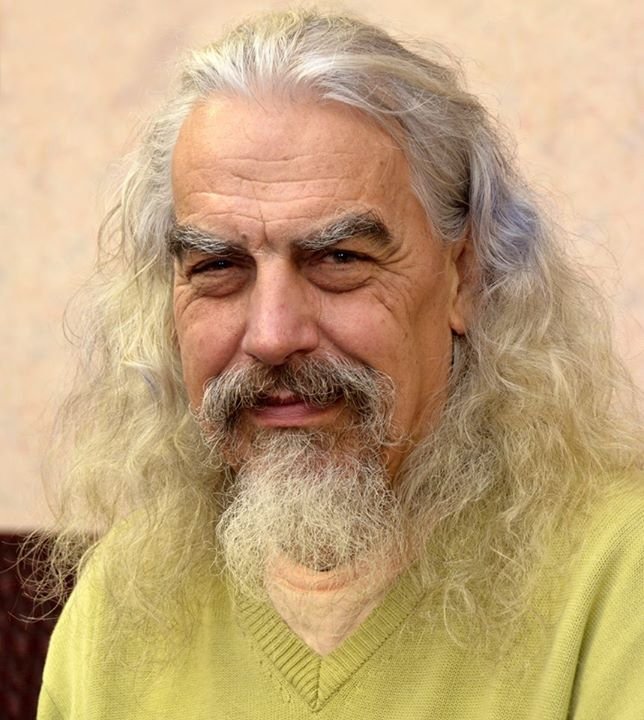
Mike Tanner and Sheila Johns
I had started my own interest in dreams six years earlier, and had explored, individually and with others, various methods of working on dreams, their symbols and meaning. I had particularly worked with yoga – not just the postures or yoga for yoga has five stages, and the postures are just level two – I had dug into my dreams vigorously and studied and practised Jung’s active imagination, and had discovered the power of spontaneous fantasy erupting into consciousness. My book, Do You Dream? was written around the work of those early years in the 1970’s.

I read all these books – with my dog :-)
I read everything I could about the subject and my interest led me to study the work of Franz Mesmer. Subjects placed by him in a relaxed condition experienced spontaneous movements, fantasy eruption, vocalisation and abreaction of trauma. All of these connect with the dream process, in that during the dream we spontaneously experience a dramatic fantasy, movements, vocalisation and sometimes the abreaction of trauma, what we call nightmares. Having watched humans and animals move while dreaming, I theorised that during the dream, in most people the movements being experienced only partially express through the motor nerves and muscles. I had watched a dog, for instance, make obvious running and barking movements and sounds while it dreamt. But the movements and sounds were faint. Yet in Mesmer’s subjects the spontaneous movements and vocalisation are more complete. So I wondered what connections existed between dreaming and Mesmer’s subjects. See Life’s Little Secrets – Functions of dreams
I found other mentions of these phenomena in as diverse places as early Christianity, in which during the Pentecostal phase, worshippers allowed spontaneous movements, vocalisation and connected phenomena. In Indonesia a group called Subud had started, that exhibited the same type of experience. And Dr. Wilhelm Reich, a student of Freud, had similarly found that patients who were helped to relax muscular tension and hold an open emotional state, experienced spontaneous physical movements, fantasy, vocalisation and abreaction. During a visit to Japan I found there a traditional practice called Seitai that has the same format. The modern teacher, Noguchi, even connects the spontaneous movements with the movements made during sleep; the original Quakers, Shakers and in India Shaktipat also allowed spontaneous movements – in other words to allow the dream process to break through into waking consciousness. See: Opening to Life; Mind and Movement; Hallucinations and Hallucinogens
Our problem as an experimental group was to find a way to allow this type of breakthrough for ourselves. To start with we tried two approaches. Jung had already suggested that to break the intellectual resistance against the eruption of fantasy from the unconscious, it was helpful to let the hands start moving where they wished. It is also a fairly well established fact that nightmares frequently reproduce the movements or postures that had been experienced during past trauma. So we tried a form of fantasy that would allow, not just hands, but the whole body to take part. Also we used the technique of reproducing the position experienced in a nightmare to see if the dream would rise into consciousness and continue.
Jung said a way to achieve it is to, “Do nothing, but let things happen.” I found that difficult as for years I had tried breaking through to that ability by hours of meditation and yoga practice. But I found in the writings of the poet T. S. Elliot these words:
I said to my soul, be still and wait without hope
For hope would be hope for the wrong thing; wait without love
For love would be love of the wrong thing; there is yet faith
But the faith and the love and the hope are all in the waiting.
Wait without thought, for you are not ready for thought: So, the darkness shall be the light, and the stillness the dancing.
So I tried giving up all the efforts I had been making and sat for half an hour a day without expectations or any aim or goal. After some months of that, when climbing into bed one night, I heard a disembodied voice say, “You have asked how God touches the human soul – now watch closely.” It was a very impressive experience because I had never experienced it before. I know in the past psychiatrists sent people who experienced such voices to mental institutions. Fortunately I never felt fear because I had explored dreams for years an saw it as an extraordinary experience.
Shortly afterwards my body began to tremble. This was something we were intellectually ready for, as it was described often in cases of this type. Then the trembling developed into powerful movements. My head pulled back hard, my mouth locked open, and my voice, quite without attempt on my part, cried out for my mother. I then relived my tonsil operation I had as a six year old. It was an amazing experience, rather like a record being played, only my body, voice, mind and feelings were the amplifier. This began a process which we entered more deeply into over the years, and with it my personal journey to healing – but also to waking up in and exploring the world of the unconscious. See Seed Meditation; Arm Circling Meditation; Opening to Life
Not only did I find childhood trauma, but also a vast unity of minds of which I was a part. It was a unity that spilled into my life as visions and insight. It needs to be said that what I described was not simply a one off experience, for I was able to continue it week after week for up to twelve years. It was the most amazing and transformative process, constantly involving new healing and new realisations about life. It is now built into me, but it never ends so still grows me. See Vibrate Vibrating Shake Shaking – Integration – Meeting yourself
To make this clear, most people are usually not really aware of two great forces acting on them in life and sleep. But we have two powerful actions working in us. The first is our waking experience based on having a body, its limitations, abilities, vulnerabilities and a particular gender. Our second is the power that gave us life and continues to express spontaneously as dreams, also as our breathing and heartbeat – our life. This I have given the description as the Life Will or your Inner World.
While we sleep our conscious self is largely or totally unconscious, and while we dream our voluntary muscles that move our body are paralysed – therefore another will or motivating force moves our body, keeps us breathing and tries to heal any things that may have put our system out of harmony. So we have a Conscious Will, and what I will call a Life Will. The first one we have experience of as we can move our arm or speak in everyday activities; but the second Will takes over when we sleep. See Sleep Paralysis
This Life will can move us to speak, to move our body, and in fact do things that we cannot do with our Conscious Will and in fact runs all our important life processes like heartbeat, digestion and also dreams. It was allowing the conscious action of this Life Wiil to be used for twelve years that produced huge changes in my life. Even so I am still an infant in what is possible, for we have evolved so far, and are capable of enormous further change.
Something that is possible for many is to be able to switch between the Conscious Will and the Life Will. For simplicity I have called this experience, of what is possible in the waking lucid state.
Waking up the dream process
So that was the beginning. The dream process could break through into waking consciousness. But it was clearer and it was healing. A long standing neck tension and feeling of loneliness disappeared. It wasn’t a nightmare – like Mesmer’s subjects, and Reich’s – it was an abreaction or catharsis and also a wonderful teaching.
So one of the keys we used to unlock the dream process into consciousness was the release of muscular tension. I discovered that most people have unconscious muscular tension. If this is made conscious by having the person become aware of it, what was unconscious is already emerging into consciousness. If the tension is then given time to release, with a body and mental attitude of acceptance, spontaneous movements begin. See: Life’s Little Secrets; Keyboard Condition; Dreams are Like a Computer Game
With further research with numerous people we found abreaction was only one of the many aspects that spontaneously emerged into consciousness. The range was as wide as the subjects covered by dreaming. i.e. sexual pleasure; experimental consideration of a life problem; creative fantasy; ESP; happy play; the exploration of the depths and heights of human consciousness and body, etc.
I suspected as our experience grew, that in normal dreaming, there is a suppression of motor impulses to the body. I also felt that the people we worked with, ourselves included, learned to relax this suppresser, so that full movement could emerge from the dream maker in us, along with often amazingly rich emotional and mental experience too.
Where does so much inspiration and healing arise from? My feeling is that we are all much bigger that we are usually aware of. For example, no plant or creature grows from a dead seed, and each living seed carries within it all the past gathered from all its forebears. So, the seed in your mother’s womb is as old as and even older than human kind, and you carry that wisdom or memories in you. But in this life you developed a new brain, and the memories you gathered this time are what you built your personality from, but beneath that is a very ancient self. It is this ancient self from which such riches arise.
Later I came across the work of Adrian Morrison and his research team at the University of Pennsylvania. They found that a small area in the brain, the pons of mammals, acts as a suppresser stopping the limbs responding to signals from the brain during dreams. When this tiny area of the pons was damaged, the animal lived out its dream fully in physical movement.
From this, researchers have been able to observe what the animals – cats – were dreaming from the movements they made during REM sleep. The cats played with dream toys, attacked or pounced on invisible adversaries, and expressed aggression.
In our own research, our observations of what emerged during periods of conscious dreaming were aided by the subjects themselves being able to give information on what they were experiencing. From these descriptions and from the privileged standpoint of being able to look directly into the dream as it happens, three main functions were observable.
Firstly, the dream process is an expression of the self-regulatory or compensatory function active throughout our being. So dreaming provides an attempt at maintaining health of body and mind. In normal dreams this may be interfered with because we interiorise fears, restraints and goals. During waking dreaming one can recognise and choose to drop the fears and restraints and thus allow the self-regulating action to complete itself. This may sound rather uninteresting, but there is nothing dull about the process which constantly keeps our body in balance and dealing with the environment and food we eat, as well as managing to spontaneously lead us through growth of body and mind.
Secondly the dream process is an expression of the growth process at the psychological level. The dream can be observed to feed upon experience and integrate it into wider understanding and a freer identity. i.e. freer from anxieties, rigid viewpoints, etc.
Thirdly dreams express a contact between ones individual sense of identity and the living consciousness of our total environment. So the dream process is creative in that the individual experiences contact with the process of life, and can learn to relate to it more effectively. Also out of this contact emerges a creative response in action, emotion, art, speech, music, dance etc. In this area the dream acts like a microscope or telescope, through which the dreamer can literally explore the cosmos, or the depths of their psychobiological being. This has all the characteristics of the deepest of spiritual experiences.
Mark Mahowald, a neurologist at the Minnesota Regional Sleep Disorders Center in Minneapolis. “We can have pieces of one state intruding into another, and that’s when things get interesting.
To put that into simple language, REM sleep means we are experiencing dreams. So, they are saying that our sleep process can occur while we fully awake, and people usually call that hallucinations. But it is simply our huge mind appearing, and it is just like dreaming. The voices heard, people seen, smells smelt, while dreaming, although appearing to be outside of us as in waking dreaming (hallucinations) are no more exterior than the things and images of our dreams. With this information one can understand that much classed as psychic phenomena and religious experience is an encounter with the dream process. That does not, of course, deny its importance.
We have noticed that as people learn the way of dropping the suppression of their ability to enter consciously into this deeper level of awareness, they can begin to tap the functions of dreaming when they wish. For instance, this process has a much fuller access to total memory and subliminal impressions than normal waking awareness. So once one has learnt to consciously enter it, one can actually ask a question and have a direct response from the process.
People who use this technique, which I now call LifeStream, have said it is like a very accessible intuition. As an example of using it, my wife and I located where she had dropped her glasses on moorland seventy miles from our home. People dealing with the public can much more easily discover what impressions their unconscious is picking up from the person, without having to sleep on it.
The more I observe this process, the more it seems to me that past cultures used it, but did not recognise it as being an extension of the dream. They considered such movements and vocalisation or intuition as being the work of God, Spirit or spirits. (I am not disagreeing with it being a holy experience at times, but want to stress that through understanding its connections with the dream process, one can avoid many pitfalls and misunderstandings.) It was violently crushed in some ages, being so feared because the church saw it as evil and ungodly to be ably to switch to a state of consciousness in which you knew God as the very core of yourself. In our own culture, which has a fairly recent record of terror and persecution regarding any spontaneous expression of the unconscious, we are only now beginning a wider exploration of its potential. Having closely observed the very direct connection between the process of dreaming and the experience of ESP, religious experience, spontaneous healing, racial memory and cosmic consciousness, it seems the dream, and especially this conscious lucid dreaming, is one of the richest areas to explore.
I also feel that any investigator of lucid dreaming is limiting themselves if they hold the concept this can only occur during sleep. Consciousness can enter into the dream state in such a way as to bring about lucidity. But dreaming can also enter into consciousness in such a way as to bring about the same result.
My observation is that after practising waking dreaming for some time, the quality of sleep and dreams changes. One of the observable changes is the total vibration of the body while sleeping. As our group has never been able to afford the equipment to monitor this, we only have a subjective and physical experience of it. Also, the process in some cases leads towards lucidity, first within the symbols of the dream then the awakening beyond any images or symbols.
To myself as observer of this, and avid follower of the work being done by other researchers, I feel we are on the edge of opening a territory – consciousness – which had never been scientifically explored before. Have other human beings in the past created a bridgehead in the dimension of sleep and death, in which they now live, just as we live in the physical world? Can we learn to wake up there and develop, not simply a few minutes of excitement, but a dwelling place, a work within the realm of consciousness, and an exploration?
These questions I hope the years ahead will unfold to us. If we work together on pushing back the boundaries of human awareness, it might be we who answer them. See – People’s Experience of LifeStream
It Responds to Us
As you become more lucid in dreams and waking, you will gradually become aware of the connections you have, at this level, with those you love, and with those you are linked to by affinities, interests and common goals such as the spiritual work you undertake. Sometimes this arises as deeply felt understanding of particular past cultures and their way of life and the wisdom they arrived at. Sometimes the connections you develop lead you to do specific work in your waking life. Finding love at that level is also extraordinary. You meet someone in your dream life who may live half the world away from you, and who yet has deep links of understanding and love with you. Then gradually you find each other in waking life. That is a very special thing.
The most enduring aspect of such connections is that your life develops meaning and dimensions it never had previously. You sense great depths in yourself. You feel more complete and whole as a person. You know you have a meaningful place in the world, and are more capable of living and loving in it.
This is a process that arises from the unconscious that most people do not know how to allow or work with, though Jung has described it well enough, and ancient cultures knew and used it. (2) It is the action of the dream–forming process emerging into waking consciousness. It emerges because the conscious mind takes on a listening and non–interfering attitude. Just as the dream process, while active in sleep produces spontaneous speech, movements and drama, so, by taking on a passive receptive attitude of body and mind, this process is allowed while awake, and produces similar actions. This involves spontaneous body movements, feelings and vocalisation, expressing themes and drama just as dreams do. It is a form of waking lucid dreaming. It is by no means something only known in present times. If you consider the function of the dream process in the light of what has just been described, what was the Pentecostal experience if not a breakthrough of unconscious material into awareness? It was a breakthrough occurring because the group took on a surrendered and receptive attitude to what they called the Holy Spirit.
What many people do not realise is they can interact with waking lucid dreams, by asking a question and then allowing a response to arise spontaneously. See Intuition – Using It for fuller instructions
In fact, over twenty five years of my experience have been gathered from personal use of, and through teaching, a technique described in my books Mind And Movement and Liberating The Body,1 in which one can explore the unconscious while awake and without drugs, by allowing spontaneous movement and feelings, much as Carl Jung describes in his commentary in the book Secret of the Golden Flower.
I have observed hundreds of people using this breakthrough into consciousness of unconscious material from 1972 onwards, and it greatly enriched my experience of how the dream process expresses, and the usually untapped perceptions we all have emerge into waking awareness. (4)
From these years of observation I believe each of us have a way of organising information and experience that is extraordinarily different to what we usually describe as ‘normal’. In fact ‘normal’ perception, in which our attention is focused on a narrow range of physical sensory impressions, ideas and memories, or what one might call a narrow–beam view of life, is the polar opposite of a wide or global beam view active unconsciously in all of us. The research into right brain and left brain perceptions has given us clearer ways of thinking about this, and made it possible for people to believe there is an aspect of their own mental functioning that is non–dominant and pushed into the background of their awareness. If this can be accepted, the ideas and viewpoints within the book can be better understood.
Lastly, I believe this polar opposite of mental activity, this non–dominant function of perception, is like an extraordinary aid to our gathering of information. Just as a telescope or microscope extends the ability of our normal senses and perceptions, but do not replace the normal sensory and mental action, so this global view acts as an amazing synthesiser of experience, and throws into relief aspects of what we have learned from our gathered experience that we usually totally miss in our normal mode. It is not however, a replacement for normal perceptions.
Because of this, I see the ideas and views presented here as having an effect on our personality and mind, helping us to balance the one–sided action of our rational mind, and lead us toward wholeness.
The technique uses a form of a deep relaxation to enter a dream like state. From that condition you allow your unconscious to spontaneously express, but you can watch the process without being asleep. 22 Here is my description of what happened:
I had a waking dream in which I lived in a world in which there was a huge multinational organisation or ‘company’. The company influenced everything and everybody. I appeared to be about sixteen, approaching manhood, and facing the question of whether to join the company or not.
My feelings at first were that if I did I would be another cog in the huge machinery of its massive workings. I felt threatened by this, as if I would lose my identity. But the organisation would not go away simply because I tried to ignore it. It was everywhere and in everything, so where was there to hide? This led me to feel ready to join. Still feeling a bit threatened I met the manager – not God – but someone experienced in the place. He welcomed me and assured me that there was going to be no attempt to take away my identity as Tony. In fact it would be useful to the organisation if I continued to live and work in my accustomed manner. The only change would be that I was given a gadget like a bleeper. It represented intuition. Through intuition I could link with the Whole – the united being of the organisation of Life. This link would guide, not control, my individual activities to help them harmonise with the overall working of Life. This felt wonderful and so simple and clear. Behind the smallness of my personal being lay the immensity of Life, of which I was a linked part, living my individual life yet working with the whole.
As an example of this here is a lucid experience I had:
I had an extraordinary lucid experience that involved some imagery. One of the clearest of these images was of me in a maze. The walls of the maze were made of hedges, as the whole thing was outdoors. But I realised, because I was lucid in the experience, that I had purposely created the maze as an experiment.
The point of the experiment was that the maze was complicated enough to make it difficult for me to find my way out. So, confronted by the difficulty of emerging from this dream maze, because of the lucidity, I could understand that this was a dream image, and in doing so I simply realised myself as pure awareness and transcended the maze.
I then experimented again and again with this, moving beyond the imagery into pure awareness. This was such an extraordinary experience and realisation it is difficult to put into words with enough impact to make it real.
What it led me to become clear about was that all dreams involve our personal awareness in an environment or imagery of one sort or another. Usually we feel the dream imagery to be so real, and the feelings we experience because of the imagery to also be real, that in a very concrete sense we are trapped. So if we were in a prison cell in a dream, then there would be no way out of that cell without a key. But realising oneself as pure awareness means there is no prison, there is no entrapment, there are no walls to hold you. The imagery of the dream is then seen as simply that – imagery – stuff of the mind that we have conjured and become identified with and lost or trapped in. Even imagery with positive feelings is a form of trap if we identify with them.
I repeat again, this was an extraordinary experience. And of course it relates to everyday life. The more I look at the experience the more I realise that virtually everybody on our planet is trapped in a prison of their own emotions, thoughts and ideas. To recognise this in any reasonable degree leads to an extraordinary sense of freedom. To see that we live our life trapped in the world of thoughts, of emotions, of sexual drives, of fears or beliefs, is astonishing.
This is so like the ending scenes in the film Matrix, that I am sure whoever wrote the script had a profound awareness of this. The hero of Matrix breaks through the surface appearance of things and enters into the very programming of the apparent world around him. This is what happens when we wake up to what underlies all our experience whether as a physically external world, or as our own dream world.
For further instruction see The LifeStream and People’s Experience of LifeStream

Tony and Sheila just before her death
Lucidity – The New Frontier
Lucidity Part 5
Sleep is a strange country. In it we lose sense of self in unconsciousness. Or dreams take us into realms of extraordinary experience in which we are still largely unaware. But throughout history there have been individuals who have described a different meeting with sleep. They wake up in what is usually a dark, unconscious world. Or in the midst of a dream they realise the situation and relate to the dream in a new and dynamic way. See Answer to Critics
This condition, usually called “lucid dreaming” holds in it enormous possibilities and advantages unavailable in normal sleep or dreaming. To understand these possibilities and something of what takes place in lucidity, it is helpful to realise that during sleep our sensory input is largely switched off, and while dreaming the voluntary muscles are paralysed.
Usually we enter this sightless, soundless, immobilised world of sleep unconsciously. But what would it be like to travel that deeply beyond sensory input, that deeply into the substrata of the mind and bodily functions with awareness? What would it be like to enter sleep with critical faculties, with active curiosity, and some ability to direct what we found? What would it be like to carry the bright torch of personal awareness into the depths of the usually unconscious body and mind?
Well, for some it is like an exploration of an archaeological dig, except it isn’t dead bones or fragments of a long past we find. But living experiences of the different levels of our past. See Levels of Awareness
Here is a frontier a few people have crossed. Like the frontiers of sea and sky that past generations conquered, this frontier of the mind holds enormous treasures and benefits. However, unlike the frontiers presented by the exploration of the oceans and space, the crossing of this frontier is open to us all if we are courageous enough to go on such a journey. See Archetype of the Search for Self
If we use the image of a large building to represent the mind and body, the upper levels above ground depict waking awareness and physical activity. But beneath ground level, in the place of sleep and the unconscious, there is far more space than above ground.
In these further spaces of the mind people have found access to the motivations, fears and responses that lie behind their waking success or failure. They have a gateway to the roots of creativity and innovation that can enrich their everyday life. The processes of our body, usually beyond control, can be influenced to improve health.
As one lucid dreamer described, “I literally woke up in sleep, and I could observe how my body was dealing with a chest infection, and how a rigid attitude I had was creating tension in my neck, and thus interfering with the healing process.”
Another lucid dreamer said that this new state is like a wonderful play area, or a gymnasium for the mind and emotions. This enabled him to stretch or enlarge his abilities, his perspectives, in a way that was difficult in waking life.
In brief, some of the possibilities of lucidity are:
1 – The ability to do the “housework” of your mind and emotions, cleaning up old conflicts, unhelpful responses and habits that generated in childhood.
2 – The possibility of working with the processes of healing in the bodymind and thereby enhancing your health.
3 – The unconscious has long been recognised as being a major resource used by great artists and musicians. So lucidity opens this treasure house of creativity.
4 – The unconscious is the generator of helpful hunches, of intuition and wider perception. This is partly because it holds the whole library of our memories and experience. It also creates new patterns of connectivity between previously unconnected pieces of gathered information. So lucidity brings a new sense organ.
5 – Quantum physics has begun to show that the roots of our being are not in the atom — the material object that led to our view we are only a body that lives and dies. The new view suggests that the very foundation of our being lives beyond time and space. In fact many lucid dreamers appear to experience or explore this condition. This enables them to witness events away from their sleeping body. Out of body and near death experiences are part of lucidity
6 – Real scientific research has helped to clarify how lucidity can be accessed. There are clear methods one can use to reach toward this personal experience of crossing a new frontier into an enlargement of our world and our abilities. This need not remain something only experienced in sleep.
See: Life’s Little Secrets; Techniques for Exploring your Dreams; for further suggestions Dream Yoga and Lucid Dreaming
Link to List of Chapters – Link to Part 6
Lucidity – Awake In Sleep
Lucidity Part 4
Sometimes in the practice of deep relaxation, meditation or sensory deprivation, our being enters into a state akin to sleep, yet we maintain personal waking awareness. This is like a journey into a deeply interior world of mind and body where our senses no longer function in their waking manner, where the brain works in a different way, and where awareness is introverted in a degree we do not usually experience. It can sometimes be a frightening world simply because we are not accustomed to it.
In a similar way a measure of waking awareness can arise while dreaming. This is called lucid dreaming. During it we can change or wilfully direct what is happening in the dream in a way not usual to the dream state.
“Only a handful of psychical researchers studied lucid dreams and many people associated such work with the paranormal or occult. Orthodox scientists who studied sleep were not interested. They argued that lucid dreams could not possibly be real dreams at all; that the very idea of awareness during a dream was a contradiction in terms. So their theory went, lucid dreams must be occurring in brief moments of wakefulness or in the transition between waking and sleeping – but not in the kind of deep sleep during which rapid eye movements (REMs) and ordinary dreams usually take place. In other words, lucid dreams were not really dreams at all.
How could the dreamers of lucid dreams convince them otherwise? After all, when you are in a deep sleep and dreaming you cannot shout, ‘Hey! Listen to me. I’m dreaming right now.’ The muscles of the body are paralysed. You cannot even move a finger.
The breakthrough came when sleep researcher Keith Hearne, at the University of Hull, realised that, of course, not all your muscles are paralysed. In REM sleep, the eyes move. So perhaps a lucid dreamer could signal with eye movements. It was just over 10 years ago that Alan Worsley, a lucid dreamer, first managed this crucial trick. He decided to move his eyes left and right eight times in succession whenever he realised he was dreaming. In the sleep laboratory, Hearne had him connected to a polygraph and could see the string of extreme eye movements clearly recorded in the middle of REM sleep. So the doubters were wrong. Lucid dreams are real dreams and do occur during REM sleep.” Quoted from New Scientist vol 178 issue 2397 – 31 May 2003, page 26
Example: ‘I had backed my car into a big yard, a commercial area. My wife, two of my sons and I got out of the car. As we stood in the yard talking I realised there was a motorbike where my car should be. I said to everyone, ‘There was a car here a moment ago, now it’s a motorbike. Do you know what that means? It means we are dreaming.’ Mark my son was now with us, and my ex wife. I asked them if they realised they were dreaming. They got very vague and didn’t reply. I asked them again and felt very clearly awake.’ William V.
William’s is a fairly typical lucid dream, but there are features which it does not illustrate. During the days or weeks prior to a lucid dream, many people experience an increase in flying dreams. The next example shows another common feature.
Example: ‘In many of my dreams I become aware that I am dreaming. Also, if anything unpleasant threatens me in the dream I get away from it by waking myself.’ Alan LBC.
Lucidity often has this feature of enabling the dreamer to avoid apparently unpleasant elements of the dream. The decision to avoid any unpleasant internal emotions is a common feature of a person’s conscious life, so this aspect of lucidity is simply a way of taking such a decision into the dream. Some writers even suggest it as a way of dealing with frightening dreams. Avoidance does not solve the problem, it simply pushes the emotion deeper into the unconscious where it can do damage more surreptitiously. Recent findings regarding suppressed grief and stress emotions, which connects them with higher incidence of cancer, suggests that suppression is not a healthy way of dealing with feelings. See The Healing Experience
Another approach to lucidity is that it can be a sort of playground where one can walk through walls, jump from high buildings and fly; change the sofa into an attractive lover, leave ones body, and so on. True, the realisation that our dream life is a different world and that it does have completely different principles at work than our waking world is important. Often people introvert into their dream life the morals and fears which are only relevant to being awake in physical life. To avoid a charging bull is certainly valid for waking life. In our dream life though, to meet its charge is to integrate the enormous energy which the bull represents, an energy which is our own, but which we may have been avoiding or ‘running away’ from previously. Realising such simple differences revolutionises the way we relate to our own internal events and possibilities. To treat lucid dreams as if they offered no other attainable experience than manipulating the dream environment, or avoidance of difficult emotions or encounters, is to miss an amazing feature of human potential.
Example: ‘In my dream I was watching a fern grow. It was small but opened out very rapidly. As I watched I became aware that the fern was simply an image representing a process occurring within myself which I grew increasingly aware of as I watched. Then I was fully awake in my dream and realised that my dream, perhaps any dream, was an expression of actual and real events occurring in my body and mind. I felt enormous excitement, as if I were witnessing something of great importance.’ Francis P.
It is now acceptable through the work of Freud, Jung and many others, to consider that within the images of the dream lies valuable information about what is occurring within the dreamer, perhaps unconsciously. Strangely though, it is almost never considered that one can have direct perception into this level of internal ‘events’ without the dream or without dream interpretation. What Francis describes is an experience of being on the cusp of symbols and direct perception. Considering the enormous advantage of such direct information gathering, it is surprising it is seldom mentioned except in the writings of Corriere and Hart – The Dream Makers.
Example: ‘After defining why I had not woken in sleep recently, i.e. loss of belief, I had the following experience. I awoke in my sleep and began to see, without any symbols, that my attitudes and sleep movements expressed a feeling of restrained antagonism or irritation to my wife. I could also observe the feelings were arising from my discipline of sexuality. Realising I did not want those feelings I altered them and woke enough to turn toward my wife.’ Francis P.
After the first of his direct perception dreams, Francis attempted to use this function again, resulting in the above, and other, such dreams. Just as classic dream interpretation says that the dream symbols represent psychobiological logical processes which might be uncovered by processing dreams, what we see in Francis’ lucidity is a direct route to self insight, and through it a rapid personal growth to improved life experience. Such dreams provide not only psychological insight, but very frequently, a direct perception of processes occurring in the body, as the following examples illustrates.
Example: ‘Although deeply asleep I was wide awake without any shape or form. I had direct experience, without any pictures, of the action of the energies in my body. I had no awareness of body shape, only of the flow of activities in the organs. I checked over what I could observe, and noticed a tension in my neck was interfering with the flow and exchange of energies between the head and trunk. It was also obvious from what I could see that the tension was due to an attitude I had to authority, and if the tension remained it could lead to physical ill health.’ C.
Example: Taken from CompuServe files – contributed by Oliver W. Markley. First appeared in Whole Earth Review, Fall 1991:
It was as though the dream I had been watching was a movie, and instead of looking at the screen on which it was being projected, I somehow began looking into the lens of the movie projector. As I did so, the energy of my gaze ‘melted’ the movie that was passing through, which in turn allowed my gaze to penetrate deeper into the movie process, seeing where the movie came from. I knew that I was about to get an answer to some of my deepest questions about dreaming: What is the true nature of dreams? Where do they come from? What function do they play?
I was somehow able to see first the more superficial levels of dream process within myself, and then deeper levels, until the depth of my gaze revealed processes so alien that I was no longer able to understand them. At this point I returned my attention to the need to record the dream, and woke up. There were five categories of dreams in all. The function of the first type of dream process I saw was pure entertainment.
The second reviewed current concerns and unfinished business, and the attempt to find solutions to problems therein.
The third process involved the reception of guidance from higher wisdom sources within the mind. At a superficial level, this guidance dealt with the concerns of the second type of process; but at a deeper level, it dealt with topics that came along with the guidance process. These topics seemed to concern the future, and the evolution of the mind and soul both individual and collective.
The fourth type answered a question about the familiar assertion that ‘most of us use but a small part of our mental capacities’ (some ‘experts’ say we use only about 10 percent, others that it is as small as 2 percent). I had often wondered about this, thinking that in nature, if things don’t get used, they atrophy. If we have all this excess mental capacity that we aren’t using, why doesn’t it atrophy?
The fourth mode seemed to be some sort of gymnasium, with a range of mental, psychic, and spiritual exercises to keep the brain/mind fit.
The final type of dream content was totally surprising. As I penetrated deeply into my internal dream process, what I found can perhaps be best described as being visited by aliens.’ The ‘foreground’ resembled a resort hotel, a place for sightseeing and recreation. It was benign and human-feeling, although the visitors were anything but human! As I explored more deeply, however, things got so alien that I couldn’t understand them in the lucid-dream state.
As I reluctantly turned back from this journey, I realised that I had an answer to yet another question about dreams that had long puzzled me: ‘Why are our dreams so highly symbolised? ‘
I now understood why the deeper reaches of dream life must be camouflaged by symbols: the self-protective belief systems which dominate waking life are simply unable to accept the alienness of deep dreaming process; symbolic camouflage artfully bridges the gap.
This last category of dream represents what I call ‘the L-Squared dream,’ a lucid dream in which the dreamer is lucid about the process of being lucid. To become lucid in this way, it is helpful to imagine having a miner’s lamp on one’s forehead, a metaphoric ‘truth beam’ that reveals the underlying truth of whatever is involved.
An effective way to develop lucidity is to frequently consider the events of waking life as if they were a dream. Try to see events as one might see dream symbols – what do they mean in terms of ones motivations, fears, personal growth? What do they suggest about oneself? For instance a person who works in a photographic darkroom developing films and prints might see they were trying to bring to consciousness the latent – unconscious – side of themselves. A banker might feel they were working at how best to deal with their sexual and personal resources. A person working with children who are in some way injured or deficient might be trying to heal their own inner child. In this way one might actually apply what is said in this dream dictionary to ones outer circumstances.
The second instruction is, on waking, at a convenient moment, imagine oneself standing within ones recent dream. As you get a sense of the dream environment, realise that you are taking waking awareness into the dream. From the standpoint of being fully aware of the dream action and events, what will you now do in and with the dream? Re-dream it with consciousness. For example the things you run from in your normal dreaming you could now face. See: Techniques for Exploring your Dreams; The Waking Lucid Dream; for further suggestions Dream Yoga and Lucid Dreaming
See also: processing dreams; Lucidity- The New Frontier; Creativity: The Lucidity Institute.
Link to List of Chapters – Link to Part 5