Posts Tagged ‘rejected spiritual nature’
Levels of Awareness in Waking and Dreaming
There is an immense amount of obscure writing in connection with words such as spiritual, consciousness, God, and death. However, most of us come back to the fact that everyday life confronts us with the most observable experience of reality that we have. Fortunately, if we carefully examine what we experience every day, much of the mystery surrounding the words mentioned disappears.
If we start with the word consciousness or awareness, we can begin to open the book of our own life experience. Daily we pass through an extraordinary change that we often take so much for granted we miss the wonder of it. The change occurs between sleeping and waking. For most of us being awake is when we most fully feel ourselves. Compared with this sleeping is a period during which we lose any focused awareness of being an individual, and we sink into what is generally called unconsciousness — the lack of personal awareness.
This swing between waking and sleeping can be seen as the extremes within the possibilities of our experience. Sleeping and waking are the polarities, the North and South Poles of what we can confront. In quite a real sense we can say there is nothing beyond what is included in those polarities. For without consciousness there is nothing.
Obviously that is a very general statement and needs further explanation. So to start with let me give you an example. When I was a youth I met a man who quite subtly led me to listen to music in a way that I had never done before. He played a piece of Beethoven and said that some people believed they could hear several themes playing at any one time. He asked me how many I could hear. I listened carefully and thought I could hear three or perhaps four. He then played Beethoven’s pastoral symphony and asked me to tell him when I thought the storm was approaching.
These two exercises helped me to listen to music in a new way and began my appreciation for the classics, something that I had not done previously. It also showed me that things existed that I had not been aware of. The music had been there, and I had heard it before, but I had never known there were several themes playing at once. I had never listened carefully to the music.
I use that example as an analogy of the way we live our life. There is so much of our experience that we do not “listen to carefully” and so do not appreciate its depth or possibilities. There are many aspects of waking life that this applies to, but it is particularly relevant to sleep. This may seem like a strange statement because in sleep we lose awareness, so how can we more fully appreciate it?
Of course, one of the well-known ways of discovering what lies within the obscure depths of sleep is to explore the resources of one’s dreams. When this is done the apparently black depths of sleep begin to reveal an amazing life and energy. Light is taken into the darkness. Things become visible that were hidden. What was unconscious begins to become known. The huge area of our experience that seemed to be a blank gains life and substance. Then the unconscious is recognised as an area as vast and varied as the physical world.
However, it has to be remembered that dreams occur when our core self is almost awake. During sleep the core of our being dips deep into what we call unconsciousness or ‘the unconscious’. Several times during sleep our core rises from those depths almost to the point of waking. At that point we dream. In a dream, deeper levels of our being express in the imagery and sensations of our waking experience. They express in the images and experiences we have gathered through our senses while awake, and are largely culturally programmed. It is only when we break through the dream images and touch the forces those images portray that we begin to move into the unconscious. This is explained more fully in How it Flows and Answer to Critics
The picture on the right graphically illustrates what it is like to break through surface appearances and enter into the formless worlds of experience contained in our unconsciousness.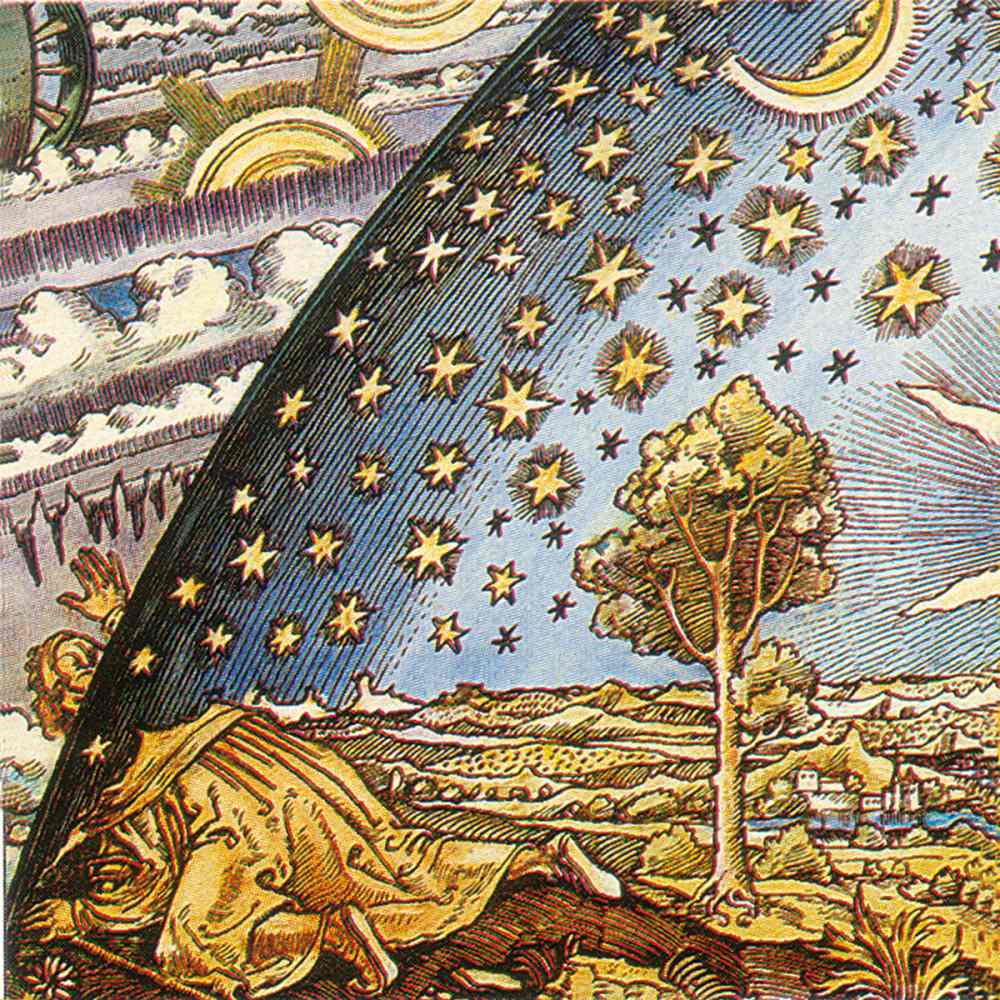
When this happens we begin to meet the cosmic forces that form our being and the universe.
In this way, the organic, cellular and other ‘life’ processes that are usually unknown and unconscious are met. Focussed consciousness can dive all the way down through all the levels of being and know them.
The Polarities of Existence
I want to bring the word “natural” in here because it is relevant to what is being explained. If we see animals as examples of what is natural, or what happens in nature without human intervention, then we could say that it is not natural to have one’s appendix taken out when it is inflamed. It is not natural to have breast implants. It is not natural to have vaccinations against disease. But these things are all options we are capable of, along with the countless other things that humans do because they are possible. So although animals do not spend time examining their dreams, it is possible for us to do so, and thereby expand our awareness of who we are and what the possibilities of our existence are. Perhaps it was not natural for human beings to travel to the North and South Pole’s, or to journey into space; but by doing so we have enlarged our awareness of the environment and the cosmos in which we live.
There are, of course, other ways in which we can explore the polarities of our experience. Meditation, and the use of certain drugs, enables people to explore areas of experience that do not occur “naturally”. For instance, some forms of meditation enable the practitioner to enter the condition of sleep while maintaining a certain amount of critical awareness, as happens in lucid dreaming. This really is a voyage of exploration, and is different to what happens when a person explores a dream. Exploring a dream brings contents of the unconscious into waking experience. Meditation and lucidity enables a personal dive into levels of awareness that are usually cloaked in unconsciousness. Perhaps this can be likened to the first humans who dived under the sea with a submarine and began to personally witness the immense range and variety of life that exists under the surface. See LSD Hypnosis and Dreams
But it has to be mentioned that the imagery of dreams and lucid fantasy are still almost at the level of waking.
Almost immediately after Albert Hoffman discovered LSD in 1943, it was used for psychological research and psychotherapy. During that period of intense research and therapeutic use, huge areas of the unconscious became available for exploration and mapping. As with meditation, the person’s conscious sense of self could travel in areas that were usually blanketed by the fog of sleep. The human experience behind such obscure words as spirit and God became available to the West for analysis and study – although Eastern explorers had done an excellent job centuries before. The depths and heights of what is usually unconscious within us revealed worlds completely different to what we know during waking life. Those worlds are no less real than the world of our conscious personality. They are in fact a balancing polarity to what we know and experience in our daily life. (1) See: The Mind Bomb.
From the research mentioned it was seen that in waking life we generally have a sense of ourselves as distinct from anybody else. Thus your memories and experiences seem completely separated from those of another person. We refer to this personal and unique set of experiences and responses as, “Me” — or “I”. When the researchers examined the experiences of people exploring their deep unconscious, it was seen that this sense of self gradually diminishes. There are levels of this experience that can be likened to what was said about the polarities of experience. At one end of the polarity is focused self-awareness. At the other end is an ocean of awareness without any focused sense of self. This ocean of consciousness that is at the core of our being is what has been called God in other cultures or Nirvana. In India it has been described as Sat-Chit-Ananda – Being-Consciousness-Bliss. When we discover it as the centre of ourselves it is no longer seen as exterior or distant. But in waking life where we lack awareness of it we see it either as non-existent or as separate and distant. See: Realms of the Human Unconscious by Stanislav Grof.
But many people in the west have an image of God as a sort of great man in the sky; that is because the Catholic church has presented it as such an image, and it has been painted over and over again. But the Christian religion was an outcrop from the Hebrew view of God, which was Ain Soph – the Unknowable God. This was because the creative force was ‘Everything’ and so could not be presented as a thing, such as a man. So, I am supposing the Catholic church purposely changed that. See Criticism – Answers To – Big Bang and God are the Same
One interesting part of this exploration of the depths of human consciousness is that if you go deep enough you arrive back at what we call the external or physical world. The formless and the formed are seen to be different ends of the same thing. The ancient symbol of the snake with its tail in its mouth illustrates this closed system. Quantum physics, digging deep into the world of form, is arriving back to what mystics of all ages have discovered in their inner depths. See Tao of Physics by Fritjof Capra
This leads us to an extremely important point – what we are not capable of being personally aware of does not exist for us. In a very real way nothing exists for us unless we can be aware of it in some way. There is nothing outside of consciousness. Or to put it another way, without personal awareness nothing exists for us. Therefore the polarities of our awareness hold the whole cosmos of experience for us. If most of that lies in darkness in our ‘unconscious’ then much of what we hold as a possibility remains unknown. See: The Dancing Wu Li Masters.
The Remarkable Roots of Being
Seen as a circle in which there are polarities of focussed awareness at one end and unfocused sentience at the other, helps us to realise that what occurs when self awareness plumbs the depths of its source – the unconscious – is remarkable. The roots of our being lie in the mysterious depths of subatomic particles. At this very moment you contain in yourself that level of existence. It is also a fact that what you are has emerged from, and is intricately enmeshed in, the universe and its origins. Also, you are what you are because life on this planet emerged and you hold in yourself in your very genes, cells, organs and overall structure, the full history of that emergence. So diving below the level of waking awareness is an entry into the most profoundly amazing discovery of what you are and how you have come into being. There is not space in this short feature to spell that out, but such books as The Holographic Universe and Realms of the Human Unconscious, vastly extend what is being said here.
So, with a little reflection it can be seen that each of us experience these polarities every day. As our sense of self diminishes we become unconscious. In the depths of sleep the self we know in waking does not exist — or at least, it is greatly diminished. But these areas of human experience can be known if we learn to “listen carefully”. This is what some forms of mental and emotional discipline helps us to do.
Anyone who seriously undertakes this voyage into what was previously unconscious meets phenomena that at first seem strange, or sometimes even frightening. Remember that usually we enter this realm of the unconscious in the form of sleep and dreams, and in most cases dreams use our cultural and everyday imagery and experience. So our focused self-awareness is guarded from a direct confrontation with these phenomena. The nearest most of us get to experiencing life under the surface is when we recall a dream. And in fact a dream illustrates this first level of what we meet. See Jesse Watkins Enlightenment
But there are difficulties in meeting our larger self
The human personality – the You that you call yourself, with a name, is only a tiny thing. It is moved and tossed around by all manner of drives, ambitions, emotions, fears, temptations, worries, love and desire with its pains and hopes; it is something we take so seriously and get carried away into awful situations; we take many sorts of pain killers to deal with ourselves. Things such as alcohol, coffee, medical drugs and street drugs, and yet we are still prone to break down, as can be seen by the number of people who need antidepressants or are totally lost in themselves. See Programmed
And a lot of the pain and the mental misery are largely because we put so much trust in what we think and feel. We are totally identified with it. Yet thoughts are simple photocopies of reality and are never the real things. They are just sounds we make into words to help us move around a strange and confusing world. And feelings to are simply a response to what we meet. Do you believe the person you think of is them? It can only ever be your own thoughts and feelings about them.
We are small because we know nothing about who we are and how we came to be – except of course in the words we have been taught are really the truth. We do not know anything about the mass of things that keep is alive – except what we have read, yet more words. We are largely unconscious of what makes our heart beat, and all the millions of things that life behind our existence does, so we are moved by whatever moves us – whatever that is – childhood fears and social programming, or haunted by the past.
Also as we begin to meet the Hugeness that we are we often react to it with fear or panic. So we dream or being attacked by aliens or frightening creatures. If we realise that they are things we have created with fear we will pass on.
We are many things and are unaware of our own complexity
We are probably all acquainted now with looking at the instruments on the dashboard of a car. On such a panel we can see an indication of the speed, of the amount of fuel, and of the temperature of the water cooling system. When we look at any of these gauges we are not of course directly aware of the hot water, of the amount of fuel, or of the engines revolutions. We are only seeing a graphic display of what is taking place in unseen parts of the car.
Our body and mind are far more complex than any car. There is far more that goes on in the hidden places of our being than ever goes on in an engine. But dreams perform the same function as the gauges on the dashboard. They illustrate processes that are going on in the depths of our body and mind — and in fact often in the very deepest places of the unconscious. As with the gauges, we are not directly experiencing the processes displayed in images and drama. What we are witnessing is a process that puts into imagery, into emotions and drama, things that in themselves may be quite formless, that may never previously have come near to verbal definition or conscious conceptualisation. The word imagine has its root in the word image. We literally put into images those things that lie beyond our usual senses in the formless and timeless regions of our being.
So this image making process, this myth forming creative activity of dreaming, forms environments and experiences that seem as convincing as waking life. If we find ourselves in the midst of a dream, or in the midst of this virtual reality without understanding how it works, we may be completely immersed in its apparent reality. I suppose this might be likened to looking at our hand, then looking at it with a microscope, and then with an electron microscope. There are worlds within worlds and you hold them all within you and can be conscious of. See Summing Up – Jesse Watkins Enlightenment
For many people, especially those who have stumbled upon this inner journey without guidance or understanding, or have been “opened” to it through the use of a drug, shock or mental illness, this is as far as they can travel. They become lost in the imagery and the emotions, the conflict and fears, the subtle and enchanting glamour or illusion of this first level. Or they may lose some of their mental balance, haunted by what is revealed or released into consciousness, as often happens to people who frequently take mind expanding drugs without the skills to deal with what they confront. They release these aspects or ‘creatures of the unconscious without having learned the psychotherapeutic tools or personal disciplines and understanding to integrate what they meet. They are then haunted by what emerged.
Many myths throughout the ages have illustrated this part of the journey in various ways. One Arabic myth instructs the traveller to use a sword to cut down whatever appears in front of them, even if it seems to be their mother or father. Perhaps this is a bit harsh, but it does point to the fact that at this level things are not what they may appear. Neither are they complete illusions. They are images and environments portraying something. The aim is to break through the surface level to the source from which they emerge. The point being that if you can destroy or cut through an image you are still not meeting its source. The core self is indestructible. But whenever we dream its images are not like real life. Because a dream is nothing like outer life where things could hurt you, but is an image like on a cinema screen so that even if a gun is pointed at you and fired it can do no damage – except if you run in fear. So all the things that scare you are simply your own fears projected onto the screen of your sleeping mind.
The Indian sage Ramakrishna says of his own journey beyond forms, “Tota Puri taught me to detach my mind from all objects and to plunge it into the heart of the Atman (core self). But despite all my efforts, I could not cross the realm of name and form and lead my spirit to the Unconditional state. I had no difficulty in detaching my mind from all objects with the one exception of the too familiar form of the radiant Mother, the essence of pure knowledge, who appeared before me as a living reality. I said to Tota Puri in despair, ‘It is no good, I shall never succeed in lifting my spirit to the “Unconditioned” state and find myself face to face with the Atman.’
He replied severely, ‘What! You say you cannot? You must!’ Looking about him, he found a piece of glass. He took it and stuck the point between my eyes, saying, ‘Concentrate your mind on that point.’ Then I began to meditate with all my might, and as soon as the gracious form of the Divine Mother appeared I used my discrimination as a sword, and I clove Her in two. The last barrier fell and my spirit immediately precipitated itself beyond the plane of the ‘conditional’, and I lost myself in Samadhi (unconditioned bliss).
However, for many people there is an enormous amount to be experienced and used at this level, existing as it does amidst the images of the ‘psychic’ realm, and expressing in a sort of more fluid mirroring of the three dimensions, time and space limited experience we meet through our senses and body. This is the world the psychic works in when they extend their perceptions to ‘communicate with the dead’, tell us about our life situation without us giving clues, and having glimpses of the future.
In attempting to understand these experiences, it must be remembered that beyond the images of a person, of a situation, of voices heard, in the way dreams present things, lies a more formless dimension of experience. It is one where the boundaries of personality and distance, time and space break down. So for many people, it is an easier task to look at this formless dimension through the translating instrument of dream image formation, and see people, places, environments, or hear voices talking to them.
The Guardian of the Threshold
This breaking through into other dimensions of experience, which occurs in successful dream insights, mediation and in some facilitated drug use, takes one to the next level of the unconscious.
In one of the old western traditions in which people were guided to make this journey, the illusionary imagery and environments were called the psychic world, as described above. One was warned that at some point you would meet The Dweller or Guardian of the Threshold. Sometimes this was illustrated as a shadowy and perhaps frightening figure, the sort we often meet in scary dreams. If you could face the Dweller without running away, the realm you enter beyond the Guardian was described as the meeting with all the forces you had perhaps unwittingly released or created in the past. They are the factors or experiences out of which the waking experience of your life has been woven. In the past this was called one’s fate, kismet, or karma. Today we tend to think of it as the many influences carried from genes, birth and early childhood, that shape the way we respond in our daily life; in other words, inherited tendencies, cultural programming and psychological traumas. But the Guardian also represented influences from prior to ones present birth. See Reincarnation
Not only is it a guardian, but also, if you meet it without fear and pass the tests it presents you with, it is also a guide and companion on the journey. If you meet this by actually facing the ‘scary monster’ of a nightmare, a similar thing happens – you meet forces that arise from the past and shape your present personality.
Any deeper exploration of the unconscious shows that it is not simply one’s infancy and its problems that we face. There are influences streaming from the long past through the body that we have inherited. There are the family influences and massive inputs from the culture we were born into, and also other intangible forces playing upon our life. As we cut through the images and drama of the dream creator, we begin to discover and gain insights into this incredible process of creation that forms and guides our life. See The Conjuring Trick
The image of Frankenstein’s creation illustrates the Guardian of the Threshold very clearly. The Guardian, like Frankenstein’s creation, is made of many different people or bodies. We face, in the Guardian, what we have created in our long past; the many personalities assumed, and lives lived, by our core self. See: Archetype of the Shadow.
Light of My Life
This world of the formative, of the archetypes, of the physiological and the cosmic processes — even the intelligences – that are the creative matrix out of which we have arisen, is strange and wonderful. Very often the traveller has to lose a great deal before they can safely explore this realm with awareness. The reason for this is quite simple. Identity, the ego, what one calls self, is an extremely new and vulnerable thing in terms of evolution. It might be likened to the fragile filament in an electric light bulb. When the current is switched on the filament glows brightly, and we can liken this to personal awareness. The current passing through us is the air, water and food that flow through in an almost continuous stream to form our energy. Whether we consider the electric light bulb, or our own sense of self, behind the existence of both, immense activities take place making them possible. The light bulb needs a great deal of cable, switching gear, and some sort of generator. Our personal existence needs a great deal more. The whole universe lies behind the ‘light’ of our self awareness. Without the cosmos we do not exist. Without the sun and the earth we do not exist. Without the bacteria and processes of plant and animal life on our planet we do not exist. Without other human beings who have taught us language and perform the constant background and foreground to our life, we do not exist.
However, this fragile thing we call self often builds powerful defences or boundaries to protect it from knowing its dependence upon the forces forming it. These defences often show themselves in rigid beliefs, in a fog of ignorance, in emotional outbursts against anything that might be felt to threaten, and also of course in the many ways in which we use drugs such as alcohol, medications and nicotine to deaden our sense perceptions of what is taking place around and within us. We do this because our ego is fragile and vulnerable. We may also do it because the journey into the unconscious diminishes the sense of self, and this can be threatening. It can be felt as a form of death, or an experience of breaking open. The boundaries that were so necessary at a certain stage of our growth fall away. The journey into that more inclusive polarity of our being is actually a form of growth, of greater maturity, of a meeting with something more permanent than the fragile ego.
Another way of looking at the business of defences against a widening awareness of oneself is to see all of it as a process of growth. Perhaps we cannot let go of our defended relationship with our identity while we still feel vulnerable or insecure. Perhaps the change comes about naturally once we feel confident enough to let down our defences.
If you have managed to enter this level of experience for any length of time you will be confronted by an enormous paradox. This is, in essence, no different to the paradox we face every day in experiencing focused individual identity, and the loss of that identity in sleep. What we meet when we pass beyond the dream stage in which everything is represented as images external to us, is a vast ocean of mind or consciousness in which all that has lived exists. It exists as an unseparated part of the ocean of awareness — yet at the same time it can manifest independently and as a separate identity. This applies to oneself also. You sense yourself as having no real separate existence from what lives and knows itself in all things. Yet at the same time you experience your own separated identity. This is a difficult paradox, and human language tends to express things as either this, or that. Things cannot be both things at once. But in this journey to one’s own centre such separation is transcended. You experience a sense of things that transcend the limitations of time and space. Things can be here and there at the same time.
The old Newtonian physics has never included mind or consciousness in its equations. As the atom was the fundamental particle, and the atom was a physical object, it was seen that there could be nothing beyond the body, its molecules and atoms. Therefore personal awareness was a trick played by the play of chemicals, and organs in the body. As for consciousness surviving death, it was seen as a childish superstition created by weak minds to deal with fear of death.
But the new physics, quantum physics, has since its earliest days included mind and consciousness in its concepts. It has had to because from the earliest days of quantum experiments two unimaginable phenomena were unveiled. Irish physicist John Stewart Bell put forward a quantum theorem that has revolutionised the way reality is considered. In brief, the theorem states that when two sub-microscopic particles are split and moved to a distance from each other, the action on, or of, particle ‘A’, is instantaneously reproduced with particle ‘B’. This interaction does not rely on any known link or communication and is considered to stand above normal physical laws of nature, as it is faster than light.
Faster Than Light
Prior to such findings it was thought nothing could transcend the speed of light. Nick Herbert, in an interview published in High Frontiers writes, ‘THERE ARE LOTS OF THINGS that are being kept from the public as far as the subjects of physics and consciousness are concerned. Bell’s Theorem was proved in 1964, and it is still not taught in physics classes, and you don’t hear it on your science news programs. A theorem is a proof, and no one has found a flaw in this theorem. It’s such a simple proof that a high school kid can understand it. So physicists can understand it. They have various ways of trying to ignore it, but it can’t be refuted because it’s so simple.’
The second finding that transformed our understanding of life and the universe is that an electron can be either a particle or a wave like energy. The change occurs when a human observes it. If we do not observe it an electron remains as an energy form. If we observe it a transformation occurs and it changes into a particle. This locks human consciousness into the very fundamental workings of the deepest levels of our body and the universe. In fact quantum physicists have said we are co-creators because consciousness alters ‘reality’.
To quote Gary Zukav, ‘Quantum mechanics is THE theory. It has explained everything from subatomic particles to transistors to stellar energy. It has never failed. It has no competition.’ The implications of the theorem are enormous. Something can be in two places at once. Apparently distant objects, or people, are intricately linked in an immediate way. There is no separate existence as we previously thought. Our view of the world is not one supported by the facts of physics. Time and space are transcended. David Bohm, an eminent physicist, goes as far as to say that all things in our observable universe are inextricable linked. Nothing has separate existence. Also we all have infinite potential
When we personally meet this level of experience, when we transcend our awareness of separateness, the experiences we have gathered through our everyday life are gradually transformed. They shift, wherever possible, into concepts or insights that approach the universal or timeless and unchanging. Just as our physical body is formed by the continuous partaking of food water and air, so a more permanent body or identity is formed by the transformation of sensory experience into a body or identity that has connections with the unchanging and eternal. Buddhism calls this the diamond body, the imperishable self.
We can glimpse the meaning and possibility of this by once more looking into everyday life. At some point in human history an individual must have realised how to count. This realisation could be passed on to other people. They in turn developed it until we have the incredibly subtle knowledge of mathematics available today. This knowledge, the concepts of mathematics, preceded your own personal existence. It will also survive your own physical demise. In this sense it has a subtle life of its own, transcending the individual lives of those who first realised it, and also those of us who now learn it and perhaps develop it further.
As one meets the deeper levels of the unconscious a similar experience of self emerges. The identity we know is seen to be something that has emerged from countless lives lived in the past, the essence of which has given us shape and form. This is precisely the same as we meet in language. The language we take for granted is the result of thousands of years in which individuals, cultures and groups contributed their concepts, passions and wisdom to form new words. The words we use are living connections with the past, and if we investigate them unfold their history. Similarly, as we meet the deeper levels of self we find our own personal connections with the past. The difference is that the connections we meet in the deeper levels of self are living and profoundly felt.
In confronting this awareness of what contributes to our individual existence we cannot help but be transformed in some measure. The limited viewpoint of life we had drops away. A more inclusive and deeply centred viewpoint arises. In some manner you also meet with the realisation that all that has ever lived, and all and everybody that exists today, is alive at the core of your being. (See Creativity – Doorway to the Wonderful Fire).
This incredible background to personal life is so vast and inclusive, and holds so many wonders, that when we meet it, it becomes apparent that this is what many people have called God. It presents another of the paradoxes we find in this experience beyond opposites. It is both impersonal and yet we can have a personal relationship with it, experiencing direct communication. It is this real life beyond the limitations of our sensory experience and limited waking self, which is indicated by the word spiritual or spirit.
However, this is not the fundamental level of being. The causeless cause, the self-existent centre of us, when we find it, is seen to be one and the same as the origin of the physical universe.
In brief, our present theory of the emergence of the cosmos is that there existed what has been called a Singularity. From this emerged what is known as the Big Bang. One commentator describes our understanding of this as follows:
Because scientists cannot look back in time beyond that early epoch, the actual big bang is hidden from them. There is no way at present to detect the origin of the universe. Further, the big bang theory does not explain what existed before the big bang. Time and space began at the big bang, so that it makes no sense to discuss what happened “before” the big bang from a consciousness locked in a sense of time and space. (2)
As is suggested, it is understood that time and space was actually created during the Big Bang. So what existed prior to the big Bang is known to be beyond our concepts of time and space. Because of this we cannot even think about it because our concepts are all formed around our experience of time, space and individual existence. This is exactly what we meet when we touch that indefinable core of our being. It is impossible to reason about this experience or in any way to describe it. One translation of the Tao Te Ching, an ancient Chinese classic about the foundation of existence, says that ‘The Tao that can be named is not the Tao.’
Who am I?
One of the main constituents of what we call ‘me’ or myself, is identification. Although our sense of self seems so concrete and definite, if we turn attention back on it the creature we call self is a very slippery customer to get hold of. What does seem obvious as we make the journey to our core self, is that the body sensations, the thoughts, the emotions felt, and the image we have of ourselves, are identified with so deeply, that most people take them to be who they are. They believe their body is who they are; or their thoughts are what constitutes their real being, or their emotions or sexual experience are what they identify with. However, one can lose limbs, or even be paralysed and still have a sense of self. You can be sterilised and so lose your sexual self -and yet you still exist. And if you gradually ‘undress’ yourself of all these things – imaginatively take away hearing, remove visual impression and body sensations – you still have a sense of self without them. Dreams make this very clear. Without the senses being active, without sight, without body sensations, you still dream and have a sense of existing. Usually though, even in dreams you clothe yourself in the usual trapping of the three dimensional body life of waking awareness.
When we approach our core awareness it is like undressing. We lose body awareness if we do it while asleep. We pass through the realm of thought governed by language – so we lose thoughts. We lose all the things consciousness ‘clothes’ itself in while awake – yet we still exist. It is a very different form of existence, beyond the limitations of the body, and even time and space, but we still exist as an incredible creature alive in a world with almost no boundaries. We are godlike. In fact it seems to many when they experience this, that they are meeting God – in fact they are God.
This Core experience is often described as enlightenment. It can also be described as naked awareness. This is because what we usually know of self has become “undressed”. What that means is that what we usually call self has dropped away.
This dropping away of self is what had been called ‘enlightenment’. However, there is enormous confusion about this, as what some people who have touched it say is that you are left with no self. They say this sometimes almost like a threat – “Go there and you will lose everything. You will no longer exist.”
I see this as an incomplete process of meeting and integrating the polarity of the Core. Certainly the self that we believed we were from our sense impressions and our almost total identification with our body, thoughts, emotions and sexual feelings drops away. But what such statements fail to tell is that the Core is EVERYTHING. An unimaginable amount is added, and in the end nothing is taken away. You still have your body sensations, you can still make love with even more wonder, you have your thoughts, your emotions, you can still love and laugh and carry on with life – you simply do not identify with them as fully as you did. The concepts and sense of self arising from them is seen as limiting.
Also, one great fact that is almost never mentioned, is that the formless and the formed are not separate. They co-exist at the same time. To gain one is not to lose the other. It is part of that huge paradox that is life.
Beyond Time and Space
This opening to naked awareness, can, when healthy and adjusted to, be recognised as an expanded awareness, an unconditional love, and a deep understanding and compassion for the human condition. The limitations of time and space have fallen away to some extent.
So the past, present and future are all here and now. In terms of waking awareness, this means the person will often know something of the future, and of the past – the far past. The boundaries between themselves and other people have also to some extent fallen away, so they frequently know very much what is going on in another person’s mind and feelings. (Witness the life of Swedenborg and Edgar Cayce).
When this transcendence of time and space, and its boundaries, are very marked in the person, they express extraordinary genius and great creativity. They often demonstrate a multitude of abilities, as for instance seen in somebody like Rudolph Steiner. Whoever the author of the Shakespeare plays was, the enormous insight into human nature and the wonderful creativity, suggest he had transcended the usual boundaries of self. Wouldn’t you know a great deal more, express a great deal more, if you had transcended the boundaries of time and space, knowing as you would your core self – a self that is at the same time the core of the universe?
Of course there are all stages in between normal waking awareness bounded by the body and sense impressions, and the boundless self of naked awareness. It is a new and emerging possibility for our race, and many people only reach it either in a maladjusted form, or in small degree in a sort of psychism.
To achieve it reasonably fully in waking awareness does not make a mystic or peculiar human of you. Self awareness is fairly new to the human species. Being self awareness has an enormous range of ways it is expressed – from criminal to genius. This is also true of achieving the Core experience. Touching your core does not make of you an all wise guru. The experience is new and unstable in our species as yet. But if you achieve it you are no less human than someone who has achieved self awareness. Maurice Bucke, in his major work Cosmic Consciousness, spelt all this out in 1863.
In meeting this core however, there is something we do know. We know that everything has emerged from that Core, and all will fall back into it. The changing changes and passes away – the changeless remains pouring forth change.
(1) See LSD Psychotherapy by W. D. Caldwell: The Tao of Physics, by Fritjof Capra; Myself and I. by Constance Newland; Realms of the Human Unconscious By Stanislav Grof; and LSD – The Problem Solving Psychedelic by P. G. Stafford and B. H. Golightly.
(2) “Big Bang Theory,” Microsoft® Encarta® 98 Encyclopedia. © 1993-1997 Microsoft Corporation. All rights reserved.
The Archetype of the Shadow
The shadow archetype is depicted as a shadowy figure, often the same sex as dreamer but inferior; a zombie or walking dead; a dark shape; an unseen ‘Thing’; someone or something we feel uneasy about or in some measure repelled by or frightened of; drug addict; pervert; what is behind one in a dream; anything dark or threatening; sometimes a younger brother or sister; a junior colleague; a foreigner; a servant; a gypsy; a prostitute; a burglar; a sinister figure in the dark, a person or thing that we can see but not put a face or defined form to. Usually there is an air of disrepute about the person, or of danger. In literature we find the negative aspect of the shadow depicted in such stories as Dr Jekyll and Mr. Hyde; Frankenstein’s monster or Lurch; Wilde’s The Picture of Dorian Gray; Hesse’s Steppenwolf, and in many stories about werewolves or haunting. Ackroyd, in his Dictionary of Dream Symbols, even points to Cinderella as a shadow figure, as she is seen as inferior by her socially accepted sisters, and is kept shut in the house, thus repressed.
But as usual we all live a dual or many sided life. So there is what Carl Jung called our ‘Golden Shadow’; this is the creative, loving and powerful side of our nature that we also tend to keep hidden, repress or do not believe we are worthy of. Many, many people hold themselves back maybe because their sense of themselves arises out of your personal misery, out of depression or emotional pain. Is that how you see yourself? Is that the limit of what you know yourself to be? Is that the lie that you have taken to be the truth? If that is so it is a tragedy. It is from that painful, tiny and limited world that you are rescued by the action of the core. When you recognise that it enables you to transcend the prison bars of those limitations. See Opening to Life
In occult literature the Shadow is called The Guardian of the Threshold. It is described as a great – subjective – figure we meet at a certain stage of growth. The Guardian holds in it all the negative and positive actions and deeds that have been repressed aspects of self committed or developed in the past, even in past lives, which must be met and transformed or allowed to grow more fully. See: guardian of the threshold.
The Shadow is any part of ourselves that we reject, and so do not allow sufficient expression in our life. We may so dislike aspects of our nature we fail to recognise them altogether and instead see them in other people and criticise them. Nations as well as individuals do this. The Nazis projected all problems onto the Jews. The Americans have not wished to see their own social sickness, and looked instead at the Russians. No doubt the Irish blame the English, and the English use the class system, with its projections between employee and employer. It is easier than looking at one’s own shadow. The foreigner is one of the favourite shadow projections. This may be because through living in our culture we develop certain likes and dislikes, certain value judgements and ways of doing things. In other cultures their normal and acceptable values and ways of living may be vastly different. In dealing with the foreigner we therefore meet our own unconscious potential for living in a different way. Many individuals who worked in the British Commonwealth in vastly different cultures to their own, started out loathing the native customs, and then changed their life to live within the new culture. In the English language it was called ‘going native’.
The shadow develops in us, according to Jolande Jacobi, because as we grow and absorb our culture, we naturally repress parts of our nature as they are not acceptable to ourselves and/or society. These grow and mature in just the way our conscious personality does, through experience and further information – except the shadow has a life under the surface – in the darkness – like any socially unacceptable organisation, criminal activity or individual. But often it is the functions or instincts in us that date from prehistory, when present day social and sexual restraints did not have survival value, that make up a large part of the shadow.
If you can think of the characteristics you loathe in others, that is a fair picture of what you repress in yourself. The great ‘ladies man’ may hide a shadow which feels inadequate sexually. The loving Christian mother might meet a shadow full of resentment and anger at how she has been taken for granted. The rigid heterosexual might hide homosexual tendencies. Meeting the shadow through our dreams is a meeting with our own reality, which in turn enables us to look at the world realistically. If the shadow can be met it leads to wholeness.
Example: During his analysis of women patients, sexual advance or assault by the woman’s father was often revealed. Freud struggled with this, wondering whether the assault was memory of an actual event, or a psychic reproduction of it. He eventually came to the conclusion that hysterical and neurotic behaviour was often due to the trauma caused by an early sexual assault by the parent. Where there was not evidence of physical assault, then he saw the neurosis as due to sexual conflict or a trauma caused by some other event. This led to Freud being rejected by university colleagues, fellow doctors, and even by patients.
This an excellency example of the shadow working in individual and society. People refused and still do refuse to see the awful side of the repressed side of ourselves and others. Fraser Boa tells the story of a man who told his analyst he had dreamt of Red Rooster – a cartoon character used in American national parks. Red Rooster is bossy and tells people to keep their litter and cigarettes and not to make a mess. The analyst asked the man if he recognised Red Rooster in himself. After some thought he said no, he couldn’t see he was like that. The analyst suggested he go ask his wife if she could see Red Rooster in him. He did this and was astonished when she said she could. After a few minutes of his attempts to suggest she was mistaken, she suggested he ask each of his three children. He took each one aside and was amazed when each said that of course they could see Red Rooster in him. He was always bossing people around and being authoritative. Red Rooster was his shadow.
A main feature of many archetypal figures, and particularly of the shadow, is their autonomous activity in us. This is called an autonomous complex, or in some schools ‘sub personality’. We experience this as an influence to act in particular ways that have a lot of feeling and motivation in them, but may be very different to our image of ourselves. For instance we may deeply criticise a man for leaving his wife for another woman, only to find later that we have the same urge, and have been denying it. Therefore, when we detest something in another person, our dislike for them is very strong and often unreasonable in its degree. So much so that we cannot stop mentioning them or criticising them. See: autonomous complex; sub-personality.
P. W. Martin says the shadow is ‘something which comes between a person and their fulfillment: his laziness, his fecklessness, his tendency to let things slide or to over-do things, his cowardice, his rashness, his self-indulgence, his carping and envious nature, his murkiness.’ It is all the negatives which we prefer not to see about ourselves.
Example: Before I started my serious yoga practice I had dreamt my wife and I had been talking about whether there were any ghosts in the house. On going to bed I sat in bed and challenged any ghosts to show themselves, certain I could handle them. There was no response, and feeling rather smug I lay down to go to sleep. Just then the door creaked open, and in walked two black men who looked as if they had climbed out of an old grave. Their flesh was falling off them and they were blank eyed. I was terrified and made the sign of the cross and said a few holy words to ward them off. It worked and they went, but not for long. This time all my signs and prayers didn’t get rid of them and they put their dead hands around my throat strangling me. I woke screaming and frightened. Some years later I dreamt of these two black men again, this time on an underground train. They were no longer zombies and were well dressed. One of them still went for my throat though. I caught his hands and wrestled with him, pulling his hands down, overpowering him. As I did so I realised this was what yoga had done – given me the strength to meet this attack. After another long period of time another dream came in which I was sitting with this black man in a circle with other people meditating. We were all opening ourselves to the spiritual power. Suddenly the power took hold of my whole body and moved me around the room, along with the chair I was sitting in. Then I experienced it moving my mouth and vocal organs, speaking through me. The word flowed through me talking to the group about the spiritual life. Afterward the black man came to me and asked if I had really been moved, or was I acting. I said as far as I knew it had been spontaneous, not acted. He said he would like to surrender to that same influence with me. What I gathered from these dreams was that originally I had repressed parts of my own natural sexual feelings, shown as the black men. They were dead because I had killed this part of myself as a teenager. But I was deeply frightened of these sexual urges because of what had happened in adolescence. Therefore, in my meditation, in trying to enter more fully into myself, I always turned back through fear, because in meeting more of myself, I met these black men – my own sexual urges. My practice of yoga had gradually helped me find strength in meeting this part of myself, show in the second dream. There was also a change going on in my unconscious – the underground train – as the men were healthy and well dressed.
However, because the shadow is the ‘out of sight’ area of our psyche, it also holds in it great treasure through its connection with our unconscious potential. In fact a great deal of our energy is involved in our ‘negatives’. When we meet our shadow or our fears, we are enormously more energised. Meeting the shadow and unfolding the possibilities held unexpressed is our life’s work. Without it we may never become the mature and full person we are capable of. As Prospero says of Caliban, we need to say ‘this thing of darkness I acknowledge mine’. Through this we gain not only our own greatness, whatever that might be, but also the acceptance of our common connection with humanity. Jung says that if we could fully meet our shadow, we would be immune to any moral or verbal insinuations. We would already have seen this for ourselves. Finding this sort of transformation to a state beyond guilt is a task for the hero/ine who has the strength to descend into the underworld and wrestle dark creatures; to open Pandora’s Jar and deal with what is revealed. See: black person; black under colour; shadow.
Useful Questions and Hints:
What do I hate in others – and what can I gather from that about what I repress in myself?
Where is my shadow appearing in my dreams – and what happens if I explore its qualities?
For help doing this see Talking As and Processing Dreams. If I observe what I think and feel, can I catch myself editing/deleting certain thoughts or feelings?