Posts Tagged ‘Dream Encyclopedia’
The Waking Lucid Dream
In January of 1972, two friends, Mike Tanner, Sheila Johns, and myself formed an experimental group. We wanted to research into the probability of the unconscious and dream process breaking through into waking consciousness with ourselves as the subjects. Our main reason at that time was to see if the therapeutic functions of dreaming could then be more fully exploited. I for one was seeking personal healing from depression and psychosomatic pain.
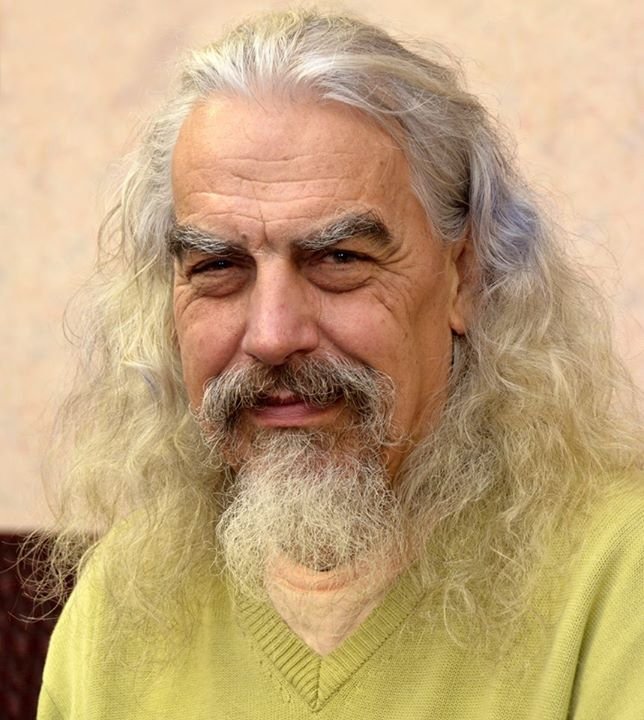
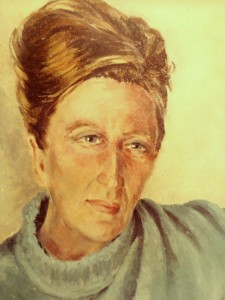
Mike Tanner and Sheila Johns
I had started my own interest in dreams six years earlier, and had explored, individually and with others, various methods of working on dreams, their symbols and meaning. I had particularly worked with yoga – not just the postures or yoga for yoga has five stages, and the postures are just level two – I had dug into my dreams vigorously and studied and practised Jung’s active imagination, and had discovered the power of spontaneous fantasy erupting into consciousness. My book, Do You Dream? was written around the work of those early years in the 1970’s.

I read all these books – with my dog :-)
I read everything I could about the subject and my interest led me to study the work of Franz Mesmer. Subjects placed by him in a relaxed condition experienced spontaneous movements, fantasy eruption, vocalisation and abreaction of trauma. All of these connect with the dream process, in that during the dream we spontaneously experience a dramatic fantasy, movements, vocalisation and sometimes the abreaction of trauma, what we call nightmares. Having watched humans and animals move while dreaming, I theorised that during the dream, in most people the movements being experienced only partially express through the motor nerves and muscles. I had watched a dog, for instance, make obvious running and barking movements and sounds while it dreamt. But the movements and sounds were faint. Yet in Mesmer’s subjects the spontaneous movements and vocalisation are more complete. So I wondered what connections existed between dreaming and Mesmer’s subjects. See Life’s Little Secrets – Functions of dreams
I found other mentions of these phenomena in as diverse places as early Christianity, in which during the Pentecostal phase, worshippers allowed spontaneous movements, vocalisation and connected phenomena. In Indonesia a group called Subud had started, that exhibited the same type of experience. And Dr. Wilhelm Reich, a student of Freud, had similarly found that patients who were helped to relax muscular tension and hold an open emotional state, experienced spontaneous physical movements, fantasy, vocalisation and abreaction. During a visit to Japan I found there a traditional practice called Seitai that has the same format. The modern teacher, Noguchi, even connects the spontaneous movements with the movements made during sleep; the original Quakers, Shakers and in India Shaktipat also allowed spontaneous movements – in other words to allow the dream process to break through into waking consciousness. See: Opening to Life; Mind and Movement; Hallucinations and Hallucinogens
Our problem as an experimental group was to find a way to allow this type of breakthrough for ourselves. To start with we tried two approaches. Jung had already suggested that to break the intellectual resistance against the eruption of fantasy from the unconscious, it was helpful to let the hands start moving where they wished. It is also a fairly well established fact that nightmares frequently reproduce the movements or postures that had been experienced during past trauma. So we tried a form of fantasy that would allow, not just hands, but the whole body to take part. Also we used the technique of reproducing the position experienced in a nightmare to see if the dream would rise into consciousness and continue.
Jung said a way to achieve it is to, “Do nothing, but let things happen.” I found that difficult as for years I had tried breaking through to that ability by hours of meditation and yoga practice. But I found in the writings of the poet T. S. Elliot these words:
I said to my soul, be still and wait without hope
For hope would be hope for the wrong thing; wait without love
For love would be love of the wrong thing; there is yet faith
But the faith and the love and the hope are all in the waiting.
Wait without thought, for you are not ready for thought: So, the darkness shall be the light, and the stillness the dancing.
So I tried giving up all the efforts I had been making and sat for half an hour a day without expectations or any aim or goal. After some months of that, when climbing into bed one night, I heard a disembodied voice say, “You have asked how God touches the human soul – now watch closely.” It was a very impressive experience because I had never experienced it before. I know in the past psychiatrists sent people who experienced such voices to mental institutions. Fortunately I never felt fear because I had explored dreams for years an saw it as an extraordinary experience.
Shortly afterwards my body began to tremble. This was something we were intellectually ready for, as it was described often in cases of this type. Then the trembling developed into powerful movements. My head pulled back hard, my mouth locked open, and my voice, quite without attempt on my part, cried out for my mother. I then relived my tonsil operation I had as a six year old. It was an amazing experience, rather like a record being played, only my body, voice, mind and feelings were the amplifier. This began a process which we entered more deeply into over the years, and with it my personal journey to healing – but also to waking up in and exploring the world of the unconscious. See Seed Meditation; Arm Circling Meditation; Opening to Life
Not only did I find childhood trauma, but also a vast unity of minds of which I was a part. It was a unity that spilled into my life as visions and insight. It needs to be said that what I described was not simply a one off experience, for I was able to continue it week after week for up to twelve years. It was the most amazing and transformative process, constantly involving new healing and new realisations about life. It is now built into me, but it never ends so still grows me. See Vibrate Vibrating Shake Shaking – Integration – Meeting yourself
To make this clear, most people are usually not really aware of two great forces acting on them in life and sleep. But we have two powerful actions working in us. The first is our waking experience based on having a body, its limitations, abilities, vulnerabilities and a particular gender. Our second is the power that gave us life and continues to express spontaneously as dreams, also as our breathing and heartbeat – our life. This I have given the description as the Life Will or your Inner World.
While we sleep our conscious self is largely or totally unconscious, and while we dream our voluntary muscles that move our body are paralysed – therefore another will or motivating force moves our body, keeps us breathing and tries to heal any things that may have put our system out of harmony. So we have a Conscious Will, and what I will call a Life Will. The first one we have experience of as we can move our arm or speak in everyday activities; but the second Will takes over when we sleep. See Sleep Paralysis
This Life will can move us to speak, to move our body, and in fact do things that we cannot do with our Conscious Will and in fact runs all our important life processes like heartbeat, digestion and also dreams. It was allowing the conscious action of this Life Wiil to be used for twelve years that produced huge changes in my life. Even so I am still an infant in what is possible, for we have evolved so far, and are capable of enormous further change.
Something that is possible for many is to be able to switch between the Conscious Will and the Life Will. For simplicity I have called this experience, of what is possible in the waking lucid state.
Waking up the dream process
So that was the beginning. The dream process could break through into waking consciousness. But it was clearer and it was healing. A long standing neck tension and feeling of loneliness disappeared. It wasn’t a nightmare – like Mesmer’s subjects, and Reich’s – it was an abreaction or catharsis and also a wonderful teaching.
So one of the keys we used to unlock the dream process into consciousness was the release of muscular tension. I discovered that most people have unconscious muscular tension. If this is made conscious by having the person become aware of it, what was unconscious is already emerging into consciousness. If the tension is then given time to release, with a body and mental attitude of acceptance, spontaneous movements begin. See: Life’s Little Secrets; Keyboard Condition; Dreams are Like a Computer Game
With further research with numerous people we found abreaction was only one of the many aspects that spontaneously emerged into consciousness. The range was as wide as the subjects covered by dreaming. i.e. sexual pleasure; experimental consideration of a life problem; creative fantasy; ESP; happy play; the exploration of the depths and heights of human consciousness and body, etc.
I suspected as our experience grew, that in normal dreaming, there is a suppression of motor impulses to the body. I also felt that the people we worked with, ourselves included, learned to relax this suppresser, so that full movement could emerge from the dream maker in us, along with often amazingly rich emotional and mental experience too.
Where does so much inspiration and healing arise from? My feeling is that we are all much bigger that we are usually aware of. For example, no plant or creature grows from a dead seed, and each living seed carries within it all the past gathered from all its forebears. So, the seed in your mother’s womb is as old as and even older than human kind, and you carry that wisdom or memories in you. But in this life you developed a new brain, and the memories you gathered this time are what you built your personality from, but beneath that is a very ancient self. It is this ancient self from which such riches arise.
Later I came across the work of Adrian Morrison and his research team at the University of Pennsylvania. They found that a small area in the brain, the pons of mammals, acts as a suppresser stopping the limbs responding to signals from the brain during dreams. When this tiny area of the pons was damaged, the animal lived out its dream fully in physical movement.
From this, researchers have been able to observe what the animals – cats – were dreaming from the movements they made during REM sleep. The cats played with dream toys, attacked or pounced on invisible adversaries, and expressed aggression.
In our own research, our observations of what emerged during periods of conscious dreaming were aided by the subjects themselves being able to give information on what they were experiencing. From these descriptions and from the privileged standpoint of being able to look directly into the dream as it happens, three main functions were observable.
Firstly, the dream process is an expression of the self-regulatory or compensatory function active throughout our being. So dreaming provides an attempt at maintaining health of body and mind. In normal dreams this may be interfered with because we interiorise fears, restraints and goals. During waking dreaming one can recognise and choose to drop the fears and restraints and thus allow the self-regulating action to complete itself. This may sound rather uninteresting, but there is nothing dull about the process which constantly keeps our body in balance and dealing with the environment and food we eat, as well as managing to spontaneously lead us through growth of body and mind.
Secondly the dream process is an expression of the growth process at the psychological level. The dream can be observed to feed upon experience and integrate it into wider understanding and a freer identity. i.e. freer from anxieties, rigid viewpoints, etc.
Thirdly dreams express a contact between ones individual sense of identity and the living consciousness of our total environment. So the dream process is creative in that the individual experiences contact with the process of life, and can learn to relate to it more effectively. Also out of this contact emerges a creative response in action, emotion, art, speech, music, dance etc. In this area the dream acts like a microscope or telescope, through which the dreamer can literally explore the cosmos, or the depths of their psychobiological being. This has all the characteristics of the deepest of spiritual experiences.
Mark Mahowald, a neurologist at the Minnesota Regional Sleep Disorders Center in Minneapolis. “We can have pieces of one state intruding into another, and that’s when things get interesting.
To put that into simple language, REM sleep means we are experiencing dreams. So, they are saying that our sleep process can occur while we fully awake, and people usually call that hallucinations. But it is simply our huge mind appearing, and it is just like dreaming. The voices heard, people seen, smells smelt, while dreaming, although appearing to be outside of us as in waking dreaming (hallucinations) are no more exterior than the things and images of our dreams. With this information one can understand that much classed as psychic phenomena and religious experience is an encounter with the dream process. That does not, of course, deny its importance.
We have noticed that as people learn the way of dropping the suppression of their ability to enter consciously into this deeper level of awareness, they can begin to tap the functions of dreaming when they wish. For instance, this process has a much fuller access to total memory and subliminal impressions than normal waking awareness. So once one has learnt to consciously enter it, one can actually ask a question and have a direct response from the process.
People who use this technique, which I now call LifeStream, have said it is like a very accessible intuition. As an example of using it, my wife and I located where she had dropped her glasses on moorland seventy miles from our home. People dealing with the public can much more easily discover what impressions their unconscious is picking up from the person, without having to sleep on it.
The more I observe this process, the more it seems to me that past cultures used it, but did not recognise it as being an extension of the dream. They considered such movements and vocalisation or intuition as being the work of God, Spirit or spirits. (I am not disagreeing with it being a holy experience at times, but want to stress that through understanding its connections with the dream process, one can avoid many pitfalls and misunderstandings.) It was violently crushed in some ages, being so feared because the church saw it as evil and ungodly to be ably to switch to a state of consciousness in which you knew God as the very core of yourself. In our own culture, which has a fairly recent record of terror and persecution regarding any spontaneous expression of the unconscious, we are only now beginning a wider exploration of its potential. Having closely observed the very direct connection between the process of dreaming and the experience of ESP, religious experience, spontaneous healing, racial memory and cosmic consciousness, it seems the dream, and especially this conscious lucid dreaming, is one of the richest areas to explore.
I also feel that any investigator of lucid dreaming is limiting themselves if they hold the concept this can only occur during sleep. Consciousness can enter into the dream state in such a way as to bring about lucidity. But dreaming can also enter into consciousness in such a way as to bring about the same result.
My observation is that after practising waking dreaming for some time, the quality of sleep and dreams changes. One of the observable changes is the total vibration of the body while sleeping. As our group has never been able to afford the equipment to monitor this, we only have a subjective and physical experience of it. Also, the process in some cases leads towards lucidity, first within the symbols of the dream then the awakening beyond any images or symbols.
To myself as observer of this, and avid follower of the work being done by other researchers, I feel we are on the edge of opening a territory – consciousness – which had never been scientifically explored before. Have other human beings in the past created a bridgehead in the dimension of sleep and death, in which they now live, just as we live in the physical world? Can we learn to wake up there and develop, not simply a few minutes of excitement, but a dwelling place, a work within the realm of consciousness, and an exploration?
These questions I hope the years ahead will unfold to us. If we work together on pushing back the boundaries of human awareness, it might be we who answer them. See – People’s Experience of LifeStream
It Responds to Us
As you become more lucid in dreams and waking, you will gradually become aware of the connections you have, at this level, with those you love, and with those you are linked to by affinities, interests and common goals such as the spiritual work you undertake. Sometimes this arises as deeply felt understanding of particular past cultures and their way of life and the wisdom they arrived at. Sometimes the connections you develop lead you to do specific work in your waking life. Finding love at that level is also extraordinary. You meet someone in your dream life who may live half the world away from you, and who yet has deep links of understanding and love with you. Then gradually you find each other in waking life. That is a very special thing.
The most enduring aspect of such connections is that your life develops meaning and dimensions it never had previously. You sense great depths in yourself. You feel more complete and whole as a person. You know you have a meaningful place in the world, and are more capable of living and loving in it.
This is a process that arises from the unconscious that most people do not know how to allow or work with, though Jung has described it well enough, and ancient cultures knew and used it. (2) It is the action of the dream–forming process emerging into waking consciousness. It emerges because the conscious mind takes on a listening and non–interfering attitude. Just as the dream process, while active in sleep produces spontaneous speech, movements and drama, so, by taking on a passive receptive attitude of body and mind, this process is allowed while awake, and produces similar actions. This involves spontaneous body movements, feelings and vocalisation, expressing themes and drama just as dreams do. It is a form of waking lucid dreaming. It is by no means something only known in present times. If you consider the function of the dream process in the light of what has just been described, what was the Pentecostal experience if not a breakthrough of unconscious material into awareness? It was a breakthrough occurring because the group took on a surrendered and receptive attitude to what they called the Holy Spirit.
What many people do not realise is they can interact with waking lucid dreams, by asking a question and then allowing a response to arise spontaneously. See Intuition – Using It for fuller instructions
In fact, over twenty five years of my experience have been gathered from personal use of, and through teaching, a technique described in my books Mind And Movement and Liberating The Body,1 in which one can explore the unconscious while awake and without drugs, by allowing spontaneous movement and feelings, much as Carl Jung describes in his commentary in the book Secret of the Golden Flower.
I have observed hundreds of people using this breakthrough into consciousness of unconscious material from 1972 onwards, and it greatly enriched my experience of how the dream process expresses, and the usually untapped perceptions we all have emerge into waking awareness. (4)
From these years of observation I believe each of us have a way of organising information and experience that is extraordinarily different to what we usually describe as ‘normal’. In fact ‘normal’ perception, in which our attention is focused on a narrow range of physical sensory impressions, ideas and memories, or what one might call a narrow–beam view of life, is the polar opposite of a wide or global beam view active unconsciously in all of us. The research into right brain and left brain perceptions has given us clearer ways of thinking about this, and made it possible for people to believe there is an aspect of their own mental functioning that is non–dominant and pushed into the background of their awareness. If this can be accepted, the ideas and viewpoints within the book can be better understood.
Lastly, I believe this polar opposite of mental activity, this non–dominant function of perception, is like an extraordinary aid to our gathering of information. Just as a telescope or microscope extends the ability of our normal senses and perceptions, but do not replace the normal sensory and mental action, so this global view acts as an amazing synthesiser of experience, and throws into relief aspects of what we have learned from our gathered experience that we usually totally miss in our normal mode. It is not however, a replacement for normal perceptions.
Because of this, I see the ideas and views presented here as having an effect on our personality and mind, helping us to balance the one–sided action of our rational mind, and lead us toward wholeness.
The technique uses a form of a deep relaxation to enter a dream like state. From that condition you allow your unconscious to spontaneously express, but you can watch the process without being asleep. 22 Here is my description of what happened:
I had a waking dream in which I lived in a world in which there was a huge multinational organisation or ‘company’. The company influenced everything and everybody. I appeared to be about sixteen, approaching manhood, and facing the question of whether to join the company or not.
My feelings at first were that if I did I would be another cog in the huge machinery of its massive workings. I felt threatened by this, as if I would lose my identity. But the organisation would not go away simply because I tried to ignore it. It was everywhere and in everything, so where was there to hide? This led me to feel ready to join. Still feeling a bit threatened I met the manager – not God – but someone experienced in the place. He welcomed me and assured me that there was going to be no attempt to take away my identity as Tony. In fact it would be useful to the organisation if I continued to live and work in my accustomed manner. The only change would be that I was given a gadget like a bleeper. It represented intuition. Through intuition I could link with the Whole – the united being of the organisation of Life. This link would guide, not control, my individual activities to help them harmonise with the overall working of Life. This felt wonderful and so simple and clear. Behind the smallness of my personal being lay the immensity of Life, of which I was a linked part, living my individual life yet working with the whole.
As an example of this here is a lucid experience I had:
I had an extraordinary lucid experience that involved some imagery. One of the clearest of these images was of me in a maze. The walls of the maze were made of hedges, as the whole thing was outdoors. But I realised, because I was lucid in the experience, that I had purposely created the maze as an experiment.
The point of the experiment was that the maze was complicated enough to make it difficult for me to find my way out. So, confronted by the difficulty of emerging from this dream maze, because of the lucidity, I could understand that this was a dream image, and in doing so I simply realised myself as pure awareness and transcended the maze.
I then experimented again and again with this, moving beyond the imagery into pure awareness. This was such an extraordinary experience and realisation it is difficult to put into words with enough impact to make it real.
What it led me to become clear about was that all dreams involve our personal awareness in an environment or imagery of one sort or another. Usually we feel the dream imagery to be so real, and the feelings we experience because of the imagery to also be real, that in a very concrete sense we are trapped. So if we were in a prison cell in a dream, then there would be no way out of that cell without a key. But realising oneself as pure awareness means there is no prison, there is no entrapment, there are no walls to hold you. The imagery of the dream is then seen as simply that – imagery – stuff of the mind that we have conjured and become identified with and lost or trapped in. Even imagery with positive feelings is a form of trap if we identify with them.
I repeat again, this was an extraordinary experience. And of course it relates to everyday life. The more I look at the experience the more I realise that virtually everybody on our planet is trapped in a prison of their own emotions, thoughts and ideas. To recognise this in any reasonable degree leads to an extraordinary sense of freedom. To see that we live our life trapped in the world of thoughts, of emotions, of sexual drives, of fears or beliefs, is astonishing.
This is so like the ending scenes in the film Matrix, that I am sure whoever wrote the script had a profound awareness of this. The hero of Matrix breaks through the surface appearance of things and enters into the very programming of the apparent world around him. This is what happens when we wake up to what underlies all our experience whether as a physically external world, or as our own dream world.
For further instruction see The LifeStream and People’s Experience of LifeStream

Tony and Sheila just before her death
Supersenses In Dreams
The question of whether we have supersenses is disputed in some scientific circles. Joseph Bullman, director of ‘The Secrets of Sleep,’ a recent UK Channel 4 TV series, gives an interesting comment on this. While researching the series Bullman travelled to America. Searching through the books on dreams in the Los Angeles Public Library he saw an entry called ‘Psychic Dreams’ that caught his eye. It was in a book titled The Encyclopaedia of Sleep and Dreaming, and the passage read:
“A woman who described herself as having frequent out-of-body experiences spent several nights being monitored in a sleep laboratory. One night she awakened from sleep and correctly reported a five-digit number that had been placed out of sight on a high shelf above her bed. She reported that she saw it while floating above her body.”
Bullman’s aim for the series was to report in a popular way what the experts knew and did not know about the subject of sleep and dreams. So in reading about a woman who was observed in laboratory conditions to read a hidden five-digit number while asleep, he wondered why the experiment wasn’t famous. Why wasn’t it seen as an enormous breakthrough, like Crick and Watson’s discovery of DNA structure? After all, the implications of what the woman did are astonishing!
It took Bullman six months to discover who did the experiment and track him down. In visiting sleep-lab after sleep-lab nobody had even heard of the experiment. Then one of his researchers found mention of it in an obscure academic journal. The author was Dr. Charles T. Tart who wrote the book Altered States of Consciousness.(6) Tart had wired ‘Miss Z’ – the subject – to an EEG machine to watch her brain wave patterns as she slept. He had taken a random number, written it on a piece of paper, sealed it in an envelope, climbed up a step-ladder, and placed the envelope on a shelf high above Miss Z’s head.
On the first three nights Miss Z reported that she had not been able to leave her body to view the envelope. On the fourth night she said she had managed and correctly told the number – 25132. Tart had also instructed Miss Z to look at the clock on the wall when she experienced leaving her body, so he could check this against the EEG reading. He describes the reading as, “ unlike anything anyone had seen before. The brainwave recordings on the EEG appeared to show that when she saw the five-digit number, her brain was both awake and asleep at the same time.” (7)
Not only does Tart’s experiment with Miss Z show there is a physiological and neurological basis for an out of the body experience – OBE – but it also shows how, in Bullman’s words,
“ scientists who come up with results that challenge conventional beliefs are ostracised by the academic establishment. This work, I discovered, did indeed have revolutionary implications for mainstream science. And, precisely because of this, it had been all but ignored.”
The Symbol and the Reality
In certain areas of thinking and living, Western culture has brought about a radical shift in the way we see our personal life. Although this shift began with the Greek culture, it has developed beyond those beginnings. In older cultures, and still in much present personal assessment or religious thought, we see the use of symbolism. People writing about Native American beliefs for instance, still encourage the reader to explore and remain in symbolic worlds of experience.
Present religious teachings too still refer their followers to symbolic figures such as Christ or God. They suggest living in hope while suffering, sickness and deprivation eat away at people’s lives. Symbols of holy figures hold people is systems of thought that are like a dangled carrot, keeping them chasing a rainbow, the foot of which they never arrive at.
In this way a whole lifetime can be spent living in misery that is excused, covered up, or explained away by religious faith, misdirected spiritual seeking, hope and trust. These are such subtle things and thus so deadly.
Such symbolic living, like dreams whose meaning we allow to remain hidden within their imagery, never confront us with the birth trauma, with childhood hurts and sexual abuse. They never really transform the base of our being where such real emotional and even physical pain exist buried and avoided. In fact symbolic living is a way of maintaining the avoidance.
As an example of the way we use symbolism to hide reality, it is interesting that both the Australian aborigines, and the American indigenous people, have a profound belief that they were born from the soil of the land they now live in. They believe that a Creator or creative process formed them out of the land in which they live. But findings arising from DNA sampling in regard to moving populations show that neither the Australian aborigines, nor the native American people were indigenous to the area in which they now live. So in this sense there belief is a symbolic one. Or if not symbolic, then it refers to a much earlier age in which all human beings, life itself in fact, emerged out of the substance of this planet.
But many such uses of symbolism are much more personal. St. Theresa gives a wonderful example of this in saying:
Now that I have recorded some temptations and secret, inner disturbances aroused in me by the devil, I will describe certain others which he inflicted on me almost in public, and in which it was impossible not to recognise his agency.
Once when I was in an oratory he (the devil) appeared on my left hand, in a hideous form. I particularly noticed his mouth, because he spoke to me, and it was terrifying. A great flame seemed to issue from his body, which was intensely bright and cast no shadow: He said to me in a dreadful voice that I had indeed escaped his clutches, but that he would capture me still. I was greatly frightened and made shift to cross myself, whereupon he disappeared, but immediately came back again. This happened twice and I did not know what to do. There was some holy water near by, some drops of which I threw in his direction, and he did not return again.
Here St. Theresa symbolises her inner psychological and probably sexual struggles as the Devil. Nowhere in past times was sexual struggle associated with experiences of meeting the devil. Yet in modern psychotherapy, when people are helped to meet their vision of the devil, they break through to a meeting with sexual repression and fears, or trauma occurring during their birth. Such early traumas, because they act as inhibitors on the full development of the person, also often inhibit sexual ease and flow. (For further information on this see Grof’s Realms of the Human Unconscious by Grof.)
An interesting insight into what the avoidance of going beyond the symbol might lead to has been given by Ralph Frenken Ph.D. in his review of Christian mystics. He believes that, “The psychodynamics of mystics, their symbol formations and their actions are based on excessive early trauma. . . . There is evidence that medieval mystics were deprived and also emotionally and sexually abused as children.”
To bring this more into the present times, Robert Van de Castle, in his excellent book Our Dreaming Mind, quotes from Norma Churchill’s experience of using active imagination.
“Help me” I beg the serpent. He rears back, giving me a steely look with his mysterious sky-blue eyes. Then, he swiftly strikes my crippled foot and bites it with his powerful jaws. I nearly faint at the pain of it, and both my feet and legs turn black and rotten. I look at the serpent in astonishment.
One half of me glows with light, the other half is putrid and black with rot. Then in a flash, my legs and feet turn to diamond and light up my forehead.
This is typical of the way many people arrive at some form of symbolism about their inner life and seem satisfied to leave it in that form — symbolic. What, in terms of Norma Churchill’s everyday life, are diamond legs? What is the serpent she meets in personal human experience?
Often the things that emerge in a dream or in self observation of one kind or another, are very much like a myth or fairy tale. The person using the technique meets dangers and triumphs as in a mythological encounter. So in continuing their self exploration without going beyond the symbols, they may even create a sort of personal myth.
One of the early books – Woman by Rix Weaver – in describing the experiences of a person using a method of interior exploration outlines just such a personal myth, and is rather like reading a story. This may clarify or extend a dream or a question about oneself, but nevertheless it has not arrived at any real connection with ones own here and now existence. What it does do is to give the person an indirect relationship with important issues in their life via the symbols. Thus the monstrous serpent in Norma Churchill’s early sessions does not become real knowledge of her own history or genesis. Nowhere does the person have to actually bring to the surface childhood pains, the depths of real psychological sickness, or the misery of feeling deserted or unloved.
The real heroine or hero of the inward journey does not remain in this symbolised version of themselves. They do not accept the Devil as an exterior agent, or Christ as an outer and perhaps historical character. They do not accept their dreams at face value, but are ready to face themselves with the courage necessary. For it is an uncomfortable journey to actually see oneself. It is a demanding climb to have ones awareness stretched and widened beyond ones personal limitations in order to include a vaster experience of oneself. Therefore there are inbuilt or personal resistances to actually having direct insight. It is easier to remain at a symbolic level rather than discover the wonderful or uncomfortable truths about oneself. (For a detailed description of someone breaking through symbols to direct experience see Active Imagination)
One of the difficulties we face in discovering ourselves is the belief that direct experience is not possible. Strangely, Carl Jung, despite his extensive exploration of dreams never talks of direct personal experience of, for instance, a traumatic childhood experience, or of birth. Freud, linking dreams more directly with a person’s real history, still remained at an interpretive level rather than moving to direct experience. It was only later workers such a Reich, and Grof, who describe people experiencing their history in detail.
Stanislav Grof, chief of psychiatric research at the Maryland Psychiatric Research Centre and an assistant professor of psychiatry at the Johns Hopkins University School of Medicine, in particular writes about verifications of an individuals ability to find in themselves direct information about their own origins and past. Grof originally worked in Prague exploring the connection between psychotherapy and the spontaneous experiences provided by LSD. Working with thousands of patients he found that by studying each person’s many therapeutic sessions, “Rather than being unrelated and random, the experiential content seemed to represent a successive unfolding of deeper and deeper levels of the unconscious.”
Writing about this in his book The Holographic Universe, Michael Talbot says, “It quickly became clear that serial LSD sessions were able to expedite the psychotherapeutic process and shorten the time necessary for the treatment of many disorders. Traumatic memories that had haunted individuals for years were unearthed and dealt with, and sometimes even serious conditions, such as schizophrenia, were cured. But what was even more startling was that many of the patients rapidly moved beyond issues involving their illnesses and into areas that were uncharted by Western psychology.”
In previous times such human ‘disorders’ were all dealt with in a symbolic manner and given symbolic names. It is therefore important to state that one of the great leaps forward in human culture is this recognition that there is a reality underlying the symbol. Older religions and methods of self realisation such as Shamanism, yoga and occultism did not in general move beyond the symbolic presentation or approach to the human condition.
One of Grof’s earliest insights was that many of his patients relived experiences connected with their birth and of life in the womb. At first he saw these as something the patient had imagined, or part of a fantasy dealing with their difficulties. But as these experiences continued he came to see that the knowledge the patients expressed far outstripped their education of embryology and the processes of foetal development and birth. Patients described specific details concerning blood circulation in the placenta, and even details about the various cellular and biochemical processes taking place. They often exhibited awareness of actual events, thoughts and feelings experienced by the mother during the pregnancy.
Whenever he could Grof investigated the reality of these insights and in many cases found them to be correct.
But there were levels of experience met that were far beyond these womb and birth memories. Patients often described what it was like to be ancient animals, as if they had lived as such at one period of their evolution. Such descriptions were often verified as to details of the creature’s body and habits. (See The Ten Day Voyage)
Patients recounted experiences in which they were able to tap into the consciousness of their distant relatives. One such person accurately described an event her mother met at the age of three, along with a description of the house her mother lived in at that age. Some of these memories were of ancestors living centuries beforehand. These verifiable experiences are what one meets when we burst through the symbol into the reality.
At times people experienced what were more racial memories of past periods of time, recounting accurate ‘memories’ of being bushmen, of Aztec rituals, Egyptian burial rituals, and many other such insights into the past.
Once again, to return to the point, these direct insights or experiences lie within or beyond the symbol. The inner is always directly related to the outer. There is no higher or lower, better or worse in this scheme. If we cannot connect our inner world directly with our outer present and our history, then there is a link missing somewhere. The symbols of our dreams and visions are the icons on the desktop of our awareness. We need to click on them if we wish to access the treasure of direct experience they connect with.
Teenage Girl’s Love Dreams
Sexual maturity
If you are a teenage girl, you will be experiencing the changes brought about by puberty. Looking at your dreams can help you understand these changes as you develop from a child into a woman. The physical and emotional issues which are part of adolescence will often emerge in your dreams.
There are three major themes you may notice in your dreams. One of the most important is the emergence of your sexual abilities as a woman. In all warm blooded animals sex is not just the urge to join two bodies genitally. It also involves desires to attract and bond to a mate; the urge to have a child, and the strength to care for and protect your children. Your dreams are a safe place where you practice or unfold these emerging facets of yourself. Dreams allow you to work out any difficulties in letting these qualities flower. It is quite normal to worry that you may not be attractive enough to attract a partner, or that if you do you may not know what to do. So you will probably dream of a boy you find attractive, and enjoy the pleasure of touching and loving. You will also encounter the fears or pains standing in the way of such a meeting.
At this level of your development you are in a huge flood of hormones that drive you toward enormous desires for a man. It is actually the sex instinct, but you might not recognise it as that. It may probably be felt as a tremendous attraction to a star singer or actor – sometimes a desire to improve your appearance – it could even show as ambition to achieve something to become a mature person. Sometimes it is even a firm sense that you do not want anything to do with a man. It can express in many ways, but it is your life energy, and is diverted or directed according to you inner world – the world of your beliefs, convictions, educational ideas, your programming from parents and society. See Programmed
The courtship and mating behaviours in reproduction and the sexual drive that urges you toward the opposite sex or toward mating in some way, is often accepted in its naked power, to find a mate and to have sex in order to procreate. Unfortunately most of us have no real awareness of how we are instinctive creatures and so are driven largely by ‘nature’ in us. After all we are mammals, for we as we evolved as humans, had lived in the state for millions of years, where we never had to make decisions but were directed by our instincts. And being conscious and able to look back upon oneself and ask, “What am I?” – we were suddenly naked of this background of support given by instincts and felt exposed and unprotected.
Most people explain it by the idea of romance and soul mates, and so often end up deeply hurt. Other instinctive drives are the desire to have standing and recognition in one’s social group; the drive for dominance – or the resulting depression or sickness if no recognition or place in the group is found. This is most likely an influence form the reptilian brain we all have that is a basic prompt. It developed about 200 million years ago and is still an underpinning part of what influences your behaviour today. See Animals in your Brain
Your dreams can guide you as you flower into the unique woman you potentially already are. No matter what you look like, no matter what your skin colour, you have an innate beauty. As you look around you, you may recognise the beauty in everyone, and realise that no one is too fat or thin, too ugly or too beautiful, too white or too dark, too wrinkly or too spotty to love and be loved. As the secret processes of life are transforming you into a woman, you may realise that being female is something you share with women of every race throughout history – yet YOU are unique.
Example: I dreamt of being with a woman who was desperately seeking a man. I was also with my own female companion. I believe the woman had been suddenly dropped by her man, and I and my partner were close and with her.
Still in the semi-awake state I tried ‘being’ the woman, and had a very clear response. I experienced being her, but was also me with experience of seeing into myself in some degree. I saw that the woman, like most of us, was a female creature whose instinctive drive was to find a mate. But she was not aware of this as an instinctive drive but as a personal feeling. As such she had become, like many women and men, lost in a huge web of personal ideas about whether they were attractive, sexy, with many complications about love, gender mixed with childhood unconscious traumas and the heartbreak all that brings. See Being the Person or Thing
Being pregnant
In some dreams you may also experience being pregnant, and even having a baby. These are very positive signs that you are meeting your physical and emotional changes well.
Example: I’m 14 and had a dream of having a baby boy. I don’t know who my husband was. I am sitting in a house with no roof and all my family come to see my baby and said it was special. It was night time. When I looked into the sky there were 3 moons. Two of them were shaped like a lady with a baby in her arms. Sam – Teletext.
Sam’s dream shows a great sense of beauty and ease about her ability to have a baby.
The struggle for independence
The third major theme you may meet in your dreams relates to your growing independence and the process of separations from your parents or guardians. You are moving toward becoming physically, emotionally and financially independent of whoever parents you. This will show in dreams such as feeling trapped by your Mum or Dad, perhaps fighting them, or even seeing them die. Meeting your parent’s death in a dream is a way of saying you can survive alone, that you are no longer dependent on them. Sometimes these dreams of independence centre around what clothes you wear. You might be wearing other people’s clothes, or arguing with your mother about what you can wear. Other people’s clothes represent how you might be modelling yourself on someone else, or feeling pressured to do so. In your teenage years there are commonly issues around peer pressure to conform and belong to your social group while also trying to establish your own individual identity.
Example: I have this recurring nightmare. I see my mother standing by my bedroom door, blocking it as if I am being trapped and stopped from getting out. I often call to her “Let me out Mum” but she just stands there staring with no expression on her face at all. I end up getting out of bed and switching my bedroom light on and then she disappears. Sometimes I will see her standing by my wardrobe. It seems as if she is always standing by a door and trying to trap me. Natalie
In the above dream Natalie is struggling with her own feelings of being trapped by what she feels about her mother, she is probably struggling to become more independent.
Your unique treasure
One of the things you will meet in your dreams if you allow them to develop is a wonderful sense of having an inner treasure, a unique inner quality. Every woman has such a treasure, and each is unique and special. This may well be a difficult thing to deal with, because there is often a deep hope that somebody else, a boy or man usually, will recognise this special quality inherent in you. This treasure is derived from the generations of heritage you carry in you from your forebears. You have in you the seeds of the future, and those seeds are your treasures. It hurts if this is not recognised and cared for by your partner and loved ones.
Usually we think of this uniqueness as our DNA, but in fact it is your eggs you carry with you that are far more about your uniqueness that your genes. You are the survivor of ten million generations of ancestors, struggling, developing new strategies, on the heroic journey from the earliest mammals to your life today. All of that is held in the mystery of your eggs. And every young woman knows she has something very special, but may confuse this with her external appearance.
Example: As I considered teenage I had a series of wonderful scenes occur. They were so lovely I laughed with pleasure. I felt the explosion of energy which occurs in adolescence, and I saw teenagers, running, dancing, loving, fighting, and exploring relationships. They were life exploding into the new, into experiment, into growth. If we held them back too firmly it would be like my stuck record, and my vision of the cosmos had shown me life never repeats itself, never stops. It always moves on, changes, dances.
Your dreams link you with this deepest mystery and gifts of life. Unfolding your womanhood means receiving many new powers and abilities. The power and pleasure of full physical sex – the power of emotional strength and gentleness – the power of creativity – the feeling of being a part of life and the world. Be daring enough to meet any difficulties and fears necessary to claim these powers. Use them – don’t be used by them. They are yours to claim. These may seem like daunting tasks and enormous challenges, but you will find that your dreams will help you find your way if you are able to open to them and allow them to guide you.
Example: Back with my lover I felt, still young, inexperienced and a bit clumsy, but laughing and happy, the flow of pleasure to my lover, leading to a kiss. The deep internal pleasure of kissing gradually widened until it led to genital feeling. I realised so many things as this lovely gentle growth of feeling and flowing occurred. I realised that I and most teenagers have too much technical sex instruction, so it is portrayed as an erect penis entering the vagina.
But I was seeing it wasn’t like that at all. First of all came the gradual relationship with my lover. As that deepened it led to touching, being happy together and kissing. The kiss, oral pleasure, was our first area of loving with our mother. From that original centre of pleasure, it grows into anal and genital pleasure. This was what was happening. Then gently the body began to move. But there was still no erection. The movement was the forerunner of the inner pleasurable urge to thrust and penetrate. So there was a slow and internal growth through escalating feelings, and not an outwardly ordained set of movements that led to “sex”!
Sleep Paralysis
Many people experience feeling paralysed while they are partially awake but dreaming. This may be due to the fact that voluntary movements are inhibited during periods of the dream process. All brain signals to the voluntary muscles are stopped. Therefore if we become slightly awake and attempt to move at that time we feel paralysed. This is not sensed as a problem if we are unconsciously involved in a dream. While dreaming another level of will takes control of the body, so any sounds or movements made are not from ones conscious will.
If enough self awareness arises in the dream state, then awareness of the inability to move may occur, along with the anxiety this can arouse. In fact this is probably only a problem to people who are frightened of the paralysis, as for most people, active dreams manage to break through the inhibition enough to cause mild movements and vocal sounds.
Another factor is illustrated by what Susan says in the example below – the harder she tries to move the worse it gets. Our unconscious is very open to suggestion. If this were not so we would lack necessary survival responses. In a dimly lit situation we may mistake a shape for a lurking figure. Our body reactions such as heartbeat, react to the mistake as if it is real until we gain fresh information. Whatever we feel to be real becomes a fact as far as our body reactions are concerned. The fear that one cannot move becomes a fact because we believe it. When Susan relaxes, and thereby drops the fear of paralysis, she can be free of it. This applies to anything we feel is true – we create it as an internal reality.
‘It starts as a dream, but I gradually become aware that I cannot move. The harder I try to move the worse it gets and I become very frightened. I can neither move nor wake myself up. Sometimes I feel as if I am leaving my body. But to deal with the fear I have learned – its a recurring thing – to stop struggling, knowing that I will eventually wake.’ Susan Y.
The excellent description in the following example was given by Roy Herbert. It was taken from a feature he wrote. Unfortunately the news-cutting did not have either the name of the paper or the date with it.
‘In this condition, I can hear what others are saying to make me come to. The bed-room is the one I am in though sometimes altered in layout and the real persons in it may be joined by dream ones. I can speak and even offer suggestions on how to bring me awake, such as cold water on my head, though I am told that the words are not intelligible. I am aware that my mouth is dry. My brain is working on some levels that are far from asleep. I have been able to censor swear words from anguished advice I am offering the rousers for fear of offending them, though I am not awake.
The worst thing of all is that I have almost no power in my limbs while the struggle is going on. The prospect of sinking back into deep sleep, unable to move, is terrifying – so dreadful that I finally burst fully awake with the sensation of shooting up through water into the air.
I don’t think that I can be unique in floating halfway, half awake and half asleep, paralysed but speaking and thinking in a half real world. It might be interesting to hear from other sufferers.
Other strange phenomena occurring either during or on the edge of sleep probably have similar causes, or are linked in some way. Roy Herbert’s description vividly portrays the experience of being locked half way between the ‘waking’ world and the ‘dream’ world, and perhaps that is part of the fear experienced. But the threshold of waking that Roy is trying to approach need not be the one that leads to a loss of the dream state. What I mean is that Roy’s dream imagery stops when he wakes. For many people their dream imagery persists when they wake, and they have to travel further into waking than Roy does to lose the sense of having no control, or of being invaded by experiences from ‘outside’ themselves. See: Reaction to the unconscious; hallucinations andhallucinogens
Much of the problems felt by people in these states arises from their relationship to what is being experienced. Many people actually seek the state Roy describes through self-hypnosis. In my teens I studied and practised a mixture of relaxation techniques and self-hypnosis in an attempt to explore what Tate later called altered states of consciousness (ASC). After a few months practice I found I could enter a condition where I had no sense of a body, and felt myself to be awake in the depths of sleep. As I had consciously sought this there was no fear attached to it, and I could rouse myself easily. See Answer to Critics
However, the terror Roy and other people speak of in regard to the paralysis, I have experienced myself, and witnessed in other people, who felt themselves powerless against a spontaneous eruption of emotions or urges from the unconscious.
If we can understand that we have two levels of will, the conscious will that enables us to move around and make decisions while awake, and the Life will that takes over when we dream, creating full surround environments and events, and paralyses our conscious will to some extent. The Life will that we confront in dreams and sleep paralysis is what directs all the functions of our body and mind. It is far more important than our conscious self, and actually needs to take over more fully sometimes to regulate, grow and harmonise our being. When the unconscious will pushes through to waking awareness we experience it as what have been called hallucinations, a voice speaking to us, spontaneous movements or speech, as happens in dreams. For may people who experience sleep paralysis they feel a terror that either some outside force has or is taking control of them; or else they fear they are dying. The images we see if this state are actually created by these fears and are not external beings trying to control us. It is our fear of this great Life Will that causes it. It is strange indeed that we are terrified of our own life process. See Edgar Cayce
One such person, a teenage male who had been told in an emotionally charged way by his mother that he would die if he continued to masturbate, decided with much fear that he would never masturbate again. The fear became more pronounced when he began to masturbate while asleep. This loss of control over himself deepened his anxiety still further, and made him feel he was in some way possessed. He eventually managed to stop this sleep masturbation by wearing tight swimming trunks, thus causing him to struggle to reach his penis, and thereby wake himself and avoid the dreaded possession. It wasn’t until he was twenty one that, having read about some basic information on how the unconscious follows suggestions and emotions, he managed to let go of his fear, and with relief found the ‘possession’ no longer had a hold on him. See: It is important the 2 wills; – Martial Art of the Mind; awake – difficulty in awakening sleeper; movements during sleep; yoga and dreams.
If that can be fully digested you can begin to work with and actually gain benefits from what is really an extension of your mental processes and possibilities.
If you have this ability and do not suffer fear, then you have a wonderful talent that could transform your life. Sleep is a huge country that many of us have never explored, and that is why so many people are terrified when they wake up in the very different world of sleep. When we sleep a huge process is at work, the process of life that in fact keeps us alive. That is going on under the surface all the time, but when you wake up in sleep it can feel like an alien force is attacking us – us being our conscious personality. We are so out of touch with life within us that we react to it as if it is an enemy.
Something else we have to realise is that we are also dreaming; so any impressions and information we meet is presented is images and drama. Because dreams mirror what we feel and fear it can be shown as an attack. In other words your fear creates the fearful dream images.
While your voluntary muscles as paralysed another process takes over – your unconscious or inner self – and so it tries to move you apparently against your will. If you stopped fighting it, it would make very sensible movements that are a way of moving you toward healing.
Some people who understand what is happening and allow it. In fact some people have learned to allow such movements while awake. See Life’s Little Secrets – LifeStream
We usually think that being awake is the ‘everything’ of life. But if you think about it, it is only a small part of who you are. Every time you go to sleep you swing to the opposite pole of your awareness. You go to the depth of who you are; the very Source of your existence. Of course it is a very different level of being than waking awareness. And to get there you go through levels of existence – and your sleep paralysis is one of the early ones. But most people lose self awareness when they go to sleep, but there are some who can maintain awareness right the way through to the Source. It is an extraordinary experience.
The Levels of Sleep
The first level of sleep we meet is dreaming. That is if we are even a little bit aware. If we begin too explore this level, the apparently black depths of sleep begin to reveal an amazing life and energy. Light is taken into the darkness.
If we persist in exploring our dreams there comes point where yo8u break thorough the images of dreams into direct insight. An example of this is as fllows:
In fact the awakening interrupted a dream, which was extremely lucid and logical. I knew clearly, during it, what it meant. I was simply watching leaves, like a fern, grow and expand. As I did so I realised this was an expression of something taking place in my being. Namely, the vegetative (vegetable) forces had been released to greater or more powerful activity. It was very clear in the dream, but I quickly lost much of the accompanying knowledge. But I knew, or experience, that the release was linked with consciousness and will. In some way I cannot yet explain, the power of this process streamed through the will or consciousness, and awareness expanded as the leaf grew. In other words consciousness filled the leaf being grown.
These are only an overview of the process of exploring consciousness, so the next level is to wake up in the lucid state and goo beyond imagery.
I was dreaming and woke up in sleep. I was then aware of being in the level of dream images and wondered what was beyond it. Immediately I was in another level in which I could directly observe the subtle energy workings of my body. I saw that I had a slight infection in my lungs, and observed how it was like watching fluid moving through a plant. It was a healing action. The I also observed how the energy between my trunk and head was blocked slightly in my neck. In trying to understand what the block was I realised it was an attitude I have pf being proud or stiff necked. If it were not dealt with I could see it would lead to a serious illness in my neck.
As can be seen it is this level of insight that can radically change ones life. But there is still more.
I became lucid in my dream and realised that I could move deeper. I was already at the level of seeing into the inner workings of the body so asked the question is there anything else. Suddenly I was plunged into bodiless awareness. I had been here many years previous and so was at ease with it. In the past I had seen that this was the apparent nothingness that is the primal level, and out of it everything flowed. But being curious I asked if there was anything beyond this. I was amazed at what happened next. I was at the same time bodiless, spaceless and timeless existence, and also here and now in everyday waking life. It was like Blake described it, “To see a world in a grain of sand, And a heaven in a wild flower, Hold infinity in the palm of your hand, And eternity in an hour.”
To quote from the feature What we need to remember about Dreaming:
• In life and sleep we have two powerful actions working in us. The first is our waking experience based on having a body, its limitations, vulnerabilities and a particular gender. Our second is the power that gave us life and continues to express as dreams.
• While we sleep our conscious self is largely or totally unconscious, and while we sleep our voluntary muscles are paralysed – so another will or motivating force moves our body. So we have a Conscious Will, and what I will call a Life Will. The first one we have experience of as we can move our arm or speak; but the second will takes over when we sleep.
• This Life Will can move us to speak, to move our body, and in fact do things that we cannot do with our Conscious Will. As Freud pointed out this inner will has full access to our memories. It can do so many other things that are described else where – See ESP in Dreams; Edgar Cayce. This Life Will or motivator has been active for millions of years and we see it working all the time in animals. We are partly split in half because we are often opposed to what our Life Will in us wants. So the only way to express what is good for us is in dreams when our conscious will is largely passive.
• Life Will created your body and pre-existed you as a person you know today. It was working in you prior to your ability to speak or know in the way you do now. But of course it has fantastic wisdom and skills, as can be seen in animals.
For fuller information about the levels of sleep and the different experiences we meet in each, See Levels of Awareness in Waking and Dreaming. See also: movements during sleep; yoga and dreams; Life’s Little Secrets
Spiritual Life In Dreams
Dreams have always been connected with the spiritual side of human experience, even though today many spiritual leaders disagree with consideration of dreams. Because dreams put the dreamer in touch with the source of their own internal wisdom and certainty, some conflict has existed between authoritative priesthood and public dreaming. A lay person finding their own approach to God in a dream might question the authority of the priests. No doubt people frequently made up dreams about God in order to be listened to. Nevertheless, despite such opposition, the Bible still states that Matthew dreamt of an angel appearing to him; Joseph was warned by God in a dream to move Jesus; Peter was inspired and instructed by his dream of the unclean animals.
The modern scientific approach has placed large question marks against the concept of the human spirit – an eternal aspect to human life. Study of the brain’s functions and biochemical activities have led to a sense of human personality being wholly a series of biological and biochemical events. The results of this in the relationship between doctor and patient, psychiatrist and client, sometimes results in a communication of human personality being of little consequence. It may not be put into words, but the intimation is that if one is depressed, it is a biochemical situation or a brain malfunction. If one is withdrawn or autistic, it is not that there is a vital centre of personality which has for some reason chosen to avoid contact, but that a biochemical or physiological situation is the cause. It’s nothing personal – take this pill to change the biochemistry, because you are not really a person.
Of course we have to accept that human personality must sometimes face the tragedy of biochemical malfunction – but we also need to accept that biochemical and physiological process can be changed by human will and courage, and particularly by the transformative influence of the spiritual dimension of experience. See Steiner
What is the human spirit?
In attempting to find what the human spirit is by looking at dreams, the simplest definition is that when a dream enables us to go beyond the limitations of our personal memories, our learning, our body and our sense of what life is, it opens our spiritual life to us. The most profound of these experiences usually involve a sense of existing throughout all time – that at ones core exists a level of being that has always been, and is beyond the changes of life and death. Certainly one of the sources of the spiritual is that we have a sense of something, or an experience, that shows us a very different view of our life and the objective world than we usually arrive at through our sense impressions or our inherited cultural views. Common experiences of the spiritual are as follows:-
- Tragedies in our life are suddenly seen from a much more inclusive view, or one’s personal situation is seen as a part of a continuing and cosmic process. This dignifies and integrates our life into a greater whole, and removes the sense of tragedy.
- The spiritual might also be felt as experiencing our own wholeness. This meeting might be an encounter with Christ, or a holy being.
- We experience ourselves as part of one great life, existing throughout time and space. We then see the variety of living creatures and inanimate matter are all manifestations of that one life. The oneness behind multiplicity is experienced as self existent.
- A great experience arises in us of the essential part of us streaming back throughout all time. Our personal life connects with all that has existed and all that will exist.
- A realisation of oneself as being more than one’s thoughts, emotions and body sensations. This direct experience of being is called illumination and cannot be described as it is outside of the thinking process and its definitions.
In my dream I had got hold of a book of photographs of Japan. It was printed in the thirties or earlier and was externally worn and dog-eared. I opened the book to look at the pictures. They were all black and white. The first one was spread over the two open pages. It was of a beach, taken from a hillside. The day was cloudy but bright. One could almost feel or see the breeze blowing because there was a sense of movement. The beach was slightly curved, bay like, with the hill rising from near the edge of the sea. Here and there trees were growing, not big. On the beach the rollers were breaking, quite big surf. A large rocky shelf ran into the sea from the beach, and this caused the breakers to roll up and around at one point, turning back toward the sea again. In the middle of this, quite small in the photo was the figure of a man sitting in the lotus position facing the land. As I looked the still picture was full of movement as if I had stepped into it. Waves were breaking around and slightly over the man, but he sat at peace, undistracted, in Zen meditation. It was so simple, so beautiful. I realised I had read somewhere of the man who sat amidst the waves. Anthony.
Anthony explored the dream and knew himself as the man on the beach. He then experienced a connection with the great ocean of life. This was not making him turn away from everyday life – shown as facing the land. It gave Anthony an experience of a radiance within him existing beyond effort – just being. Whenever he relaxed he experienced this gentle radiance bathing him. This removed from him a great sense of struggle that had dogged him all his life. He also felt his life was meaningful, and part of a great wonder. He was filled with a radiance from within.
The many levels of being
I felt myself rushing upwards in blackness. Then a sense of release followed, like a cork coming out of a bottle and I could see. I was floating above my bed, near the ceiling of the room. Below I could see myself asleep. Terror overcame me. In hindsight I think I was afraid I was dying. Then I realised I had read about people doing this, and the terror became uncontrollable laughter, perhaps release of the awful tension moments before.
Next I was flying through space with my knees up to my chest. I was in the RAF in Germany at the time, and I could see the land underneath. It was still a light summer evening. I started to pass over the sea, and could see a few ships, but was suddenly at my home in London. I couldn’t believe what was happening, it was so real. I noticed I was in my clothes, not pyjamas. My mother was sitting knitting. My dog was asleep by the gas fire. I called excitedly to my mother. She paused but didn’t see me. I couldn’t understand this as I experienced myself as totally real with full self awareness. I shouted to her in an attempt to break through what I felt must be a barrier. She carried on knitting, but I had an immediate experience of there being two levels she operated at. There was the level of herself that was knitting but not aware of me; then there was a level her everyday waking self wasn’t in contact with. This level knew I was near her. There was a merging of consciousness and a sharing of love – a becoming ‘one’. At the same moment my dog was awoken. He ‘saw’ me and rushed to me barking and howling, as he usually did when he saw me after an absence. Then I woke in Germany, feeling as heavy as lead. I found out that my mother had been alone knitting on that evening, and the dog had unaccountable rushed to the back of the sofa howling. Tony C.
The above experience shows Tony going beyond the usual boundaries of his senses, and perhaps even of time and space.
An aspect of the human spirit demonstrated by dreams is consciousness of massive integrated experience. The unconscious mind, if its function is not clogged with a backlog of undealt with painful childhood experience and non functional premises, has a propensity to form gestalts. It takes pieces of experience and fits them together to form a whole. This is illustrated by how we form gestalts when viewing newsprint photographs, which are made up of many small dots of different shade. Our mind fits them together and sees them as a whole, giving meaning where there are only dots. When the human mind is working well, when the individual can face a wide range of emotions, from fear and pain to ecstasy, this process of forming gestalts can operate very creatively. This is because it needs conscious involvement, and if the personality is frightened of deep feeling, the uniting of deeply infantile and often disturbing experience is cut out. Yet these areas are very rich mines of information, containing our most fundamental learning experiences.
The magic of personal insight
If the process is working well, then one’s experience is gradually transformed into insights which transcend and thereby transform one’s personal life. For instance, we have witnessed our own birth in some manner, we also see many others appearing as babies. We see people ageing, dying. We see millions of events in our own life and in others. The unconscious, deeply versed in imagery, ritual and body language, out of which it creates its dreams, picks up information from music, architecture, traditional rituals, people walking in the street, the unspoken world of parental influence. The sources are massive, unbelievable. And out of it all our mind creates meaning. Like a process of placing face over face over face until a composite face is formed; a synthesis of all the faces; so the unconscious scans all this information and creates a world view – a concept, a synthesised image of life and death. The archetypes Jung talks of, are perhaps the resulting synthesis of our own experience, reaching points others have met also. If so, then Christ might be our impression of humanity as a whole. If we dare to touch such a synthesis of experience it may be searing – breathtaking. It breaks the boundaries of our present personality and concepts because it transcends. It shatters us to let the hugeness of the new vision emerge. It reaches, it sours, like an eagle flying above the single events of life. Perhaps because of this the great hawk of ancient Egypt represented the human spirit.
When our awareness does lift up above the particular thoughts and impressions, above our individual life, and flies like the hawk to have a synthesised vision, we attain a spiritual dimension, and gather wisdom in a new way. Within the one great life in which our personal existence merges like water in the ocean, is all experience, all history, all knowledge.
I thought about the dream that I had about L., the dream was that L. had a very red face when she told me that she was pregnant. But I didn’t think that I could have made her pregnant and I told her so. She then changed her mind and said, ‘OK then I’m not pregnant’.
In working on the dream I imagined becoming L. I entered into her pregnant body and felt her sexuality and understood the dream. She had offered herself to me, her sexuality and her body but I hadn’t recognised it, I didn’t see it and so she withdrew. L. wants another child and she had offered herself to me but I couldn’t give myself to her. I had never given myself before. In the dream I felt I was not responsible for her pregnancy, and that represents the denial of my own sexuality and of all that results from it.
This is when I entered into the house of God. At first I saw the image of a huge cathedral or church with a magnificent domed roof and I knew that I was in the house of God. I felt the utopia. I felt like I have never felt before, so very good, so excellent. I knew all things. I didn’t have to read the bible or any kind of teachings because the answers are all here in the presence of God. In this state I could ask any question and know the answer. I knew God, yet I was God because there was no separation. Neal C.
The journey inwards
As we meet our immensely varied internal contents a process of change occurs in us. What we meet within is often very dramatic, enormously powerful, yet our external change may appear small in comparison with the journey we undertook. We might have met everything from the experience of our birth; the pains and trauma of childhood; the adventure and triumph of becoming independent and surviving amongst other humans; we may have faced the void in which all sense of self disappears, and all certainties are melted by seeing all opposites as true; we will certainly have become acquainted with death in many forms; we will also know the various people we are inside. Despite this enormous breadth of experience, for the traveller the question often arises as to what one has gained from it all. Possibly the most obvious is that one can allow all manner of things to have life in consciousness and pass through. One becomes a shape shifter.
Example: I witnessed a conversation between a man and a woman, and the man says, “Religion; that’s surely a direction for failures and people who can’t really cope with facing reality.”
And the woman he is accusing of this inability to face reality says, “You poor person! Is your mind or awareness so tiny that you have never realised the forces and processes of your own body are beyond anything you understand? Can’t you see that your very existence is brought about by things so far beyond your knowledge that it is only a statement of your impoverishment to suggest religion is an expression of some sort of smallness and failure. Have you never understood that? Have you not seen that religion is not only an acknowledgement of what we fail to understand and yet depend upon, but it is also an opening to it, a willingness to relate to it? It can also be something far more even than that. It is can be an active loving relationship. And such love is an exchange, a sharing, a way of merging one with another. It is an exchange – a sharing of bodily fluids – the very substance of life. Is that something you are afraid of?”
This intense journey may also bring one to the realisation that one has always existed in a life that is wider or larger than ones conceptions. A realisation of ones existence and participation within this wider life brings with it the insight that the experience of the greater life has been gradually built in ones own being by the love and sympathetic connections one has built with others, whether human animal or plant. It is through these connections, perhaps through a love affair, through being in a helping capacity, dealing with ones own inner life, or through meeting stress together, that ones wider awareness emerges and grows.
The infinite is infinite. We experience it in an infinite number of ways. People ask if there is a personal God, or even if a god exists at all. Within the infinite all things are possible. Here is another way of experiencing the essence.
Suddenly, toward the end of working on my dream, I seemed to leap beyond anything I had ever experienced before. Instead of being someone separated from everybody else living a certain day in time, I was a river that flowed through all time. I had always existed and was involved in all history. As this happened I knew just as clearly as in ordinary life I know my name, that a life had been lived in which the ‘I’ of that person had been persecuted for their religious beliefs. In persecution some of their family had been killed, and as that person I had made a decision to never again trust people. The decision brought about the desire to live isolated from human group activity. With an amazing heightened vision I could see this influence flowing through all my present life, subtly shaping it. The things I had chosen to do or work at were all connected either as a means of trying to change that decision or as an expression of it – Tracy M.
Doing the impossible
Lastly, humans have always been faced by the impossible. To a baby, walking and not wetting its pants is impossible, but with many a fall and accident it does the impossible. It is a god in its achievement. To talk, to fly heavier than air planes, to walk on the Moon, were all impossible. Humans challenge the impossible every day. Over and over they fall back into defeat. Many lie there broken. Yet with the next moment along come youngsters with no more sense than grasshoppers, and because they don’t know what the difference is between right and left, do the impossible. Out of the infinite potential, the great unknown, they draw something new. With hope, with folly, with a wisdom they gain from who knows where, they demand MORE. And it’s a common everyday sort of miracle. Mothers do it constantly for their children – transcending themselves. Lovers go through hell and heaven for each other and flower beyond who they were. You and I grow old on it as our daily bread, yet fail to see how holy it is. And if we turn away from it, it is because it offers no certainties, gives no authority, claims no reward. It is the spiritual life of people on the street. And our dreams remember, even if we fail. For this is the body and blood of the human spirit.
See: Ain Soph – The symbolism of Genesis;Buddhism and dreams compensation theory; history of dream; religion and dreams; The Bible and dreams; yoga and dreams; Life and Death.
Sub Personalities
As human beings we have a complex structure making up our personality. Recent findings suggest our waking personality is not made up of one integrated monolithic structure, but rather many different modules of behaviour and skills. Different circumstances call upon different modules. Some of this is obvious in that we may have a skill in dealing with a group of people, but the behaviour related to it does not dominate our behaviour unless we are dealing with several people. In this sense the personality we become at that time is unconscious during most of our activity. It can therefore be thought of as a sub-personality.
Many dream characters – other people who appear in our dreams – may be thought of as a sub-personality. As such they denote aspects of our character or personality which do not denote our everyday behaviour, but emerge, sometimes unexpectedly in certain circumstances. For instance in a violent argument our behaviour may be totally different to what we would expect of ourselves, and may disappear – become unconscious – rapidly. See Characters in Your Dreams; Autonomous Complex; Talking As.
Self-Regulation – Homeostasis
Self-Regulation
Tony Crisp
The Secret Power – the Force that heals
If the self-regulatory processes of your being ceased its action you would be dead in a very short time. Even a brisk walk causes such enormous changes in the body it would kill you without the action of self-regulation. The production of lactic acid, unchecked, would destroy the system. Also the drop in blood sugar, unless balanced by the release of glucose from the storage in tissues and liver, would result in collapse.
The level after level of safety factors built into our system are nothing short of incredible. For adequate functioning our blood pressure needs to be at about 110 to 120 (i.e. it displaces 110 millimeters of mercury). It can drop to 70-80 before a critical situation arises in which tissue may die because blood is not reaching it. If we lose a lot of blood, even as much as 30 or 40 percent, the self-regulatory process maintains adequate blood pressure by constricting the blood vessels. This action is controlled by a part of the brain. If that brain area is injured or destroyed, other centres take control. If they arc eliminated, ganglia in the sympathetic nervous system direct the action. If they too are eliminated the walls of the arteries and veins themselves regulate their own activity.
Keeping balance during change – dealing with stress
Such functions are usually listed under the heading ‘homeostasis’. The word means to ‘keep level or balanced during change’. The ball cock in a toilet is an excellent example of mechanical homeostasis. As soon as we flush the toilet the ball-cock descends allowing water to pour into the cistern. When the water reaches a certain height the water entering is stopped, thus a level is maintained despite change. To quote from Anthony’s Textbook of Anatomy and Physiology (Mosby):
The principle of homeostasis is one of the most fundamental of all physiological principles. It may be stated in this way: the body must maintain relative constancy of its chemicals and processes in order to survive. Or stated even more briefly: health ad survival depend upon the body’s maintaining or quickly restoring homeostasis.
In 1885 the Belgian physiologist Leon Fredericq described it this way:
The living being is an agency of such sort that each disturbing influence induces by itself the calling forth of compensatory activity to neutralise or repair the disturbance. The higher in the scale of living beings, the more numerous, the more perfect and the more complicated do these regulatory activities become. They tend to free the organism completely from the unfavourable influences and changes occurring in the environment.
In 1900 Charles Richet a French physiologist went further by saying:
The living being is stable. It must be so in order not to be destroyed, dissolved or disintegrated by the colossal forces, often adverse, which surround it. By an apparent contradiction it maintains its stability only if it is excitable and capable of modifying itself according to external stimuli and adjusting its responses to the stimulation. In a sense it is stable because it is modifiable – the slight instability is the necessary condition for the true stability of the organism.
The wisdom of the body
In 1933 Walter B. Cannon published his remarkable book The Wisdom of The Body (Kegan Paul, Trench, Trubner & Co. Ltd.). Through his years of research and experiment he added enormously to the understanding of physiological homeostasis. He points out that the self- regulatory process not only has to adapt the body to outer influences, “There is also resistances to disturbance from within. For example, the heat produced in maximal muscular effort, continued for twenty minutes, would be so great that, if it were not properly dissipated, it would cause some of the albuminous substances of the body to become stiff, like a hard-boiled egg”. He points out that such processes are not originally given naturally but are slowly developed by organisms as they evolve. Thus, the frog cannot prevent free evaporation of water from its body, so cannot be long free of its home pond. Nor can it effectively regulate its temperature, so becomes torpid and sluggish in cold weather.
This helps in understanding what Fredericq meant in saying the “regulatory agencies. . . free the organism completely from the unfavourable influences and changes occurring in the environment.”
Obviously this is only partly true, and humans have much greater freedom from environment than the frog. Nevertheless, we cannot survive in anything except small changes of temperature, outside or inside, but must use special equipment in, what is for us extreme heat and cold. Also, in the airlessness of space, and while submerged in water, we must again use special ‘clothing’. These things we create by our mental ingenuity. Therefore, we can say that self-regulation is not a fixed ability, and our conscious use of intelligence and experience are also aspects of the homeostatic process. Through expanding our ability to adapt to outer and inner environments we have expanding freedom. If our ability to adapt lessens, then our freedom lessens also.
Learning to keep balance in a changing world
This learning process even takes place in such major homeostatic features as heat control and regulation of blood sugar level. During this century it was found that for quite a long period after birth babies have little control of temperature regulation. When exposed to cold their temperature drops with hardly any reaction to prevent it, rather like a frog. There are also much greater swings in a baby’s blood sugar level than in an adult. The baby only gradually ‘learns’ to respond to these new features of inner and outer change after the steady temperature and blood sugar of its prenatal life in the internal sea of its mother. We could perhaps say the baby learned such regulation unconsciously, or without conscious deliberation. In order to gain greater ‘freedom’ even the baby is faced by the need to learn. The unconscious wisdom that enables it to learn complicated bodily adaptations also operates in adults and in other ways. Walter Cannon describes this as follows:
Many years ago, Murphy and I observed with X rays a curious phenomena after the first part of the small intestine (the duodenum) had been cut across and sewed together again. Although peristaltic waves were passing routinely over the stomach, the sphincter at the outlet (the pyloric sphincter) held tight against them, and only after about five hours did it relax and permit the gastric contents to enter the injured gut. The interest here lies in the relation of the delay to the process of healing; according to surgical observation, about four hours are required after an intestinal suture for a plastic exudate to form and make a tight joint. It was after the proper time had elapsed for that process to come to completion, therefore, that the chyme from the stomach was allowed to advance. Similar results were obtained when the section and suture were made further along the alimentary canal.
Such unconscious though purposeful activities are expressions of this inner wisdom our being has, and are all part of our self-regulatory process. The urge to eat and drink, to work, play and learn, the longing to hold someone and be held, to make love, to sleep and wake, are all ways we keep balance. If any of these are severely curtailed our nature may become unbalanced and even crippled in its ability to freely extend itself in reasonable freedom.
The enormous drive to grow
Caron Kent adds to the usually mentioned instincts what he sees as one of the most fundamental – the urge to grow. From conception onwards this urge is powerfully manifest. From conception until birth the growing organism increases its weight alone up to 27 million times. So, growth is an energetic urge producing enormous change, but also one which brings detailed control over the miracle of forming a living human body. This comes about by stage after stage of formative forces acting in the construction of our being. As an egg and sperm, we are tiny single celled creatures. The next two stages of development as the cells increase in size and number resemble the activities found in many simple living things such as plants. The twenty-day old embryo develops four brachial grooves, which in the embryo of a fish grow into gills. At this point the formative forces which produce a fish are active, as were the formative forces of a plant at an earlier stage. These are then supplanted by forces which bring about features of the mammalian upright animal we are. As one textbook states, “A human is not constructed like a modern office building, as cheaply and efficiently as possible. . .but rather like an ancient historic edifice to which wings and sections were added at different times and which was not modernised until it was almost completed.”
If we recall Richet’s statement that instability is the necessary condition for true stability and consider how this works in the realm of the personality, we have some idea of psychological as well as physiological homeostasis. In a very simplistic sense, if we are overcome by fear and feel unable to move, unless we are capable of releasing confidence we will remain paralysed. If our psyche is not ‘unstable’ or mobile enough, this compensatory shift cannot take place. These shifts, between the dynamic opposites of our nature – tension and relaxation; pain and pleasure; spontaneity and control, are vital for our healthy psychological survival. Factors preventing such mobility are causes of illness and even death. Locked feelings of guilt, shock or stress are recognised as productive of major illness. So, part of the healthy homeostatic action is to actually be ‘mobile’ enough to deeply grieve or release emotion, instead of being rigidly controlled or coping. The ‘control’ and the ‘out of control’ balance each other. If we are so controlled that we become ill through suppressed anger or grief, we are less in control of our life and well being than someone who can let themselves cry uncontrollably for a while.
It is partly this ability to have a wide range of choices or opposites available to us that makes human survival and self-regulation more efficient than in other animals. In Africa for instance, herds of deer are being driven from the open grasslands because of human use of the land. The instincts of the deer lead them to always seek survival on the open plains, because this has always been their habitat. It is ‘natural’ for them to hide from enemies on the plain. But on the plains they are killed, and it would be better for their survival to hide in the forested areas. To manage that, however, they would have to be capable of suppressing their instinctive ‘natural’ drive and acting in a new way.
New areas of the brain had to be developed
Perhaps human beings faced a similar conflict in the past. When forests dwindled their only chance of survival was in open country which was an ‘unnatural’ habitat for them. So, to survive they had to deny their instinctive inner urge. Perhaps this is where the idea of original sin arose, when humans denied the voice of God/instinct within them. However, it happened, humans can now question their own drives and evaluate them against survival and achievement. They thereby have extended their homeostatic functions. Ling and Buckman, in their book Lysergic Acid and Ritalin in The Treatment of Neurosis, say:
“New areas of the brain had to be developed not only to integrate, but also to inhibit primitive survival oriented impulses and to enable them to store stimuli to act on them later. It is this ability to defer action and to act in a purposeful and objective rather than instinctive way that distinguishes the well integrated adult from the child, the primitive from the neurotic.”
Ron Hubbard looked at human beings as if they were an engineering problem. Although this gives a different view from someone like Jung, it does have a lot of helpful information. Writing about the human computer (problem solving function or self-regulatory process), which he calls the Analyser, Hubbard describes it as capable of computing on any problem and arriving at a correct conclusion if the information it has is sound. It can work extremely quickly and can handle large numbers of problems simultaneously, as occurs when we drive a car. It can re-evaluate its past memories and conclusions and come to new conclusions. It has a nearly infinite memory bank. It is self-determining and does not need an outside operator. It is also self-regulating and avoids, through estimating probable outcomes, future damage. Through the senses it contacts the objective world and has a sense of self. Its memories are stored in time sequence, with full colour, movement, sound, smell, feeling, and self-awareness. It has the faculty of imagination to enable it to compute on probabilities or create new survival aids. It is also portable.
Hubbard recognised that anyone with a healthy body who did not have brain damage through injury or surgery, had all the above abilities. Nevertheless, despite the fact the human computer is self-regulating, Hubbard had to admit that with all its faculties, the computer was frequently ill or malfunctioning. Experimenting with hypnosis on a patient who was colour blind and could not remember sounds or images, Hubbard found the person could be relaxed to a point where the problems disappeared. At this level the person could think clearly, had no colour blindness, had consideration for his wife, all of which were usually missing, but were again absent on the patient’s return to ‘normal’ consciousness. So, Hubbard’s conclusion from this and other experiments was that underneath the functional aberrations was a whole and healthy person. This left the question though as to how the aberrations got into the computer.
Further experiment showed that any sort of aberration such as stuttering, hallucinations, phobias, compulsions, schizophrenia, fears, hysterical blindness, paralysis, depression, anxiety, could all be brought about in healthy hypnotic subjects simply by suggesting it. Such suggestions as: “When you awake you will not be able to hear/feel anything in your arm/ remember who you are. You will be sick every time you eat an apple/frightened when you get near women/etc,” brought about the aberration it described. With hypnosis however, the suggested deafness or fear faded fairly quickly, simply because the ‘human computer’ is self-regulating. So, what causes the aberrations that haunt people for years to stay in place?
Do you have a held down 7?
Hubbard’s work led him to see that the non-hypnotic aberrations get in from the outside world. The only reasons aberrations could stay in place in the human computer would be if, unlike general experience, their causative experience had got past the Analyser, could not be recalled, and so could not be re-evaluated. He gives the example of a calculator that works perfectly unless we hold down the number seven. When the seven is held down all future calculations are wrong. The machine then seems insane. Allow the seven up and sanity returns, just as it does when the hypnotic suggestion is removed.
In his book ‘Dianetics-The Evolution of A Science’, Hubbard explains what he discovered to be the cause of the ‘held down seven’. It was PAIN. During a painful life experience such as an accident or frightening surgical operation in childhood, our analyser is knocked out of operation. A lump of experience enters us unassessed. It is not our analyser that operates when we put our hand on a hot stove, crash in a car, fall under a blow from dad, or feel the agony of mum apparently having deserted us. It is the reactive or instinctive mind.
Our memory is a full experience of sound, sight, emotions and pain! Once we have felt the pain of being burnt, next time our hand gets even near such heat an automatic action pulls our body away. The same happens with emotional pain. To pull away is reactive and seems necessary for survival. So, we automatically pull away not only from painful and frightening things in the outer world, but also from any part of our inner memory and feelings that are painful or frightening. Pulling our consciousness away from a memory means we cannot recall or evaluate and integrate it. We may remember the event, but when it comes to recalling the painful emotions and fears we pull back. Therefore, many areas of vitally important experience, decisions and thoughts connected with it, wisdom learned from it, are HELD DOWN SEVENS. Recalling Richet’s formula of mobility, this means we have lost the mobility to maintain balance and freedom.
Also, suggestions may have entered the memory at the same time. If a man is involved in a car accident, and during it someone shouts – “DON’T MOVE!”, this is just as active as any hypnotic suggestion. Because it is held back from the self-regulating activity of remembrance and evaluation it can remain active. Therefore, the man may literally not move, not take chances in life, always be worried something is going to hurt him.
Hubbard called these moments of painful unevaluated experience ‘engrams’. These not only caused aberrations in the person but were also contagious. They lead to an acting out of our pain on our children or others. A mother loses a baby and nearly dies. Her pain and fear are now engrams. This leads her to irrational behaviour. So, when her daughter shows affection for boyfriend’s mother hits or threatens her because of her own fear of pregnancy. Her daughter grows up with a fear of sex. Some such reactive behaviour is passed on for generation after generation unless it is re-evaluated. Wilhelm Reich called it THE EMOTIONAL PLAGUE. War, political murder, religious carnage, social discrimination, go on through the centuries despite human ability to reason and see them as evils. As Reich says, “If you live in a cellar too long, you will hate the sunshine.” There can be no real change in individual and social conditions at an emotional and feeling level unless individuals agree to re-evaluate their own unconscious pains, longings and values.
In Europe and the U.S.A. today so many babies are battered to death that infants have a high probability of being battered rather than being sick from normal causes. Also, parents who have not re-evaluated the pains of several wars have passed their aberrations to children who now are themselves raising families. This means more individual and social sickness, which in turn means more broken homes, which produces more children who will pass on their own pain.
It goes on and on. To stop it we need, as adults with self-awareness, to learn how to extend our self-regulatory process. We need to do this with awareness of our natural avoidance of pain and fear. As Von Franz says in Man and His Symbols, we “must get rid of purposive and wishful aims. The ego must be able to listen.”
What will happen then? The pieces of experience that have been ‘held down’ can be released for integration and understanding. This can only occur if we let ourselves ‘experience’ what is released. During reactive behaviour we are seldom coolly intellectual. Most of what occurs is deeply emotional or physical. Therefore, to calmly have an intellectual view of the experience is not enough. To experience it is to feel its deeply emotional or physical quality.
Homeostasis Dreams and the Unconscious
It is easy for us to understand many of the physiological processes of self-regulation, but our culture is sadly lacking in understanding how deeply self-regulation penetrates our psychology and the processes of the mind and how we unconsciously resist it.
For instance, doctors and therapists who supervised LSD sessions in the 1960’s, noted the conflict between the two reactions of defence or surrender. They felt this conflict may be the source of the severe anxiety experienced by some people as they face their own internal traumas. The conflict is sometimes resolved by a collapse of the ego defences, and the subject then feels a terrible sense of disintegration. This is usually experienced as a distortion of the body image (the physical awareness of self), so that the patient feels his flesh is falling away from his bones, that time and space have disintegrated, that he is nothing but a sound or a colour or an emotion. This is called ‘depersonalisation,’ and it may seem to the patient that he has gone completely mad or even died. This demonstrates the enormous defences placed around painful areas.
However, somewhere within the total personality there appears to be a continuing integrative force (self-regulation); though an individual may be overwhelmed by the LSD experience, some part of his mind still seems to observe, evaluate, comment, and even attempt to integrate this otherwise hidden material with the knowledge of conscious life. This may disappear for brief periods, when the fear of insanity or death supervenes, but for most of the time it is clearly at work. No one knows what type of ‘thinking’ this may be. It appears to be different both from ‘reality thinking’ and ‘autistic thinking,’ from the patterns of conscious thought and the imagery of fantasy, a kind of bridge between two types of mental process. Lawrence Lessing, in a Fortune article on recent sleep research, has written: ‘At the same time recent evidence shows that there may well be a second, lower level of dreaming extending down even into deep sleep, consisting largely of abstract thoughts or isolated symbols, much harder to recall than the generally vivid, active imagery of rapid-eye-movement dreaming.’ (Abstracted from Dreams and Dreaming by Mackenzie.)
Jung, Hadfield and several other dream researchers believe the dream process is one of the main self-regulatory processes in the psyche. See Man and His Symbols, Jung – Dreams and Nightmares, Hadfield – Mind and Movement, Liberating The Body; Crisp. This means that the process underlying dream production helps keep psychological balance just as physiological homeostasis keeps body functions balanced by producing perspiration when hot, shivering when cold, and the almost miraculous minutiae of internal changes. This means that the dream process is part of the overall self-regulatory processes.
Despite self-regulation or homeostasis being an obvious and fundamental process in the body, in nature and the cosmos as a whole, it still appears difficult for many people investigating the mind to accept a similar function psychologically. Dr. J. A. Hadfield, in his book Dreams and Nightmares (Penguin) describes this process as follows:
“There is in the psyche an automatic movement toward readjustment, towards an equilibrium, towards a restoration of the balance of our personality. This automatic adaptation of the organism is one of the main functions of the dream as indeed it is of bodily functions and of the personality as a whole. This idea need not unnecessarily concern us, for this automatic self-regulating process is a well known phenomenon in Physics and Physiology. The function of compensation which Jung so emphasised appears to be one of the many by which this automatic adaptation takes place, for the expression of repressed tendencies has the effect of getting rid of conflict in the personality. For the time being, it is true, the release (of insecurity, fear, rage) may make the conflict more acute as the repressed emotions emerge, and we have violent dreams from which we wake with a start. But by this means, the balance of our personality is restored.”
Freud showed modern man that apart from their everyday waking life, they also had an obscure or hidden inner life taking place unconsciously. He showed that people had tendencies or desires they would not admit even to themselves. These desires or impulses were held back or repressed from conscious recognition and expression, and dreams portrayed some of these hidden longings or traumas. These longings were mostly childhood urges that were natural at the time, and expressive of the stage of development the child was going through. They had never been fulfilled because the child had gained the impression from adults that such things were either wrong, would cause people to withdraw love or support, or were very injurious. As an example, a mother might withdraw love every time the child sucked its thumb or be terribly shocked on finding the child masturbating. Thus, the drives to gain pleasure in the thumb, or to fulfil the need to release a sexual tension, would be repressed. As further growth can only arise out of the fulfilled activity of early growth processes, and as such drives are parts of physical and psychological growth, further growth is thereby blocked. Dreams would show, by the energy drive – to masturbate – and the factor that blocked it – the fear of disapproval or being unwhole. The self-regulatory process of energy release is thereby stopped, and degrees of illness in body and soul would be experienced.
Freud and Jung join the Discussion
Freud also brought to light that the emotions of an earlier injury, such as being nearly drowned, or bitten by a dog, or being beaten or unloved by a parent, could be repressed and cause present illness or neurotic behaviour. But Freud never seemed to clearly express the self-regulatory aspect of the unconscious processes such as dreams. As Caron Kent says:
In Freudian analysis the emphasis is still placed on the ego and its conflicts. It is held that the ego is in conflict with its instincts or some other obscure forces. That the unconscious itself was a spontaneous source from which the ego as well as the organism unfolded, was not conceived. Freud did not see that before man can say “I am” – “I will” – “I think” – he has to grow, to breath, to digest and to metabolise. The mysterious force in our being is the growth force.
In modern times, Jung has been the great explorer of this side of human nature in regard to the unconscious, and Wilhelm Reich in regard to the body. Through long years of study, Jung showed that dreams do not simply express the conflict between our conscious self and our instincts. They are also an expression, capable of being recognised by consciousness, of the wisdom underlying our existence. The wisdom that forms a baby, that holds the stomach sphincter closed while the intestine heals, that unfolds human personality, pre-exists our ego. This wisdom, expressing as it does in the growth forces, and the self-regulatory process of everyday life, lies deeper than our personal awareness, existed before it, and communicates with it. It is from this source the compensatory and growth forces of our being emerge, and if we have cut them off, our ability to meet our inner and outer life, our freedom, is diminished.
This deep centre, this core of our being, from which our body, its structure, its functioning and our conscious ego or soul arise, Jung named the ‘Self’. In past ages it has been called Spirit or Atman. Writing of this, and the way dreams express it, Von Franz says in Man and His Symbols, (Aldus)
Thus our dream life creates a meandering pattern in which, individual strands or tendencies become visible, then vanish, then return again. If one watches this meandering design over a long period of time, one can observe a sort of hidden regulating or directing tendency at work, creating a slow, imperceptible process of psychic growth – the process of individuation.
Gradually a wider and more mature personality emerges and, by degrees becomes effective and even visible to others. Since this psychic growth cannot be brought about by conscious effort of will power, but happens involuntarily and naturally, it is in dreams frequently symbolised by the tree whose slow, powerful, involuntary growth fulfils a definite pattern.
But this creative nucleus of the psychic growth – the Self – can only come into play when the ego gets rid of purposive and wishful aims, and tries to go to a deeper, more basic form of existence. The ego must be able to listen attentively and to give itself, without any desire or purpose, to that inner urge toward growth.
Von Franz, here explaining the Jungian attitude, expresses one polarity of our relationship with our own source – that of surrender to it. Other schools express the other polarity of making the ego so strong and defended it can dominate its source and instincts.
There is a middle way, but before commenting on this, what has been said of body and soul is brought into clear relief by recent research into sleep and dreams. It was found that “every normal adult and child over a certain, as yet undetermined, but very tender, age, have hallucinatory experiences of dreaming, as a regular, repetitive concomitant of natural sleep.”[1]
That is, every person tested, dreams, and dreams in cycles throughout sleep. “This nightly pattern is as universal as sleep – and as regular as the motions of the planetary bodies. At first one falls into a deep dreamless sleep. After about sixty or seventy minutes there is a rising up toward waking consciousness and one dreams for about nine minute. Down into dreamless sleep again, but not as deep. After ninety minutes, up toward waking consciousness again, and about nineteen minutes of dreaming. Now a shallower trough of dreamless sleep for another ninety minutes, up, and this time twenty four minutes dreaming. Down, and up after ninety minutes for twenty-eight minutes. The fifth period of dreaming then continues until fully waking. People who were woken as dreams began, and thus were prevented from dreaming, after a few days showed signs of mental and physical breakdown.
Exploring the Deep Unconscious
There are several important points regarding these findings about the psychological process of self-regulation or homeostasis. For instance, Freud made it quite plain that many contents of the unconscious cannot, or do not, easily rise into awareness. Therefore such things as sexual urges were symbolised in dreams instead of being directly felt. This means that even while asleep and dreaming the process of repression or control continues. So although there is an attempt, on the part of one’s unconscious processes to deal with conflicts, to release and integrate past trauma, there is an opposition to this through repression and the avoidance of pain. As Ron Hubbard puts it, we have a held down 7.
Because of this, the conscious decision to face our own internal contents has to be made. This decision must include being ready to meet pain, disorientation, and the distorted feelings that arise from past trauma. Even with such a decision the journey is still not an easy one, for the release does not then occur spontaneously. We still have to persist, because at each step we are, as Freud puts it, resisting our own move toward health.
Dr. Oliver Sacks worked with the drug L. Dopa with patients who had lain in a coma-like state for years. This led them to wake and once more consciously face the world of objective and subjective experience. He says of these ‘awakenings’ –
All the operations in coming to terms with oneself and the world, in face of continual changes in both, are subsumed in Claud Bernard’s fundamental concept of ‘homeostasis’. We have to recognise homeostatic endeavours at all levels of being, from molecular and cellular to social and cultural, all in infinite relation to each other.
His patients, often severely diseased physically and emotionally, sometimes managed, he says, to become astute and expert navigators, steering themselves through seas of trouble which would have caused less expert patients to founder on the spot. “Thus, some patients with severe illnesses got well and remained so, and some less ill never managed. They had obviously learned or not learned to work with their own nature.”
He goes on to say that we must concede the possibility that nature, and therefore, human nature, has an almost limitless ability to reorganise itself at chemical, cellular and hormonal levels. This is seen in action where, with the ‘will to get well’ patients inexplicably recover from the most serious of illnesses. “One must allow,” he writes “with surprise, with delight, that such things happen. Health goes deeper than any disease.”
You can sail the seas of a stormy life
So far it has been pointed out that the self-regulatory process is fundamental in body and mind. It has also been shown that we may unconsciously resist the action of that because of the pain or disorientation it might temporarily cause in its healing action. Dreams have been described as one of the main processes of self-regulation in the psyche, but once again, their action of healing can be resisted. Physiologically the process of vomiting is a self-regulatory process, ridding the body of poisons or harmful bacteria. Psychologically, powerful spontaneous body movements and emotions are also ways the self-regulatory process deals with harmful experience. Because this is so important, it is helpful to understand something of its action.
As almost anybody can observe, sometimes during sleep and dreaming, we call out, or our body moves expressive of what is happening in the dream. Adrian Morrison at the University of Pennsylvania uncovered some interesting information in connection with this. Usually, in animals and humans, a small area of the pons in the brain prevents our muscular system from responding to signals from the brain while we are dreaming. If this were not so we would make full body movements while asleep as we do in the dream. As it happens, only a tiny fraction of these movements break through, except for the rapid eye movement of dreaming. But Morrison noticed that in mammals in which the pons is damaged, full body movements are made during REM sleep.
Although this has already been described elsewhere in this book, because of its importance I repeat that this shows not only can the dream process create a spontaneous fantasy or experience we call a dream, not only can it invest the dream with deeply felt emotions or creative ideas, it also expresses as full body movement. Such body activities are prevented by the pons from being expressed except perhaps in small jerks or movements. Nevertheless, speech, walking, dancing, fighting and making love, are all frequent dream subjects and at times break through to conscious expression.
So human beings have at least two centres that can direct body processes. We are used to making conscious decisions about walking or moving our hands, but few of us suspect that another part of our being outside our conscious volition is capable and practised in making full body movements and expressing in complex speech.
I believe that by letting things happen without criticism or interference, we can actually allow the dream process to break through into waking life and express in full body movements, speech, a dramatic theme, and deeply felt emotions. We begin to be aware of things that usually happen to our psyche only while we sleep. Our consciousness is expanded to the point where it includes a realm of experience that is in many ways different from our waking world. In quite a real sense we begin to ‘wake up’ in what was sleep. We start to become explorers of the unconscious. As exciting as that is, it might not have much point, apart from a novelty, if it were not for the many possibilities the awakening holds.
Many therapeutic approaches completely overlook this fundamental process of self-healing through physical movement. Neither Freud nor Jung really dealt with this. Only Reich and the approaches emerging from him appreciated it. Yet many traumatic experiences, from birth through to medical operations, are deeply physical. Tensions in our body do not simply melt away. Often the desires, anger and movements that are linked with the original episode need to be expressed and released in some way. Apart from that, body and mind are not separate. They are intimately meshed, and what needs to be felt with one is expressed with the other.
Ancient cultures all recognised this, and many of them developed techniques in which an environment in which this could occur were developed. We are not simply a body, nor simply a mind. We are not simply a creature of time and death, but also a creature of those aspects of the universe that lie beyond time and space. So when a therapist only talks and debates with us, they are only dealing with thinking. You need an acknowledgement of your body and your spirit to become whole. Accept nothing less.
Summary
- Self-regulation is fundamental to all cosmic activities and life forms.
- In humans it acts both at a physical and a psychological level.
- It assures survival.
- It is partly a spontaneous process and is partly learned.
- Most self-regulation occurs unconsciously, and learning to cooperate with its action is a learnt skill.
- Such skill enlarges ones possibilities.
- Vomiting and digestion are functions of physical self- regulation.
- The rising into consciousness of emotions and experience for integration and re-evaluation are functions of psychological self-regulation.
- Pain and such feelings as fear and guilt frequently cause us to prevent experience and emotions from emerging into consciousness.
- Freud showed that if a person is afraid of sexual feelings their sexuality is repressed even in their dreams.
- Such deeply repressed feelings cause psychological and physical tension and illness.
- Allowing spontaneous body movements and feeling fantasy allows the emotions and experience held in the unconscious to be released, evaluated and integrated.
- At points where fear or pain usually block the process one can decisively allow the self-regulatory process to continue.
- Because this allows previously unrealised experience to be known, an enlargement of our personal self awareness occurs.
[1] More recently it has been shown that babies dream in the womb and do so almost continuously. See Many Ways to a New Life
Settings In Dreams
The environment in which the action of the dream takes place signifies the background of experience or circumstances that support the situation dealt with in the foreground.
A helpful way of defining this is to give it a name, such a name such as one does with dream people. You do this by trying to sense what your main feelings are about regarding the place, or what happened to you there, and how that left you feeling. You might have felt a lot of conflict in a certain town or while living in a particular road. So you could call that ‘My conflicts’. Or a place may be linked with a loving relationship, so could be called ‘My ability to Love’.
Example: I was near a lake in the countryside. Everything was frozen. I saw some horse droppings still steaming and this seemed to be the only living thing around. Kevin K.
Kevin’s comments on this are that the frozen lake and countryside express his feelings about the world around him. He sees it as cold and uninviting. It is frozen and there is no life in it for him. That is, he cannot find anything in life to excite him or have meaning. The horse dung he realised is the resources he can use to change his life. The dung can be manure or food for growth, or fuel to burn for energy and heat. This made him feel as if there is a way to transform his old unsatisfying patterns of ‘frozen’ emotions into something growing and satisfying.
So Kevin’s dream setting illustrates his view of the world – that it is a cold uninviting place. So it is the feeling state he lives within most of the time.
Example: ‘I was in a crowd around a church.’ Efrosyni G.
If we looked at the rest of Efrosyni’s dream we might lose the impact of this very first ‘scene setting’ statement. If we look up crowd, we find under, Talking to, leading, or part of crowd at a central event: ‘An impulse or idea that unifies many parts of ones own nature.’ So here is something which Efrosyni is deeply interested in. Many of her feelings are involved in it. Looking up church we find, ‘Religious feeling or beliefs, including moral code, or our feelings about organised religion.’ So it is against Efrosyni’s religious beliefs the rest of the dream drama unfolds.
Example: ‘I was in a house with old clothes and was washing up.’ Mrs P.R.
The entry on house says it is P’s everyday feeling state, her general image of herself. The old clothes are a sense of being old or unattractive. Washing up suggests she feels there are things to clear up concerning what is happening in her life. But it also suggests she sees herself as unexciting. Having clarified that – she feels old and uninteresting, and this needs to be cleaned up or dealt with – the very next part of the dream explodes into view with meaning. ‘My daughter’s husband to be came in. I admired the way he dressed and he turned his back on me.’ At the end of her dream P feels ‘lost and rejected.’ By clarifying the opening scene, it seems likely P looks at her daughter in her new romance – P being 50, a divorcee, and at the tail end of a ‘whirlwind romance’ – and feels jealous. Maybe she even hopes to attract her daughter’s man away from her, but he indicates there is no hope. Basically, after her romance, P feels unwanted and rejected. The helpfulness of the dream however, is that the first scene shows P. the sort of feelings about herself she is living in daily – feelings of being old and uninteresting. Shifting those feelings can change the way others react to her. See: The series of dreams used to explain active imagination.
Sex In Your Dreams
Although sex is symbolised in many dreams, where it appears directly, it shows that the dreamer is able to more easily accept their sexual urges and hurts. What is then important is to attempt an understanding of what setting or drama the sexual element occur in. Our psychological and sexual nature, like our physical, never stand still in development unless a pain or problem freeze them at a particular level of maturity. Therefore, our sexual dreams, even if our sex life is satisfactory, show us what growth, what new challenge, is being met.
Example: ‘My lover was standing behind me, and John, my husband, was standing in front of me. I was asking John to have sex with me and at the same time thinking, ‘Oh, hell, if he does he will think we have something going between us’. I felt no flow towards John but felt somehow I was trying to tell my lover that I was desirable.’ Sally A.
Sally’s dream needs no interpretation. Such clear dreams show that Sally is ready to be directly aware of what she is doing in her relationships. If the sex in the dream is deeply symbolised, it suggests the dreamer is less willing to be aware of their motivations or connected painful feelings. Even though Sally’s dream was clear, it was still dealing with an area of her sexuality she was not clearly conscious of. If she had been aware, it is doubtful whether she would have dreamt it.
Chained up love
Example: ‘I was in a farmyard. A small boy climbed all over the bull. It became terribly angry. It had been chained without attention too long. Now it tore away and sought the cows. The gates were closed, but the bull smashed through the enclosing fence. I rushed to the fence and sat astride it, but on seeing that the bull smashed it like match wood, I looked around for some safe place. The bull charged the first cow to mount it, but so terrible was its energy and emotion that it could not express as sex. It smashed the cow aside as it had done the fence. Then it rushed the next and tossed it over its head, charging and smashing the next. I climbed into somebody’s garden, trying to get out of the district.’ Arthur J.
Although this dream depicts Arthur’s ‘chained’ sexual drive using the bull, it is still fairly obvious. If we consider the setting and plot of the dream, as suggested above, we see that Arthur is desperately trying to avoid responsibility for, or trying to escape, his own sexual drive – figuratively ‘sitting on the fence’.
Example: ‘My husband and I were walking down a road. We were going in the same direction together. I started to sing with a very happy feeling but then felt I should stop because he would say the happiness was because I had had sex. I sensed he knew what I was thinking as I walked along. He then quietly began to sing and the dream ended with me smiling to myself. We had sexual cut off for four weeks but had made love that afternoon.’ Joan W.
In talking about this dream Joan said she felt it slightly embarrassing to admit that sex gave her feelings of happiness. She liked to believe she was perfectly happy without it. It is probably out of the slight conflict between her conscious attitude and her feeling of well being after sex, that the dream was produced.
General information about sex in your dreams
Whenever a healthy man dreams, he experiences an erection, no matter what the subject of the dream. Women also experience such stimulus while dreaming.
While dreaming you can safely allow any form of sexual pleasure you desire. Don’t let the useful morals of waking life intrude into your dreams. If your sexual dreams are frustrating, or do not lead to deep pleasure, drop the fears and limiting attitudes that are blocking the full flow of your excitement.
Your longing for sexual partners that isn’t openly expressed, will attempt to become real in your dreams. It doesn’t mean that you are dissatisfied with your present partner if you have sex with other people in your dreams. All of us have such secret longings, and it is healthy for them to be allowed as we sleep.
Sometimes sexual pleasure is depicted in dreams as a tidal wave, or a snake, or something you may be resisting. This is because full sexual bliss floods the whole body, releasing tensions, bringing peace and a healing action physically and psychologically. To achieve this, learn to let go of rigid self control and be ready to be emotional.
Enjoying sexual pleasure with an animal, such as being kissed or licked by a cat, is the way dreams describe your own sexual urges at their most uncomplicated and basic level. It doesn’t mean you are weird. In such dreams you are dropping the complicated social rules that usually direct how you express yourself.
The energy behind the sexual drive is enormously important. It can flow in many different ways. It not only expresses as genital sex, but also in caring for others. If it is blocked illness can result. Your dreams show in detail just how you are dealing with this most important area of your life, and what is standing in the way of satisfaction and health. Do not accept the ready made formulas of popular sexual norms. Your dreams will show your own intimate and unique needs. Remember your dreams and be enriched by them.