Posts Tagged ‘sleep’
The Astral Body, Astral Travel and the Dream Body
The term ‘astral’, ‘etheric’, or even ‘dream’ body, refers to the theory that human consciousness can become completely separate from the body, and in this form be free of the limitations the body has. The astral body is said to appear very much like the physical body, with all the features and limbs, but be made of subtler material, or even of thought and emotion. This concept of a finer body most likely arose out of two basic human experiences in the earliest period of human thought. Because while dreaming it is common to be in places far distant from where one is asleep, it was thought that the dreamer actually visited that place while they slept, or that a finer spiritual body had travelled away from the corporeal self and gone to a heavenly or spirit world. Also early human beings, just as occurs today, experienced impressive out-of-body events which at face value again show a distinct self moving at a distance from, and having a life completely independent of, the physical body.
This concept and the experiences it arose from, have led to the development of whole belief systems, such as that of spiritualism and occultism. If you have a good grounding in what is understood about dreaming these are fascinating areas of human thought and experience to explore, as they illustrate the variety of ways human experience can be described and theorised about. See What we need to remember about dreams.
In spiritualism for instance a whole heaven world, or life after death state, is said to exist around the concept of the subtler bodies. With these subtler bodies, it is said we can exist after the death of the physical body, and have total and fascinating involvement in the different dimensional worlds these bodies exist in.
In occultism there is an attempt to define the function of the astral body in the overall process of human existence. Rudolph Steiner, stating his doctrine of occultism, says of the astral body that as long as a person has no organs of perception that can sense the subtler aspects of human nature, the only apparent world is that of the physical body. He goes on to say that during sleep ‘the soul is fully active’… ‘but a man can know nothing of this … as long as he has no spiritual organs of perception through which he can observe what is going on around him and see what he himself is doing during sleep as easily as he can observe his daily physical environment with his ordinary senses.’ In this supersensible world, Steiner says, the astral body is that which brings consciousness to the otherwise vegetative existence of our body. Without the process that the astral body produces, we would exist in a similar way to a plant, in a sort of sleep without traces of self-awareness. To quote Steiner more extensively, he says –
Man has his physical body in common with the minerals and his etheric body with the plants. In the same sense he is of like nature with the animals in respect of the astral body. The plant is in a perpetual state of sleep. Anyone who does not judge accurately in these matters may easily fall into the error of attributing to plants too a kind of consciousness such as the animals and man have in their waking state. But this mistake is only possible when one’s idea of consciousness is inexact. One may then aver that a plant too, when subjected to an outer stimulus, will perform movements, just as an animal will do. One will refer to the ‘sensitiveness’ of many plants, which for example contract their leaves when certain outer things affect them. But the criterion of consciousness does not lie in the fact that to a given action a being shows a definite reaction. It lies in this, that the being has an inner experience, and this is a new factor, over and above the mere reaction. Otherwise we might as well speak of consciousness when a piece of iron expands under the influence of heat. Consciousness is only there when for example, through the effect of heat, the being inwardly experiences pain.
Quoted from Occult Science – An Outline by Rudolph Steiner, Translated by George and Mary Adams, published by Rudolf Steiner Press, London. See Rudolph Steiner’s Philosophy of Life and Death.
This is not, however, the general view of the astral body in popular spiritualism and alternative thinking. In these the astral body is a vehicle through which one can experience awareness separated from the physical body. Through this one can travel anywhere in the world and beyond in moments, and witness what is happening at a distance. One can meet and commune with other individuals who are also projected from their body, as well as meet people who are dead and therefore have no physical existence at all.
The reasons or causes for this projection from the body may be due to an induced trance, an anaesthetic or other drugs, or an illness or the approach of death. A fascinating account of the experience of astral projection and the world one exists in is give by William Lilley, a renowned spiritual healer working within the belief system of Spiritualism. He says he was able to consciously ‘leave his body’ and visit the ‘Beautiful Place’, where he meets the dead. His description of this is typical of many other peoples, even to the ‘going through the mists’.
When I am going into trance, I breathe in the Yoga method shown me by Dr. Letari. Immediately I get a sensation as though I am falling, or being pulled backwards. As this sensation comes to a climax, I seem to be travelling through space at terrific speed.
I have opened my eyes many times but the only vision I had was of passing through a dense fog; then, quite suddenly, the fog clears and I am at a stile. I climb over this stile and immediately there is a voice speaking to me over my shoulder. This voice is always with me, explaining everything I see and everyone I meet. The stile seems to be on the edge of a large field, which rises gradually to the form of a hill. I walk up the hill, and beyond it I visit many places.
I have been to the Children’s Land many times and have spoken to children with whom I used to go to school, many of whom I did not know had died until I met them. I have paid visits too, to the Halls of Learning, which seem to me more like the Acropolis at Athens.
It is always the same stile, the same hill, the same voice, and it just seems like a large country with so many different towns to visit.
The most interesting and remarkable experience I ever had during these visits into the Spirit, happened before I went into trance. Several sitters had been speaking of consciousness. They had asked me to describe the Spirit. Was it solid? Did I appear solid? I promised the Sitters that if I could, I would find out.
I arrived at my stile, the voice came to me and it evidently knew my desire because it said ‘Feel the earth!’ I did. It was solid. ‘Feel the grass beneath your feet!’ I did. That was solid too, and even had dew on it. ‘Smell these flowers!’ They were perfectly natural and had the usual perfume. In fact, everything around was natural. Then I was told, ‘Feel your body’. I did so. It was as solid as I am materially.
The voice then said, ‘Close your eyes; make your consciousness passive’, or as one would do when preparing for a trance state. ‘Now feel the earth beneath your feet!’ There was nothing. ‘Open your eyes’. It wasn’t dark, it wasn’t light. ‘Feel at your body’. It wasn’t there. ‘Such is Spirit’ said the voice. ‘Just a consciousness holding within it all experiences of your lifetime, all the joys and sorrows, your desires, achievements and failures, whence comes spiritual evolution. In your world of the material, you are able to examine matter; everything is matter. When you think of the spiritual, naturally you build in your consciousness another material world.’
Here is an experience of an out of body experience. Sir Auckland Geddes, an eminent British Anatomist, describes his own OBE, which contains many of these features.
Example: Becoming suddenly and violently ill with gastro-enteritis I quickly became unable to move or phone for help. As this was occurring I noticed I had an ‘A’ and a ‘B’ consciousness. The ‘A’ was my normal awareness, and the ‘B’ was external to my body watching. From the ‘B’ self I could see not only my body, but also the house, garden and surrounds. I need only think of a friend or place and immediately I was there and was later able to find confirmation for my observations. In looking at my body, I noticed that the brain was only an end organ, like a condensing plate, upon which memory and awareness played. The mind, I saw, was not in the brain, the brain was in the mind, like a radio in the play of signals. I then observed my daughter come in and discover my condition, I saw her telephone a doctor friend, and saw the doctor also at the same time.
The extraordinary experiences we can meet are here so clearly describe. Geddes is not only aware of his physical body but observes it in a way he had never before perceived. His brain was only an end organ, not the originator or thoughts; he could see his whole surroundings, garden as well without moving; he witnessed his daughter and the doctor without travelling anywhere; here and there were the same place for him.
Spiritualism, through the experience of people like Lilley and Geddes, tells us the ‘dead’ have a subtle body and live in worlds in many ways similar to physical life, except in their beauty, colour, lack of sickness and pain, and without war and in its possibilities. In these worlds we can fly like birds, swim underwater like fish, communicate with others heart to heart, mind to mind, soul to soul, without the use of clumsy words. We have a body, but it is a body at its prime, without weight or tiredness. We have clothes, but they are creations of our thoughts, and we are clothed by our own love and wisdom. We experience heaven or hell, not as punishment or reward, but because we create our own environment by our own thoughts and emotions. Here we explore music, the arts, creativity, knowledge, relationships, without the limitations the body imposes, and with the added wonder of a new dimension of experience. Our senses are extended so that when we look at someone, we see not only a body shape and their posture and expression, but also we perceive their quality as a person, perhaps through a surrounding field of colour or emanation from within. When we consider a painting in this world, we not only appreciate the colours and forms, but we commune with the artist through the work, and experience for ourselves the artist’s vision and feelings, their unique quality and spirit.
With the development of the theory attached to Quantum Mechanics – The New Physics – a very different view is emerging of time, space and human consciousness. This vastly subtler view of the cosmos and our place in it brings a shift also to the way we can look at experiences such as the projection of the astral body, or the concept of the astral body itself. These shifts appear to offer an open door to greater freedom of experience within these areas, and an entirely new way of explaining them. Well, perhaps not entirely new, as many of the subtlest of thinkers of East and West have already written much about these subtlest aspects of ‘Reality’.
As Lilley’s inner voice had said, ‘Close your eyes; make your consciousness passive’, or as one would do when pre-paring for a trance state. ‘Now feel the earth beneath your feet!’ There was nothing. ‘Open your eyes’. It wasn’t dark, it wasn’t light. ‘Feel at your body’. It wasn’t there. ‘Such is Spirit’ said the voice. ‘Just a consciousness holding within it all experiences of your lifetime, all the joys and sorrows, your desires, achievements and failures, whence comes spiritual evolution. In your world of the material, you are able to examine matter; everything is matter. When you think of the spiritual, naturally you build in your consciousness another material world.’
In other words we create in those subtler dimensions of experience replicas of what we have known in the body. But as we accept the growth beyond limitations we can drop those physical forms and operate as formless and genderless beings. This does away with the need to feel that we travel anywhere and have moved away from the physical. My own experience tells me that our consciousness is all pervading and so called astral travel is not travelling, but tuning into a particular tiny area of the cosmos, and becuase of our physical experience of travel needing to move our body, we create the dream of travelling..
See Levels of Awareness in Waking and Sleeping; consciousness – the body mind split; esp in dreams; out of body experiences; paralysis while asleep; http://dreamhawk.com/dream-encyclopedia/what-we-need-to-remember-about-dreaming/#Paralyzed.
Artemidorus and the First Dream Dictionary
To Artemidorus of Daldis we owe one of the first and most famous books on dream interpretation – Oneirocritica – ‘The Interpretation of Dreams’. Artemidorus lived in Greece about 140 AD, and almost certainly drew on older works, such as Assurbanipal’s dream book, and also the mystery schools in Egypt. Clay tablets found at Nineveh, part of the library of the Assyrian king Assurbanipal – 669 and 626 BC – tell of the importance of dreams in the life of kings and commoners. The Assurbanipal dream book is itself only a link in a chain of tradition, as the library possibly held records starting about 5000 BC or earlier.
If this is correct, the Oneirocritica links the remote past with present day theories of dream interpretation. This is made clear by MacKenzie in Dreams and Dreaming. He points out that in the Assurbanipal tablets it says that if a man flies frequently in his dreams he will lose his possessions. In Zolar’s Encyclopaedia and Dictionary of Dreams printed in 1963 in USA it says ‘Flying at a low altitude: ruin is ahead for you.’ Other obvious similarities suggest that the most recent of popular dream books is largely a copy of the most ancient.
However, Artemidorus added many personal observations to what he had learned from the ancient books which preceded him. In fact he and his followers believed that dreams could be understood best, not from divine inspiration, but by observing the details of ordinary everyday life. One can see in his writings, which included methods of interpreting ones own dreams, signs of connecting popular association between object and dream image. Therefore Artemidorus was probably one of the first to see the connection between dream imagery and the way we associate particular feelings or ideas to objects. His observations led him to say that ‘dreams and visions are infused into men for their advantage and instruction’ and ‘the rules of dreaming are not general, and therefore cannot satisfy all persons, but often, according to times and persons, they admit of varied interpretations.’
This subtlety of thinking is obvious in what he says about the meaning of shaving in ones dreams – ‘To dream of having one’s whole head shaved, except in the case of priests of the Egyptian gods, and those who study how to raise a laugh, and those whose custom it is to shave, for whom it is good, is in general a bad dream, because it signifies the same thing that nudity does, and indeed foretells sudden and dire misfortune. To sailors it clearly portends shipwreck, and to the sick a most critical collapse, but not death. For the shipwrecked, and men preserved from a serious illness are shaved; the dead not at all. As to the former, it is a good dream because of their custom of shaving. To have one’s hair cut by a barber, however, presages good to everyone equally.’
As can be seen, there is no difference here between what Artemidorus advises and how we arrive at insight into our dreams today. The situation of the dreamer, and the common associations prevalent socially, are all a part of the insight. Artemidorus therefore advised dreamers to consider such points as whether what they dream is a lawful action, whether it is usual for the dreamer to do or be engaged in, what puns or association exist in the dream, and even what language the dreamer speaks – for each language has different puns, associations and idioms.
Although his main preoccupation was to present dreams as omens of the future, or of the outcome of present actions, Artemidorus also speculated upon many other aspects of dreaming. He considered the importance of recurring dreams. He was interested in the question of why some dreams produced such intense emotions. He wondered how and why a dream might show clear signs of physical illness long before it became evident externally. In attempting to understand these various phenomena of dreams, he classified them into two types – the Somnium, and the Insomnium. Dreams of the Insomnium type Artemidorus related to the feelings and concerns evoked by everyday life – ‘The lover occupies himself with his sweetheart, the fearful man sees what he fears, the hungry man eats, the thirsty one drinks.’ Dreams of the Somnium type he saw as presenting a wider awareness of the dreamer’s life, perhaps forecasting their future, divining outcomes of actions. MacKenzie sees these as similar to Jung’s ‘great dreams’ which are rich in symbols and full of powerful deeper associations.
Some examples taken from the Oneirocriticus are as follows –
Bathing. In clean, clear water, a dream of great good fortune; in muddy water, the reverse.
Blossoming Tree. An invariable dream of gladness and of prosperity.
Bridge. To see one, successful undertakings, probably a change; a broken bridge, fear and trouble and a warning to take no steps on the unknown road: to fall from a bridge denotes brain trouble.
Candle. To see one being lighted forecasts a birth; to exhibit a lighted candle augurs contentment and prosperity; a dimly burning candle shows sickness, sadness and delay.
Cupid. A dream of love and happiness.
Geese. The cackling of geese means good luck and speedy success in business. Some interpretations correspond to those of animal behaviour.
Porpoise. A dream of joy and happiness.
Rice. To dream of eating rice denotes abundance of instruction.
See: Aesculapius; Greece (ancient) dream beliefs; interpretation of dreams; Babylonian dream beliefs; Mesopotamiam dream beliefs.
Artists and Dreams
We are constantly giving meaning to a torrent of impressions that we meet through our senses and from within us. We give form to raw experience. We scan our enormous wealth of words, phrases, context, to arrive at an understanding of what is communicated verbally or in writing. If we could watch this process taking place, we would observe a constant searching and rejection of non-hits, a lining up of possibilities, and a bringing to the forefront of what we sense are highest probabilities.
Our mind/brain is a flashing loom of connections, a constantly moving wonderful network of links between billions of cells. This flashing creative network that constitutes the miraculous background to our responses, our feelings, our thoughts and spontaneous fantasies and dreams, is constantly forming patterns from the multitude of experiences we have. It constantly tries to match these patterns against what is already known or learnt. It draws out from the chaos of memory and incoming experience whatever it can liken to what was met in the past. What it can’t match it tries to put into some sort of order or to give a form to. And within all this constant activity the search for personal meaning goes on – Who or what am I? How can I survive? Is there a way ….?
Out of such a profoundly integral search for meaning, as artist, writer, musician, we may project the subtle forms of our inner meanings into the art form we use. We may create shapes, places, people, and feelings. Out of the flashing web of our own sentience we create life – our life – with its own conceptions of what it is to exist, what it is to love or hate, to strive or fail.
Even the most modern of dream theories agree that it is out of the fathomless depths of our drive to give meaning to impressions, that we create dreams. It is out of the barely formed impressions and understanding of the dreaming impulse that we create and live. In fact many artists of every discipline – and I now use the word to include musicians, painters, writers and architects – have directly drawn from their dream life.
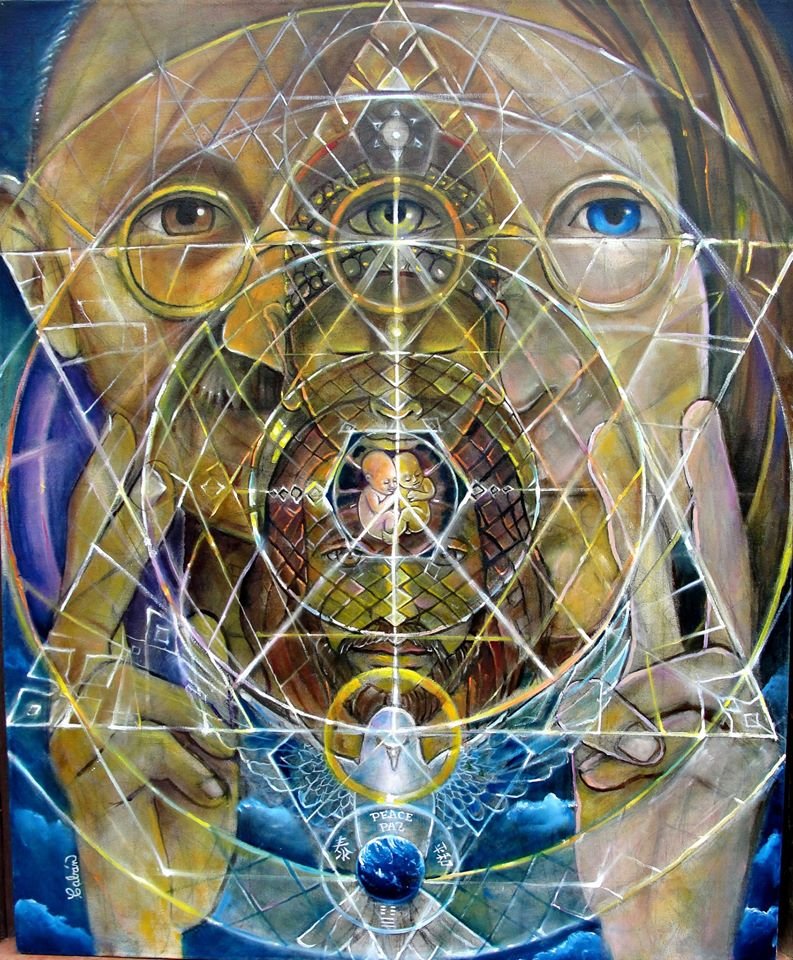
What we cannot quite grasp – what is too vast and many sided for us to hold entirely in our thoughts, we give form to in paintings, in carvings, in sound, in piling rocks one upon another to form a monument. We may then venerate or hold as of immense value such art forms. They hold in them for us the vast dimension of the ungraspable, of the infinity of our own within. They stand before us as represent a journey of lives of the alien in our midst, in ourselves. They remind us of what we are not masters of, and what may take hold of our life. See
 |
In past times tribal people stood in awe of their own existence. They recognised, even if it were unconsciously, the incredible journey they had made from being an unconscious animal, to the attainment of personal awareness and human society. They represented this awe-full experience in rituals, and symbolic paintings and sculptures such as the totem. They also recognised in their art the immense journey ahead, of claiming the possibilities of human life, and put this into their art. How do we deal with the powers that overwhelm us and drag us into mass murder in war and social upheaval? How do we create a personal and social world that we can be proud of? |
In writing about Symbolism In The Visual Arts, (Page 255 in Man And His Symbols, Jung)
Aniela Jaffe mentions the drawing of Klee, interestingly called The Limits of Understanding, which expresses this attempt to put into form what cannot be thought. Jung said that a true symbol appears only when there is a need to express what thought cannot think or what is only divined or felt.
The great artists of any culture give to us what we may have failed to see ourselves. They portray to us the spirit of our times, and our predicament, and perhaps even a passage through the dilemmas we face. Sometimes they manage to break through the cultural plethora and froth of everyday life and display an insight into the fundamental forces of life, renewing our own connection. To do this they face a personal death into the unconscious. They experience darkness and light that many of us may not dare to face. They live within the great forces of their dreams more intensely, more fully than those of us whose awareness is centred on the everyday surface produced by the concepts of life generally agreed upon.
When an artist manages to meet and give birth to one of the spirits of our age, whether it is a terrible demon of our times, or a healing angel, it speaks to us beyond our reasoning. It draws crowds, it holds attention. In the early part of this century the artist Kandinsky wrote that ‘The art of today embodies the spiritual matured to the point of revelation.
Something that we must recognise as an enormous shift in human awareness that has taken place in our own times, and which must influence art from here forwards, is the attainment of self-awareness we have been helped toward by the findings of modern psychotherapeutic schools. This form of self examination has enabled us to explore the wealth of pain and wonder usually forgotten in the mists of childhood. But it also lays bare the struggle, the enormity of the evolutionary movement toward consciousness, toward being human. And there is tremendous art here when it is discovered; art expressing the meeting between the social individual we try to be, and the animal we are still largely immersed in within the depths of our mind and body. In fact we are the whole spectrum of things from sub-atomic particles, through molecular survival and interactions, on into the basic living organisms and creatures up through the lizard, the mammal and the human. All these things are active in us, in harmony, in conflict, in process of becoming. Out of this weaving loom of life all art and music arise; all life experiences an expression of it.
As an example, Thomas De Quincey’s Confessions of an English Opium Eater describes his fantastic dream life over a period of years. De Quincey started to take opium as a sedative. It led to a heightened awareness of how the mind can produce powerful images and memories. He writes that ‘In the middle of 1817, this faculty became increasingly distressing to me.’ Not only did his inner visions present ‘… nightly spectacles of more than earthly splendour.’ But also ‘…. vast processions moved along continually in mournful pomp. Concurrently with this, a corresponding change took place in my dreams; a theatre seemed suddenly opened and lighted within my brain.’ Such experiences led De Quincey to feel ‘deep-seated anxiety and funereal melancholy.’ At times he might recall the ‘minutest incidents of childhood, or forgotten scenes of later years, were often revived.’ ‘I could not be said to recollect them; for, if I had been told of them waking, I should not have been able to acknowledge them as parts of my past experience.’ In his visionary state however, he says ‘I recognised them instantaneously . . . I feel assured that there is no such thing as an ultimate forgetting.’
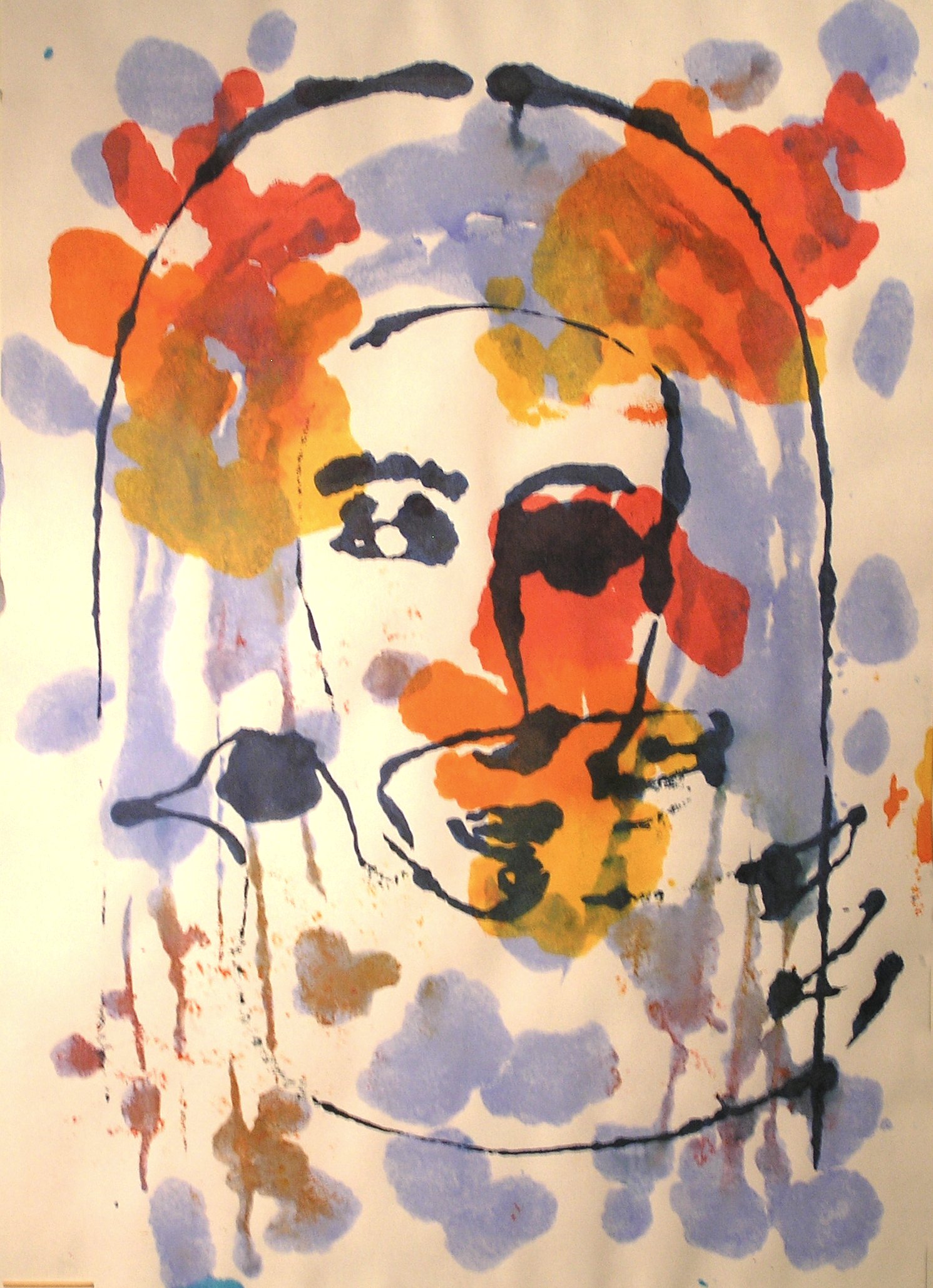 |
De Quincey’s deep seated anxiety and melancholy, in our present times, would be signs of an underlying neurosis which could have been dealt with by exploring his fantasies to their roots in his personal history – already being touched on spontaneously by him. Whether we take the example of De Quincey’s opium aided fantasies, or the visions of Christian mystics such as the temptations of St. Antony, art and religion has at least a facet of being a symbolic way of meeting a neurosis. It is only when we reach through the symbol into what it depicts about us personally, that we move from this historical symbolic form of healing and representation. |
One cannot of course limit the definition of art and dreams to that of dealing with hidden neurosis, or even of the move toward wholeness. Therefore it is interesting to remember some of the artists who directly used dreams as part of their work. William Blake for instance purposefully made use of dreams not only as sources for his art, but also for invention – his method of printing for instance. He particularly tells of the man who taught him painting in his dreams. Blake actually drew the face of this character.
In the 1950’s the painter Jasper Johns was working as a window dresser in New York. In a dream he saw himself painting an American flag. In waking he painted the flag from his vision of it in the dream. The painting became a powerful force in an American revolution in art.
Salvador Dali consistently used dreams as a basis for his paintings. He tried to preserve his dream imagery in his art, and particularly to portray the subtleties of time and space. He referred to his paintings as ‘hand painted dream photographs.’
A number of film directors also used their dreams in the art. Ingmar Bergman tried to portray episodes from his dreams as accurately as possible. He felt that dreams have the ability to help people find points of connection, to link people. Carlos Saura used fragments from his dreams to capture atmosphere and environment.
For each of us, our dreams are our own studio in which we nightly create beyond our waking talent to produce the new, the novel, the unexpected and the deeply true. We are each visionaries, artists of the night and live in another dimension than that of the body. See: archetype of the artist; compensation theory; creativity and problem solving; hallucinations and hallucinogens; hallucinations and visions.
Aristides and the First Dream Diary
Aristides was a Greek who is thought to have written the first dream diary during the period of time dated 530 to 468 BC. This diary, titled The Sacred Teachings, was a huge work five volumes in length – although 27 portions of it may have been lost.
The reason for the title is that many of the dreams concerned Aesculapius the god of healing. They give accounts of how Aesculapius appeared to Aristides in his dreams and taught him various methods of healing illnesses. Many of these methods were what would be considered extreme today, consisting of bathing in icy cold streams, taking mud baths in freezing weather, and so on. Interestingly, in Japan, the teachings of Seitai, which are said by their founder Noguchi to be based on observations of the process underlying dreaming, also recommend freezing baths and other rigorous disciplines. The reason given is that much illness arises from having what might be described as a limp personality – one which constantly worries over inconsequential things, or retreats from any minor discomfort. The rigorous disciplines are said to strengthen the will and resolve of the practitioner, and thus make them more forceful in the way they meet experience. This is mentioned as the ancient practices may have had a similar aim. In some modern pain clinics, the patients are helped to gradually increase their exposure to pain, even to the point of powerfully moving painful joints and body areas. The results reported are said to increase the persons ability to meet and deal with pain and difficulties. See: Greece (ancient) dream beliefs.
Useful Questions and Hints:
Do you worry about inconsequential things? If so you could do with disciplines such as described in the slow breath.
It is also worthwhile to read and take to heart what is said in Dream Yoga.
Can you face and integrate emotional pain or do you hide it with nicotine and alcohol – or even worse heavy drugs? Use Integrating.
The Night Journey – the Search for Self
Each of us are constantly gathering information about who we are, what we are capable of and what the meaning of our life is. This is often put into an archetypal form as the great quest, a journey or the great pilgrimage. For many it is expressed as the search for God, Allah, or the many names people of the world give to what they experience as the Great Unknow Mystery, and the often extraordinary efforts people make to grow beyond the pain of childhood or adult trauma. In some it becomes the quest for knowledge when one truly tries to understand rather than simply remember facts. It is seen in artists attempts to go beyond themselves in creative acts; in the spiritual quest for the imperishable; the search for real love or even the way some people manage to transcend the limitations of their body. They are all aspects of this search for self. The journey is endless because it is a journey through infinity.
I am a wave on a shoreless sea.
From no beginning
I travel to no goal,
Making my movements stillness.
Constantly I am arriving
And departing,
Being born and dying.
I am always with you
And yet have never been.
Throughout history we have examples of how such quests were lived out. Mohammed for instance, describes his massive breakthrough into what he felt was a cosmic revelation as The Night Journey, which occurred in a dream. Siddhartha, after years of discipline and privation, finds a new way of experiencing life in what we now called enlightenment, and became the Buddha. Jesus transformed from a carpenter to the Christ at baptism through an opening to a new type of awareness. Thousands of people in today’s world have followed in the footsteps of those early pioneers and experienced for themselves the meeting with what Jung calls The Self – the emergence into an experience of greater wholeness or completeness; the falling away of the defences, resistances and fears that have held us back from our fullest and most profound experience of ourselves; an experience of enlightenment. It is not a case of developing an attribute we didn’t already have, but of bursting through the personal or culturally imposed barriers that have walled off this greater expanse of self from easy access. See Enlightenment
In a sense, every dream is a part of this huge journey which is our life. Each dream is a facet of what is met in experiencing – meeting – our own existence. There are definitely highlights in our many dreams – times of critical and arduous difficulties, such as we find in the great quests such as Jason and The Golden Fleece, and the Odyssey. The journey is one we are all on, and our dreams and archetypal images are but ways of depicting aspects of what we meet, the enormity of the ordinary, the hidden depths of a problem we encounter, the wonder of possibilities awaiting discovery, the way into the trackless realm beyond collective norms. The journey is from dependence toward independence, from being a part of collective humanity to the actualisation of our own unique identity. This journey to oneself is, paradoxically, also the journey to the universal, to merging of self with the One. See: archetype of the hero/ine; Inner World
Example: I was in the army. We were going to fight the Germans. We collected together in a large flat, the Germans coming also. We came to know each other not as enemies but as people. I was so moved by the feeling of brotherhood I nearly wept.
Then I was on a ship. It was night. Ahead loomed land, some miles away. On the left, high up in the hills, flashes of guns could be seen. The captain explained that the guns were bombarding and terrorising people. It was our mission to stop them. As this was explained I felt, for the first time in my life, a real feeling of being a part of a group, and being willing to risk or give my life for my people. It was almost a religious feeling. T.
This is a typical ‘night sea journey’ dream. The dreamer was starting to delve into himself and the dream shows him ready to give his life to dealing with his internal conflicts. It also shows the love and courage necessary to make this journey.
There are grand stages or points on the journey. Most of the great religions attempt to depict these stages, although there can never be a final definition. In Christian symbols for instance we have the annunciation, the divine birth, the recognition at the temple, the baptism, the teaching, the marriage; the trial and crucifixion, the death and the resurrection, and finally the ascension. All of these depict psychological events in the process of meeting ones own depths, of the growth to ones own maturity and wholeness. Other cultures define these stages in other ways. The Hindu teachings give them as four major stages. Namely the student, the householder, the retired person, and the fourth is the ascetic (also known as a sanyassin or a sadhu). See The Inner Path to Christ Intro
Example: I remember leaving some place and embarking on a journey at night. I’m frightened but I want to make this journey. I approach a stream with a very narrow bridge. It’s dark and I’m afraid I may fall off the bridge. But to continue I must cross the bridge. R.
This extract from R’s dream is typical of the starting of the process of uncovering ones own unconscious darkness and the night of the unknown self we are journeying to. This is the beginning of what is often called the Night Journey and the facing of fears. The Night Journey is itself an archetype involving the search for self. It is called a journey in the night because the person enters into what was previously dark, hidden and unconscious. They enter into awareness of the unconscious. Carl Jung’s frontispiece to his book Man and His Symbols is the entrance to an Egyptian tomb, leading into profound darkness.
Example: My dream is of an endless journey, which takes a road that turns into a circle or maze that is endless. There is cloth covering the sides of the pathway. I have to take sticks of wood to try to lift it out of the way. J. P.
Example: Then imagery came and I was walking in a beautiful forest. The trees were very big and widely spaced, so it was light and giving the impression of quiet space. I felt as if I were beginning a journey and the forest was my starting place. As I walked in the forest I heard a sound coming from somewhere. I had the sense of it beckoning me or attracting me so I go off in search of it. But although it beckons it is difficult to know exactly where it is coming from. There is a sense that it is coming from higher up, from the mountains that stand beyond the forest.
I am experiencing something the imagery is of being in the midst of a tribal group perhaps they are like people from New Guinea or South America. I seem to be lying on the ground and they are in front of me in a long column, all males. They are not threatening, but they seem to be expressing masculinity, perhaps even the source of strength that would go into being warriors. I am apart from the group, an old male. I feel it is something about facing death.
Now they have gone and the women of the tribe are dancing in front of me. They are bare breasted and their dance is about being female. My sense is that they are calling my masculine energy, raising or rousing it in preparation for something like an initiation I am about to pass through. I am the elder and they are readying me for a further initiation. What they are doing is traditional, and it is to set the scene for what I am to face or confront.
Now the preparations have ended and I am to go off alone up the mountains to meet whatever waits for me there. Now it feels as if something is flowing into my body. I am now experiencing a state or condition that has been very marked or strong in my life lately. My breathing became very slow, it seems even at times as if it has stopped, and everything becomes very still. It feels like being dead. My body becomes so still it disappears and all that is left is awareness submerged in enormous emptiness or space. There is a paradox in this experience because it feels as if I, my sense of self, has melted away, and yet there is still a very definite experience of existing. I suppose what has stopped is what I have called movement. The movement of thinking, of feeling, of longing or hoping for things.
There is this huge reality confronting us all the time. We call this reality death. And often that has an awful face for us. But I am feeling it as joy, a most wonderful joy. It is here in the darkness I am experiencing – that joy. The waves of this gentle joy flow through me. It is like floating in a subtle ocean and my consciousness, my being, is gently lifted and moved by the waves of this quiet joy.
Here the waves of that joy were big, lifting me high in a coloured spectrum of rippling, vibrating radiance. My being was the waves. I was myself waves of rippling sparkling radiance. At the same time my awareness could switch back to what was happening with my body, and it was shaking, vibrating with energy flowing through it. As this happened it really seemed as if my body was being absorbed into the energy. This felt to me as if my body was melting and becoming part of the emptiness that was rippling through me, that was me. The great waves of life were absorbing my personality. It was being broken down just as our body breaks down food we eat and digests. It was drawing me back into itself. Living or dying is a joy. I love you life. I love you death. You are both the same beauty. Beautiful mystery. I cried out with the wonder of it, “Oh my Darling.”
Our dreams often insist that the journey is everlasting, not even ending with death, but moving through the great cycles of the universe. Only by making the journey can we find our own wholeness and our own place in life with any awareness. The term probably arose with the description of Muhammad’s experience of enlightenment which he called The Night Journey. Jung called it the Night Sea journey.
Paul Levy writing about this says: “This process can be so extreme, so radical, that the ego experiences it as death …. This experience is related to the shaman’s and Jesus’s descent to the underworld as well as the archetypal journey of the wounded healer. See Vibrate Vibrating
Example: As I walked among them I saw their lined faces, bent backs, and thought/wondered whether this could be healed and released. Now their doctor/priest came to them. A big man who seemed to have a slightly lame right (I think) leg. He had penicillin on his hands – to heal the many sores his people had. He then laid down in the small channel seen in cowsheds to carry of the urine and cow shit. It had been cleaned, but a cow had shit in its slightly. He asked for blankets to lay on. These were brought. He lay down and prayed. This was the inner strength his people needed.
This is an example of the wounded healer.
To quote an ancient alchemical text “…the Tincture, this tender child of life…must needs descend into the darkness of Saturn (which symbolizes the point of lowest descent, of death), wherein no light of life is to be seen; there it must be held captive, and be bound with the chains of darkness.”
Mythologically the night sea journey is described as being swallowed up by a sea monster and thereby carried into the depths of the sea – the story of Jonah. Psychologically it is the experience of ones life energy turning inwards and descending back toward its root or source. In doing so our poor vulnerable self awareness, our tiny spark of consciousness is carried beneath the protective boundary of waking awareness into its own depths. This is akin to travelling into the darkness of sleep with awareness. Sleep, after all, is a strange country in which our waking self seldom if ever travels. Imagine, if you have not already made the journey, delving into the level of yourself where your eyes no longer see, your body sense of form or size and touch have disappeared. There is no hearing of the external world. You are sinking into the country of what we call the mind or consciousness, the world of sleep, death and dreams, in which the usual boundaries of experience are taken away. Here you meet – given form by your fears and cultural symbols, as if with real bodies – your own fears, the pains buried deep in your past, the residues of all past actions so far unredeemed.
But you also meet the wonder of an enormously enlarged awareness, the sparkling immediacy of questions answered, the splendour of bodiless life linking in love and mind with an infinity of others. Here you experience the vision of the spirit’s journeys into time and space, and its life in eternity. Here you are the genderless consciousness of angels.
Example: This is when I entered into the house of God. At first I saw the image of a huge cathedral or church with a magnificent domed roof and I knew that I was in the house of God. I felt the utopia, I felt like I have never felt before, so very good, so excellent. I knew all things. I didn’t have to read the bible or any kind of teachings because the answers are all here in the presence of God. In this state I could ask any question and know the answer. I knew God, yet I was God because there was no separation. Neal C.
Example: Suzanne Segal in her book, Collision with the Infinite, says, There is no one I could instruct to do something to make you the vastness. That’s already and always who you are.
There is no end to all of this, just as there was no beginning. There are constant “bus hits,” as I now call them, in which the infinite expands yet again and again. The substance of the vastness is so directly perceivable to itself in every moment that the circuitry at times requires another adjustment phase to get used to more infinite awareness. When asked who I am, the only answer possible is: I am the infinite, the vastness that is the substance of all things. I am no one and everyone, nothing and everything—just as you are.
And before you say you think that is all preposterous think about this – you can see Less than 1% of the electromagnetic spectrum and hear less than 1 % of the acoustic spectrum. As you read this, yon are travelling at 220 kilometres per second across the galaxy. 90% of the cells in your body carry their own microbial DNA and are not “you”. The atoms in your body are 99.9999999999999999% empty space and none of them are the ones you were born with, but they all originated in the belly of a star. Human beings have 46 chromosomes, 2 less than the common potato. The existence of the rainbow depends on the conical photo receptors in your eyes; to animals without cones, the rainbow does not exist. So you don’t just look at a rainbow, you create it. This is pretty amazing, especially considering that all the beautiful colors you see represent less than 1% of the electromagnetic spectrum. See: The Next Step.
Useful Questions and Hints:
Have I consciously made the decision to take the journey of self revelation?
If I am on this journey what stage am I at? See: individuation for stages.
Am I meeting, or have I met the dying of self – if so what changes is it bringing?
Also it is worth reading Levels of Awareness – Jesse Watkins Enlightenment – Methods of Awakening – Meditation with Seed – Life’s Little Secrets – Dimensions of Human Experience
The Baby In Your Dream
Your dream baby is very special to you. It doesn’t matter that perhaps the baby in your dream is the child of another woman, it is still the baby of your dream. Like any baby, it is something new and vulnerable that has come to life – come to your life. The important question is, what is it that is new and growing in your love, in your work, or in yourself? Or perhaps it is about vulnerability. Therefore the answers you give to the following questions are important in helping you discover the truth about your dream baby.
Example: I have had 2 dreams now where I am pregnant and there are 3 possibilities for the dad! 3. And usually its a pair of brothers (different each time) and another person (cant remember exactly who, once it was my ex bf I think). Weird right? Why would I have this dream? I am married and had a baby over a year ago.
Your dream baby is very special to you. Like any baby, it is something new and vulnerable that has come to life – come to your life. The important question is, what is it that is new and growing in your love, in your work, or in yourself? Such a baby is a new part of yourself that you have formed out of your life experiences and so is enlarging you. Take care of it and see what it adds to your life.
However, if you are pregnant or hoping for a baby at the time of the dream, your dream baby may be reflecting your hopes, fears or intuitions about pregnancy. Many pregnant women have very anxious or strange dreams about their baby. So do not feel that such dreams are predictions. They are often ways of releasing anxiety or of expressing hopes regarding your unborn child.
If you have given birth to a baby in a dream, it can represent a new phase of life; a new idea; new activity – as when we say someone has a new baby, meaning a new project or business. This ‘baby’ might be part of you that did not have a chance to be ‘born’ or express before. Or it may be things learned in a rich life that you could not put into practice because of circumstances. The baby in this aspect is the ‘you’ that could have been if you had been free from problems and past hurts.
How would you describe the condition or situation of the baby?
The baby in your dream might be hungry or ill. It might be wonderfully advanced and already able to speak. Whatever the condition, this is a description of what is happening with the newly emerging or vulnerable part of you. Therefore try to put into words what you see or feel the condition of the baby is.
As an example of this, here is a fragment from a man’s dream: ‘I am responsible for bringing up a baby boy. I feel very happy about it and feel committed to it.’ So in this case the condition of the baby is that of being loved and cared for.
What does it mean when I give birth to a dream baby without a father?
If you have given birth without any man involved, it suggests it is a virgin birth – i.e. no male partner was involved at the time.
So the dream baby born to you in this way a wonderful creative act between you and Life. It is a new part of you that if you let it gradually grow into your waking life as a new force, a new way of feeling about life and acting. Being pregnant like that is very important. Obviously you are not going to give birth to a physical baby, but dream babies are important too.
Many women dream of giving birth without any man involved. Virgin birth is normal part of dreaming. It means that the woman or young girl has conceived as a process of Life. Being a virgin represents the human soul or psyche and its possibility of dropping pre-conceptions, thus attaining an inner virginity and through that being receptive to the unseen or unconscious side of self. Joseph Campbell in his book “Myths To Live By” says – “There are myths and legends of the Virgin Birth, of Incarnations, Deaths and Resurrections; Second Comings, Judgements and the rest, in all the great traditions. And since such images stem from the psyche (from you and your dreams), they refer to the psyche. They tell us of its structure, its order, and its forces, in symbolic terms.”
For instance, the story and events surrounding the virgin birth, when looked as if a dream are not about a biological miracle, but about how as ordinary people, we can drop our preconceptions, our fixed ideas and beliefs and allow an entirely new and creative impulse into our life. This truth has been so venerated that we find virgin figures all over the world such as Maya the mother of Buddha born 500 BC; the virgin mother of Osiris, and of course the story told of Mary.
Being a virgin in this case is about having a mind free from previous ‘conceptions’ and so being open to Life itself fertilising you for a new and precious thing being born. If you are not a virgin because you have had children, that is not what virgin birth is about. It is about conceiving without any mental preconceptions, having an open and receptive mind or soul. it is about a wonderful human possibility.
Only a ‘virgin birth’ can bring forth the birth of an intuition, a new response to oneself and ones environment, that transforms ones life. This is a living relationship with the mystery which underlies our life. If we generate a child in this way, we are not held prisoner by habits of thought, stereotypes of behaviour, then we can begin to allow into our waking life what was previously impossible to know. This open state of mind and feelings, acts as a link between the identity or personality, and the deep unconscious life processes. This link allows a birth of realisations and inner change that brings healing and a possibility of experiencing the aspect of oneself that is our core self. Here is an example of a man giving birth to the wonderful child.
“Was in a basement where my wife and a woman I loved was giving birth to a baby, but I was somehow the one who gave birth to it without a doctor being there. It was a lovely boy. Its lower face was covered by a tight caul, but I pulled this off and it began to breathe. It opened its eyes and looked about, fully conscious; then said something about Jesus, and, “It is gone!” I asked what had gone, and it replied, “The other ego; where has it gone?” I explained that the spirit self it knew before birth was now gone so it could live in the body. The baby was then taken upstairs, and I felt it was a holy and wonderful baby. I was going to rest from the rigours of the birth, but on looking around saw how dusty and dirty the basement was. I began to clean it, and felt I would go upstairs and rest afterwards.”
This was a dream marking a real change in the man’s life. The man did work at cleaning his basement/unconscious and then began to go upstairs to his wider awareness.
Example: “I had a baby girl, but I had no idea who the father was. I’m dating someone now, so I figured it was his, but she didn’t look like him at all. I remember I started going through this list of men I’d been with recently”.
A way to understand this dream is that you have given birth to a new part of yourself and your inner male is the father. This is said because of your uncertainty about who the father was, and that your baby girl did not look like the present partner. /so this makes it more certain that your baby was a creation with you and the processes of life in you, your inner male – or animus – which is a synthesis of all your male contacts.
See http://dreamhawk.com/dream-encyclopedia/archetype-of-the-animus-jungs-view-of-the-male-in-the-female/
What are your feelings or thoughts about the baby as it appears in the dream?
What you feel and think about the baby gives an indication of how you are relating to the new or vulnerable part of yourself, or what worries you are discharging. Clarify them to recognise what may be helping or hindering this new experience in your life.
An example of this: I had a dream that I had a child and had to cancel a test because I had to take care of the baby. I was breast feeding the baby, because it is healthier to breast feed than to give formula from a bottle. The person that I had been seeing wanted to know what I thought I was doing. The question was in an accusatory manner, like I had no business breast feeding my own baby. Then I left the baby with my friends and left. When I came back, they were feeding the baby Tabasco sauce because they ran out of milk. This shocked me because I thought my friends were more responsible than that.
So there are two issues here. The first is the struggle and strength to oppose what is felt to be right in the face of other people’s opinions. The second is that other people can injure your vulnerable and growing self if you let them take over your decisions. In either case it is clear that you have the intuitive knowledge to see what is the best way to nurture your baby.
Is the dream baby my own child?
If we are parents we often dream about our own children. Occasionally such dreams express concerns we have about our own child. We have noticed something ‘out of the corner of our eye’, and the dream puts this into focus. But often such dreams use the child to illustrate a developing part of you. This is because your actual child has characteristics unique to itself. They may be adventurous, playful, thoughtful or highly verbal. To understand your dream you need to define how you see and feel about your child.
For instance a woman dreamt she was sitting on a window sill and was frightened of falling. So much so she couldn’t move. Then she reached out and took her small son’s hand and climbed into the building away from danger. In describing how she felt about her son, she said he was courageous and confident. So her dream was showing how, by reaching out for her own confidence and courage, however immature, she could overcome her anxiety about falling/failing. Her child calls out her inner strength to meet the situation and overcome the danger.
Can I help the baby in any way?
This is an important question to answer because your dreams often present you with opportunities to change or to grow. If the dream is dealing with an emerging part of your nature, or a new love or project, protecting and helping this new dimension of your life is important. So, for instance, if your baby needs feeding or affection, sit quietly and imagine yourself feeding the baby, or giving it affection. Do whatever you feel is needed to help it. See Secrets of Power Dreaming
Is this an intuition about a baby’s or my baby’s situation?
Quite often we dream about awful events in connection with our baby or child. Because these can be incredibly disturbing it is important to understand their meaning. As a first step there are at least two types of dreams that deal with disturbing events. The first type of dream is called ‘representative’. And the following is an example of it.
I am on a country walk with my wife and small son. I look back to see my son fall down a deep hole. I rush back to see him drowning, and wonder whether I should jump down to help him. Then suddenly he is okay and with me again.
The father was incredibly worried that it showed a bad situation for his son. But as we explored it we realised that the son represented his marriage. He had a terrible row with his wife the day before, and he was frightened that it was the end of their life together. The son in this dream was the result of their marriage, what they had created together. So if the son had died it would have shown the father feeling their marriage had no hope of a future. But the dream showed the son fully recovered, showing that even when he was feeling bad, his dream showed him a different outcome. So it represented the father’s intense feelings and the possible outcome.
The other type of dream can be called direct insight or prophetic. Such dreams are usually not in any way symbolic and are highly uncommon. They do not include such things as are in the above dream which quickly switches from danger to ease. The following dream is an example.
One morning my wife woke and told me she had dreamt about the baby of two of our friends. The friends, a man and wife, were living about 200 miles from us. We knew the wife was pregnant, and about a week or so before the dream we had received a short letter saying their baby, a boy, had been born. We were not on the telephone at the time, so the letter was our only means of communication.
In the dream my wife saw the baby and a voice from behind her told her the child was ill. Its illness, she was given to understand, was serious, and would need to be treated with a drug taken every day of the child’s life. The reason for this illness and the drug use, she was told, was because in a past life the person now born as the baby had committed suicide using a drug.
In this dream very definite information was given that could be checked. I didn’t take the dream seriously, thinking it was some sort of personally symbolic dream. The dream was sent to the couple, and about a week later a letter from them said that the letter and dream had crystallised their already existing anxiety about the baby. It had not been feeding well and was fretful. On taking it to the doctor nothing definite could be found but special tests were made in hospital. From these it was discovered the baby was dying. It lacked an enzyme which was needed to digest calcium. To compensate it was given a drug, which it has had to take every day of its life to make up for the lacking enzyme.
The dream did not represent a situation, it described it clearly. Also it could easily be checked. So if you are uncertain, always go for the representative dream, as prophetic dreams are extremely rare.
So the questions to ask are: Is this dream making a direct statement? If so can I check it for accuracy? If it is a representative dream, ask yourself what it represents symbolically, and go through the questions above.
Summing Up
From the answers you have given to the questions see if you can recognise what new thing has come into, or is emerging, in your life. What do you feel vulnerable about? Is it to do with someone you love? Is it a new attitude you have to the way you express yourself? Or perhaps it is a new project you have undertaken.
When you can connect the dream with your everyday experience, consider what the dream is depicting in its drama. Is it saying the baby is healthy and strong? Does your baby need support? Is it nourished? Whatever you have discovered from looking at your dream baby, try to use the insights in your everyday life. Build them into the way you feel and think, and watch your baby grow.
See Being the Person or Thing; Inner Baby and Child; also baby babies.
Animals as Dream Figures
Like any other animal, human beings have developed certain physical and behavioural traits. Some of these traits, such as a new born baby attempting to suckle the breast, and attempting to bond with its mother, are rooted in millions of years of past experience and can be thought of as instinctive. To be abandoned by ones mother, even for a short time, was a life threatening danger in the past, and is still felt as such today by an infant because of the millions of years of imprinted experience.
We can observe such instinctive traits in a dog in such behaviour as cocking of the leg in male dogs. We can see some of our own traits in such things as the human desire to elect leaders. Many of these habits are psycho-biological or social. In our dreams we represent these drives or habits in the form of various animals. Our restrained sex drive or aggression may be shown in our dream as a dog on a lead. The power of drives such as the urge to parenthood via sex might be shown as a horse which we are trying to control. More than anything else though, our dream animal represents our powerful feeling reactions to situations – reactions developed through centuries of human experience in frequently terrible situations. This aspect of ourselves is rooted in the older portions of the brain. The feeling reactions indicated are those such as the fight or flight reaction; the drive to protect property or territory even to the point of killing another human being; the urge, often not accepted in its naked power, to find a mate and to have sex in order to procreate; the desire to have standing and recognition in ones social group; the drive for dominance – or the resulting depression or sickness if no recognition or place in the group is found. See: animals in our brain.
Because dreams exhibit a powerfully precise way of using symbols, there is a difference in meaning between the wild animals and the domesticated animals we dream of. In general the domesticated animal such as a cat or horse represent urges we have more conscious control over and are therefore less threatening to our conscious desire to be in charge. The wild animals in our dreams often pose a much greater threat to our ego, but nevertheless offer rich rewards if we can develop a working relationship with them. After all they are aspects of ourselves, so the relationship can release more of our usable potential.
Example: I am sitting in the hotel staff room eating lunch at a large dining table. One by one I am joined by perhaps a dozen women. The atmosphere is pleasant, easy and light hearted. I enjoy the feeling of being the only male among a dozen attractive women. Then I notice a strange thing. One by one all the girls around me turn into cats, but carry on laughing and talking as if nothing is happening. I find this interesting and not alarming. I am aware each girl turns into the sort of cat that is right for her – a vivacious redhead becomes a purring orange tabby; an aloof, slightly superior lady becomes a Siamese; the only ex-girlfriend of mine present becomes a black witches familiar.
I remember turning to my left and asking: ‘Tell me Rebecca, how did you do this?’ The Rebecca cat giggles with a human voice and says: ‘He doesn’t have a clue, does he?’ As I look at the Rebecca cat I realise she still has her human eyes. This I realise is true of all the cats, they have human eyes in feline faces. As I realise this one says: ‘I think he’s beginning to understand now’ and laughs. Paul C. Teletext.
This graphic dream so well illustrates how our human personality exists within our animal drives and urges.
The animal in our dreams has commonly been seen only as the sex drive. A careful examination of animal dreams shows this to be untrue. The animal represents all aspects of sexuality and relationship. If this wider sexuality in an individual is damaged or traumatised, the person might become a parent who has lost the natural bonding and care for their child; an individual who has no sense of social status or responsibility; is criminally violent; or someone with disturbed and misplaced sexuality, a person unable to love or care for someone else. See: what does the animal in my dream mean.
Dominating or attempting to kill the animal in us can cause tension, depression and illness. The escape into dry intellectualism that might occur if the ‘animal’ aspect of oneself is denied, can be a cause of internal conflict. Complete permissiveness is no answer either. Our higher brain functions need expression also. So one of the challenges of maturing is how to meet and relate to our ‘animals’, and perhaps bring them into expression in a satisfying way. Such drives are fundamentally a push toward LIFE. Our dreams are selective in what animal is used to portray our situation. For instance a dog or horse are creatures that have been socialised for thousands of years, whereas a dinosaur has no history of socialisation. These different animals – domesticated or wild – can therefore be used to represent the socialised or untrained elements of ourselves.
In considering what our dream animal communicates to us, consider how you feel about that animal, what view you have of it, whether it excites, disgusts or frightens you. Is it funny because it exhibits some aspect of human nature so openly, like monkeys making love in public? Is it to be envied because it is so honest, like the dog growling at someone it doesn’t like or is frightened of, and giving obvious affection to someone it has a link with? With such straightforward questions we can arrive at what our dream animals represents to us personally.
Ancient Greece – Dream Beliefs
Antiphon, a Greek living in the fourth century BC., wrote the first known descriptive book of dreams. It was designed to be used for practical, and professional interpretations. He maintained that dreams are not created by supernatural powers but natural conditions. In the second century AD. a similar book was written by Artemidorus, a Greek physician who lived in Rome. He claimed to have gathered his information from ancient sources, possible from the Egyptian dream and the dream book dating from the second millennium BC. He may have used works from the Assurbanipal library, later destroyed, which held one of the most complete collections of dream literature. Artemidorus classified dreams into dreams, visions, oracles, fantasies and apparitions. He stated two classes of dreams; the somnium, which forecast events, and the insomnium, which are concerned with present matters. For the somnium dreams Artemidorus gave a dream dictionary. He said Abyss meant an impending danger, a dream of warning. Candle: to see one being lighted forecasts a birth; to exhibit a lighted candle augers contentment and prosperity; a dimly burning candle shows sickness, sadness and delay. This latter is taken from folklore of the times, and because dreams tend to use commonly used verbal images, was probably true. He maintained that a persons name – that is their identity, and the family, national and social background from which they arose – has bearing on what their dream means.
Plato 429 – 347 BC. said that even good men dream of uncontrolled and violent actions, including sexual aggression. These actions are not committed by good men while awake, but criminals act them out without guilt. Democritus said that dreams are not products of ethereal soul, but of visual impressions which influence our imagination. Aristotle 383 – 322 stated that dreams can predict future events. Earlier Hippocrates, the ‘father of medicine’ discovered that dreams can reveal the onset of organic illness. Such dreams, he said, can be seen as being illogically representing external reality.
Hippocrates was born on the island of Kos. On the island was the famous temple dedicated to Aesculapius the god of medicine. There were about 300 such temples in Greece alone, dedicated to healing through the use of dreams. Hippocrates was an Aesculapian, and learned his form of dream interpretation from them. In such temples the patient would have to ritually cleanse themselves by washing, and abstain from sex, alcohol and even food. They would then be led into what was sometimes a subterranean room in which were harmless snakes – these were the symbol of the god, and are the probable connecting link with the present day use of snakes to represent the healing professions. Prior to sleep the participants were led in evening payers to the god, and thus creating an atmosphere in which dreams of healing were induced. In the morning the patients were asked their dream, and it was expected they would dream an answer to their illness or problem. There are many attestations to the efficacy of this technique from patients.
“But how did a small, dirty, crowded city, surrounded by enemies and swathed in olive oil, manage to change the world? Was Athenian genius simply the convergence of “a happy set of circumstances,” as the historian Peter Watson has put it, or did the Athenians make their luck? This question has stumped historians and archaeologists for centuries, but the answer may lie in what we already know about life in Athens back in the day.
The ancient Athenians enjoyed a deeply intimate relationship with their city. Civic life was not optional, and the Athenians had a word for those who refused to participate in public affairs: idiotes. There was no such thing as an aloof, apathetic Athenian. “The man who took no interest in the affairs of state was not a man who minded his own business,” wrote the ancient historian Thucydides, “but a man who had no business being in Athens at all.” When it came to public projects, the Athenians spent lavishly. (And, if they could help it, with other people’s money—they paid for the construction of the Parthenon, among other things, with funds from the Delian League, an alliance of several Greek city-states formed to fend off the Persians.)
All of ancient Athens displayed a combination of the linear and the bent, the orderly and the chaotic. The Parthenon, perhaps the most famous structure of the ancient world, looks like the epitome of linear thinking, rational thought frozen in stone, but this is an illusion: The building has not a single straight line. Each column bends slightly this way or that. Within the city walls, you’d find both a clear-cut legal code and a frenzied marketplace, ruler-straight statues and streets that follow no discernible order.
In retrospect, many aspects of Athenian life—including the layout and character of the city itself—were conducive to creative thinking. The ancient Greeks did everything outdoors. A house was less a home than a dormitory, a place where most people spent fewer than 30 waking minutes each day. The rest of the time was spent in the marketplace, or working out at the gymnasium or the wrestling grounds, or perhaps strolling along the rolling hills that surround the city. Unlike today, the Greeks didn’t differentiate between physical and mental activity; Plato’s famous Academy, the progenitor of the modern university, was as much an athletic facility as an intellectual one. The Greeks viewed body and mind as two inseparable parts of a whole: A fit mind not attached to a fit body rendered both incomplete.
And in their efforts to nourish their minds, the Athenians built the world’s first global city. Master shipbuilders and sailors, they journeyed to Egypt, Mesopotamia, and beyond, bringing back the alphabet from the Phoenicians, medicine and sculpture from the Egyptians, mathematics from the Babylonians, literature from the Sumerians. The Athenians felt no shame in their intellectual pilfering. Of course, they took those borrowed ideas and put their own stamp on them—or, as Plato put it (with more than a touch of hubris): “What the Greeks borrow from foreigners, they perfect.”
Athens also welcomed foreigners themselves. They lived in profoundly insecure times, but rather than walling themselves off from the outside world like the Spartans, the Athenians allowed outsiders to roam the city freely even during wartime, often to the city’s benefit. (Some of the best-known sophists, for example, were foreign-born.)
It was part of what made Athens Athens—openness to foreign goods, new ideas, and, perhaps most importantly, odd people and strange ideas.
The city had more than its fair share of prominent homegrown eccentrics. Hippodamus, the father of urban planning, was known for his long hair, expensive jewelry, and cheap clothing, which he never changed, winter or summer. Athenians mocked Hippodamus for his eccentricities, yet they still assigned him the vital job of building their port city, Piraeus. The writer Diogenes, who regularly ridiculed the famous and powerful, lived in a wine barrel; the philosopher Cratylus, determined never to contradict himself, communicated only through simple gestures.
While they didn’t know that their time in the sun would be so brief, the Athenians did know, as their famed historian Herodotus once noted, that “human happiness never remains long in the same place.” Neither, it seems, does genius. ”
See: Aristides and the First Dream Diary
Analysis of Dreams
A great preoccupation of humans has always been ‘What intention does the world have in regard to ME?’ And also, ‘What do I want in regard to the world?’ If we understand that the sense of ‘me’ or ‘I’ includes all one holds dear, such as family, ‘tribe’, reproduction, hunting or business and general survival, then we have in a nutshell the essence of many dreams. We seek to deal in our dreams with the things that threaten these interests, whether they emerge from within us as urges or emotions, or from an external source. Dreams allow us to explore these difficulties of meeting our inner and outer worlds, and perhaps to find courage, resources or wisdom in facing them. The fact that the dreams of many ancient peoples included confronting gods or demons need not seem strange to us considering our present day dreams – see examples below. Whether the wisdom comes out of the mouth of a god or computer in our dream, the result is much the same. Whether fear arises out of the image of a ghost or an alien, it is still our own emotion we are meeting. See dream yoga.
All analysis of dreams rests upon concepts of what a dream is, what the events or images in the dream represent, and what we feel about them. Analysing dreams has a very long history, and this history shows the various concepts different cultures had about dreams and dreaming. But the analysis of a dream must not be confused with exploring a dream or using something like active imagination or the amplification method. Analysis is largely an intellectual approach while the other methods tend to encourage the dreamer toward direct personal experience, or allow unconscious content to emerge. See: Greece (ancient) dream beliefs; history of dream beliefs; religion and dreams; spiritual life in dreams; peer dream work.
Most societies, ancient and modern, have had professional dream interpreters. India had its Brahmin oneirocritics; in Japan the om myoshi; the Hasidic rabbis in Europe fulfilled this role; in ancient Egypt the pa-hery-tep; ancient Greece had the priesthood within the Asclepian temples given to dreams; among the Aztecs, dream interpretation and divination were the prerogative of the priestly class teopexqui, the Masters of Secret Things; in today’s world the Freudian and Jungian psychoanalysts fulfil this role – the author has worked as resident analyst for television’s channel four Teletext in the UK, New Zealand Teletext, London Broadcasting Company, as well as a major national newspaper.
Some of the most ancient written documents are about dream interpretation and are direct expressions of the attempt to understand or interpret dreams. The Chester Beatty papyrus on dreams for instance, dates from 1250 BC, from Egypt. This contains records of 200 dreams and their interpretations according to the priests of Horus.
Most social roles that survive for such long periods of time fulfil some useful purpose. The most fundamental purpose of dream analysis is probably that of reducing tension and anxiety in the dreamer. In skillful use of dream interpretation there may also be a powerful shift in the dreamer towards greater understanding of their life situation, or their internal process. With such understanding they find themselves in greater accord with themselves and their social and general environment. As with any role however, there is also the aspect of manipulation and control of ideas and behaviour that can occur when a lay person seeks the advice of priest or professional. Some such analysis of dreams, in the past and today, have most likely been ways of influencing the individual to fit present social or political norms or expectations, or to serve in some measure to maintain the role of the interpreter socially and economically.
Different cultures and ages approached dream interpretation in different ways. But one of the fundamental early ideas concerning what a dream meant has become folk philosophy. It has influenced thinking in regard to the mind and spirit to this day. Perhaps the most obvious example of this is that because many dreams place the dreamer in surroundings different to those in which they sleep, early thinkers were convinced this meant the human awareness or spirit left the body during sleep and travelled to far regions, or perhaps even to other worlds of the spirit. The idea of the personal awareness being able to leave the body gave rise to much speculation about the nature of human life. It became a fundamental belief that the mind or consciousness and the body were quite separate, but during life joined together in some way, perhaps like a letter in an envelope, or water within a tree. This view dominated the way personal awareness or consciousness was thought about for millennia, and was undoubtedly influenced by observation of such phenomena as out of body or near death experiences. In many people’s mind this duality is still a prime way of thinking about such phenomena of the mind as out of OBE’s and NDE’s. In fact, even with a much wider base of cultural viewpoints and philosophical and scientific debate and experiment with which to approach such phenomena, they are still not easily explained. There are however, completely different standpoints to approach the phenomena from. See: out of body experience; consciousness – the body mind split.
The Kalapalo Indians of central Brazil are a Carib-speaking community of fewer than 200 people. To the Kalapalo, dreaming represents an experience of life that frees the imagination and memory, and dreams must be interpreted with reference to the future of the dreamer.
The interpretation of dreams requires special linguistic resources that might be different from those appropriate for speaking about the ordinary waking life. Dreaming is believed to occur when, during sleep, an individual’s “interactive self” awakens and wanders until it achieves an experience. The dream experience begins when the interactive self stops wandering and starts to participate actively in some event.
According to the Kalapalo, the process of remembering is responsible for the experience of particular images, which can be associated with the memory of recent events. Dreaming is claimed to be a means of communication with powerful beings who visit the sleeper and are drawn to the interactive self when it detaches itself from a person’s physical body and begins to wander about. The appearance of powerful beings in their dreams allows the Kalapalo to acquire direct knowledge about them and about their properties, which can be subsequently used in waking life (in the event that the vision is not fatal). A person who experiences frequent and successful contacts with a powerful being becomes a shaman, after a period of apprenticeship. Quoted from Dream Enclopedia by R. Lewis James and Evelyne Dorothy Oliver.
The mental and spiritual world the ancients lived in can fairly easily be understood by our own present day dreams. This is because some of our dreams emerge from the primordial in us, such as ancient psychological and cultural patterns laid down over millennia. Therefore in our dreams we may meet with a rock, a tree or an animal that can speak to us. We face and have to deal with evil or benign spirits. We talk with our dead parents. We have warning or problem solving dreams. We are told by wise beings what will be the outcome of a situation. We experience landscapes or events that are awful or wonderful. All that has changed over the ages is the explanations given to such dreams, and the personal feelings involved.
We learn from this that we have an innate tendency in our dreams to portray the world around us, even if it is a rock, as having consciousness and intention. Other ways of putting it are that we project meaning onto the world around us, or that we have powerful emotional and thought associations with all that we experience. Of immense importance also is that we create an image of things we sense ‘out of the corner of our eye’ but cannot or do not have a clear concept of. In our dreams these obscure perceptions appear as definite images or beings with which or with whom we have a relationship. Therefore such things as social pressure, the collective or cultural character, are given form, as we find in cartoon characters such as John Bull representing the British, and Uncle Sam representing the Americans collectively.
A great preoccupation of humans has always been ‘What intention does the world have in regard to ME?’ And also, ‘What do I want in regard to the world?’ If we understand that the sense of ‘me’ or ‘I’ includes all one holds dear, such as family, ‘tribe’, reproduction, hunting or business and general survival, then we have in a nutshell the essence of many dreams. We seek to deal in our dreams with the things that threaten these interests, whether they emerge from within us as urges or emotions, or from an external source. Dreams allow us to explore these difficulties of meeting our inner and outer worlds, and perhaps to find courage, resources or wisdom in facing them. The fact that the dreams of many ancient peoples included confronting gods or demons need not seem strange to us considering our present day dreams – see examples below. Whether the wisdom comes out of the mouth of a god or computer in our dream, the result is much the same. Whether fear arises out of the image of a ghost or an alien, it is still our own emotion we are meeting. See dream yoga.
Example: My toddler was on the landing and he had red silk shorts on with plastic pants half pulled up over the shorts. I ask him how he got like that as he is too small to do it himself. Then behind him my husband just appeared and said he had dressed him, but I knew my husband was out and this must be an apparition or something really evil. I was extremely frightened and ran into our bedroom and saw my husband floating over the bed head. Then I woke. Mrs. H. C.
Example: There were a few strangers in a chemistry laboratory, with myself – one at each table all waiting for something. Suddenly we all looked at a large house spider on the wall. At the same time one of us, it seemed to be me, turned into some sort of evil monster-man. We all ran away terrified, while he rampaged round the building. Mrs. K.L.S.
Example: I was in an ancient room. It had the feeling of it being an old church. Then my wife and I were in bed in the room. A middle aged woman was in the room. She was a ghost. I felt afraid of her, but to confront the fear I reached out my hand to her. I was crying out in my sleep from fear. As she took my hand I was amazed and shocked to feel it as physically real. I cried out ‘I can feel you – I can feel you!’ She was also surprised. I had the impression this level or dimension was recognised by ‘them’. She said to companions ‘I do not understand, ‘He is from the fourth level.’ I then said I wanted to understand. A.T.
Example: I was with a young boy and went to his house. I believe his mother was there and a cat. The vivid part was that the cat spoke to me. It spoke in a rather female voice, very clearly. As it spoke I felt great amazement. I had lots of thoughts about how it had learned language – that it could speak because of human language – what did language do to its mind – and so on. I didn’t reach any conclusions. I noticed as it spoke that it had tiny lips, but they were perfectly formed like a woman’s. They had lipstick on – or at least were red and attractive. I cannot remember what the cat said, but this didn’t seem to be important. It was the fact it spoke that was so wonderful. I left the house and was asking people whether they had ever heard a cat talking – still full of wonder. A.T.
The major difference between the way ancient people interpreted their dreams and the way we generally approach them today is that ancient people were certain the dream was real, whereas we have a certainty of its illusionary quality. This enormous difference meant that ancient peoples generally approached their dreams with a conviction they could find help, healing or information from them. See what we need to remember about dreams.
In many cases in the past, dreams were looked to for signs of prophecy about important issues such as ones health, long life, fertility, wealth or victory in a battle. For instance an ancient Babylonian prayer reads: ‘Either let me see it in a dream, or let it be discovered by divination, or let a divinely inspired man declare it, or let all the priests find out by incubation whatever I demand of them.’
In the oldest known book, the story of Gilgamesh, it is told how Enkidu, the king’s great friend, dreamt an awful prediction of his own death. ‘There is the house whose people sit in darkness; dust is their food and clay their meat. They are clothed like birds with wings for covering, they see no light, they sit in darkness. I entered the house of dust and I saw the kings of the earth, their crowns put away forever; rulers and princes, all those who once wore kingly crowns and ruled the world in the days of old. And there was Ereshkigal the Queen of the Underworld; and Belit-Sheri squatted in front of her, she who is recorder of the gods and keeps the book of death. She held a tablet from which she read. She raised her head, she saw me and spoke: ‘Who has brought this one here?’ Then I awoke like a man drained of blood who wanders alone in a waste of rushes; like one whom the bailiff has seized and his heart pounds with terror.’
Enkidu goes on to say – ‘The dream was marvellous but the terror was great; we must treasure the dream whatever the terror; for the dream has shown that misery comes at last to the healthy man, the end of life is sorrow.’ Following the dream Enkidu became increasingly ill and died twelve days later.
The dreams that have come down to us in such written form are of course greatly memorable. The following is another example of this – The night before (the parents of Alexander the Great) lay in wedded bed, the bride dreamed that lightning fell into her belly, and that withal, there was a great light fire that dispersed itself all about into divers flames. King Philip her husband also, shortly after he was married, dreamed that he did seal his wife’s belly, and that the seal wherewith he sealed, left behind the print of a lion. Certain wizards and soothsayers, told Philip that this dream gave him warning to look straightly to his wife. But Aristander Telmesian answered again, that it signified his wife was conceived with child, for that they do not seal a vessel that hath nothing in it: and that she was with child with a boy, which should have a lion’s heart. From Plutarch’s ‘The Life of Alexander the Great’, AD 100.
A dream such as this is also reported by the mother of Buddha prior to his birth. (See Buddhism and dreams.) It is also much the same as Mary’s vision prior to her conception of Jesus. In fact in the Jewish and Moslem traditions regarding dreams, an encounter with God in a dream was regarded of very great importance, and was not seen as different to a vision or waking encounter with God or an angel. For more everyday dreams however, we must read those collected by anthropologists from present day tribal people. See: Native American dream beliefs; Babylonian dream beliefs; Hebrew dream beliefs; Iroquoian dream cult; Islamic dream traditions; Chinese Dream Beliefs; Mesopotamian Dream Beliefs; Australian Aborigine Dream Beliefs.
We can generalise and say that Babylonian dream interpreters tended to see dreams as being either good or bad. The good were sent by supportive gods, and the bad by demons. The Babylonians had a goddess of dreams named Mamu. The function of the priests of Mamu was to prevent bad dreams.
The Assyrians believed dreams to be mostly omens of good or ill luck. Like the Babylonians they tried to deal with the possible fate following from bad dreams. In fact this sense of an ill fate being presaged by bad dreams was common to most ancient cultures. But this was gradually extended in Egyptian, Greek and Roman culture. This development of what people expected to find in their dreams probably arose from folk wisdom arising from observation of actual events. Diodorus for instance said that ‘in Egypt, dreams are regarded with religious reverence, especially as means of indicating remedies in illnesses’; and that ‘the prayers of worshipers are often rewarded by the indication of a remedy in a dream.’ An Egyptian prayer to this effect reads ‘Turn thy face to-wards me. Tis thou who dost accomplish miracles and art benevolent in all thy doings; ‘tis thou who givest children to him that hath none. Tis thou who hast created magic, and established the heavens and the earth and the lower world; ‘tis thou who canst – grant me the means of saving all.’
This idea of dreams being a source of information that can help heal a physical illness, or as a source of inspiration in making difficult decisions is widespread in ancient cultures. The Egyptian story of Satni tells of Mahituukhit going to the temple of Imuthes in ancient Memphis, praying to the god, then falling asleep in the temple. She then received a dream from the god showing a cure for her infertility. The god said to her ‘When tomorrow morning breaks, go thou to the fountain of Satni, thy husband; there thou shalt find growing a plant of colocasia; pull it up, leaves and all, and with it make a potion which thou shalt give to thy husband: then shalt thou sleep with him, and that very night shalt thou conceive.’ It was common in seeking such dreams as the above to prepare by ritual fasting and bathing as a means of purification and then to sleep in the temple.
These early forms of dream analysis arose then out of a quite limited set of values. A dream was either good or bad. A dream either prognosticated good or ill fortune. It illuminated the way to death or to regained health. Lastly the dream may be a message from a god showing a wise decision in life, battle or politics. Therefore early analysis was limited to such views, as is show in the account of Pharaoh’s dream of the seven fat kine and the seven thin kine who ate the fat cattle. The dream and its interpretation, showing the future of the nation’s fortune, was both a dream about a dire fate, and about a political or state decision.
The Huron and Seneca Indians of America had a view of the dreams which stands in the balance between the ancient world and the modern psychological concept of dreams. They saw dreams as expressing psychological tension and unexpressed desires. This was a definite forerunner of modern understanding. Nevertheless the main sources of modern dream interpretation lie in the ancient dream interpreters such as Artemidorus who wrote the Oneirocriticus – Interpretation of Dreams – in AD 200; in the commentaries on dreams of Aristotle which so influenced Western thinking; and in the early criticisms such as we find in Cicero, in which he says – ‘Even if true interpretations of dreams could exist, it is certainly not in the possession of those who profess it, for these people are the lowest and most ignorant of the people.’ He reached this view by observing that dreams were infinitely variable, and one could observe that different people having the same dream did not experience the same results. One could not therefore base any conclusive conclusion upon them. He ended by saying ‘Let us reject, therefore, this divination of dreams, as well as all other kinds. For, to speak truly, that superstition has extended itself through all nations, and has oppressed the intellectual energies of all men, and has betrayed them into endless imbecilities.’ However it is apparent in what Cicero says that he is talking about the interpretation of dreams which sees them all as divinatory.
Aristotle moved beyond this viewpoint and was perhaps the first to leave a record of careful and analytical thought about dreams and sleep that link with today’s approach in which information is gathered and sifted. His suggestions in regard to how one might analyse dreams are summed up in three short essays: On Sleep and Dreams, On Sleep, and On Divination Through Sleep. See: Aristotle on dreams.
Strangely, European history appears to have been a slide into the deeps of superstitious imaginations regarding dreams and dreaming. It was a state of mind which appears to have had no links with the clarity of past cultures, or observations of collective experience. During this period all manner of fantastic explanations of dreams arose. The ancient dream dictionaries, the first of which was written by Artemidorus, and was published in the second century BC – were slowly degraded into statements of good luck or bad luck unconnected with cultural symbolism such as was found in Artemidorus original work. The influence of these European dream dictionaries are still found on sale in book shops today. Raphael’s Dictionary of Dreams, and the like are still purchased and read, and are modern expressions of this dark period of European psychological learning regarding dreams.
During this time dreams were also linked with numerology. In 1654 The Palace of the Curious was published in France. It explained how algebra and the laws of chance are means by which we can interpret the most puzzling of dreams. This became a tradition and many dream dictionaries published today still explain dreams in this way. Alongside these there were many claiming to explain dreams according to ancient Egyptian wisdom. As Norman Mackenzie says in his excellent review of these books in his Dreams and Dreaming, these ‘modern dream books represent the most degenerate form of what was once regarded as a divine art; they lack any real religious or magical sanction, and are simply an expression of popular superstition, like the belief in lucky numbers, lucky colours or birthstones. Whatever meaning may once have lain behind the symbols and the interpretation has long been lost.’
There were however lights within this gloom. Amidst the darkness created by a repression of any attempt to explore fresh understanding, there were still groups and individuals who attempted to discover and protect what was good of ancient thought, and what might be uncovered by personal observation. An illustration is this quote of Paracelsus rediscovered by Jung. ‘That which the dream shows is the shadow of such wisdom as exists in the man, even if during his waking state he may know nothing about it; for we ought to know that God has given us our own wisdom and knowledge, reason, and the power to perceive the past and the future; but we do not know it, because we are fooling away our time with outward and perishing things, and are asleep in regard to that which is real within ourselves.’
Although Sigmund Freud is popularly thought of as the founder of modern therapeutic analysis of dreams, many other people set the scene for him by careful observation and experiment. Freud encouraged clients to relax on a couch and allow free association of ideas arise in connection with aspects of their dream. In this way he helped the person move from the surface images – manifest content – of the dream, to the underlying emotions, fantasies and wishes – latent content – often connected with early childhood. Because dreams use condensation – a mass of different ideas or experiences all represented by one dream image or event – Freud stated that the manifest content was ‘meagre’ compared with the ‘richness and variety’ of latent content. If one succeeds in touching the feelings and memories usually connected with a dream image, this becomes apparent because of the depth of insight and experience that arise. Although ideally the Freudian analyst helps the client discover their own experience of their dream, it can occur that the analyst puts to the client ready made views of the dream. Out of this has occurred the idea of someone else ‘analysing’ or telling us about our dream. See: Freud, Sigmund; latent content; manifest content.
Carl Jung used a different approach. He applied amplification, helped the client explore their associations, used active imagination, and stuck to the structure of the dream. Because what arises for the dreamer is frequently still shaped and presented according to the information and experience of the therapist, again the dream work might still be largely verbal and intellectual, rather than experiential. See: amplification; active imagination; association of ideas with dream; Jung, Carl.
In the approach of Fritz Perls Gestalt Therapy and Moreno’s Psychodrama the approach to dream analysis is almost entirely experiential. The person exploring the dream acts out or verbalises each role or aspect of the dream. If one dreamt of a house, in using the Gestalt approach, one might start by saying, ‘I am a house’ and then go on to describe oneself just as one is as the particular house in the dream. It is important, even if the house were one existing externally, not to attempt a description of the external house, but to stay with the house as it was in the dream. This is like amplification, except the client gives all the information. This can be a very dramatic and emotional because we begin to consciously reveal the immense realms of experience usually hidden behind the image. When successful this leads to personal insights into behaviour and creativity. So this is experiential rather than analytical. See: gestalt dream work.
Modern dream analysis, if not limited to the approach of one clinical school such as Freudian or Jungian, is a very rich technique. It spans the best of the ancient cultures such as the use of dreams for help in decision making or healing of physical health. It incorporates techniques that enable dreams to be accessed by any intelligent person in order to be enriched by them. Many tools are available in this modern eclectic approach, tools that enable one to mine the various treasures from ones inner life of dreams. But foremost among the additions to the jewels of understanding garnered in the past, is that of insight into ones personal psychological history and personal traumas. This I believe is unique to our times, and not fully appreciated generally. From this new skill a way is being developed to integrate the many aspects of ones own multifaceted being. See: amplification; gestalt dream work; processing dreams; psychodrama and dreams.
The Amplification Method
This is an approach suggested by Carl Jung. In essence it is to honour what the dream states. In the dream example below David is sleeping on a mattress, but it could have been a bed or a hammock, or even a sleeping bag. So why a mattress and why in the garden, and why not alone? Having noted the specifics of our dream, we then amplify what we know about them. We ask ourselves such questions as ‘What connections do I have with a mattress? What does sleeping on a mattress on the floor mean? Have I ever done it? When? Why? Where? In what circumstances? Does it represent some condition?’ Thus we bring out as much information as we can about each dream specific. This includes memories, associated ideas, recent events, anything relevant.
Example: ‘I am sleeping rough in a garden with a woman I do not love. I think I should try to make the best of the situation, but my feelings against it are too strong. Then I decide I don’t ever want to live like that again and tear up the mattress we slept on. As I do this I realise, as if waking from amnesia, that Pat lives just across the road. She has specially moved there because of our love. I realise with horror I had forgotten and may have lost her.’ David H.
One of Carl Jung’s favourite questions in using amplification was to get to the very basic level by asking, ‘Suppose I had no idea what the word mattress (or whatever the dream symbol) meant, describe the thing to me in such a way I cannot fail to understand what it is.’ In response to this one might say that a mattress is something used to soften or cushion the contact between our body and the floor while we rest or sleep. It’s size might indicate whether it were used by one or two people, so might suggest relationship. In continuing the amplification using the questions suggested (when? why? where? what? how? who with? etc.) ones connections, feeling and conceptions of the symbol are slowly unfolded. In the case of David, he was sleeping on a mattress on the floor in his present relationship. But he realised from the dream that he had slipped back into attitudes which damaged his prior relationship, so might very well damage the present one.
P. W. Martin emphasises it is amplification not free association which is sought. Free association may lead to other ideas and feelings not directly connected to the dream specifics. Amplification honours the precise expression of the dream and attempts to uncover out of what memories, feelings, insight or experience the dreamer has formed or created the dream. Therefore the message of the unique dream is found.
If David had used free association with the dream, starting with the word ‘mattress’, it might have gone on to – duvet, shop, money, bank, overdraft, work, boss. As such it could end in a completely different series of realisations than the mattress and its direct associations. In using amplification, after moving out from the central symbol to find its associations, one then comes back to the symbol again to check for relevance with the dream theme. If one did not do this, one could simply start from any word and explore associations. The inward inclinations of the person doing the word association would lead to issues that are on their mind or deeply felt, but it would not throw light on the specific dream.
If a professional analyst is working with the dreamer, he or she may help the dreamer amplify the dream in other ways too. For instance the dream of David’s which included a mattress and a love affair, may have been preceded by other dreams with the same objects or themes. If so what might be understood by a comparison? When a dream is honoured specifically, there are often parts of it which not only state what a life situation is, but also comment on it. David’s dream once more exemplifies this. Not only does it illustrate his attitudes in the present relationship, but points out the love displayed toward him which he had forgotten. The dream specifically points to the lapse of awareness as leading to the attitudes of living without love. In other words David has forgotten how much love his partner has displayed in actually coming to live with him. In forgetting this aspect of their relationship he lapses back into old attitudes. In this second phase of amplification, the dreamer would also be helped to see their dream in the light of its social implications. Therefore an Asian dreamer might have different cultural responses to situations than a European. David daily life, for instance, included sleeping on the floor on a mattress. If it had not the dream would have signified something different, perhaps a sense of impoverishment.
A professional analyst would also help the dreamer realise any connections existing between their dream and similar themes in mythology, fairy tales and religious practices or beliefs. Jung would often use active imagination after the amplification, to further explore the dream. See: active imagination; association of ideas with dream; assisted passage; postures movement and body language; processing dreams; word analysis of dreams; settings.