Posts Tagged ‘superminds’
Superminds
Super Minds is a series of true life stories of weird and wonderful minds. Like the man who could remember EVERYTHING that ever happened to him, or the extraordinary abilities of the boy brought up by WOLVES.
Or the girl who could read her friends’ MINDS and the man who could suddenly speak foreign languages NEVER having learnt them! But that’s not all! YOU have an amazing mind too, and this book shows you how to make the most of its hidden powers!
You can read the whole thing here on this site, by clicking on the Chapter headings – or if you wish you can buy the book. It is avaialable from Amazon UK or Amazon USA. Also from Barnes and Noble
Chapters
 |
Chapter 1 – The Weird and Wonderful Brain
Chapter 2 – The Man Who Remembered Everything Chapter 3 – Edgar Cayce and the Cosmic Mind Chapter 4 – Ramana Maharshi Chapter 5 – Eileen Garrett – Psychic Chapter 6 – Hadad – The Rogue Yogi Chapter 7 – Sai Baba of Shirdi Chapter 8 – Schermann – Graphologist Extraordinaire Chapter 9 – Journey through the Mind – Jesse’s Experience of Madness Chapter 10 – Pak Subuh – God’s Chosen People Chapter 11 – Padre Pio – Modern Saint Chapter 12 – Evelyn’s Divining Adventures Chapter 13 – A Journey Through Deaths Wonders Chapter 14 – Animal Children Chapter 15 – Helen Keller — The Sighted Blind Chapter 16 – George Washington Carver – From Slave to Genius Chapter 17 – I Died – But I’m Alive Chapter 18 – The Genius of Rudolph Steiner Chapter 19 – Meetings With The Christ Chapter 20 – An Astonishing Death Experience Chapter 1 8 – Wonders of Your Mind
|
Hadad – The Rogue Yogi – Superminds 6
Dr. Donald Wilson discovered Hadad while he was researching drug addiction in Leavenworth prison in the USA.[1] Little is known of Hadad except what Dr. Wilson was able to observe in the short time he knew him. Hadad was a black man, possibly born in Senegal West Africa from a mixture of Senegalese and Hindu parents. His own claims were more flamboyant. Speaking in a wonderful Oxford accent he described himself as “a Chaldean astrologer with direct line of forebears back to 400 BC.” He also said he had been educated at the universities of Carthage and Oxford, and was a Zombie priest from Haiti. He told Dr. Wilson that he had been initiated into secret and ancient blood rites which gave him immense powers. The facts were that Hadad was imprisoned on a sentence of murder. He had been what was known as the ‘finger man’ or is now called the ‘hit man’ in a terrorising gang. His capture had occurred when the police ended an impressive car chase with the gang by riddling their car with machine gun bullets. The car had careened off the road into a cornfield. Hadad was found hiding in the boot unharmed. This was mysterious as the rear of the car was everywhere full of bullet holes. The explanation Hadad gave was ‘I found it expedient to deflect the bullets from the anatomical headquarters of my spirit.’
The meeting between the Doctor and the Yogi occurred because Hadad was a profoundly expert escapologist. He had decided it was a long time since he had been to the theatre, so he escaped from his cell, and was later seen by one of the prison staff walking out of a Kansas city theatre. His explanation was, “It has been some time since I have been to a concert, and I felt it would be such a shame not to go. After all, I am just a short distance from the city.”
He died in solitary confinement
For his truancy he was put in solitary confinement for fifteen days. In solitary, Hadad was naked – a blanket was denied to reduce risk of suicide – he ate only bread and water, had no light, and was only looked at by the guard through a peep-hole. During this period the guard, Thompson, had called doctor Wilson because Hadad was not passing urine. When the doctor and Thompson called Hadad, there was no response to their call. Thompson opened the steel door and in the light of his torch Hadad’s black naked body was seen hanging against the bars of his cage with a belt around his neck. His apparently lifeless body was cut down. The belt was identified as belonging to a relief guard, Red. “What’s holding up your trousers these days?” Red was asked. Instead of a belt he had a piece of rope around his waist, but he still assured Thompson and Wilson that he was wearing his belt. Hadad had hypnotised him and managed to convince him to hand over his belt, and hallucinate that he was still wearing it. This so frightened Red that he later requested to be moved from solitary duties.
A quick examination showed that Hadad appeared dead, even though the belt was not tight enough to have caused strangulation. As was necessary in such a prison death, an autopsy – a thorough medical examination – was decided on in three days time. Meanwhile Hadad was placed on ice in the morgue.
Return to Chapter Links –Go to Chapter Five
It was a Sunday morning when Wilson, with two other doctors, Fellows and Gordon, gathered for the autopsy. It was decided Fellows would make the first cut, opening the abdomen to extract the heart and lungs. Then the top of the head would be cut open to examine the brain. Fellows picked up the scalpel to begin, but the three of them suddenly froze as Hadad’s corpse rippled into life and took a long deep breath. Fellows dropped the scalpel as Hadad said, in his perfect Oxford accent, “Gentlemen, I would rather not, if you don’t mind.”
Cataleptic trance – being able to appear dead – is not uncommon in medical and occult literature. But being able to come out of it at will as Hadad had demonstrated, was, if not unique, extremely unusual. So when Wilson and Gordon next examined Hadad they were curious about what he had done. Hadad was ready to explain. He had used his apparent death, he said, to bring his abilities to their attention. But knowing that as doctors they were sceptical, he would give them an even more convincing demonstration. He reminded them that in the hospital within the prison there were many epileptic patients who experienced uncontrollable seizures several times daily. Nothing medical science at that time knew could stop those seizures. The doctors agreed. “I will again enter a three day death” Hadad told them. “This time I will cause all the seizures to halt for those three days. I will also make the signs of the zodiac appear on the correct parts of my body.”
The doctors agreed to this spectacular display of Hadad’s ability. Talking together, however, they thought that with Hadad’s power as a hypnotist, he might very well have already given the patients a hypnotic command to cease their seizures. Even if this were the cause, while science might explain the possibility of what Hadad was about to do, it could not reproduce it on the scale Hadad proposed.
After three days I will rise again
For three days all seizures amongst the epileptics in the prison ceased. For three days Hadad once more entered a cataleptic state in which he was apparently dead. For three days the signs of the zodiac appeared on his body in the form of raised welts.
After this amazing display, Hadad offered to pass on his secrets to Wilson and Gordon. They refused. Their reasons for doing so were many. Hadad was a known murderer, and admitted to murders unknown to the police. Wilson also gave his reasons as, “… having hypnotised us, he could have incapacitated us physically or crippled us neurologically. He could have left us mentally dissociated. We could have awakened from the trance insane. He could have given us amnesia for our scientific background and training, and left us wild-eyed exponents of the occult. We had no way of knowing what he might do. He might have killed us.”
That ended the relationship between Wilson and Hadad, who was reabsorbed into the immense prison system.
Yoga secrets
What were Hadad’s secrets? The methods he used to induce his apparent death were definitely connected with the yoga form of breath control called pranayama. This training is usually connected with strict rules of harmlessness to all creatures. The practitioner learns to gradually increase the time between one in-breath and the next. Hadad had learnt this skill to an extraordinary degree, where the held breath caused the physical signs of apparent death. The sensitivity of modern instruments have shown that the heart does not actually stop, but fibrillates or quivers. Hadad’s power of hypnotism is also a skill with a long history, much used in the East and in many old cultures. Not only was it used as a means of self-discipline in yoga, but also many tribal healers, such as the African ‘ngaka’, who is often known as a witchdoctor, diviner, healer, and herbalist, are masters of hypnosis and suggestion. In these cultures this skill was part of the communal life, and used effectively for mental and physical healing. Pranayama and the skills of the ngaka need a lot of training.
Safe yoga skills you can learn
Regulating your breath is one of the safest and easiest ways of learning to tame or calm your mind and nervous system. A classic yoga method for this uses a 1 – 4 – 2 rhythm. You sit comfortably in an upright but relaxed position. Close your eyes and wait for your breathing to level off if you have been moving about. Then breath in for a count of four, hold your breath for a count of sixteen, and breath out for a count of eight.
This is a suggested number that you will probably be able to do, but it is important to find a count that is easy for you to do without straining. So if it is too easy, take the inbreath count higher until you are disciplining your breath, but not straining. At a count of six for instance, you would hold for 24 and breath out for 12. If the starting count of four is too high, drop it to what is comfortable.
Once you find your comfortable count, you repeat the cycle ten times. As you are using the cycle be aware of whether you are tensing your body. If so drop unnecessary tensions so you are as relaxed as possible. Let your attention rest just on the counting and your physical sensations.
Your breath is constantly mirroring the feeling and mental reactions hitting your nervous system. Even if you are only reading a story, your breathing and heart rate will alter as you have a mental picture of certain parts of the story. Regulating the breath consciously therefore smoothes out these mental and emotional waves. It is one of the great tools to help deal with anxious feelings about such things as exams. So even if you don’t think you suffer such fears, it is an excellent practice, and should be used daily for two or three months to really make inner changes of mind and body.
Return to Chapter Links – Go to Chapter Seven
[1] My Six Convicts – By Donald Powell Wilson. Published by Hamish Hamilton. UK 1951.
Your Weird and Wonderful Mind
What would you do if you had a squiggy grey jelly in a round container about the size of a football? You could of course scare your friends with it by getting them to touch the wet slimy jelly. Supposing the jelly talked to you though; supposing it created full surround virtual reality worlds you could explore, did your homework for you, designed a supersonic aeroplane, or cried – what would you do with it then?
Sitting inside your head, your brain is just such a pearly-white jelly-like substance that is the visible body of your mind. It appears quite small if you look at it. If you explore it in the right way though, it is bigger than all the sky with all the stars and all the planets and space. Because a healthy brain has about ten billion nerve cells working in it, and each little cell can connect with the other cells, your brain can make more patterned interconnections than there are atoms in the universe. The number of these connections is much bigger than ten billion.
Let me make this big number a little clearer. If you wrote the number one on a piece of paper, you would then have to stick not just one metre of paper strips together to hold all the noughts after the one, not even a thousand kilometres of paper, but ten million kilometres of zeros! That means your brain can do a lot more than you usually ask it to do!
The potato you ate yesterday remembers your address today
We often take for granted some of the most astounding facts about our everyday life. They seem so normal we barely notice them. But just think, the potatoes or rice you ate yesterday, is today capable of sitting and laughing at a television program. When you digested the food you ate, in some way that is truly astounding it transformed into your movements, and feelings, and being able to do maths and enjoy a video. Not even the brainiest person in the world has been able to make a robot or creature that can eat potatoes and change them into the ability to read this book. If we can already do that amazing thing, what else might we be able to do?
Little Brain – Huge Mind
Your experience of remembering things, laughing, enjoying television and knowing who you are is called your mind. So we are going to explore your amazing, unbelievable, wonderful mind. We are going to roam around in the lives of people who do things with their mind that some people do not believe possible. Solomon Shereshevskii for instance remembered everything that ever happened to him – even the number-plate on the car that passed him on the road twenty years ago. Yes it’s true!
Djuma was reared by wolves in Russia because his parents were killed when he was a baby. What do you think his mind is like?
Those are the easy ones. Eileen Garret was able to hold an object and look into its past, describing clearly the people who used it and their life and surroundings. Edgar Cayce could apparently look into another person’s body, even when they were at a great distance. Hadad could heal people of serious illness, even when they were not present.
You have an amazing mind too
Even though you probably have two arms, two ears, and are like other people in many ways, some things about you are completely different. You are unique. Not only is your body slightly different in such ways as your fingerprints, but also your mind is different and special. There may be things some of your friends can do that you can’t. If you think about it and test yourself though, you will find you have skills and abilities they do not. To explore some areas of your specialness, we will try out some of the secret methods people with amazing minds have used in practising their unusual skills. Some of the things we will learn are how to remember things easily; how to quieten the body and melt fears; how to move beyond our eyes and ears to sense things; how to let the body tell us what it knows; how our body can heal itself, and many more.
Get ready for the journey into mind
So get ready to meet some really interesting people. They will help you discover something of the miracle it is to be human, and some of the amazing things you are capable of. What these interesting people did in various ways questions some of the ideas many people have about our mind, what it is capable of, and what the limits of human ability are. Their lives suggest we are much more wonderful than is often thought, and are part of a limitless and eternal existence.
Return to Chapter Links – Go to Chapter Two
The Man Who Remembered Everything – Superminds 2
Solomon Shereshevskii had a memory so perfect that he could recall every minute of his life in graphic detail. This fantastic capacity was further distinguished by the fact that he could “feel” images, “taste” colours, and “smell” sounds.
Solomon was born in Russia about 1886. His talent for remembering was discovered when he worked as a newspaper journalist in Moscow in 1905. His editor noticed that Solomon never took any notes when at meetings planning the day’s work. This had irritated the editor enough for him to eventually confront Solomon and criticise him for not doing his job properly. In some ways Solomon was quite a shy and awkward person, and the editor’s criticism embarrassed him. On being questioned however, he explained to his editor that he didn’t understand why anyone needed to take notes. He asked what purpose they had. This led the editor to ask more questions and discover that Solomon remembered everything his editor had said to him at every meeting. The editor realised what an unusual mind Solomon possessed and introduced him to Professor Luria.
A remarkable mental athlete
Professor Luria was a famous doctor who helped people with brain damage, and studied people with special abilities such as Solomon. Luria immediately wanted to try out a series of tests on Solomon. So together they began to explore the limits of what he could remember. To start with Luria asked Solomon to listen to lists of numbers that were read out to him and then repeat them from memory. Solomon was able to perfectly recall the numbers in each of these tests, and Luria gradually increased the length and complication of the list until it got to 70 numbers. Each time Solomon was able to repeat them perfectly and Luria became more astonished with each performance. If you imagine Solomon as a sort of mental athlete, then these test were not even getting him out of breath. So to show Luria a little bit more of what he could do, he repeated the lists backwards without having to hear them again.
The tests proved that Solomon’s ability to remember was almost boundless. Not only did there seem to be no limit to what he could recall, but each memory was indelible. It was never wiped out. So fifteen years later when Luria looked at his records of the lists of numbers he had used in the tests, and asked Solomon if he could repeat them without hearing them again, Solomon remembered without any hesitation. As usual he could repeat them forward or backward.
Because Professor Luria was a scientist, he wanted to make sure Solomon wasn’t faking his ability to remember, and he wanted to find out how such a phenomenal memory worked. He also wanted to know what it was like for Solomon himself. What was it like not to be able to forget anything – even the tiniest details of a room you visited, or a person you met? So once Luria trusted that Solomon had such a memory, he started to ask just what Solomon could remember.
Imagine having a memory so incredibly vivid that late in life you can still clearly recall your mother’s face corning into focus as she bent over your cot. What would it be like to remember every event of your babyhood and school years? Most adults have forgotten their childhood. In some ways this is a blessing, but it means they can’t remember what it was like to feel so helpless, to depend upon someone else to do everything for them, and to have such passionate feelings about events and people. Solomon clearly remembered not only the events from when he was an infant in a cot, but also what he felt in response to what was happening.
Your voice tastes good and seeing you is like music
Luria discovered that when Solomon experienced something, he didn’t simply hear a sound or see something. Instead his impressions of things seemed to merge together. This was not unique to Solomon, and is called ‘synesthesia’. This means that when Solomon heard something he might have an experience of tasting it also – or when he saw something he might also experience it as sound or smell. It is this blending of all his sense impressions that is a clue to the perfection of his memory. When Solomon heard someone speak, their voice might sound ‘crumbly and yellow’. He experienced another person’s voice like a ‘flame with fibres protruding from it’. One event Luria recorded in his book about Solomon (The Mind of a Mnemonist – or perhaps better called a Hyperthymesia) was that Solomon refused to buy ice cream from a woman because he experienced her voice as ‘black cinders bursting out of her mouth’.
Not only did a persons voice produce these accompany images or sensations, but the sound of words also linked with particular inner experiences too. This would often produce a similar difficulty for Solomon as he experienced with the woman selling ice cream. In Russian the word for pig is svinya. This sounded “so fine and elegant” to Solomon so it didn’t suit the pig. The word khasser – Yiddish for pig – sounded just right though, and seemed to sound, and feel, and be experienced as the right quality for the pig. It made Solomon have an impression of a pig’s “fat greasy belly caked with mud.”
These strong mental pictures and sensations were the secret of Solomon’s inexhaustible memory. To remember the long sequence of numbers in the tests Luria had given him was easy. Each number connected with a particular mixture, a sort of mental hologram or many dimensional experience. These mental holograms were made up of sound, colour, taste, touch and smell. Each one was different and because it linked with so many sensory experiences, was easily memorable. As the numbers were read out, Solomon imagined placing these dimensional pictures along a road. To remember the sequence he simply imagined walking along the road again and repeated the numbers.
If only I could forget!
Because these multi-faceted mental holograms accompanying each experience were so intense, Solomon did not lose them as most of us do. For most of us our memory of experiences fades quite fast. For Solomon they would last for hours, crowding his mind with impressions, and making it difficult for him to give attention to what was happening in the present. This was such a problem Solomon tried various methods to get rid of some memories. He tried imagining a great sheet of canvas covering them over. He tried writing down the things he wanted to forget and burning the paper. Nothing worked.
Another problem Solomon faced was that he often found it difficult to recognise people he had know for some time, or recognise whose voice it was on the telephone. Solomon’s awareness of detail was so acute that slight changes in a person’s facial colouring or voice made it difficult to recognise them. Most of us do not even notice such small changes of complexion or vocal sound.
A mental giant with problems
Perhaps because of Solomon’s difficulty in dealing with the immense flood of impressions he met each day, he did not appear to be a mental giant. In fact he struggled with things that many of us deal with easily, and in this sense was mentally crippled by his ability. Sometimes he was timid and cautious. To others he looked awkward and often appeared mentally slow, spending a lot of time daydreaming amidst his vast internal virtual reality world. He worked at dozens of different jobs trying to find something in which he could feel skilled, and, at the same time use his remarkable abilities. Eventually he worked on stage as a memory man – Mnemonist – showing his mental ability to a paying public.
The magic of imagination
Because of the way his mind functioned Solomon demonstrated other remarkable talents than memorising. Being able to walk around his memories and knowledge as if it were a real landscape enabled him to solve problems which required detailed planning, visualisation and thinking. Through using his vivid mental imagery, Solomon said that he could rid himself of pain. He would create an image of the pain, then slowly move that image further and further away until it disappeared over the horizon. He said that at this point the pain disappeared. Using this image making ability he could also change his temperature. If he wanted to feel warmer he would imagine himself in a hot place. If he wanted to feel cold he would imagine himself amidst ice fields.
Solomon always thought that because of his amazing memory he would one day do something great. Instead he spent most of his time daydreaming, exploring the boundless lifelike memories he could relive so vividly. However, in 1968 A. R. Luria’s book about Solomon was published. It has since become recognised as one of the great works of literature on psychological research. So perhaps Solomon did mange his ‘great thing’.
Building your own memory power
Just as athletes learn special techniques to improve their performance, so we can each learn simply things to improve the way our mind works. Our memory is one of the easiest of our mental abilities to improve. Because the brain has such unlimited connections to store information, even people with brain damage can learn an incredible amount.
If you had all your memories locked up in a safe, and to get to any memory you had to dial a long number, such as 5861497300719430476, to be sure you remembered, it would be best to write it down. But if you could open the safe with a picture of a blue horse standing between two trees with a big white bird sitting on his head like a hat, it would be easier to remember. And that is the most important fact to learn about memory. Using images helps us remember, just as it did with Solomon. So instead of asking your mind to do things the hard way, you can start using an easy way. You can then remember ten times the amount you usually do, and you already know a lot!
The mat sat on the cat
Using images or funny descriptions to remember names and numbers is fairly simple. With a name for instance, you can make up a picture which is easy to remember. If you have a friend called Brian Webster, or Brenda Galloway, create pictures or scenes and words which make you laugh or are strange enough to be remembered.
So for Brian Webster we could change his name to Brain, and make a mental picture of a big brain on his body, sitting in the middle of a huge spider web waiting to catch someone. Because we actually have a memory on file of his name as Brian Webster, when we think of him with the weird picture, it is easy to go from Brain on the Web, to Brian Webster.
With Brenda Galloway a bren gun might link with Brenda, and a path to a gallows create a link with Galloway.
But those are my images, and it is best to create your own, made up of pictures or objects you link with the name. Of course this also links with names of things you have to remember in lessons at school. Anything is easier to remember if you link it with an image.
With numbers or dates a similar technique can be used. You can either make up your own image to link with a number – for instance 1 = Dad; 2 = Mum; 3 = mum Dad and yourself; 4 = a horse with four legs, etc. Or you can link numbers with words and the pictures associated with them – 1 = bun; 2 = shoe; 3 = tree; 4 = door; 5 = hive; 6 = sticks; 7 = heaven; 8 = gate; 9 = line; 10 = hen. To remember a date like 1899 you could make a picture of a bun walking through a gate dragging two lines.
When you use pictures to remember something, you must of course run the picture through your mind several times to record it in memory. You then need to recall it the next day to really etch it into your memory.
The great movie maker
Remembering general things like an event in history, or something you have been asked to do, needs a similar technique. Instead of creating a static picture however, you need to make a mental movie. Scenes in a film, for example, are easier to remember than something you read from a book. So make a mental movie of what you are trying to remember. Or if it is something you have been asked to do, make a mental movie of yourself doing it, and make sure there is fun in the picture. If not you may be telling yourself to forget it because you don’t like it!
There are lots of things you already have in your memory that are really useful, but not linked to any easily recalled picture or mental movie. These are the things so useful when writing essays or being creative. At times you might feel you know nothing much. If I ask you what you know about trains for instance, you might come up with a few facts. But if you used a clever memory technique, and wrote the word train in the middle of a blank sheet of paper, then wrote down anything crazy or ordinary that came to mind, and linked it to train, you would come up with a massive amount of information. To start with you could write ‘rails’; then ‘doors’; then ‘driver’; then ‘bridges’ – and the words would go on and on because you know a lot more than you realise. Having written out your words connected with train, you could then easily write something about trains, especially if you wrote about the things you feel regarding trains, and memories of rides.
Your mind is a wonderful treasure place full of feelings, knowledge and creative connections. Use it like an athlete and you can enjoy yourself more than ever.
Return to Chapter Links – Go to Chapter Three
Edgar Cayce and the Cosmic Mind
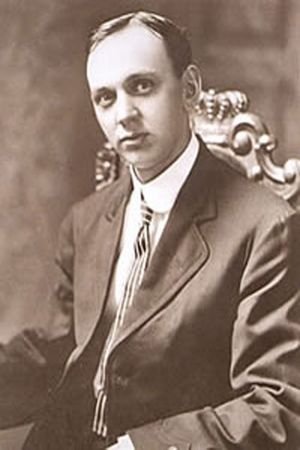
Edgar Cayce had many strange abilities. One was discovered when he was a young child and could’t remember how to spell the words he was learning at school. After struggling to memorise the spelling with his father’s help he said, “Daddy, please let me sleep. I’m so tired.” By chance the book he had been learning from was under his head as he slept. When Edgar woke and his father continued with the lesson, they found that Edgar knew how to spell every word perfectly. In some way his mind had looked into the book as he slept and photographed each word. When he knew his sleeping mind could do this he used it to learn his other school lessons. He found it easy, when asked, to stand up and recite a long, famous political speech!
Like some other children, Edgar also claimed to see people who were not visible to adults. Psychologists often explain this as an ‘imaginary playmate’, but Edgar claimed one of these people was his dead grandfather. Another unusual ability appeared when Edgar was accidentally hit on the head by a baseball. Just before becoming unconscious he described a poultice that should be put on his head. The poultice was made and applied, and helped Edgar’s healing.
Realising just how extraordinary Edgar’s abilities were, his parents never mentioned them to people outside the family in case they thought Edgar was mentally peculiar.
Seeing beyond eyes
When he grew up, Edgar consciously used his capacity to look into things with his mind and prescribe something to cure people’s illness. This came about because at one time stress caused Edgar to lose his voice. In trying to find a cure he consulted a hypnotist named Hart. Hart failed to put Edgar into a hypnotic sleep, but Edgar knew he could do this himself. Working with another man, a hypnotist named Layne, Edgar was able to put himself into a sleeping state, look into his own body, and describe what needed to be done. While in the self-induced sleep he said it should be suggested to him that the circulation to his throat should increase. This was done and his throat became scarlet with blood. Gradually this decreased to normal, he was told to wake, and he had regained his voice.
When local doctors heard of Edgar’s ability they started asking him to help them with difficult cases. Gradually his fame spread. In August of 1902, Edgar was called to the house of Mr. and Mrs. Dietrich of Hopkinsville, USA Their five year old daughter Aime had been ill for three years. After an attack of flu at the age of two, she had stopped developing mentally and was experiencing frequent convulsions, up to twenty a day. The Dietrich’s were quite wealthy and had tried many specialists, with no avail. It must have been desperation that urged them to ask a young, rather shy book-shop assistant to see if he could help their only daughter.
Doctor when asleep
Cayce explained to them that he was not a doctor and knew nothing of medicine, or why the child had convulsions. The Dietrich’s said they understood this, but urged him to continue. Loosening his shoes and tie, Edgar reclined on their sofa and put himself to sleep. Standing nearby, Layne, began to ask him questions about Aime. Remaining asleep, Edgar answered in a clear voice and in great detail. |
 |
When he woke, Mrs. Dietrich was crying. She said, “You have given us the first hope we have had that Aime can recover.”
Edgar’s only reply was: “What did I say?”
While asleep, he had explained that a few days before catching flu, Aime had slipped and hit the end of her spine, displacing one of her vertebrae. The flu germs had been able to enter the spine. But Edgar had said that osteopathic adjustments to the vertebrae would cure her.
This was done, and a few days later Aime spoke the name of a doll, a thing she had not done since her first attacks. From then on she rapidly developed into a normal five year-old. Some years later, the case became headlines in the New York Times (9/10/1910). The report read, “The medical fraternity of the country is taking a lively interest in the strange power said to be possessed by Edgar Cayce of Hopkinsville, Ky., to diagnose difficult diseases while in a semi conscious state, though he has not the slightest knowledge of medicine when awake.”
After the feature appeared in the New York Times people began to request Edgar’s help from all over the world. Distance did not seem to be a problem. He would go into his self induced sleep state and his wife, Gertrude, would ask him to examine the person who had asked for help. From his sleep state he would describe in medical terms what was wrong in their body and mind, and suggest ways they could find healing.
While awake, Edgar was a poorly educated man who for many years worked as a photographer. He became so sought after though, that an organisation was formed to support his work, and a hospital was built in which several doctors worked under Edgar’s supervision.
You have lived before
Gradually people began asking the sleeping Edgar questions regarding other things than their health. This was partly because in some ‘health readings’ he mentioned that the person’s present illness or life situation linked with what had happened in a previous life. While awake Edgar did not believe in reincarnation, but his sleeping mind saw it as part of the wider scheme of a person’s experience.
One man who sought what were called ‘life readings’ – which meant a description of past lives – was Dave Kahn. From his sleep state Edgar told Dave that he had been an Irishman, and worked as an aide to Lord Howe, a famous English soldier. Edgar went on to say that General Somerville of the American forces was in fact the reincarnation of Lord Howe, and if Dave would go to him, General Somerville without knowing why would take him on as an aide. Dave Kahn did get an introduction to General Somerville, and was taken on as an aide. Because of other past life influences, Dave was also advised to go into the wood and metal business. Needless to say, he did. He became a millionaire through the results.
One night, when Edgar and his Gertrude were just going to bed, there was a knock on the front door. Edgar went, and Gertrude heard him talking for about an hour. When he came back to bed, she asked him who it was. The strange reply was that it was a friend they had known some time ago. She had died, and had come to Edgar to help her understand her situation. This was not an unusual event for him. He taught that when we are born we have died to another ‘spiritual’ existence. Then when we die in this life, we are born back into that other life. Just as in this life our body forms from what we drink, eat and feel, so in the life after death we form our ourselves out of all we have experienced, thought and felt during our physical life.
I know nothing – yet I know everything
Edgar’s life demonstrated the extraordinary nature of the human mind day after day. At times while asleep he spoke foreign languages he had never learned – actually holding a conversation with someone seeking a reading. His awareness could reach across space and see a place he had never been. For instance once, after giving a health reading and suggesting a particular medicine called ‘oil of smoke’ the medicine could not be found in any pharmacy. During another reading Edgar gave the name and address of pharmacist in Louisville, a great distance away. The owner of the pharmacy said he didn’t know of the medicine, and didn’t have any. So Edgar took yet another reading and described a shelf in the pharmacy and said the medicine was old stock that had got pushed to the back. The owner looked where Edgar had suggested and found the medicine.
Of course, because Edgar’s sleeping mind would respond to any question, people asked how he could gather such amazing information, and if through training they could do likewise. His reply to this was that what we are aware of while awake is only a tiny part of our total awareness. Parts of our mind usually unconscious link us with all other minds – in fact we are linked with all history. So when Edgar put himself to sleep, he was able to touch millions of minds and gather what was relevant to the question being asked. He said that we are all capable of this, but of many of us it is difficult to bring to awareness what we know unconsciously.
From the time the organisation formed around Edgar, a secretary typed each reading that he gave while asleep. During his lifetime he dictated 14 million words in this way. They are all preserved at the Association for Research and Enlightenment in Virginia Beach, VA 23451, USA. (E’mail: are@are-cayce.com)
Edgar left us a lot to learn.
Learning from your own cosmic mind
Edgar Cayce’s life demonstrated that the mind is much vaster than we usually believe. Although our own personal memories and skills may be limited to what we have experienced and learnt, Edgar showed that if we go beyond the edge of our own mind, if we open to what is bigger and older than our personal mind, it is possible to know what is happening deep inside another person’s body; to see or know what is happening at a distance; speak languages you have not learnt; know the ancient events in which this present life has its roots; have an experience of being part of a vast life and awareness.
Edgar taught that most of us lack his easy access to this cosmic mind. But he said that dreams are a link with it because during sleep we merge with the cosmic mind. Therefore a dream is sometimes like a message from this vast mind about our life and actions. Edgar said that if we try to understand and use what we find in our dreams, the wall between our waking self and cosmic self will get smaller, allowing us to lead a life that is not separated from this great ocean of life and mind.
Edgar also taught that we need to frequently remember our connection with our larger self. To do this we need to learn how to listen and to be quiet. This form of quietness or listening is sometimes called meditation or prayer. But if we call it prayer it doesn’t mean simply repeating words that someone else has written about the cosmic mind. We need to listen ourselves to see what our relationship with it is.
The power of dreams
A simple way of using the power of your dreams it to start writing them down. Make a dream diary. It is then easier to look back to see if you have dreamt about the same things in the past. Think of everything in your dream as being magical. This means that even stones can speak and are alive in some way. Certainly any animals or other people in your dreams have a lot to teach you and can become friends, even if at first they may appear frightening. If you do have frightening dreams, make a model of the dream or draw a picture of it. But think of it like a film script, one you can change and carry the plot on past where it ended. So the frightening thing in the dream can be put in a cage for instance, until you have tamed it or made friends with it.
Another way to learn from your dream is to sit quietly while awake and imagine yourself back in your dream. As with drawing a picture, you can change the plot if you need. But also you can become the different things and people in the dream by imagining yourself inside them. You are a shape-shifter in dreams, and can be any of the characters in your dream. That is how you get their power and wisdom. When you are the character you can notice how you feel, how you think, and how you respond to things. Don’t be afraid to explore. Remember, if you need help or encouragement, call on the strong helpful characters in your dreams. By learning to become these different creatures and people of your dream, you are gradually getting your own various talents and strengths. This is because each part of a dream is a picture of something alive within your own mind and feelings. See Techniques for Exploring your Dreams
Learning to listen to intuition
Our bigger mind speaks to us in much the same way as our ordinary memories come to us. Most of us however, have made something like tapes or recordings in our mind. So when we think, or try to get a new idea, we are often simply replaying something we read or heard or felt in the past. Listening is a way of quietening these tapes so something new can come to us. This is often called intuition, knowing something without someone else telling us or experiencing it through our senses. So when Edgar examined someone’s body while they were many miles away he was using intuition.
You can practice listening almost anywhere or at any time. Start by remembering your links with the rest of life. Remember that without food – the bodies of other living things – you could not exist. You need the air and the sun. The clothes you wear and the house you live in were made by other people. So your life is a part of a huge network of connections with other people and with life.
Having remembered that, see if you can create the feeling inside you of being receptive like an empty cup. An empty cup makes no effort. You do not need to struggle or try to be good or powerful. Life touches everything and everyone, so open to it. Remember your connection with everything and open to it to see if you are missing something, or can learn something. Hold that feeling for a few minutes then get on with your everyday life. If the larger mind has something important to communicate, you will find ideas and feeling trickling into your mind. See Keyboard Condition
For instance when I first read about Edgar Cayce I wanted to do something to help the A.R.E. I wrote to say this but wasn’t satisfied. Feelings nagged at me to offer more. At the time I was running a book business in the UK. So I wrote another letter saying I would be willing to sell their books. In a few days two letters came from the USA. The first one asked if I knew of a bookseller who would handle their books as they were planning a lecture tour. The second letter said, “The books are on the way. This is a fine case of telepathy.” Visit Story of Edgar Cayce – Edgar Cayce – Who Was This Man? – Edgar Cayce Website – Using Your Intuition –
Return to Chapter Links – Go to Chapter Four
Eileen Garrett – Psychic – Superminds 5
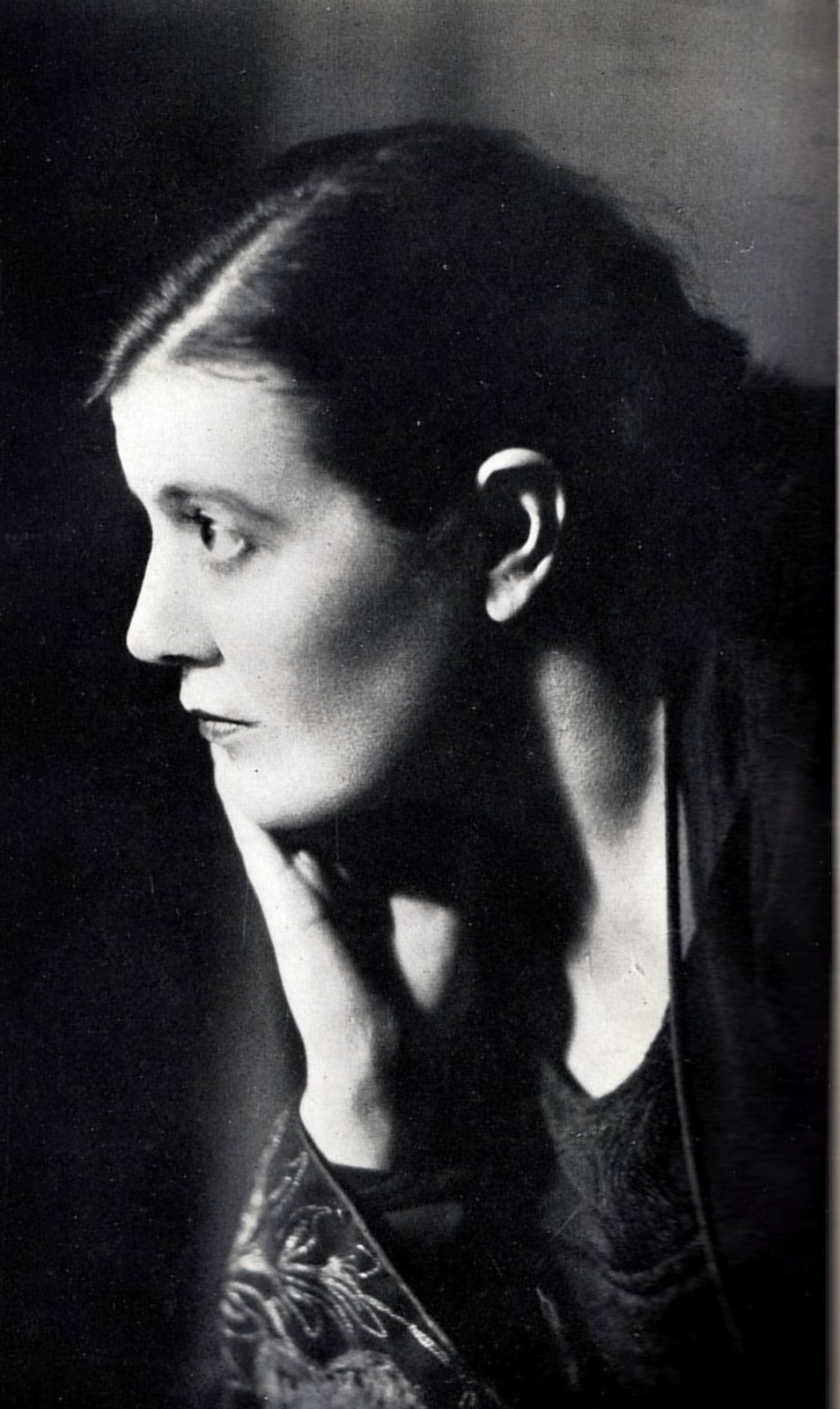
Eileen was born in the Irish countryside. She loved dogs and horses, but was shy of people. They seemed to be insensitive to what she felt. Her parents died when she was young, an aunt looked after her. . Her aunt was a very critical person, and Eileen found she could completely shut out the sound of her voice. So from an early age she discovered she had abilities most people lacked. She could also see people and children invisible to the adults around her, and touch objects and know their inner feelings and history. From the age of four onwards she had young playmates that her aunt could not see. Because her aunt taunted her saying they were not real, Eileen touched and questioned her ‘invisible’ playmates, but they seemed as real as her aunt. There was only one difference. When she looked at ordinary people she could see what she called a ‘nimbus’ of light – an aura – surrounding them. When she looked at the children they were all light. As the adults who looked after her punished her for playing with or talking about the children, she became secretive.
Seeing hidden worlds
Being so aware of the living feelings in trees and animals, and feeling that adults were always lying to each other and to her, Eileen became very observant. She learnt to watch and to feel things, to learn from experience and think for herself instead of believing what people told her. Because the aura surrounding a person was so obvious and visible to Eileen it took her a long time to believe people when they said they couldn’t see it. To Eileen the aura told her a great deal about what the person was thinking or feeling, or their health. She said, “For me, the important thing about anyone I met, was to see and feel the quality of these surrounds. By their colour and their tone, I knew whether people were sick or well.” Some people, she said, were surrounded by a grey mist, which showed how unhappy they were. She could see that animals could sense these surrounds also. When watching people she saw how the colours in their surrounds changed, showing how thoughts and emotions disturbed them when talking with each other. She could also see, however, that people were unconscious of what caused these disturbances.
As she was so sensitive to the inner feelings of people, Eileen found school difficult, as she was in contact with so many people. To heal herself from the shock of so many impacts, she learnt to allow her awareness, or as she describes it, “a fluid part of myself,” to flow out to plants, trees and the earth, and feel connected with all living things. This ability developed to the point where she could extend her awareness to people or objects at a distance and feel as if she were part of them. She could sense the innermost condition and history of natural things, and the health and thoughts of people. |
 |
Death is a doorway to another life
This ability to see surrounds, and touch people’s minds, enabled Eileen to see death as something beautiful. She watched animals and people as they died. The light that had been the person or animal’s ‘surround’ left the body at death, and started an entirely new life, one not restricted by the body. When she was a grown woman, and gave birth to a son, she watched her baby die in her arms and she saw his subtle self leave his body. The pain of his loss made her seek deeper for what happens after this departure. She travelled to America to take part in scientific experiments testing telepathy and extension of awareness – what is sometimes called projection or out-of-body-experience (OBE). One experiment took place while she was in New York. Another member of the team was in his house in Newfoundland. The test was to see if she could observe what the doctor in Newfoundland was doing and saying. In such a test she moved her awareness away from her body to the distant place. In this condition Eileen felt she was actually at the place. She said “I was able to see the garden and the sea, as well as the house I was supposed to enter; I actually sensed the damp of the atmosphere and saw the flowers growing by the pathway. Then I passed through the walls and I was inside the room in which the experiment was to take place.”
I travel faster than light
So in this condition she didn’t have to be dead to be a ‘ghost’ and pass through walls. Once in the house she could not at first find the doctor in the room assigned. But within moments she saw him walking down the stairs with his head bandaged. As this was happening she told the researchers in New York what she saw. So she was operating in two places at once. She was able to describe to the team in New York objects the doctor had placed on a table for her, and also repeat words of a book the doctor took from his library shelf and read. None of the team knew the doctor had injured his head, but after the results of the experiment were sent to him, all that Eileen observed was confirmed. The doctor had injured his head just before the experiment, which was why he was late entering the room.
Through taking part in such scientific experiments, and through support from people like Edward Carpenter, who had made a study of the extra-sensory-perception (ESP) she experienced, she gradually developed a view that life is continuous. “… Birth and death” she said, are “necessary phases of an eternally changing cycle which strives towards the perfection of man’s soul.” Just as one day in our life is only a part of a longer ongoing process from which we learn and grow, so she felt that our whole lifetime is like a day compared with the eternity of which we are a part. We have other ‘days’ in this eternity, from which we will learn and develop. She also felt that her super-sensory abilities to see beyond what the eyes can see, to hear beyond her physical ears, to move through space faster than ever her body could, were powers that many more people will develop as they open their mind to such possibilities.
Entering the Temple of the Animals
Eileen Garrett said that, “In living close to the animal and plant worlds, I had come to understand that there seemed little difference between birth and death to any living creatures excepting the human. How much unnecessary and hopeless misery might have been spared to man had he observed as I had the true nature of birth and death. I knew both of these processes of change to be joyful and equally creative. Why, since the balance of the whole universe is kept so perfectly by Infinite Direction, must man alone, of all living creatures, fear for his place in the scheme of things, and be so lost and frightened in facing what he calls death?”
Eileen says that by living close to animals she learnt things about life and death that many people fail to understand. But Eileen didn’t simply stand in a field or wood and watch rabbits and badgers at play. She moved into another dimension of her mind, where she saw beyond what her eyes ears and nose showed her. I am not going to suggest this is easy for most people to do, but it IS easy to start developing the ability to receive more from this inner life of our mind. One of the simplest ways of going about this is to allow ones feelings and body to have the opportunity to express spontaneously. Most life processes express as spontaneous movement, such as our breathing, heartbeat, digestion, sneezing and yawning.
What we often fail to understand is that this also applies to the mind, and we see this in the process of dreaming. If we can only learn how, the unconscious wisdom of our being can speak to us. Lots of ancient races discovered this and saw it as a holy experience. In those races, the man or woman who couldn’t enter into this experience were seen as lacking a normal ability. So the simple practice I am going to describe is aimed at creating a mental and physical readiness to allow ones wider mind to express, to communicate. If we have never experienced our wider awareness before it may at first seem clumsy, like someone who has been tied up for years trying to move easily. So you will need to practice once or twice a week until it becomes easy. You also need to be ready to let your imagination have some freedom, and not to stop yourself expressing things by judging them as silly or pointless. It is those attitudes that stop us from allowing our inner life. As you can see reading about Eileen, many people judged her as silly or lying when she allowed her inner life. What people did to her we might be doing to our own inner life.
Being a seed
To practise this skill you need have about twenty minutes to half an hour when you will not be disturbed. You need floor space, preferably on a carpet or blanket, big enough for you to lie full length on if necessary. It can be very helpful to have a sympathetic friend with you to watch. It is also best to have fairly loose clothing enabling you to move easily.
When you are ready, stand in the middle of your space. Stand with feet about shoulder width apart and arms stretched above your head, making an X shape with your body.
Now close your eyes and hold in mind the idea of a seed – one that has not yet been planted. It can be any sort of seed you like. Do not struggle with this. It is enough to gently think about it. As you hold the seed in mind compare it with the way your body feels. Does the shape of your body feel like a seed at the moment? For many people standing with legs and arms apart doesn’t feel like an unplanted seed. So by following how your body feels and without trying to think it out, explore moving your body until you feel more like a dried up seed. Learning to follow these simple body feelings is important. See Seed Meditation
Where will I grow from here?
If possible, let your feelings and body sensations lead you. Find a position that feels satisfying. As you get to this, ask yourself if a seed is asleep, or waiting, or what it feels like before it is planted. It can, after all, remain dry and without apparent life, for many years. Without trying to be scientific, let yourself have something of the feeling of the unplanted seed. When you feel satisfied, shift yourself into being a seed that has been put in warm, moist soil, and so can start to grow.
This can be a wonderful experience, and the way to get the most out of it is to not think about how a seed grows, or try to act it out. Simply lie in the warm soil and let things happen. If you are not sure how to do that, remember that when you yawn or stretch in the morning, you don’t think it up. Your body does the movements automatically. So simply remain still until something starts to urge a movement. Maybe it starts as a little twitch of head or fingers. Whatever it is, simply let it happen without trying to direct it or know where it is leading.
I can grow forever
As your growth starts let it happen and it will carry through to a point where you will know it is ended. If you have learnt to allow spontaneous movement – as you do when you yawn, sneeze, breathe, laugh or cry – then a most mysterious and wonderful emergence of experience and feelings will arise that will be unexpected. Something you didn’t think up, and so is new, fresh and perhaps informative arises. Perhaps you will need to practice to get a very full experience of this. Perhaps you will hit it right first time and receive a wonderful experience of being a seed. Whatever happens, it is worth practising again and again, because the source of the inspiration that comes seems to forever have something new to show us. I have been using this seed meditation for nearly thirty years, and I still find new treasures. Only a personal experience of this amazing ability to produce the new can convince us of the creativity we each have within us.
Return to Chapter Links – Go to Chapter Six
Rafael Schermann – Graphologist Extraordinary – Superminds 8
Graphology is the study of handwriting, and has many uses. Some businesses ask a skilled graphologist to examine the handwriting of people seeking top jobs in their company. The graphologist would describe the person’s strengths and weaknesses. Individuals often seek help from a graphologist to show what training would be the best use of their natural talents. The police use handwriting experts in cases of forgery.
One of the greatest of modern graphologist was a man by the name of Herr Schermann. From early childhood, Herr Schermann, instead of collecting stamps or badges was fascinated by envelopes. He amassed a huge collection and would sit looking at the handwriting, telling himself stories about the people who had written them, trying to form a picture of them. His interest didn’t disappear as he grew. Although like any graphologist he studied how people shaped their letters, what slant was on the words, how powerful the force used in writing, he also had another dimension to his skill. He appeared to ‘see’ the person who had written the words he studied. Some sense beyond those of sight, hearing, smell, taste and feel was operative. Some intelligence beyond a clever mind was at work.
We write what we are
Whether we are aware of it or not, when we write our whole body takes on a certain posture, a mood or emotion may be present as we write.
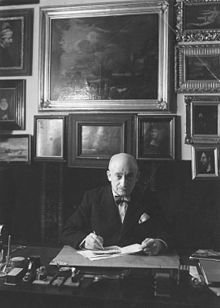 |
Our age and state of health, as they underlie our movements, also express in the subtle actions of writing. Therefore the marks we have made on paper are the result of what is going on in our body and mind at the time of writing. What Schermann did was to project the process backwards to build up a living impression of all the feelings, the movements, and the type of body and mind that created it. |
Cornelius Tabori, a journalist who investigated Schermann in Austria, describes in his book My Occult Diary (Rider. UK. 1951) what happened when Tabori showed the graphologist an envelope written by a woman Schermann did not know and had never met. He says, “Schermann looked at it briefly and then started to work. He described the woman’s hair colour, how she looked, her figure, even her face. Suddenly she seemed to come alive before me in Schermann himself, because he imitated her voice and the body movements she made. To my amazement he told me the story of her life. It was uncanny the way he had become part of her, and told me exactly about settings, people and objects important to her, even to talks we had shared. I had never experienced anything like it before.”
Something that no other graphologist had ever managed before Schermann was his ability to look at a person, then reproduce their handwriting. This is one of the clues to his great skill. His insights into handwriting, linked it completely with the person and all aspects of their body and mind. Because of this he was often asked by doctors to diagnose a persons illness by looking at a sample of their handwriting.
An image in the handwriting
Herr Schermann often worked with the police. One of his most famous cases was regarding a bank forgery. His work on this case far exceeded analysis of whether the writing belonged to the person it was stated as. On 28th June, 1922, the Wiener Bank received a letter from a man signing himself as Herman Zagg. The letter said that on the 23rd of June £80,000 had been deposited in Zagg’s account. It asked the Wiener Bank to transfer all of the money to another account in Anglo Bank.
The account was checked, and the money was there. The transfer would have proceeded except that through the carelessness of the junior bank clerk who was to enter the transfer, the pay slip did not get dealt with for two days. Therefore, to make sure the money was still in the account, and to avoid being caught for negligence, the clerk went to the carbon copy of the entry instead of into the bookkeeping office. He was amazed to find there was no entry for the account. He therefore hurriedly told this to his seniors. It was then discovered that someone had written in the £80,000 at the bottom of the day’s entries. The writing appeared to be that of the young woman who wrote up the entries. She was therefore suspected of forging the entry to get the money. Someone was immediately sent to the address Herman Zagg had given. No one of that name lived there. Obviously someone within the bank was the forger, and was working with an outside accomplice.
The police were asked to investigate, but could not discover who the forger or accomplice were. Schermann was then asked by the bank to help. Firstly he looked at the letter received by the bank from Zagg. “The person who wrote this is a tall, fat man,” he said. “His work calls for much concentration, has led to eye strain, and needs little physical activity. Most of the time he is bending over his work. It is not mental work, but he needs to be precise and accurate. He is probably a watchmaker or goldsmith.”
From this the bank could assume the writer posing as Zagg was not one of the staff of the bank. Even so, whoever made the entry in the bank ledger must be an employee. Therefore Schermann was asked to look at the handwriting of fifty of the people working at the bank. Among the fifty was a man named L.B. who Schermann said was the forger. It was not the young woman in charge of the ledger. “This man,” Schermann said, “is someone who has long planned this crime. He studied the writing of the woman for a long time, and is an artist at copying people’s handwriting. He needed an outside accomplice. I have a mental picture of him persuading the goldsmith, promising much gold for him to work with. L.B. knows the forgery has been discovered. Therefore I need a sample of his handwriting today. To see what he is planning.”
Genius at work
Looking at the new sample, Sherman’s analysis was that “The man knows he is going to be discovered. Yesterday he explained to his parents that he has committed a crime, and asked them to forgive him. Both parents are ill, and his mother said she would commit suicide if he were sent to prison. It would be difficult for his father to survive also. I can see L.B. is going to say he is innocent until the very end. If you agree not to tell the police I will get him to confess. I want him to remain free to support his parents.”
The promise was given as, so far, no money had actually been stolen. The young man was then called to the office and accused of the crime. As Schermann had foretold, he maintained he had nothing whatever to do with the forgery. Then Schermann asked him to write and sign the following:
“Wiener Bank-Verein
Organisations-Bureau
I have nothing to do with the hundred millions. Vienna 11 July 1922”
Writing these few words betrayed L.B’s secret motives. The man’s first name was Ludwig, but he had started to sign his name as ‘Loui(s). He quickly crossed out this mistake and wrote Ludwig. Looking at this Schermann faced him and told he had taken a goldsmith as an accomplice, and that he had told this man his plans to escape to Paris and use the name Louis. The forger’s confidence shattered and he gave a full confession. The accomplice he named turned out to be a goldsmith who was eighteen stone (252 pounds) in weight. So Schermann had not only correctly assessed the forger and his motives, but had also given an exact description of the accomplice. The forger also gave details of his sick parents that confirmed Schermann’s accuracy.
The young forger was dismissed from his job, but no police action was sought. Due to Schermann’s kindness, the man was able to continue his life without a criminal record. He later wrote a letter thanking Schermann for saving him from prison and complete disgrace.
Return to Chapter Links – Go to Chapter Nine
Journey Through The Mind – Superminds 9
Jesse Watkins had led an ordinary but adventurous life prior to the day when the doors in his mind opened revealing experiences he had never previously thought possible. At 17 he had gone to work on a tramp steamer, which he remained on during the First World War. His first voyage was to Northern Russia in very rough seas. The ship he was serving on was torpedoed while in the Mediterranean during his first year of service. Later he worked on a square rigged sailing ship, and during the Second World War he served in the Royal Navy as a Commander and Commodore of coastal convoys. From his earliest years he loved sketching and painting, and late in his life became a sculptor. But during his years at sea he experienced shipwreck, mutiny and murder. So he had a varied life, and frequently met danger and the unknown.
The door in the mind
When he was thirty eight Jesse experienced several things that were probably instrumental in opening the doors of his mind. He had moved to different surroundings and changed his way of life. His work was very demanding and he was working seven days a week, often till late into the night. Within himself he felt very low. Then things happened which further distressed him. He was bitten by a dog and the bite would not heal. He was therefore taken to hospital, anaesthetised and his wound attended to. Then his extraordinary journey began.
When Jesse returned home from hospital things looked different. Time seemed to slow down and gradually go backwards, as if he were on some sort of conveyor belt taking him into the past. He said, “This gave me a rather panicky feeling”. He felt he wasn’t controlling what was happening, and he didn’t know where he was being taken. But this changed when he looked in the mirror. He appeared the same but at the same time unfamiliar, and suddenly he felt he was in control of his mind and body in a much more powerful way than ever before. He tried to explain this to his wife, but it sounded to her as if he were ‘rambling on’. This frightened her because he was talking about going back in time, and glimpsing past lives and having new abilities. To Jesse however it seemed clear enough because he was experiencing what he was talking about.
Think of someone who has always seen the world in much the same way as you have, and to whom time, their body and mind have been experienced in much the same way as you experience them. Now imagine how it would feel if they suddenly claim to see and experience things you cannot see and have never heard anyone talk about. It might be quite disturbing.
Jesse’s wife sent for the doctor, and Jesse was taken back to the hospital to be observed. Jesse says that people “looked at me as if I were mad. I could see the look on their faces. I felt it wouldn’t do much good to talk to them because theythought I was round the bend”.
The journey of the mind Jesse was now travelling progressed into even stranger regions. He said that when he got to the hospital, “I felt as if I had died. It seemed to me as if the other people in beds on the ward were all dead too, and waiting to move to the next department of life.”
Alive yet dead
Travelling into the depths of the mind is not an uncommon experience, and is described even in ancient myths and folklore. To get some insight into what was happening, and what caused the feelings Jesse met, it is helpful to think of our personality, our experience of being awake and knowing who we are, as being like water in a goldfish bowl. The water has a shape given it by the restrictions of the bowl. If it had awareness it might say it was round. If we poured the water into the sea or a river however, the person the water knew itself as might feel it was dying as its boundaries melted away. Similarly, Jesse, like most of us, only knew life through the limitations of his body’s senses, and through the things he had be brought up to believe. We too probably believe we ARE the shape of our body, and we can only do what it can do. However, as can be seen from the lives of some of the other people described in this book, our mind can sometimes reach completely beyond the body senses. When we first find the narrow walls of our senses disappearing, most of us feel some panic, and may fear we are dying. Some people having an anaesthetic feel this fear.
Jesse’s journey had not finished. His feeling of extending backwards expanded, and he became aware of directly experiencing life as an animal. In fact he felt he had actually been all sorts of animal, all life forms from the lowest up to the human. So at times he felt like a squirming blob of life without brain, then like a rhinoceros, and a baby. Jesse was fully in each experience, as we are in a dream which we are totally convinced is real. It was completely real to Jesse. However, the difference regarding his experience and dreaming, is that Jesse was awake, without the escape hatch of feeling he was dreaming. Therefore there was no ‘ordinary’ world to escape back to.
As an example of this Jesse’s wife wrote a letter to him while he was in hospital. One of the things she said was, “The sun is shining here.” When Jesse read this his mind was so vast and flowing with feelings and images, that it made him realise that his wife was in a completely different world to the one he was in. He was frightened he would not be able to get back.
In this condition however, Jesse had powers he did not have in his ‘goldfish bowl’ state of mind. When the nurse came to bandage Jesse’s finger he had the feeling he could now govern the way his finger healed. So he said to the nurse, “My finger will be okay if you just leave it.” He took the bandage off revealing the cut right along his finger. He gave his finger what he called “intense attention” and the next day it was completely healed. He tried giving this ‘intense attention’ to some of the other men in the ward who were disturbed, and the men became calm.
I have always existed
Another way of picturing what happened to Jesse is to imagine what it would be like if you had lived in a small town all your life, then one day you went up in a helicopter, high above the town. Suddenly you would be able to see all the different places you had been at different times in your life. It would all be visible in one glance. Not only would you see all the places you had been, but places previously unknown would be visible. Jesse, in his journey into mind, said that “I was more than I had ever imagined myself. Not only was I living my life now, but I had existed from the very beginning of time, from the lowest form of life up to the present. The real me was all that experience. Then at times I could see ahead beyond even the awareness I now had, to where we become aware of it all.” Jesse felt that the new ‘world’ he was experiencing was something humans were moving toward, but most people couldn’t reach at the moment. In that world were beings Jesse called gods, beings who could live and move in that world easily, beings who were not afraid of the enormity of the experience. From this he felt that all the things that happen to us in our life are helping us evolve toward becoming like the gods Jesse met. But it was too much for Jesse. “I had suddenly met something so much greater than myself that I couldn’t take it. So I decided to stop the experience.”
In fact Jesse’s journey lasted ten days. On the tenth day he closed the door in his mind and returned to the world of time and limitations.
Learning from Jesse’s Journey
Ronnie Laing the psychiatrist wrote about Jesse’s journey in his book Politics of Experience. Ronnie and Jesse both believed that Jesse’s experience was not madness, but something above or beyond normal experience. In many older cultures such as the Red Indian, the East Indian and African, a man or woman who went on a journey into the mind as Jesse did, was treated as a holy person, a priest or priestess. The visions they experienced were valued and seen as useful to the community. The timeless place of mind they lived in was seen as the great temple of life. Often a building was erected on the spot the experience or vision happened. Therefore the great work of the priest or priestess was to go in and out of the Great Temple – not the building. They could go into the place beyond time where healing power can be directed to others, where a vast view of life and its meaning is seen and can be described. They could prophecy, see distant things, talk with the dead, heal the sick, see into the inner quality of people and advise them, and be like a window for a world beyond the senses.
Men and women were trained to do this, or supported if they had a gift for it. Jesse had no such training. He was thrown into the Great Temple through working too hard and being ill. For people such as Jesse, thrown in by shock, illness or drugs, there is possible danger, just as there is for someone who is suddenly dropped into deep water without previously knowing about it or learning how to swim. It doesn’t help that in many modern cultures such people are treated as if they are mentally ill.
Training to enter the Great Temple
The Great Temple is not made of bricks or wood. If all of us were rivers, the Great Temple would be the sea we all flow into and blended into each other. It is where our personal mind merges into all other living things like a great ocean of life. The Great Temple has all living things in it, and has been involved in life from the beginning. To see and enter the Great Temple there are things we must learn, skills we must develop.
To open our eyes to seeing we must learn to look beyond single things
Over millions of years the need to survive has developed in us the skill to look at the world to see dangers or opportunities. We see THINGS – a person, a book, an animal or a tree. Our mind and feelings mostly work to see if what we see and hear are of any use to us, whether they are dangerous or helpful. This narrow view of things stops us seeing the web of life in which we are linked. To start seeing like a dweller in the Great Temple, begin by looking at a tree or animal as a separate thing. Then start to recognise how the tree or animal does not have a life distinct from everything around it. For instance what would happen to a tree if there were no air or sun? Take time to recognise as many such links as you can. Don’t think you have ever discovered them all, as there is depth after depth to find. When you begin to detect the links of life, and not only think about them but can feel something about them, try looking at yourself, your parents, or a new born baby. The Great Temple is where we all link. To see it we must see what connects us all.
Receiving strength from the Great Temple
hen we, or people and animals we love, are troubled or ill, we can gather strength from the Great Temple. As your eyes begin to open through looking at links, you may begin to see the Sun and the Earth in a new way. Because you need to eat, your life depends on the death of plants or animals. Without their death you would not have a body. The plants and animals live in the same way, on the death of other plants or animals. But every living thing on earth depends on the dying sun and earth. The sun pours out radiant energy as it is dying. The rocks of the earth break down or ‘die’ also, giving up their minerals and energy. All animals and plants take nourishment from the dying sun and earth.
When you stand in the sun to absorb its warmth, you don’t have to be anybody in particular to receive the gift. You don’t have to act holy or wise. You can be any skin colour, age, sex or condition of health. So it is with the enormous energy poured out to us from the process in nature that lead to the death of sun and earth, processes that produce life and feelings and mind. In Christianity this death and life-giving is symbolised by drinking wine and eating bread in memory of life dying for us. “This is my body” the ritual says. “Eat!”
To get the strength from the Great Temple imagine you are standing in sunlight and letting it go deep into your body. Make no effort, simply open to it. Or hold out your hands like a cup, and imagine the energy that dies and gives us life, is dropping into your hands like a waterfall. Then imagine drinking it, washing in it and have a mental picture of pouring it over friends who need healing or strength.
The secret key to the Great Temple
You grew from a tiny part of your father’s body called a sperm, and a tiny part of your mother’s body called an ovum. These two very different tiny bits of life met and completely blended together so they are now one person, you! They so completely gave themselves to each other they no longer existed separately. This is LOVE!
Love is not clinging to someone because you are frightened of being alone. It isn’t staying with someone because you can’t look after yourself. Love is a deep way of giving yourself to another living thing, or being able to let that other living being enter into you deeply, as the sperm and ovum do. Such love is the basis of your life.
If you gradually learn to see that your life depends on the great giving of the sun and earth, and the plants and animals, if you see the links we all have with each other, then it will be obvious the great key to the Temple is Love.
Learning to love is not easy, because we too must learn to die, like the sun, like the rocks, like the sperm and ovum. Through love we learn to stand out of the way and let the power greater than our small self live through us. When we learn that type of love, a greater life opens to us, one in which death is only a doorway to a wider life.
Return to Chapter Links – Go to Chapter Ten
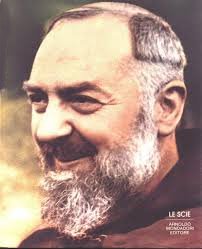
Padre Pio – Modern Saint – Superminds 11
When looking at the things Padre Pio experienced in his life, things seen by witnesses and doctors, we may believe there is no scientific explanation for them. Such things are often called supernatural. The word means beyond the natural, or outside of nature. Supernatural is not a good word however, as all things are part of the universe we live in. There is nothing we know of outside of it. So it would be better to say that what Padre Pio experienced were natural principles we do not yet understand, or have not been able to measure or perceive.
Padre Pio was born in Southern Italy in 1887. He joined the Capuchin Friars, a group of monks within the Catholic Church, in 1903 at the age of 16. At 23 he became a priest in the order. His childhood had been unremarkable. He had been a healthy active boy and youth, working on his father’s farm. But in the summer of 1918, when he was 31, something from beyond what we can explain by science touched his life. He was praying alone in the mountain friary at San Giovanni Rotundo. |
 |
All was quiet on the mountainside, and within the priest there was also an intense stillness. So quiet was his mind and feelings that he passed into a state resembling sleep where all thought stopped, yet he was still awake. He lost all sense of time and described his condition as one ‘similar to sweet sleep.’ Suddenly the silence seemed to penetrate him, and he saw Christ standing before him, bleeding from wounds. So moved was he by the vision, he felt as if his chest would burst open. Then, when he came out of the ‘sweet sleep’ he realised that his own hands, feet and side were bleeding, and showed the same wounds as he had seen on Christ.
A doorway beyond time
From that time onwards Padre Pio became a doorway, a window, or an opening, through which the power and the qualities from another dimension of life poured through into the everyday world. For instance Padre Pio appeared to become critically ill at times. Some doctors said he had tuberculosis, at that time a killer disease. Other doctors could find no sign of the disease, but could see his ravaged body. They also witnessed the signs of illness arise and disappear suddenly. One day while Padre Pio was in bed struggling to breathe, his face red with fever, Father Paolina of Casacalenda took his temperature before sending for the doctor. The thermometer ran so high it broke, showing a reading of 42.5° centigrade (108.5° F.) The normal body temperature is about 37° C. Anything above 41° is considered life-threatening. Fr. Paolina, knowing Padre Pio was a focus for strange phenomena, did not panic but got a larger thermometer and tried again. This time it showed 52° C. Nobody in a normal state could survive such heat, hot enough to cook an egg. Padre Pio said this was a spiritual fire burning in him. He said it caused a suffering he voluntarily endured to burn out the darkness and despair in the lives of people around him. He nevertheless lived till he was 81.
Many other strange and wonderful things happened to Padre Pio giving people belief that life is more than just having a body. He renewed in people the belief that we have an eternal life, continuing even at the death of our body. This was because people were healed of serious illnesses when Padre Pio prayed for them or touched them. He had the ability to be seen and help people even when they were hundreds of miles away. Being near him changed the way people felt. Therefore by September 1955, so many people were visiting Padre Pio that new building and enlargements were being undertaken at San Giovanni Rotundo. Thousands of letters arrived monthly asking his help, and with all this work he never left the Friary. But it was obvious to those close to the padre that not only was he living a life within the normal time and activities of the day, but he was living another life outside of time and space. Therefore, despite being at the friary constantly, some people met Padre Pio at distant places. Cecil Humphrey-Smith for instance, who was working for Heinz in Italy checking tomato crops, had such a meeting. Before this happened Cecil had barely slept for nights due to rain and hail ruining crops. Farmers continually called him asking him to check their harvest for quality. Having driven a long distance across bad roads he fell asleep while driving and crashed into a bridge. His car broke in half and his injuries were severe. As he lay injured he had a typical near death experience of standing apart from his body watching people carry his body to a car and on to the hospital. For a while he was pronounced dead and he watched his body being covered in a sheet and wheeled away. But another doctor found signs of life and revived him. As he lay near to death, a priest came in and sat next to him, telling him he must make confession. This is called the last rites in the Catholic practice. The priest knew all his history, and drove him to admit things about his life he had kept hidden.
Instantaneous healing
The next day another priest came. He and the staff said nobody else had already given confession. Later, returning to England, Cecil developed a serious illness in which he experienced ‘brainstorms’. At such times he lost control of his body, and the pain in his head was so severe he smashed furniture, banged his head on walls, and convulsed. He was later found to have a growth in his brain. A friend in Italy suggested he return there, and without telling him, took him to meet Padre Pio. Cecil immediately recognised the padre as the priest who had given him confession that night at the edge of death. Padre Pio reached out and tapped the left side of Cecil’s head twice. Cecil’s pain immediately stopped. X-rays later revealed the brain tumour had gone. His symptoms never returned. He then discovered that on the day of the car smash the friend who had taken him to Padre Pio had prayed that his guardian angel ask Padre Pio for help.
How could Padre Pio be in two places at once? Some scientist believe that time is connected with speed. So if you were travelling at the speed of light – 186,000 miles per second – you could be in many places at about the same time. The study of very small particles such as electrons shows that some things happen faster than light – instantaneously in fact. If there is a part of our mind that is also faster than light, we could experience things beyond what we usually know as time and space. You could be in many places at the same time. Time wouldn’t have the same meaning anymore.
Many of Padre Pio’s followers helped to build a hospital connected with his work. He taught that “Love is the first ingredient in the relief of suffering”. Helping sick people, and praying to heal the sick world, were two of the main aims of Padre Pio. The padre’s experiences had convinced him that when his body died he would move to an even better life. He promised people that when he moved to this bodiless, spiritual life, he would be even more powerful as a helper and healer than he was alive in the body. Because thoughts and feelings are the means by which we reach those who are dead, thinking of Padre Pio and asking his help, can still link you with him. Your feelings of love are a power to help those you want to help. Let your love shine.
Return to Chapter Links – Go to Chapter Twelve
Evelyn’s Dowsing Adventures – Superminds 11
As a child, instead of walking around clutching a doll, Evelyn Penrose wandered around with a dowsing rod in her hands. Her father had the ability to dowse and find water in a marked degree, so Evelyn had no doubts that divining worked.
Holding a forked stick in the hands to locate water, minerals or objects is called divining or dowsing. The person who has this skill is called a dowser. Dowsing has a long history. Mentions of divining rods appear in the records of ancient Egypt and Rome. Other cultures such as the Indian also used dowsing, but some of them didn’t use a stick. Many dowsers claimed that when they held the dowsing rod and walked above an underground stream, the rod would move and twist independently. Dowsers in other cultures didn’t use a stick or pendulum, but experienced the awareness of the water as spontaneous body movements or sensations. Therefore it is most likely that the rod is moved by unconscious mental sensitivity acting on the body. If this were not so, fixing a rod on the front of push chair and pushing it above an underground stream would also cause the rod to move. It doesn’t.
Finding minerals with a twig
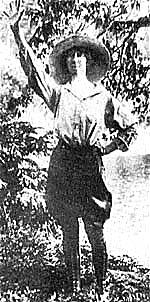
Evelyn never went to a school of dowsing. In some cultures, African for instance, long training is given. In his book Lightning Bird, Lyall Watson describes how student sensitives are trained. Part of their training is to find lost objects. They are made to practice and practice until their success rate is very high, and their awareness of the process acute. Evelyn’s training was by watching and working with her father, and then being tested in what she found. While in California for instance, she wanted to see if she could locate underground oil in the oil fields. She was taken around four sites without being told in advance whether the oil yield was good or not. Evelyn said that “the reaction was far more powerful than any I had obtained from water, or even from tin or copper.” Because of the strength of her reactions, strong enough to make her feel ill, she was able to tell which well was producing the most oil.
Then she was shown a well which it was suggested to her was producing. On testing however, she got no reaction. The deputy manager then told her it was a dry well. He had let her work on it to test her ability. But Evelyn found dowsing for oil was very stressful, and would sometimes faint while working.
Paid to be intuitive
In Canada Evelyn was asked to work for the government. No rain had fallen for years in British Columbia. The many apple growing orchards in the state were dying. The agricultural department therefore employed Evelyn as their official Water-Diviner. Her first task was to look for water on a wonderful orchard in a place called Okanagan Valley. She says about this, “It was a great shock to see his orchard, covering the side of a large hill, wilting and dying, and to the owner say quite simply that he was facing disaster. We stopped and looked up the hill and he was telling me something when, suddenly, I was nearly thrown off my feet. I grabbed his arm to steady myself. ‘Water’ I gasped. ‘Water! Lots and lots of water’. I can never stand over underground water without being swung about, and the greater the amount of water the greater the reaction.”
The well that was dug over the site Evelyn marked hit water at six feet. At twelve feet the well was easily producing 108,000 gallons a day. The orchard was saved. The locals called it the Wonder Well. Evelyn went on to discover wells all over the British Columbian countryside.
Later in her life Evelyn found she could dowse a site without going there. Instead of travelling to a location she could get the same results working on a map. Today many dowsers can work in this way. If it is true that our mind occupies all space, as suggested by the experiences of people like Edgar Cayce, then it is enough to ask a question and allow the answer to emerge. From this point of view our mind is not in our brain, our brain is in our mind – rather like a small radio is surrounded by radio waves. Evelyn was born on June 21, 1882 – and died April 1, 1971.
Body dowsing
One way of defining dowsing would be to say it is a way of letting the body tell what it knows. In other words we stop our head from working overtime and give our body space to say something in its own way. Namely – movement and mime. So to learn how to dowse we must learn how to let the body speak or express itself. An interesting and fun way of learning the first lesson is to use the arm on the wall test. Here is how you do it.
The magic arm test
We need to be a bit playful to get the best out of this, so to start with, let us realise that we are going to give our body a few minutes free space. Let us start, for instance, by seeing if you can let some yawns happen. Do this by closing your eyes, relaxing, and slowly acting out the movements of a yawn. Open your mouth really wide and slowly and yawn. If you are successful, as you start acting the movement, the yawn takes over and becomes a spontaneous movement all by itself. When that happens try it a few times to get the feel of letting your body make its own movements.
Now, for the arm test. Stand about a foot away from a wall, side on, so your right hand is near to a clear space on the wall. Lift your right arm sideways, keeping your arm straight, until the back of your hand is against the wall. Because you are near to the wall and your arm is straight you will only manage to lift your arm part of the way. So when the back of your hand touches the wall, press it hard against the wall as if trying to complete the movement of lifting the arm.
Do not press the hand against the wall by leaning, but by keeping the arm straight and trying to complete the lifting motion. Using a reasonable amount of effort stay with the hand pressing against the wall for about twenty seconds.
Now move so you face away from the wall, and with eyes closed relax and be aware of what happens.
Try the experiment before reading on, and use the left arm afterwards. In fact try it a couple of times with each arm before reading the next paragraph.
If you have learnt – from the yawning exercise – how to let your body do its own thing, then your arm will have moved upwards by itself. If it was a strong reaction, your arm will have floated right up with a wonderful feeling. Whatever your result, try it again on both arms. Practice improves ones skill in simply letting go. If you consciously move your own arm, then it isn’t working.
A simple dowsing kit
To make a simple dowsing kit you need a fairly strong wire coat hanger and two small empty bottles about four or five inches high. The bottles should be small enough in girth to hold one in each hand.
Cut the coat hanger into two ‘L’ shapes. The longest side of the ‘L’ should be able to sit in the bottle neck and be about an inch longer than the depth of the bottle. This means it moves or swings easily on the point in the bottle.
Put one L shape in each bottle, longest length in the neck. Hold one bottle in each hand and at first tilt the bottle slightly forward so the shorter arm of the L swings forward. Then level up and you are ready to begin using your dowsing kit.
Learning to dowse
Dowsing occurs because you make an agreement between your conscious and unconscious mind about certain signals and aims. This is like agreeing with a friend that a certain movement will mean ‘start’ – and another movement will mean ‘stop’. So here are some simple symbols and aims. You can develop these if you want to become more proficient at the skill.
AIM – To let my body express without interfering too much. In this way I am trying to let my unconscious knowledge or intuition become known to me consciously.
SYMBOLS – When the wire L rods point straight ahead, that is neutral. When the rods point inwards toward each other, that represent a ‘yes’ signal. When the wire rods point outwards away from each other that is a ‘no’ signal.
To start you training you can use the finding game African trainees use. A friend should hide an object without you knowing where – it can be indoors or outdoors. Then holding the bottle walk about watching the signals given by the swinging arms of the L rods. If you are getting nearer what you are looking for the rods should swing toward each other more and more. If you are getting further away the rods should swing apart.
Obviously you will need to test your own intuition and practice often to go beyond where you are still consciously influencing the rods. The next stage is that your feelings and desires influence the rods. If you relax these too, then your intuition can flow through.
Once you begin to test out positively by being able to find things, then you can start looking for water.