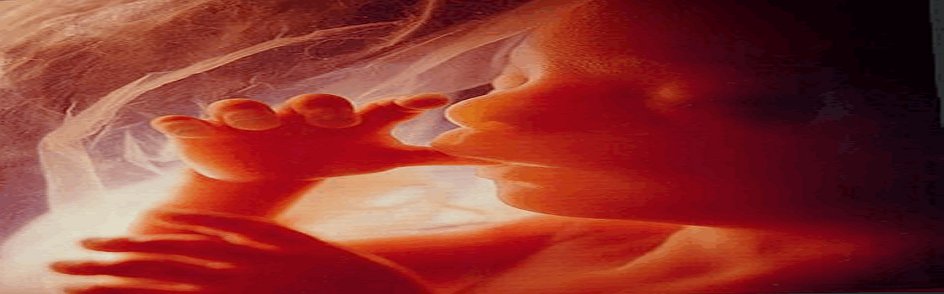
Baby Dreams
What do babies dream about?
From your baby’s perspective, birth and the experience of life outside the womb is probably like waking from a long and unbroken dream into an entirely new world.
The science of modern dream and sleep research really leapt forward when Eugene Aserinsky, working as a researcher in a sleep laboratory, noticed that his eight year old son’s eyes moved while he slept. Later it was found this was due to the eyes following activities taking place in a dream, and that these rapid eye movements (REM) were a sign of dreaming.
From this it was seen that even newborn babies dream. In fact, although adults only spend about a third of their sleep period dreaming, babies spend 50 to 80 percent of sleep in dreams. Some researchers, carrying their investigation into the womb, state that at 24-30 weeks gestational age the unborn baby dreams a 100 percent.
Because most researchers investigate dreaming from a physiological or neurological standpoint, they are not very good at telling us why babies, or we adults, spend so much time dreaming. This is because dreams are more connected with the passionate drive to survive, to relate, to learn and grow. When we see a child go into a frenzy when they are lost, we can understand just how passionate the emotional level of dreams are. It is this level of feeling that dreams deal with. But an interesting study done by Nathaniel Kleitman showed that he observed a regular breathing cycle in infants which lasted 50 minutes. He felt that this was probably to wake the baby at these intervals to see if it was in need of feeding. It would signal this by waking up and crying. The child would therefore get adequate nutrition.
Likening a dream to one of the monitors we see at the side of a patient in a hospital is perhaps the easiest way to understand what a dream is. Just as the monitor presents a visual image of the patients heartbeat, their blood pressure and temperature, a dream puts into drama and images the processes, feelings and fears that lie behind our personal awareness. In a baby, an unimaginable amount of learning, adjustment, development of responses and body skills is taking place. We usually take this for granted. But like a television show or film, it is only when we see the credits at the end of such a film that we realise just how much behind the scenes work has taken place to produce the film. And this is precisely what dreams show – the behind the scenes activities and dramas.
Understanding this, and realising that a baby and young child lives in a completely different world than we do as an adult, helps us support them toward a healthy and happy adulthood. For instance a baby and child who have not learned to speak cannot think. We think with words. So during pre-speech there are only feeling responses or instinctive urges and fears to guide the child. The development of thinking only phases in gradually, and prior to that we learn from events and relationships, not ideas. See Animal Children to understand the part speech plays in a child’s life.
For instance, a woman I met, Tina, as a child was told she was being taken to a party, but in fact she was being taken to an orphanage. She was given a bar of chocolate. She never ate it. Since then she has never been able to eat sweets, and she still has an eating problem while with other people. When she got to the orphanage she immediately went to the toilets and hid there, feeling she couldn’t speak. She still has difficulty speaking to groups of people. Tina had experienced massive feeling responses to what had been done to her. Those feelings are still active ‘behind the scenes’ of her life.
Dreams depict all the aspects of what is taking place within the child. Sometimes, just for the child to tell or draw a dream helps them integrate the underlying feelings and processes. Another thing they can do is to model their dream. In this way the awful dream event or creature can be put outside them and they can manipulate the frightening things – for instance they can put the creature in a cage where it cannot hurt them.
If you yourself can understand that whenever we dream its images are not like real life, because a dream is nothing like outer life where things could hurt you, but is an image like on a cinema screen, so that even if a gun is pointed at you and fired it can do no damage – except if you run in fear; so, all the things that scare you are simply your own fears projected onto the screen of your sleeping mind. And if you can therefore understand that dream fears are all about fears, hurts and threats that threaten the person or child’s confidence in their on coping strategies and aid them towards confidence and coping, you will do wonders.
Remember that a child’s greatest fears are to be abandoned or threatened by what they see or hear – television and films for a child are almost the same as the real world.
While small, my youngest son told me he dreamt his pet baby mice had opened their eyes. When I asked him what it means for a baby mouse to open its eyes, he told me that it showed they were ready to become independent. I then asked him what it might be like to be a pet, and he said a pet couldn’t do anything for itself, not even get its own water or food. He went on to say that because he was small, he sometimes felt like a pet. So we talked this over and he decided he could start getting his own glass of water by putting a chair near the sink. He was moving toward independence.
Although you cannot have a conversation with your baby in the same way I did with my young son, if you see your baby is having disturbing dreams you can still talk to her or him, even while they are asleep. Your baby is incredibly sensitive to the sound of your voice, and your own state of calm or agitation lying behind the way your voice sounds. Therefore you can sit with your baby and imagine a situation in which you feel calm and loving. When you feel calm and strong, gently talk to your baby telling it you are holding it close in your love, and you are with it while it meets whatever is disturbing it. Tell it your love is the strength it can use, and imagine wrapping your baby in your calm and love.
Most nightmares are an expression of a healing process. They are attempts to meet and discharge the feelings in difficult events we have faced. Because your child is so dependent upon you and is vulnerable, it is more prone to nightmares than adults are. A common nightmare for children is that a lion or some other scary creature is chasing it. There is good evidence to show that the lion might represent the child’s anger, which it has been told is wrong or bad, so the child is scared of it and tries to run away from its own feelings
Whether this theory is right or not, an easy way to help your child deal with its nightmare is to encourage him or her to draw or model the dream. In this way the child gets the frightening thing out in front of it where the scary thing can be seen and controlled. Once it has done this, ask it what it wants to do with the scary creature or thing. For instance it might wish to put it in a cage, or to make friends with it. In either case the child begins to feel more in control. Allowing your child to talk about such disturbing dreams also is very healing. It allows the child to voice its fears, and to know you will listen without criticism or judgement. But nightmares are exceptions. Most dreams are about your child’s personal growth, what it is learning, what it is feeling about the world around it, and the ways it is expressing or denying its own creative centre. So drawing, modelling and talking about these everyday dreams is tremendously creative and growth promoting for your child.
Here is an example of what a child faces and learns. True it is from an adults dream, but we carry the child in us.
I worked on the dream with my wife. The whole centre of the dream seemed to be the little girl. As I came in to land, because I had been gliding high above, she saw me and ran away very frightened. I was gliding in the same direction she was running and called out to her not be frightened. She stopped and I landed. In amazement she looked at me and said, “How did you get to be up there?”
As the young girl I had walked from the back door of my house, along the garden path, across a footpath behind the houses, into the field. As I looked through her eyes and feelings, I realised what a long journey it was for me to get into the field. Not a long journey physically in distance, but an enormous journey within myself. To be able to go from the door to the field, I had gone through the long process of learning to walk; I had learned the confidence to be alone; through language and understanding what my parents had passed to me, I had found out how to avoid stinging nettles, and how not to be overcome by my fears of them and of the huge creatures that I knew as cows. This had all taken ages, and so walking into the field was an enormous achievement, especially as I was doing it by myself. Learning to walk itself had taken an tremendous practice and perseverance. Learning to be independent of my mother was also something I had had to learn. I had made the inner journey of acquiring an immense stock of information and conditioning regarding the external environment I was facing too. I had slowly learned survival responses to nettles, walking alone, nests, birds, the sun, trees, spiders, stones, the wind, children, adults, worms, leaves on the trees, cars, etc, etc, etc, etc, and so on. See: Pregnancy; individuation.
Although it is difficult to theorise about the subject of babies dreams without their ability to report their experiences, evidence gained from the study of animal dreams probably applies to infants too. Michel Jouvet, while observing dreaming in cats, devised a way to avoid the usual paralysis of voluntary muscles during dreaming. This allowed the cat to actually make full movements while dreaming instead of the usual jerks or subdued movements. The cat would then live out its dream through the movements it made. Jouvet then noted the cats dreams were largely centred around crouching and stalking prey or play fighting. Adrian Morrison of the University of Pennsylvania noted the same behaviour in cats while investigating narcolepsy in animals. Because the area of the brain which usually stopped the dream movements from being expressed fully was injured, the cats Morrison was observing lived out their dreams in the same way Jouvet observed.
Jouvet, and later Nicholas Humphries, reasoned from this evidence that at the beginning of a mammal’s life, an enormous amount of time is spent in practising necessary survival skills in dreams. With cats the survival skill is defence and hunting. With a human infant it has more to do with socialisation, easily expressing its feeling and anger. Estimates have been made of what period of time the baby dreams in the womb, and the figures are that it dreams at 24-30 gestational age weeks a100%.
Taking this further, Christopher Evans, in his book Landscapes of The Night, says that this need to dream about social interactions and adapting to the social rules of their culture and thereby practice them, explains why children who have just started school need a lot of sleep.
The work of Stanislav Grof, which dealt a great deal with the remembrance of the birth experience in adults, and the recovery of memories and fantasies connected with it, also suggests that the dreaming baby is not only practising social skills and preparing for action in the external world, but also trying to balance and perhaps heal the internal memories it already carries from its uterine life, trauma of birth, and post-natal relationships. This type of dreaming may account for the nightmares suffered by some babies and young children. The function of such dreams or the process behind them appears to be that of attempted integration of experience, or means of finding an adaptation to its containment. See: children’s dreams; individuation.
Comments
Unprotected sex, and i dream about im carrying a baby girl i think, then because it is heavy in my dream i always dropped her when im about to carry her not like super dropped , dropped her like her head touches the ground , and i wish to have a baby in reality, is this a sign of having a baby in a future? I dont know if im pregnant tho.
Dear Marjorie – I feel that your dream reflects your feelings – hope and fear – about a possible pregnancy. In your dream you explore and become aware what feelings are part of the experience of “carrying a baby” – being pregnant – in your inner world.
It is also a way of digesting these feelings, for every woman has to face a lot of uncertainty after she had unprotected sex during ovulation and fertile days and so it was a wise decision from your “dream creator” to allow you to meet these feelings.
Please also read https://dreamhawk.com/dream-dictionary/digest/
The dream baby in this dream reflects also about what arises inside you when you are exploring the possibility of giving birth to a new role in your life; the role of being a mother.
The baby being heavy to carry I see as a reflection of your not feeling confident enough (yet) about carrying the responsibility for a new life which is totally dependent on you.
The same I see reflected in the baby’s head dropping on the floor; which is like the opposite of “holding your head up high”; being confident and proud.
Do take the time to come to terms with these feelings and I hope that these features can assist you with this inner work https://dreamhawk.com/pregnancy-childbirth/the-baby-in-your-dream/
and
https://dreamhawk.com/dream-encyclopedia/beliefs/
Anna 🙂
There was a black female dog was looking for a place to deliver a baby and finally she found a place to deliver but when she delivered she deliver human baby girl. kindly explain about my meaning of the dream.
Wow! This makes so much sense! I googled can babies dream…and i found this article! Thanks so much for making me realize that its fact! But also helped me understand my reacurring dream since i was 8! I am now 30 years old and it all makes sense! I feel so much more at peace and know now how to help my children! Thank you!
Lauren – Thank you for your enthusiasm, it makes all the work I put into writing the features worth while. I would love to hear about the recurring dreams and what it meant to you.
Tony