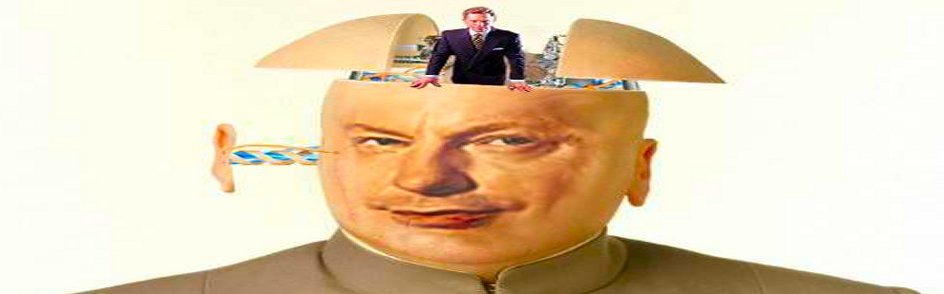
Identity And Dreams
To have a sense of personal existence distinct from others may be unique to human beings, and in large measure due to the learning of language. Jung and Neumann’s studies of the historical development of identity suggest that having an ‘I’ is still a very newly acquired function in an evolutionary sense. This makes it vulnerable. It is also noticeably something which develops during childhood and reaches different levels of maturity during adulthood. Although it is our central experience, it remains an enigma – a will o’ the wisp which loses itself in dreams and sleep, yet may be dominant and sure in waking. See Animal Children; Identification and Identity
In dreams, our sense of self – our ego, our personality or identity – is depicted by our own body, or sometimes simply by the sense of our own existence as an observer. In most dreams our ‘I’ goes through a series of experiences just as we do in waking life, seeing things through our physical eyes, touching with our hands, and so on. But occasionally we watch our own body and other people as if from a detached point of bodiless awareness. If we accept that dreams portray in images our conception of self, then dreams suggest that our identity largely depends upon having a body, its gender, health, quality, skin colour, the social position we are born into, and our relationship with others.
In fact we know that if a person loses their legs, becomes paralysed, loses childbearing ability, becomes blind or is made redundant, they face an identity crisis. Yet despite all of that they still exist as a person, and if we realise that early we can avoid all the pain and distress caused by a complete identification with our body. But the bodiless experience of self shows the human possibility of sensing self as having separate existence from the biological processes, from ones body, ones state of health, and social standing.
In its most naked form, the ‘I’ may be simply a sense of its own existence, without body awareness. It is the I AM alone and not the I am worried, I am feeling cold, I am in love, I am alone – they are all things that the I AM can experience, and are all passing impressions, not the stable existence. I see that the dream image is like a holographic presentation of what the dreamer feels, thinks, desires or fears about the person whose image it is.
This holographic image usually contains massive memories linking with the person whose image it is. The dreamer manipulates this image for a variety of reasons. But the image is in no way the person it appears to be. In fact the memories and feelings involved may be from years past. Meanwhile the person whose image it is may have changed enormously. They are getting on with their life going through change, perhaps have even died. But the image is like a magical thing that can present us with past pains, gratify our needs, unable us to explore further reaches of the relationship.
Dreams also show our sense of self, either in the body or naked of it, as surrounded by a community of beings and objects separate from the dreamer, and frequently with a will of their own. If we place the dreamer in the centre of a circle and put all their dream characters, animals and objects around them, and if we transformed these objects and beings into the things they depicted, such as sexuality, thinking, will, emotions, intuition, social pressure, etc., we would see what a diverse mass of influences the person stands in the middle of. It also becomes obvious that our ‘I’ sees these things as outside itself in nearly all dreams. Even our own internal urges to love or make love may be shown as external creatures, we have a multitude of ways of relating to these aspects of self. Therefore the depiction of self in dreams is not simple.
If we take the word psyche to mean our sense of self, then in our dreams we often see our psyche at war with the sources of its own existence, and trying to find its way through a most extraordinary adventure – the adventure of consciousness. In this adventure – very like the Odyssey – the psyche meets all manner of creatures, people, demons, temptations. It travels into dark places, climbs to the heights of wondrous experience, discovers magical powers. One of the functions of dreams can therefore be thought to be that of aiding the survival of the psyche in facing the multitude of influences in life – and even in death. see The Adventure of Consciousness
Another aspect of self that is depicted so vividly in dreams is the way we create our own Heaven or Hell in life. When we realise each aspect of the dream, each emotion, each landscape and environment are materialisations of our own feeling states, we begin to see how we live in the midst of a world – thoughts, feelings, values, judgements, fears – largely of our own making. Whatever we think or feel, even in the depths of our being, becomes a material fact of experience in our dream. In the world of the psyche we are the creator, for we shape with the magical powers of the mind, with the streaming energy of sexuality, and with the colours of our emotions, whole worlds, and multitudes to fill them. From this experience we might say that our life is a dream.
This is not saying our life is an illusion or unreal, but that the great loves we feel, along with their jealousy and passion, the sense of our own success or failure, the struggle and pain we strive to survive, all emerge out of our feeling states. The feeling and mental states are our own private universe like a dream. They are our own private ‘dreams’ we colour our life with, weave an intense story about ourselves with, and live within and feel have enormous reality – and yet are as insubstantial as a thought. It is almost certainly this inner universe religion speaks of as heaven or hell. Finding some degree of direction, mastery or harmony within this world of our own being, is the great work of individuation or maturity. See: Inner World; avoid being a victim; individuation; the dreamer.
Comments
I dream of the house where my mother lives, and we were happy and I left, but someone I knew in a dream told me that was your grand mother who passed away 1985, then I went back and she never lives there instead they show me an ols house where she lived and I was trying to get there as soon as I could, and the house was falling down but some men were were trying to pull together
For the last few years, I have had a recurrent dream that I live in a house very similar to the one I live in now which i think is quite nice. SOMETIMES IN MY DREAM THE HOUSE IS A LITTLE NICER AND THEN MY HUSBAND SELLS IT AND IT IS ALWAYS A HOUSE WHICH IS MUCH SMALLER AND NEEDS A LOT OF WORK. I BECOME VERY SAD IN MY DREAM. WHEN THIS HAPPENS. WHAT COULD THIS MEAN?