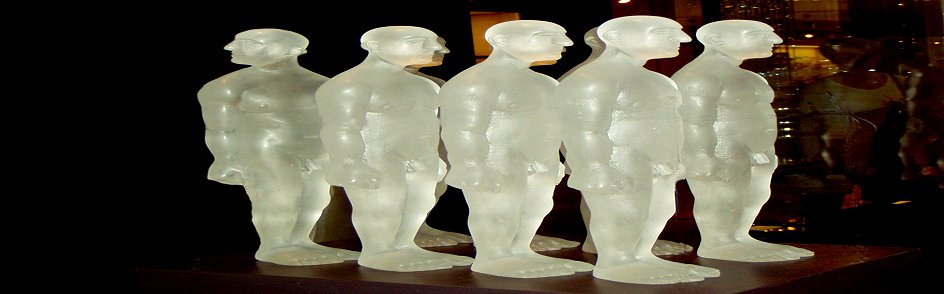
Archetype of the Outsider Outcast
Like many other animals, humans are very territorial and suspicious of anyone who is in some way different. Thus, living as an immigrant or child of an immigrant; being abused or abandoned in some way by ones parents; not having the skin colour or language of the majority; having a malformed body or being ill in some way; having greater intelligence or a different mindset, can all lead to a sense of being an outcast, and thus a connection with the archetypal feelings of abandonment or alienation. This has been such a common experience throughout the evolution of the human body and mind, that it is a powerful archetype and still strongly at work in individuals and groups today, where alienation is common.
Living out this particular stance in life leads to various attitudes that people throughout the ages have used to survive. There may be an intense form of independence, or hidden feelings of anger toward the nation or society one lives in. One may rebel against being a part of normalcy, even to rebelling against ones personal sexual characteristics; or else one hides within a formed group such as a religion. There is often a powerful drive to fight to become recognised as part of the group, or even become an active against what is the norm, being a criminal or even murderer.
The alienation can also occur because for one reason or another you cannot live within the patterns of behaviour accepted, or built into, your family or social group. This is particularly evident in religious or political groups, which, to function well, require a high degree of conformity.
There is often a high level of anxiety linked with this stance, as there is a great deal more vulnerability living outside the group than there is in being an integral part of it. The extant story of Adam and Eve is a fundamental expression of this sense of being outcast from ones very self – not even possessing oneself. In some degree we all feel as if we have lost our home – the place where we would be at ease and welcomed – and we long for it. See Adam and Eve
There is a very positive side to this archetype however, and it is one that is enormously potent in our times. This is described in the following words by a man meeting this archetype.
I committed myself to this direction of the outsider, and yet to a love of life. I need to remember that. I am not sure if I had said it clearly in my language for my son, but I need to say to my son and to those who tread this path, “This is an ancient path. It was first opened by people who were outcasts from their tribe, or their race. Maybe they were outcasts because of disease or illness. They deepened this path because they either descended into despair or developed a new life, a new awareness, a new relationship with themselves and the world. They changed something inside of themselves, and that change became a possible new pattern for other human beings. Some of these people, in today’s world, would be judged as crazy or unbalanced in some way, perhaps fanatics. If we look back into the past we see there were groups of people living the life of hermits in deserts or in isolated places. Some of them tortured themselves in various ways, such as starvation or flagellation. It was out of such strangeness that a new type of inner life developed, a new way of relating to the world arose. Of course, those early pilgrims on that path were unclear about what they were doing, and were often confused, and so included many strange and unnecessary practices.
But through their lives they began to form the possibility of a new direction for human beings, a new inner or mental life. It developed alternative ways of experiencing oneself, or living in society, and of discovering ones inner resources. And out of those many lives and the new ways they developed of relating to their mind, their body and the world around them, a new paradigm has arisen that I see is now transforming the unconscious life of many people. It is reprogramming them while they sleep. It has great power because it is so relevant in today’s world where enormous numbers of people feel alienated from what is going on around them.
However, we cannot really understand this archetype of the outsider or outcast without some understanding of what has been called the serpent power, or in India, kundalini. A great deal of mystery has surrounded this, probably because it was not clearly understood, but in practical terms the serpent power is the psychobiological energy that expresses in you as the many processes and functions of your body and mind. It is like the electricity that flows into a house, that while it is not the picture on the television screen, or the movement of the cooling fan, is the power underlying all the many things arising from electricity.
The serpent power, your psychobiological energy, is at the same time the energy underlying your physical movements, your digestion, heartbeat, your emotions, awareness and thinking; and also a potential that has not yet been expressed or manifest. It is particularly relevant to the outcast because he or she does not express themselves in the same way as the ‘normal’ or average person. Very often their sexual expression or social expression is not flowing easily. All that energy backs up like water behind a dam. It creates a pressure that will seek to flow somewhere. In many cases it moves into neurosis. In other words, because it is not flowing outwardly and satisfyingly into social and sexual relationships, it may turn inwards, enlivening the usually unconscious and disturbed patterns of feeling. Then the person lives out neurotic ways of expressing sexually and socially. They may for instance express anti social behaviour in violence or destruction. They may express in destructive sexual behaviour, or be even more introverted into deep depression.
Example: “Meeting death, the bodiless state, is just like another big fear. It is like the fear of going it alone without mum and dad. Can we face just consciousness? Can we live in the world of the mind minus the body? Can we live in the body minus mum and dad?”
“Yes, I’m not doing too badly. I’m not a genius, but I’m not doing too badly. I feel unafraid of the bodiless state because I have experienced it and can exist in it. Like swimming, I can swim a few strokes so have no great fear of water.”
“There was a crazy thing mankind did in these spiritual disciplines. They are so simple. They are simply to get you out of this matrix of consciousness. Once you become an individual in waking consciousness, and you just learn to suppress any of the desires a little bit – fasting – sex – any of them – you make a little pathway of your own. That is your individual consciousness. So simple. That is your own matrix, not the patterns of the general herd or species, within the universal pathways of consciousness around you.”
“It seems that frustration of the universal drives creates a different pattern in the whole. This pattern is used, and if it is strong enough, can exist outside of physical existence in an energy, consciousness, state.”
“I think, in modern day terms I’ve got it. I have got it. It’s free of all the old moralism. That was how they saw it, in the past, and that was how it works. But I have got it.”
I then had masses of realisations or insights into many things. My experience of death, now, added to my other experience and united to form many new ideas or realisations. In experiencing death I was left with consciousness. That consciousness was beset by fantasies, fears, ideas, but it did not lose itself in them, was not swallowed up or drowned in them. If it had been, it would not yet be ripe to exist in the bodiless state.
Also, it struck me with tremendous force that the experience of waking consciousness in the body, however we explained it, was reality. Death, however we explained it, was also reality. What was happening was that I continued to experience this changed reality of death.
But the normal human behaviour is simply one of the ways we as mammals can express. The life process itself can be expressed in an infinite number of ways, as we see in the different creatures on the earth. The fact that we are as we are is simply the result of the global, environmental and social changes we have faced. What some of the ancient outcasts found was that there are possibilities beyond the normal and beyond the neurotic. They drew out of the potential in the serpent power the possibility of what we call enlightenment, a life beyond the limitations of the ‘normal’, beyond the pain of everyday living. That is how the practices of yoga, Tai chi, and many of the other personal disciplines of mind and body arose – as methods of expanding the potential of the serpent power.
Out of this some religious organisations or leader figures made rulings that their followers should not express sexual love casually or at all. The reason for this is probably dual. Firstly the frustration of the sexual flow leads to the build up of the serpent power, and thereby offers the possibility of personal transformation. Secondly, religious organisations are like large business corporations. They have enormous property and staff to deal with. They need money and goods to do that. When we flow to someone sexually and emotionally our money and goods flow to them as well. Sometimes we share our all. If it is blocked in the individual, it flows to the religious organisation or figure who tells us to block it. It does this because they promise salvation or a better life. The organisation or guru assumes wonderful charisma because the serpent power, unable to flow in its usual way, fills such a relationship with great emotional and sexual feelings. Blocking sexual and emotional flow in followers can therefore be a way of directing funds to the organisation or leader figure.
Meeting this archetype is therefore a meeting with the need to identify the causes of our expulsion from our own happiness, our own ability to love and feel loved; our own resources of fruition and creativity in this life – now. It is a time of decision about what we will do with the energy diverted from the ‘normal’ into its new channels of expression. See Individuation
The other side of the archetype is whether you can abandon or transform the life you have lived, a life that doesn’t satisfy you, and is one in which major parts of you are left buried or imprisoned. The paradox is that we may have cast out – denied – parts of ourselves, and so feel outcasts. Here is an example of such transformation.
Example: “I was in a prison cell waith two other men. I felt it was in Spain somewhere. We ate, slept and defecated in the cell. I was standing at the bars of the cell, and had the impression I had been in the prison for years. I was shouting and cursing the people who had put me in the prison, full of hate and self pity.
One day as I stood raging at the bars I suddenly realised that my years of shouting had availed nothing. The only person who was upset by it was me. I was the victim of my own anger and turmoil. It was as if I had been haunted all my life by ghosts of anger and passion. I dropped the attitudes or ‘ghosts’ and was free of them. Years went by and one by one I recognised and dropped other habits of emotion and thought that had trapped and tortured me. I realised I could be totally free within myself.
One morning I woke and sat up on the mattress on the floor that was my bed. The last ghost of inner entrapment fell away. A fountain of joy opened in my body, pouring upwards through me. It was so intense I cried out. My cell mates called a warden because they thought I had gone mad. They stood looking at me as I experienced radiance so strong I felt as if I must be shining. I was aware my joy poured into them, although they thought I was possibly insane. I could sense the enormous change in me influencing them, and I knew it couldn’t help but change them also. I realised that I might never be released from the prison, but it didn’t matter as I had found a fuller release than simply walking the streets. Even though remaining behind prison bars, I would still be touching people’s lives deeply. Nothing would ever be the same again.”
Useful Questions and Hints:
Do I feel as if I am not really connected or identified with the society in which I live?
Have I been led to develop different ways of using my mind and developing innate abilities than those around me?
Am I still locked in anger about alienation, or have I moved to recognising the benefits of not being immersed in my surrounding culture?
Have I learnt to be a shape shifter – if not try Being the Person or Thing
See Summing Up – Definition of Spiritual – Life’s Little Secrets – Avoid Being Victims
Comments
Dear Tony Crisp-
Thanks for the information! It is greatly appreciated.
Take care,
Leslie
I was looking on the net for the evolutionary aspect of the outcast… … and perhaps the “shadow” of the Christ archetype…and found your article. I am aware of a kind of relentless undercurrent which is gradually stripping away the remnants of any “personal” life … A kind of alienation from people… Just seeming to happen… yet I am aware something in “me” must be causing this experience.. I am drawn back to investigating more deeply the shadow… all action is flight or freeze… searching for where to look …need to move… but everything seems strategic.. I feel encouraged to read “Meeting this archetype is therefore a meeting with the need to identify the causes of our expulsion from our own happiness, our own ability to love and feel loved; our own resources of fruition and creativity in this life – now. It is a time of decision about what we will do with the energy diverted from the ‘normal’ into its new channels of expression.” I am in my 70’s now… The realisation of my life being controlled by this archetype from incarnation is now so clear… I was looking for a way forward from the fragmentation … Shadow work… Jung again… some reflection I want …of my lost sheep.. ..But this is the clearest description I have found in these last months… I recognise it and am so grateful to read it.. Just to read it lessens the anxiety. Not remembering dreams for a long time… I need a new impulse to move… I want a home…
Dear Jeanette – I am now nearly eighty, and was moved by your post.
I found a way, partly using Jung’s methods, and it might not apply to you, but for me it was wonderful doorway – – https://dreamhawk.com/approaches-to-being/opening-to-life/
Tony
Hi Tony,
I have read many of your article in order to help me recognize certain archetypes, and I thought I would let you know that they have never failed to guide me to better understanding for each concept. Wonderful, wonderful work. Thank you so very much!
-Kevin
Kevin – Thank you for writing and saying what you did. It helps me carrying on writing.
Tony
This did not help me at all!
J’Na – How about asking sensible question instead of writing in such an accusing tone. Perhaps I can help, perhaps not, but it is good to communicate as people.
Tony
Thank you Tony.
You have written some wisdom that I’ve been searching for a long time.
Ignore the trolls, pearls before swine and all…
Clezza – Thank you for reminding me. I sometimes forget. I have put a link with what you have said on a Facebook page called DreamHawk.Com.
Tony
sdafjdlk;fjsdghasdklf;ahsdhgga
Blake – Hey, theres a difficult one to interpret.
I suppose I could say aovbmeot, ofofof iut. Andidifi t; I dfldkdoitn?