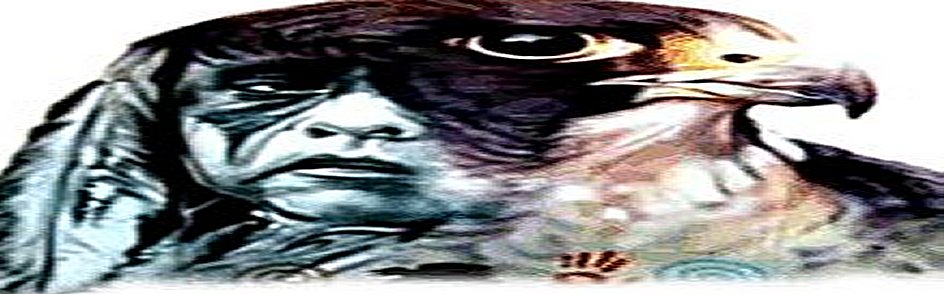
Archetype of the Shapeshifter
In Western society there is little understanding of the power and influence of the shapeshifter. In fact most people only meet the negative aspect of this flow of influence in their life.
The source of the shapeshifter power is not in its ability to move between different guises. That is only the external expression of something very profound. Form is only one polarity of our existence. At the other pole is formlessness, the spirit without physical shape, the void of Christian Mysticism and Buddhism that is nothing but holds all possibility within it. At this level the paradox of sexual difference is resolved. We are male and female and more, so the idea of soul mates does not seem possible, for we are a whole being.
As we mature and realise these paradoxical opposites of our nature, and as we identify less with the form we have as a body, the power of shapeshifter comes more fully into our experience.
What it brings with it is what might be called involved detachment. Usually we might think of detachment as meaning a sort of avoidance of something, especially people or physical pleasure. However, the very term shapeshifter includes the word shape, and so implies form, even though the form can be changed. This is because the archetype of shapeshifter stands at the very balance between form and formless; identification and the void. With its power we can live in the world and yet not be possessed by it. We can be involved in events or relationships and yet not be dependent upon them for our identity or sense of self. In fact we know that we are paradoxical in nature, having form and yet at the same time existing as formless spirit.
Of course there can be polarities even in this. So someone who realises themselves as the paradoxical balance between form and formless, might polarise on the side of form, and live a life of change and detachment not centred on the eternal spirit. In this case they move from situation to situation, from relationship to relationship without bonds.
Or they can polarise on the side of the formless and exist as a type of ascetic not forming links with the everyday world, and remaining detached from it.
The balance produces that fully formed and mature man or woman who loves but not in a possessive way; who builds and creates, but is not egoistically tied to their work; who lives, and yet is somehow a lens for something more than human to shine through.
There is a side to knowing the shapeshifter that you are that is extremely useful. As you really get the certainty that the body that is often called me is only a vehicle that you express through and is both male and female, and free of form, it opens you to another view of what life and death is. Even in dreams where the physical sense are switched of and on is bodiless awareness, people still import the idea that they ARE the body they call themselves. As that view is eroded so many things change. The approach to death is no longer something to be feared; relationships have a very different feel; you realise that life goes on in different forms until we totally identify with out formless origins. Of course you can love someone, but you know deep down that you can never own or try to posses them.
Here are some examples of people realising this aspect of them:
Example: The second day of meditation seemed eternal. Not difficult, but it was hard to remember that events in the morning were actually on the same day. I am not sure now of the sequence of things, but I think what came next was my gradually going into a very powerful state of existing in the moment. This first came as a fairly fleeting but clear sense of being naked, invisible space, consciousness, being. That first phase is quite difficult to recapture now, as it didn’t get deeply established. But it was a shift from being thought, or emotion, or body centred, to being centred on naked awareness. It was a wonderful experience, in that it brought great order into my being. It made sense of my structure. Thoughts, emotions, my body, all shift and change, but my naked being was always the same, changeless.
This led to a prolonged experience of just being. It was still the empty cave experience, but this didn’t matter. It was pleasurable because thinking and feeling had largely dropped, and there was a gentle blissfulness just in existing. It was wonderful just to exist. This got stronger and stronger and lasted longer than I have experienced it before. I remember saying to my partner that my existence explained itself, and there was no need for me to say who I was. It is/was such a delicious state I want to come back to it again and again. There was no effort in it at all, neither physically or mentally from the question. Usually if I sit for long periods I have pain in my right leg, or in my hips, but I felt completely easy. Also, while in this state I sat opposite a large man with glasses. While he was talking I felt I could see on his body all the pain and tension he was carrying yet not admitting. He was saying he was fine yet his whole body was tight, his face lined with tension, and even the words he was using were telling me of his condition, yet he was not aware/admitting it, even to himself. I felt I wanted to bathe him in the peace and joy I felt but somehow he didn’t seem to notice. At this point Jan said it was time to have a break, and this was a wonderful joke. A break from what? From existing? From life? From oneself? Where was there to go? Why did one even need to move? It was such a pleasure to just be. Of course there was no problem about moving, but one could do it out of this state of existing. Why did people need to move away from themselves and try to avoid themselves by running into by drinking, smoking, dancing seeking otherness?
Example: A most extraordinary thing happened here. The only way I can describe it is to say that it felt as if I am standing in an open space in a town without any other people about. But what I was standing in was the many images, felt threats, fears, longings that assail human beings. So in one sense I was standing in the middle of a dream, and I was surrounded by the images of the felt threats, fears, hopes, that in fact impact on human consciousness every day. They impact in a way that are for many people torments, perhaps even life-threatening, and that for some may lead to suicide. But as I stood in the middle of these things and they came at me one after the other in the form of images, but images that were deeply felt, I was like a burning flame. I don’t mean that I looked like a flame. I mean that as each image impacted on my consciousness it burnt out. I was naked consciousness, and as each form, as each image attacked my nakedness it was burnt away, perhaps by my recognition of it as simply an emotion, a feeling, an image that in itself was a passing show of things.
I don’t think I have ever before felt such an amazing feeling as that magical sense of being able to stand amidst anything and everything that came towards me and yet remaining as pure, naked me. This led me on to looking at, or wondering, why, as human beings we should be so dominated by images and imagery. In particular I was thinking about how our culture, and how we as individuals, are so manipulated by the images that are thrust at us day after day week after week, and year after year. The images of the big powerful male, the beautiful female, big tits and perfect teeth, the whole business.
Example: Then my awareness seemed to become more general looking at people as a whole. I was seeing that, as already suggested, many people see the process of ageing like the end of their life. It is like death in the sense of a descent into non-existence, into darkness and extinction. It is like they say to themselves, “This is the end of my life. The end of my existence.”
Am I crazy? Because I am saying by my life, that it is not the end, it is just the beginning. My critical mind, observing this, then asked the questions, why am I saying this? From what am I saying this? I was trying to understand how I could give this assurance to people.
As I looked at this question I could see that within me I just knew this was so. It wasn’t a sort of knowing based on belief, beliefs, religious affiliation; it was arising from a condition in me that existed in that realm. When I walk out of my house and feel the wind, I don’t need to say to myself how do I know this is the wind? I know because I experience, and this knowing was because I experience. I knew at that moment because I was standing naked in consciousness. I was naked in the realm of death, without form, without dreams, and so I knew what I was experiencing. I knew that at my base I am simply awareness immersed in the processes of nature – an intricate part of nature in fact. I am nature knowing itself as an individual called B. But beneath that tiny exterior self lies this whole world of existence within the forces of nature. In essence I am not B., I am not anybody, I am simply life naked of form and identity. My being stands in that nakedness and it is okay.
Useful Questions and Hints:
Am I identified so fully with my physical looks and bodily shape that I cannot recognise the formless in me?
Is the formless a reality to me, and does it release me from full identification with my physical life?
Where do I stand in the balance between form and formless?
See What is the Experience of Enlightenment as it explains the shapeless state and mentions how to achieve it.