Spiritualism and Heaven
Life and Death
Part Two
At the age of sixty, Andrew Jackson Davis received his diploma of MD from the United States Medical College of New York. He had, in fact, been unofficially practising as a doctor for many years, but at this late date wished to have formal recognition. The year was 1886. Before this, Davis had used what he called his ‘superior condition’ as a means of diagnosis. In her book Breakthrough to Creativity Dr. Karagulla describes many of her colleagues and laymen who can do the same thing. They, like Davis, can see into the human being as if with X-ray eyes, and watch the activity not only of organs and cells, but also of energies at work.
Using this ability with a dying patient, Andrew Jackson Davis gives the following account of what he saw:
Now the head of the body became suddenly enveloped in a fine, soft, mellow, luminous atmosphere; and, as instantly, I saw the cerebrum and the cerebellum expand their most interior portions.
I saw them discontinue their appropriate galvanic functions; and then I saw that they became highly charged with the vital electricity and vital magnetism which permeates subordinate systems and structures. That is to say, the brain, as a whole, suddenly declared itself to be tenfold more positive over the lesser portions of the body than it ever was during the period of health. This phenomenon invariably precedes physical dissolution.Now the process of dying, or of the spirit’s departure from the body was fully begun. The brain began to attract the elements of electricity, of magnetism, of motion, of life, and of sensation, into its various and numerous departments. The head became intensely brilliant, and I particularly remarked that just in the same proportion as the extremities of the organism grew dark and cold, the brain appeared light and glowing.Now I saw (in the mellow, spiritual atmosphere which emanated from and encircled her head) the distinct outlines of the formation of another head. This more and more distinctly. While this spiritual head was being created out of, and above, the material head, I saw that the surrounding aroma from the material head was in great commotion. As the new head became more distinct and perfect, this brilliant atmosphere disappeared.
In the same way as the spiritual head was formed, I saw, in their natural, progressive order, the harmonious development of the neck, the shoulders, the breast and entire spiritual organisation. The spirit rose at right angles over the head or brain of the deserted body.
But before the dissolution between the spiritual and material bodies, I saw – playing energetically between the feet of the elevated spiritual body and the head of the prostrate physical body – a bright stream or current of vital electricity.
This taught me that what is customarily termed Death is just a Birth of the Spirit from a lower into a higher state; that an inferior body and mode of existence are exchanged for superior and corresponding endowments and capabilities of happiness. I learnt that the correspondence between the birth of a child into this world and the birth of the spirit from the material body into a higher world is absolutely complete – even to the umbilical cord, which was represented by the thread of vital electricity.

The Father of Spiritualism
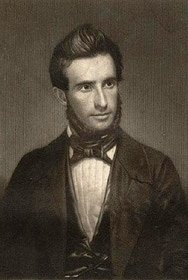
DAVIS has been called by many the father of modern spiritualism. He died in 1910, leaving a legacy of many books, such as ‘The Principles of Nature’ – ‘Penetralia’ – ‘The Great Harmonia’ and ‘Death and The After Life.’ His books described (often rather wordily) what he saw of life and death, growth, sickness and health, with his ‘Superior faculty’. Before Darwin published his works, Davis had already written and published very clear details on evolution, and his uniqueness as a spiritualist is in his wide range and depth of comment on life and its experience.
In trying to understand death, we cannot put aside the enormous amount of human experience gathered and synthesised into modern spiritualism. Spiritualism, unlike most religions, did not arise out of the life or teachings of one person, such as Jesus, Buddha, or Mohammed. It is based on fairly common human experience such as clairvoyance, projection of consciousness from the body, contact with the dead, mediumship and psychism generally. But we have to realise, looking at Spiritualism, that it concentrates on one area of experience, and this must be taken into account. Without trying to be precise, we can describe the varieties of human experience as –
|
Andrew Jackson Davis |
What happens after death?
Having said this, let us look at what spiritualism tells us of life after death.
So far, the cases of death and return explain how spiritualists feel about the moment of death. But more can be said about what occurs from there on. Although many people quickly understand what has occurred to them, quite a number, due to lack of teaching or understanding, do not realise they are dead. So fixed is the idea that death is extinction, that when they find themselves, for instance after a car accident or sudden passing, fully conscious, and in no way different except for being invisible to most people, they are extremely confused.
A tremendous frustration grows, because although they appear to themselves exactly as in ‘life’, they lack the ability to be seen or heard by most of us in the body, and cannot move physical objects in the same way.
Some people in this state at first believe that some enormous conspiracy is underfoot to ignore them or to drive them mad. Arising dazed from a bad car crash, they fail to see their mangled body. and wander of to seek help. When nobody responds to them, or appears not to see them, tremendous confusion arises.
Dennis Wheatley, in his book ‘The Ka of Gifford Hillory‘, gives a fictional account of this, and Joan Grant, in her autobiography ‘Time out of Mind’ tells how during the world wars, she left her body asleep each night, and consciously helped the dead troops to realise their situation and find their way into the ‘death’ experience. Some of the things she did were verified by returning troops.
When we enter a swimming bath, we know it is pointless trying to walk. A different set of movements and reactions have to be used to deal with water. This is like entering an out-of-the-body existence. Most of the difficulties experienced are due to using our old values and reactions in a different ‘element’.
Two of the major problems are communication with those in the body, and the power of thought and desire. Both are easy enough to understand though. Let us take communication first.
I believe that all of the central ideas to be mentioned can be proved or disproved by your own experience. In fact there is an experimental way of approaching your own inner experience, so let us perform one of these experiments to determine difficulty in bodiless communication. This experimental approach is vital if we are not to get lost within opionions about psychic phenomena.
Try the experiment yourself
Have a partner for this experiment. Read from a book to your partner who should sit facing you. In doing so you are communicating ideas, images, emotions. Having performed this first part of the experiment, go on to the second part. Continue with the book, communicate with your partner without using your body!
If you perform this experiment hundreds of times, or even dozens of times, you will come to see two things at least.
- With most people, without using the body in speech, mime, expressions, etc., no conscious communication takes place.
- With those where it does occur, it is communication of a completely different order. It arises in fact as subtle inner urges, feelings, mental images, subjective sounds, emotions, or a sense of knowing.
Experimentally then, we can say if human consciousness does exist apart from a physical body, communication is almost impossible for most people, and where it does occur, it arises as subtle ideas, sensations, mental images, dreams or a sense of knowing. Obviously, neither the dead, nor the living, can usually communicate without using a physical body. So communication is not just a problem of the dead.
The second question, in regard to thought, power and desire, can also be approached experimentally. Our laboratory, as in the above experiment is ourselves. The above experiment shows that if there is coninuance of existence after death, communication with the dead is in no way different to life, except that one of the major factors – the body – has been removed in one of the participants. Because of this removal, the way we relate to others and ourselves is greatly altered, and often in unexpected ways. If we hold on to this idea of death being only life with the body removed, the experiences described become logical sequences of events instead of superstitions or seeming fantasy.
For instance, in our experiment, if we remove the influx of impressions via the body senses – i.e. if we remove the body – we have nothing to anchor us to sensory experiences and an objective world. Suddenly the whole bias of our existence is pushed into the subjective, interior realm of our thoughs and emotions – and perhaps the transcendental realm of experience also.
REMEMBER, these levels of your being have always existed, and in varying degrees you are acquainted with them. But if most of your life has been given to objective and casual subjective experience, the loss of body will at first seem like being pushed in the deep end of a swimming pool. If you have already, during life in the body, explored your inner life of thoughts and emotions, our interior and transcendental self, you already have experienced something of what you would find in the death state. This is why I say, death is only life with the body removed. Also, it is the reason for the statement that Yoga is a preparation for death – that is, when Yoga or extensive self exploration is used to explore the interior and transcendental levels of your being. See: Levels of Consciousness in Sleeping and Waking.
Death is like a dream – Full surround virtual reality
We will explore that idea more fully later. First though, let us return to the problem of desires and thoughts. Spiritualism tells us the ‘dead’ live in a land in many ways similar to physical life, except in its beauty, colour, lack of sickness, pain, war, and in the expanded possibilities life without the body offers.
In this land we can fly like birds, swim underwater like fish, communicate heart to heart, mind to mind, soul to soul, without the use of clumsy words.
We have a body, but it is a body at its prime, without weight or tiredness. We have clothes, but they are creations of our thoughts and unconscious dispositions, and we are clothed by our own love and wisdom, or lack of it. We experience heaven or hell, not as punishment or reward, but because we create our own environment by our own thoughts and emotions.
Here we explore music, the arts, creativeness, knowledge, relationships, without the limitations the body imposes, and with the added wonder of a new dimension of experience. We can see in colour, sound or telepathic communication between art work and observer – or artist and observer.
William Lilley, was a spiritual healer. He lived an extraordinary life, uniting in his practice the use of ordinary medicine, herbs, massage, manipulation, sound therapy, vibration therapy, along with a clairvoyant ability to look into the body and diagnose sickness. He was able to consciously ‘leave his body’ and visit the ‘Beautiful Place’, where he met the dead. His description of this is typical of many other people’s even to the ‘going through the mists’, but it contains an unusual element not often given – but he can describe it best:
|
|
When I am going into trance, I breathe in the Yoga method shown me by Dr. Letari. Immediately I get a sensation as though I am falling, or being pulled backwards. As this sensation comes to a climax, I seem to be travelling through space at terrific speed.
I have opened my eyes many times at this point, but the only vision I have is of passing through a dense fog. Then, quite suddenly, the fog clears and I am at a stile. I climb over this stile and immediately there is a voice speaking to me over my shoulder. This voice is always with me, explaining everything I see and everyone I meet. The stile seems to be on the edge of a large field, which rises gradually to the form of a hill. I walk up the hill, and beyond it I visit many places.
I have been to the Children’s Land many times and have spoken to children with whom I used to go to school, many of whom I did not know had died until I met them. I have paid visits too, to the Halls of Learning, which seem to me more like the Acropolis at Athens.
It is always the same stile, the same hill, the same voice, and it just seems like a large country with so many different towns to visit.
The most interesting and remarkable experience I ever had during these visits into the Spirit, happened before I went into trance. Several people had been speaking of consciousness. They had asked me to describe the Spirit. Was it solid? Did I appear solid? I promised them that if I could, I would find out.
I arrived at my stile, the voice came to me, and it evidently knew my desire, because it said “Feel the earth!” I did. It was solid. “Feel the grass beneath your feet!” I did. That was solid too, and even had dew on it. “Smell these flowers!” They were perfectly natural and had the usual perfume. In fact, everything around was natural. Then I was told, “Feel your body”. I did so. It was as solid as I am materially.
‘The voice then said, “Close your eyes; make your consciousness passive”, or as you would do when preparing for a trance state. “Now feel the earth beneath your feet!” There was nothing. “Open your eyes”. It wasn’t dark, it wasn’t light. “Feel at your body”. It wasn’t there. “Such is Spirit” said the voice. “Just a consciousness holding within it all experiences of your lifetime, all the joys and sorrows, your desires, achievements and failures, whence comes spiritual evolution. In your world of the material, you are able to examine matter; everything is matter. When you think of the spiritual, naturally you build in your consciousness another material world.”
There are very few comments on spiritualism, by a renowned spiritualist, quite as descriptive and cogent as this. But before we approach it, and the other quoted experiences, I will mention two more examples to complete the evidence, so to speak.
Going beyond time and space
Sir Aukland Geddes, MD, one time Professor of Anatomy, and also British Ambassador to the United States, reported an experience to a meeting of the Royal Medical Society in Edinburgh. It was reported the next day in the Scotsman of February 27th, 1937.
Sir Aukland read the account on behalf of a doctor who wished to remain anonymous. The man in question was stricken in the middle of the night with acute gastro enteritis. At ten o’clock he tried to ring for help, but found himself unable to move.
Gradually he found his consciousness split in two; one part was now outside, and distinct from, his body, the other still in his physical form. The exterior consciousness grew stronger as time passed, and eventually the body consciousness disappeared. The remaining consciousness, “which was now me, seemed to be altogether outside my body, which it could see.”
Then he began to realise he could see, not only his body, but any other person or place he thought of or concentrated on, whether in London, Scotland, or anywhere.
 |
‘The explanation I received – from what source I do not know – was that I was free in a time dimension of space wherein ‘now’ was in some way equivalent to ‘here’ in the ordinary three-dimensional space of everyday life. I next realised that my vision included not only ‘things’ in the ordinary three-dimensional world, but also ‘things’ in those four or more dimensional places I vas in.” |
I understood from my mentor that all our brains are just end organs projecting, as it were, from the three dimensional universe into the psychic stream and flowing with it into the fourth and fifth dimensions. Around each brain, as I saw it, there seemed to be what I can only describe as a condensation of the psychic stream, which formed in each case as though it were a cloud. but it was not a cloud.”
Beside this, he saw people’s thoughts and emotions in the form of a coloured cloud around them. Someone then discovered him in his sickness and telephoned for another doctor. Camphor was injected, his heart began to speed up, and to his intense annoyance he found himself drawn back into his body, and his heightened consciousness diminishing again.
The next account is of a woman’s dream. She says:
I was looking at a blotting paper. There were two small dots on it. As I looked. they spread wider and wider, merged, and began to cover the paper. As I watched, a voice spoke from behind, and explained that the small blots represented what people had been doing to themselves in order not to have children. Although the effects seemed small at the beginning, the results would spread, creating far wider effects than ever envisaged. Instead of over population, human infertility and impotence will occur because of the things people do to themselves. This would not only be in the individuals themselves, but in their children also. “Unto the third and fourth generation”. I was told also, how difficult “the blot” would be to remove once it had occurred. This was dreamt in the 1960’s.
Three interesting cases, each with a voice, or mentor or teacher, giving unusual information and speaking authoritatively. One is a dream, one a self induced trance, one a spontaneous near death experience, and yet they have very similar elements. It might be that we can understand death through understanding trance and sleep – or understand trance and sleep through death.
If, in our laboratory of self we experiment on dreams and consciousness, we may discover the face of death. There are two sayings which we find in every language, all over the world. One says ‘Sleep is the little death.’ The other says, ‘Death is the long sleep.’ Who then can be afraid of death, when we experience it nightly?
Comments
Dear Tony, my husband, David John Lilley, son of William Henry Lilley/Dr Letari, has written a book – Healing the Soul – the second half of the book deals with the life of his father. The publisher is Saltire Books Glasgow and it will be available for sale from December 2013. I thought you may be interested as I note that you mention William in your article. Kind Regards
Paddy Lilley
Paddy – Thank you for that information. I looked at the book and would very much like to read it, but the price of it is out of my reach (£39.99) so I will look out for used copies.
But William is one of my early heroes.
Tony
I add the description of the book for those who read these posts.
The science of the soul No system of medicine can be regarded as healing if it fails to recognise the primacy of the soul in disease causation, and fails to treat the soul. The soul, mind and body constitute the three indivisible aspects of the unit of life. Disease of one must indicate disease of all. In this hierarchy, the soul is supreme and causative; physical and mental diseases are merely bearing witness to dis-ease experienced at soul level. Born of the soul’s lack of basic trust, the subversive force that challenges the sovereignty and ease of the soul (the true-self) is the ego-self (the false-self). Disease takes origin at the interface between these two conflicting forces. To heal any mental or physical disease it is essential to heal the soul of its ego-based disease. The science of homeopathy Homeopathy is a gentle, healing system that stimulates the body’s own curative power; its remedies act with precision because they are chosen to match the unique symptoms of the patient. Since the ego-self, the essence of all disease, is a dynamic, imponderable force, the curative influence necessary to bring about healing must also be in dynamic, imponderable form, and its action must match as similarly as possible the singular, peculiarities of the ego-self. Homeopathic remedies are infinitesimal, quanta of energy, and, when matched to the profile of the ego-self, have the power to bring about healing at the deepest possible level: the soul dimension. The science of conventional medicine lacks a soul dimension. Despite its remarkable advances, the orthodox medical model depends on chemistry and technology to control disease; these are limited to the material plane and cannot touch the level of disease causation.
Dear Tony,
I read the book “The gift of healing” The story of Lilley the healer). Could you tell me if the Sanctuary in Leeds (Hull or the nursing home in the West End) still exist or where they may have relocated? I have tried finding info on the internet but don’t seem to get very far.
Thanks for your help/
Leah – A lovely dream by a woman who knows how to love with her body and feelings.
Of course you are not dreaming about your friend, but in the way that dreams create such wonderful full surround virtual realities, you meet a compilation of your memories and feelings of him.
But obviously there is more of it than that. I am wondering whether you have had such a dream before. You have reached a maturity that allows you to love fully. It suggests that you can meet your soul mate – or maybe this dream is a first taste. A soul mate is the male half of your own personality, the part that got lost in being born a woman. And with a man his soul mate is his female self that got lost when born into a male body.
You will know it when it comes, because it is a divine experience in which you are married to each other and become one – obviously within you. Then you feel you can love so many.
Tony
Sabina – Unfortunately Lilley moved to South Africa and worked there for some years. But I could not contact him and fear he has died.
Perhaps see this video – http://www.youtube.com/watch?v=BpQYekC-tOQ
Tony
Hi Tony,I have just found your website and would like to comment re William Lilly. As a child I knew Bill Lilley through his mother a family friend whom I knew as Nanna Lilley. She was also a powerful medium and healer and many times I spoke to her guide Lechu also Dr Letari when Bill was there. Bill died in South Africa many years ago at a relatively young age.He helped found The South African Homeapathic Institute and his son Dr David Lilley is a well known Homeapath. Bills mother outlived him by many years continuing her work.. After his passing I remember Nanna Lilly telling me that when trancing in South Africa Bill used to visit her in Yorkshire .On one such visit he said ‘I have passed over’ . thus learning of his passing before the phone call from his family. I hope this may be of interest to yoy. Best Regards Roland Fritts7keh
Roland – Thank you so much for writing and giving such good news about Bill Lilley. I have wondered about him such a lot. I wanted to get in touch with him and visit him, but he had already moved to South Africa. He was a remarkable man.
His mother sounds interesting too. I will put a mention in connection with the piece on my site, saying what you wrote about his mother and his death – if that is okay.
Best wishes – Tony
Hi again Tony,thats fine.I would appreciate your thoughts on something that has had me thinking for many years.When I found Bills book i was very much interested in the section on his visits to the other side as reprinted on your website.I wonder if his vision would be the same for everyone,the meadows hill and stile would be reassuring to a yorkshireman but have no relavence to say an eskimo or african.I would assume each mans vision would be within thier own experience.Over the years(i’m 64 now) I have not followed up spiritualism because as my young experiences will always convince me of an afterlife and an ability to communicate with those there,the odd ‘medium’ I have met have have been unable to convince me of their abilities.I’ll just wait and see come the time! Best Regards Roland
Roland – As Bill says in his book, “’The voice then said, “Close your eyes; make your consciousness passive”, or as you would do when preparing for a trance state. “Now feel the earth beneath your feet!” There was nothing. “Open your eyes”. It wasn’t dark, it wasn’t light. “Feel at your body”. It wasn’t there. “Such is Spirit” said the voice. “Just a consciousness holding within it all experiences of your lifetime, all the joys and sorrows, your desires, achievements and failures, whence comes spiritual evolution. In your world of the material, you are able to examine matter; everything is matter. When you think of the spiritual, naturally you build in your consciousness another material world.”
There are very few comments on spiritualism, by a renowned spiritualist, quite as descriptive and cogent as this. Basically we are all bodiless consciousness, and we fill it with anything we think, desire, fear or run away from. See – http://dreamhawk.com/dream-encyclopedia/the-magical-dream-machine/ and Secrets http://dreamhawk.com/approaches-to-being/lifes-little-secrets/
Tony