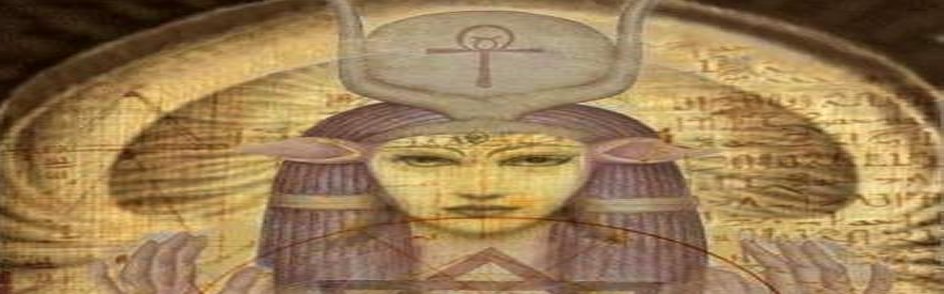
Egyptian (ancient) Dream Beliefs
Dream interpretation links back to the ancient Egyptians with the first written record of dream interpretation around 1350 B.C. – although modern findings see it as much earlier. This record was the Chester Beatty Papyrus. Chester Beatty papyrus is the oldest dream book in existence. The book portrayed images of what the dreams meant. Egyptians believed a god named Bes was responsible for their dreams.
Dreams were a very important, and indeed, sacred part of the Egyptian culture. The ancient Egyptians saw dreams as of utmost importance and had dream interpreters who were called “Masters of the Secret Things” who were temple priests. The priests were educated and most of their knowledge was taken from the “The Book of the Dead” – a book of Egyptian wisdom. In this system of belief Egyptians said that gods revealed themselves in dreams. They also saw that dreams gave warnings, advice, and prophecies.
Gods, from the point of view of dreams and from the cultural traditions of many other countries, believed gods exist. Even Christianity clearly mentions gods, even though it is denied. In Genesis it says “God said, “Let ‘us’ make man in our image, after our likeness: and let them have dominion over the fish of the sea, and over the birds of the sky, and over the cattle, and over all the earth, and over every creeping thing that creeps on the earth. God created man in his own image. In God’s image he created him; male and female he created them.” As it says, “let US make man.”
The word Elohim is used in the original script of this piece and it means, to quote from The Unknown God by F. J. Mayers, “Elohim” is a plural name, and yet in our bibles it is always treated as a “singular” one, and always used with a singular verb. In this verse, Elohim, in using the phrase “in our image,” etc., treats Its self as a plurality.” So the unknown God – ain soph – in expressing Its self, becomes many. So there are many expressions of God. In one statement it calls this ‘The One in the many’. After all, God is beyond description and so can be a paradox.
When we meet in life things that have no form, like electricity or forces of nature such as gravity, an aspect or level of our mind often produces images or emotions as a way for us to have a sense of them, so we create images of gods to show the powerful natural influences that act upon us.
Gods are said in many ancient cultures to communicate to humans new ideas, ways of making things. We know the mind integrates separate information by forming it into wholes, into a gestalt, and this was most likely one of the ways they arrived at extraordinary perceptions and creativity. (Gestalt = something that is made of many parts and yet is somehow more than or different from the combination of its parts )
For instance, the Norse legend of how the weaving of flax was taught to humans by a goddess, is almost certainly a description of a waking dream experienced by the person who invented weaving. Unable to reason, but having already noticed the separate pieces of information, such as the flax growing, then rotting to reveal its fibres, the person’s unconscious formed a new gestalt, maybe with the help of seeing woven baskets. So the person, while awake, experienced a vivid ‘dream’ or image thought process, in which the new idea is expressed as a goddess showing point by point how to weave flax.
In the dream state we can often access what Carl Jung named the Collective Unconscious. He saw our awareness like an island in a huge ocean in which there are countless other islands. Above the surface of the water – waking self-awareness – there is a sense of separate existence, with definite boundaries where the shore meets the sea. Beneath the surface however, one island is connected to all other islands. The land stretches away under the waves and rises here and there into other islands. So, it is thought, personal awareness, beneath our everyday consciousness, shades off into a connection with a collective unconscious we all share. Through this connection we may be able to arrive at insights into other people otherwise denied to us.
For instance Edgar Cayce discovered in his adulthood, that he could put himself at will into the state of mind in which he could tap this unconscious reservoir of knowledge. Because he could diagnose people’s illness without examining them, his work was supported by doctors. Investigators of psychology and philosophy also sought him, and he dictated 14 million words while in this state of wider awareness. His findings suggest that we all have this ability to tap the wealth of unconscious information – truly a collective unconscious – but few of us can bring it to waking awareness. His biography, There is a River, and Seer Out of Season, are astonishing and inspiring books to read. See: Edgar Cayce.
The ancient Egyptians understood that in dreams, our eyes are opened. Their word for dream, rswt, is etymologically connected to the root meaning “to be awake”. It was written with a symbol representing an open eye.
The Egyptians also developed an advanced practice of conscious dream travel. Trained dreamers operated as seers, remote viewers and telepaths, advising on affairs of state and military strategy and providing a mental communications network between far-flung temples and administrative centers. They practiced shapeshifting, crossing time and space in the dream-bodies of birds and animals. See Archetype of the Shapeshifter
Through conscious dream travel, ancient Egypt’s “frequent flyers” explored the roads of the afterlife and the multidimensional universe. It was understood that true initiation and transformation takes place in a deeper reality accessible through the dream journey beyond the body. A rightful king must be able to travel between the worlds. In fact ancient people said sleep was the little death, for in the dream state and in death we have no physical body, but create images of one in our great virtual reality. See Dimensions of Human Experience
In early times, in the heb sed festival, conducted in pharaoh’s thirtieth year, the king was required to journey beyond the body, and beyond death, to prove his worthiness to continue on the throne. Led by Anubis, pharaoh descended to the Underworld (the unconscious or dimensions of dreams and bodilessness – Bodyless Bodiless)
He was directed to enter death, “touch the four sides of the land”, become Osiris, and return in new garments – the robe and the spiritual body of transformation. Carol Zaleski, a prominent Harvard theologian, finds near-death experiences in Greek, Roman, Egyptian, and Near Eastern myths and legends. It is fascinated to read in her book, Otherworld Journeys, that some cultures see death as a journey whose final goal is the recovery of one’s true nature.
Jeremy Naydler’s Shamanic Wisdom in the Pyramid Texts makes a convincing case that the palace tombs and pyramid texts of Egypt are about much, much more than funerary arrangements; that the Egyptians traveled beyond the gates of death while very much alive, not only to bring back first-hand knowledge of the afterlife, but to enter into sacred union with the gods and enthrone their power in the body, and so acquire the spiritual and sexual potency to marry the worlds.
Melvin Morse, M.D., and Paul Perry in their book Closer to the Light, say that deep in a secret chamber a solemn group of men sought guidance from death. They dressed in white robes and chanted softly around a casket that is sealed with wax. One person is carefully counting to mark the time. After about eight minutes, the casket is opened, and the man who nearly suffocated inside is revived by the rush of fresh air. He tells the men around him what he saw. As he passed out from lack of oxygen, he saw a light that became brighter and larger as he sped toward it through a tunnel. From that light came a radiant person in white who delivered a message of eternal life.
This was the cult of Osiris, a small society of men who were the priests and pharaohs of ancient Egypt, one of the greatest civilizations in human history. This account of how they inspired near death is an actual description of their rites from Egyptologists who have translated their hieroglyphics.
One of the most important Egyptian rituals involved the reenactment by their god-king of the myth of Osiris, the god who brought agriculture and civilization to the ancient Egyptians. He was the first king of Egypt who civilized his subjects and then traveled abroad to instruct others in the fine art of civilization. His enemies plotted against him. Upon his return to Egypt, he was captured and sealed in a chest. His eventual resurrection was seen as proof of life eternal.
Each new king was supposed to be a direct reincarnation of Osiris. An important part of the ceremony was to re-enact his entombment. These rituals took place in the depths of the Great Pyramid and were a prerequisite for becoming a god-king. It is my guess that many slaves perished while the Egyptians experimented to find exactly how long a person could be sealed in an airtight container and survive.
Because the thought processes of the ancients were very different than occurs today, the ancient Egyptians were convinced that even their thoughts came from the core/central self, and the waking self was only a part of them, and not so important.
>>>>>>>>>>>>>>>>>>>>>><<<<<<<<<<<<<<<<<<<<<
A tiny coffin was found, in it was a fetus no older than 18 weeks of gestation. By looking at how the child was buried, it shows archaeologists that even though the child was not born and did not live the life it was meant to live, the Egyptians still gave the little child an ancient ritual burial. Historians said that this particular burial shows them just how precious Egyptians believed life was, even if the child was never actually born. The historians added that this gives them new insight into just how the Egyptians dealt with a miscarriage.
>>>>>>>>>>>>>>>>>>>>>><<<<<<<<<<<<<<<<<<<<<
Could the ancient Egyptians have been more precise than our current civilization? The pyramids were found to point North, but not just the general direction of North. It points North within five hundredths of a degree to the true magnetic North. That’s more precise than the Royal Observatory in Greenwich.
The Royal Observatory, Greenwich sets the actual clock to GTC (Greenwich Mean Time or Prime Meridian Time.) and is whopping 13 degrees away from true North. It was created in 1675. If they couldn’t get true north just a few hundred years ago, what were the ancients doing? How accurate were the ancients clocks compared to ours.
Strange that these ancient people were so precise yet todays thinkers cannot accept the ancients view that we can exist after death.
The dream guides of ancient Egypt knew that the dream journey may take the traveller to the stars – specifically to Sothis or Sirius, the “moist land” believed by Egyptian initiates to be the source of higher consciousness, the destination of advanced souls after death, and the home of higher beings who take a close interest in Earth matters.
When we look for ancient sources for all of this, we are challenged to decode fragmentary texts, some collated over many centuries by pious scribes who jumbled together material from different traditions and rival pantheons. Wallis Budge complained (in Osiris) that “the Egyptian appears never to have relinquished any belief which he once had”. We won’t find what we need on the practice of ancient Egyptian dreaming in the fragmentary “dream books” that survive, any more than we’ll grasp what dreaming can be from the kind of dream dictionary you can buy in drugstores today.
We gaze in wonder at the Egyptian picture-books displaying the soul’s journeys and ordeals after death – and the many different aspects of soul energy that survive death – and quickly realize that to understand the source of such visions, and the accuracy of such maps, we must go into a deeper space. We must go to the Magic Library.
In Hellenistic times – the age of Cleopatra – dream schools flourished in the temples of Serapis, a god who melds the qualities of Osiris and Apis, the divine bull. From the 2nd century BCE we have papyri recording the dream diaries of Ptolemaios, who lived for many years in katoche, or sacred retreat, in the temple of Serapis at Memphis. A short biography of the dreamer has been published by the French scholar Michel Chauveau in his book Egypt in the Age of Cleopatra. Ptolemaios was the son of Macedonian colonists, but like ancient Egyptians he was called to the temple by a dream in which the god appeared to him. He seems to have lived for years as a full-time dreamer, whose dreams guided him not only in his spiritual practice but in handling family and business matters beyond the temple walls.
In this later period, the Egyptian priests who specialized in dreaming were called the Learned Ones of the Magic Library. What marvelous promise is in that phrase! What profound recognition of the magic and wisdom that is available to us through dreaming!
Example: Now I am experiencing going through the burial process of ancient Egypt. It is quite strange because I am both an observer and also the person going through the rite of death. I am seeing and experiencing the mummification process. I am not sure why but the word transubstantiation comes to mind. It is something I feel as the process is going on. As the substances are poured into my body I feel my being is transformed.
As I attempt to describe this I am reminded of what happened earlier with the incredibly fast vibrations that I felt were in some way changing my being. So this is again an experience of transformation. I sense it has a gradual refinement of the substance of my being. It is both a rite of death and a transformation of my being into a spirit, into a spirit being. As I write this I wonder if any of this translates into actual physical life. It is now two days after that journey and I do feel different in some way, but I feel that the process of transformation is still underway and I have to come back to it as a sort of meditation.
During my experience of this rite of death I understood that these rituals, but especially the meaning behind the rituals, have become a part of our unconscious. They are like a stratum, a level deep within us through which certain psychological, even physiological and spiritual growth processes still work. They are patterns that are still very powerful in us and our being used in some way to effect personal or spiritual growth. What I mean is that it might be very difficult for the deeper levels of our being too express or communicate to consciousness what is happening, what changes are occurring in us. Now these ancient rituals and ways of life are ready-made images and have great meaning for us, so are still relevant and powerful to us today.
Please look at these documentaries about ancient Egypt, they are full of new information: The Pyramid Code. Or if you cannot receive it there try this US one The Pyramid Code. Also see Winged Pharoah
Read more: http://blog.beliefnet.com/dreamgates/2010/10/dreaming-like-an-egyptian.html#ixzz25UkRBC3u From http://blog.beliefnet.com/dreamgates/2010/10/dreaming-like-an-egyptian.html
Comments
Hello, I’ve always have had a sense of wild dreams I’ve learned to control and recognize while im dreaming, that I’m dreaming. For some time now, I’ve had dreams of temples, mostly writings on the walls. No physical form or anything else. A few days ago, came up to a part bird and part human holding a 3d sun disc, named Amun Ra. I know a little of this and that about ancient Egypt, a few books I have read including a copy of book of the dead. I felt connected, like Amen Ra has been looking for me. It was strange. Funny thing is, I didn’t know about an amun ra until I google it. And there he is, stone cut, 3d, holding his disc with a bird mask, like the dream. I’m glad to see I’m not the only one with Egyptian dreams. Their interesting.
Strange dreams and visions. Pyramids, fire, death, women, universe.
You have not given enough information for me to understand your dream. Things to remember when writing to us with your dream:
Write down anything that you think might have triggered the dream or links with it in some way.
Write down the whole dream; do not leave out parts because you consider them not important.
Put in any insights you have about people or animals in your dream – it has to be the character of them as they appear in the dream. See Characters and People in Dreams and Being the Person or Thing
Please let us know your age and gender, and any information about your life, health or anything about you that might relate to your dream.
Describe any emotions expressed or indicated in the dream.
skrrt skrrt esketit
Had a dream where I was an eight feet tall ancient Egyptian Queen walking but more like gracefully floating along a walk/bike path in a park! I slowly turned left off the walk/bike path and began to walk slowly towards the back of a museum.
Hi – It would help you to understand your dreams, if you would read – https://dreamhawk.com/news/summing-up/ and also https://dreamhawk.com/dream-encyclopedia/features-found-on-site/ which has so much information in.
Nothing can replace your own ability to understand your dream. With a little effort you can do this by practising what is described in – https://dreamhawk.com/dream-encyclopedia/acting-on-your-dream/#BeingPerson or https://dreamhawk.com/dream-dictionary/getting-at-your-dreams-meaning/
Tony
Deena – Egyptian and an eight foot princess, both very powerful images, so may be either from what Carl Jung describes as a, “museum, suggesting carrying those who enter it beyond the rational mind and link the dreamer, not with the dead remains of the past, but with alive and meaningful realisations of his past. See https://dreamhawk.com/dream-encyclopedia/the-conjuring-trick/
So what can you recall through your dream? Remember that dream images are like icons on a computer screen – you have to ‘click’ on your dream images to make them come alive.
Thinking about them doesn’t work. You need to open yourself to the magic of them.
To make them into the wonderful gateways they are you may have to learn certain skills, such as https://dreamhawk.com/dream-encyclopedia/acting-on-your-dream/#BeingPerson.
Hi,
I recently had a dream in which there were two females (ancient Egyptian) fighting, they were portrayed as both warriors and royalty, with headdresses and crowns. One was bearing colors of dark, shimmering purple, whilst the other emanated a light red/sunset orange skin complexion. In the dream, it was primarily the purple female warrior who was pursuing the other.
What really stood out for me was what happened next. Two black man in suits, who looked remarkably modern and of this age, appeared in a temple in which I was residing in the dream. In the dream, at that time, I had inhabited the body of the dark purple female warrior, and these two men in suits appeared when I was about to sleep in the dream. With them, they had some sort of golden chime, in which was attached to a black rod which they held with their hand. They spun the rod, and the golden chime rotated and twisted in the air, causing vibrations to enter into my body and my vision of them to go blurry. The two men were not hostile, rather the opposite. They were smiling, and I felt very peaceful in their presence. The twirling of the golden chime felt very hypnotic.
The dream then ensued and I was no longer occupying the body of the purple woman. But I noticed a huge change in her attitude towards the orange female; she didnt want to fight, but instead be at peace with her. I remember there being a very vivid flashing red light, some kind of hieroglyph on what looked like to be an old computer screen, which further instilled feelings of peace upon the dark purple warrior.
The orange female then asked how the other came to attain her dark, shimmering purple skin, and she replied with “its a mixture of my parents black skin and alien blood”. After which, the purple female cut herself on the chest, and cut the other warrior, stating how underneath, they both bleed the same; demonstrating how we are all essentially the same in that aspect and so
we should try to live peacefully alongside each other.
I am simply intrigued to hear your views on this, especially the men in suits with the chime.
Thank you.
Hi – It would help you to understand your dreams, if you would read – https://dreamhawk.com/news/summing-up/ and also https://dreamhawk.com/dream-encyclopedia/features-found-on-site/ which has so much information in.
Nothing can replace your own ability to understand your dream. With a little effort you can do this by practising what is described in – https://dreamhawk.com/dream-encyclopedia/acting-on-your-dream/#BeingPerson or https://dreamhawk.com/dream-dictionary/getting-at-your-dreams-meaning/
Tony
Cal – Dreaming of Egypt often links with your inner world and exploring what lies beneath the level of your conscious awareness.
The mixing of the modern with the ancient in a temple is what we live with each day but usually miss being aware of. Each living seed carries within it all the past gathered from all its forebears. So the seed in your mother’s womb is as old as, as and even older than human kind, and you carry that wisdom in you from an ancient past. Such awareness that we hold within us wisdom gathered from the enormity of our past is felt as holy, and is shown as the temple.
The black men also are symbols of this – of course they are dressed in modern clothes – for you are the recent rider of an ancient beast – your body, which at all times holds all the past within it. See https://dreamhawk.com/dream-encyclopedia/brain-levels-and-dreams/
But in this ancient place of Life in which we worship what creates us, you become aware of an inner conflict between two parts of you. But the golden chime enters your body communicating to a very basic part of you; the fundamental vibration that is Life itself, the Aum or Word, in the beginning was the Word – the vibration of that was the creative force. See https://dreamhawk.com/dream-dictionary/vibrate-vibration-shake/
That shows you that all aspects of you and all nature are made one by the vibration. As Kipling so wisely said in the Jungle Book to the creatures of the forest, “We Be of One Blood.”
i keep having this reaccurring dream (i dont now if your familure with nefertiti) but in it i was her and its really freaky
Hi – It would help you to understand your dreams, if you would read – https://dreamhawk.com/news/summing-up/ and also https://dreamhawk.com/dream-encyclopedia/features-found-on-site/ which has so much information in.
Nothing can replace your own ability to understand your dream. With a little effort you can do this by practising what is described in – https://dreamhawk.com/dream-encyclopedia/acting-on-your-dream/#BeingPerson or https://dreamhawk.com/dream-dictionary/getting-at-your-dreams-meaning/
Tony
Destiny – In dreams we are shapeshifters, and can be any damn thing we fancy. But most people are so stuck in seeing themselves as their body, they cannot believe they can be anything else.
Your dream is a way of feeling what life in ancienyt Egypt is like. I doubt whether is is about a past life, by try using https://dreamhawk.com/dream-encyclopedia/acting-on-your-dream/#BeingPerson
I had a dream of inheriting the mystical power from amun-ra last night, my whole body is shining with golden light in that dream and I flew to the realm of Egyptian God. What was that supposed to mean?
Hi – I am stopping from answering your posts fully – but will try to give hints; sometimes long ones because I quote from masses I have already put online. Also, I need to take time to update the site – dreamhawk.
It would help you to understand your dreams, if you would read – https://dreamhawk.com/approaches-to-being/questions-2/#Summing and also https://dreamhawk.com/dream-encyclopedia/features-found-on-site/ which has so much information in.
Nothing can replace your own ability to understand your dream. With a little effort you can do this by practising what is described in – https://dreamhawk.com/dream-encyclopedia/acting-on-your-dream/#BeingPerson or https://dreamhawk.com/dream-dictionary/getting-at-your-dreams-meaning/
Tony
Vidi – It suggests that you either lived in Egypt in the long past, or that you have read a great deal about Egypt.
Inheriting the power of a god is a sign that you are waking up to your potential, for we are all the children of God, but most of us are asleep. See https://dreamhawk.com/inner-life/extending-your-awareness/
I am having the same Egyptian dream I’ve had since I was 5. I am seeing queen neferti who is my grandmother and passes on to me a lot of wisdom and knowledge and tells me I am a protector of mankind. I am having the same dream 45 years later. What does it mean?
Hi – I am stopping from answering your posts fully – but will try to give hints; sometimes long ones because I quote from masses I have already put online. Also, I need to take time to update the site – dreamhawk.
It would help you to understand your dreams, if you would read – https://dreamhawk.com/approaches-to-being/questions-2/#Summing and also https://dreamhawk.com/dream-encyclopedia/features-found-on-site/ which has so much information in.
Nothing can replace your own ability to understand your dream. With a little effort you can do this by practising what is described in – https://dreamhawk.com/dream-encyclopedia/acting-on-your-dream/#BeingPerson or https://dreamhawk.com/dream-dictionary/getting-at-your-dreams-meaning/
Tony
Annie – It suggests that you have lived in Egypt in the long past, and you carry into this life, in very a different culture, the great wisdom of that age. It also suggests that you should share this wisdom with others, for we are in dark times in some ways. Have you ever done that? See https://dreamhawk.com/inner-life/using-your-intuition-1/
I had a dream that egyptian hyroglyps where in the air then out of no where and egyptian woman walked up then a man dresses as a pharaoh walked beside her they then walked up to my pregnant belly and they both layed an egyptian scroll over my stomach i am 5 months pregnant and would like to know what this dream means
Hi – I must take time to upgrade the dream dictionary, so must halt from answering your posts – I started revising the dictionary in 2006, and haven’t neared the end yet. I believe someone else may start giving interpretations.
So, for a while I urge you to read https://dreamhawk.com/approaches-to-being/i-am-no-longer-interpreting-dreams/ – It describes ways that can help you. And often it would help too if you looked at https://dreamhawk.com/approaches-to-being/questions-2/#Summing
Tony
Shan, your dream is a blessing on your unborn child. It suggests your child we be gifted in some way.
“I was in a house with my wife. Outside the door was something that wanted to come into Brenda. It was frightening us but we felt it was good. It asked me to have sex with Brenda to form a body for it. I had to put my penis in Brenda and wait for it to activate me. Thus it could enter her.” I dreamt this dream years ago, the baby was born and indeed had gifts.
Never put barriers in the way of your child’s growth, for it already has great learning, and may benefit by contact with ancient Egyptian beliefs.
LATELY I HAVE PUTTING TOGETHER ANCIENT FOLK SONGS OF MY CULTURE…SWEDISH WELSH BRITISH AND POSSIBLY ITALIAN…..HAVE NEVER EVER DREAMT OF EGYPT AND KINGS..THANKS A BUNCH
Had a dream that blew my mind. Someone dressed in beautiful gold trimmed egyptian attire says to me “Osiris how should they be judge?” .I replied, “What?”. The same person said “Osiris how they should they be judged?”. Then I looked around and noticed that I was sitting on a throne dressed like royalty and that person was talking to me..there was gold on almost everything even my headdress. Please, help me..what does this mean?