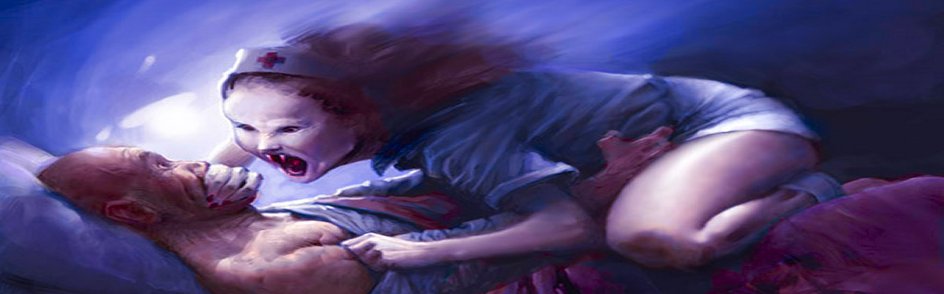
Sleep Paralysis
Many people experience feeling paralysed while they are partially awake but dreaming. This may be due to the fact that voluntary movements are inhibited during periods of the dream process. All brain signals to the voluntary muscles are stopped. Therefore if we become slightly awake and attempt to move at that time we feel paralysed. This is not sensed as a problem if we are unconsciously involved in a dream. While dreaming another level of will takes control of the body, so any sounds or movements made are not from ones conscious will.
If enough self awareness arises in the dream state, then awareness of the inability to move may occur, along with the anxiety this can arouse. In fact this is probably only a problem to people who are frightened of the paralysis, as for most people, active dreams manage to break through the inhibition enough to cause mild movements and vocal sounds.
Another factor is illustrated by what Susan says in the example below – the harder she tries to move the worse it gets. Our unconscious is very open to suggestion. If this were not so we would lack necessary survival responses. In a dimly lit situation we may mistake a shape for a lurking figure. Our body reactions such as heartbeat, react to the mistake as if it is real until we gain fresh information. Whatever we feel to be real becomes a fact as far as our body reactions are concerned. The fear that one cannot move becomes a fact because we believe it. When Susan relaxes, and thereby drops the fear of paralysis, she can be free of it. This applies to anything we feel is true – we create it as an internal reality.
‘It starts as a dream, but I gradually become aware that I cannot move. The harder I try to move the worse it gets and I become very frightened. I can neither move nor wake myself up. Sometimes I feel as if I am leaving my body. But to deal with the fear I have learned – its a recurring thing – to stop struggling, knowing that I will eventually wake.’ Susan Y.
The excellent description in the following example was given by Roy Herbert. It was taken from a feature he wrote. Unfortunately the news-cutting did not have either the name of the paper or the date with it.
‘In this condition, I can hear what others are saying to make me come to. The bed-room is the one I am in though sometimes altered in layout and the real persons in it may be joined by dream ones. I can speak and even offer suggestions on how to bring me awake, such as cold water on my head, though I am told that the words are not intelligible. I am aware that my mouth is dry. My brain is working on some levels that are far from asleep. I have been able to censor swear words from anguished advice I am offering the rousers for fear of offending them, though I am not awake.
The worst thing of all is that I have almost no power in my limbs while the struggle is going on. The prospect of sinking back into deep sleep, unable to move, is terrifying – so dreadful that I finally burst fully awake with the sensation of shooting up through water into the air.
I don’t think that I can be unique in floating halfway, half awake and half asleep, paralysed but speaking and thinking in a half real world. It might be interesting to hear from other sufferers.
Other strange phenomena occurring either during or on the edge of sleep probably have similar causes, or are linked in some way. Roy Herbert’s description vividly portrays the experience of being locked half way between the ‘waking’ world and the ‘dream’ world, and perhaps that is part of the fear experienced. But the threshold of waking that Roy is trying to approach need not be the one that leads to a loss of the dream state. What I mean is that Roy’s dream imagery stops when he wakes. For many people their dream imagery persists when they wake, and they have to travel further into waking than Roy does to lose the sense of having no control, or of being invaded by experiences from ‘outside’ themselves. See: Reaction to the unconscious; hallucinations andhallucinogens
Much of the problems felt by people in these states arises from their relationship to what is being experienced. Many people actually seek the state Roy describes through self-hypnosis. In my teens I studied and practised a mixture of relaxation techniques and self-hypnosis in an attempt to explore what Tate later called altered states of consciousness (ASC). After a few months practice I found I could enter a condition where I had no sense of a body, and felt myself to be awake in the depths of sleep. As I had consciously sought this there was no fear attached to it, and I could rouse myself easily. See Answer to Critics
However, the terror Roy and other people speak of in regard to the paralysis, I have experienced myself, and witnessed in other people, who felt themselves powerless against a spontaneous eruption of emotions or urges from the unconscious.
If we can understand that we have two levels of will, the conscious will that enables us to move around and make decisions while awake, and the Life will that takes over when we dream, creating full surround environments and events, and paralyses our conscious will to some extent. The Life will that we confront in dreams and sleep paralysis is what directs all the functions of our body and mind. It is far more important than our conscious self, and actually needs to take over more fully sometimes to regulate, grow and harmonise our being. When the unconscious will pushes through to waking awareness we experience it as what have been called hallucinations, a voice speaking to us, spontaneous movements or speech, as happens in dreams. For may people who experience sleep paralysis they feel a terror that either some outside force has or is taking control of them; or else they fear they are dying. The images we see if this state are actually created by these fears and are not external beings trying to control us. It is our fear of this great Life Will that causes it. It is strange indeed that we are terrified of our own life process. See Edgar Cayce
One such person, a teenage male who had been told in an emotionally charged way by his mother that he would die if he continued to masturbate, decided with much fear that he would never masturbate again. The fear became more pronounced when he began to masturbate while asleep. This loss of control over himself deepened his anxiety still further, and made him feel he was in some way possessed. He eventually managed to stop this sleep masturbation by wearing tight swimming trunks, thus causing him to struggle to reach his penis, and thereby wake himself and avoid the dreaded possession. It wasn’t until he was twenty one that, having read about some basic information on how the unconscious follows suggestions and emotions, he managed to let go of his fear, and with relief found the ‘possession’ no longer had a hold on him. See: It is important the 2 wills; – Martial Art of the Mind; awake – difficulty in awakening sleeper; movements during sleep; yoga and dreams.
If that can be fully digested you can begin to work with and actually gain benefits from what is really an extension of your mental processes and possibilities.
If you have this ability and do not suffer fear, then you have a wonderful talent that could transform your life. Sleep is a huge country that many of us have never explored, and that is why so many people are terrified when they wake up in the very different world of sleep. When we sleep a huge process is at work, the process of life that in fact keeps us alive. That is going on under the surface all the time, but when you wake up in sleep it can feel like an alien force is attacking us – us being our conscious personality. We are so out of touch with life within us that we react to it as if it is an enemy.
Something else we have to realise is that we are also dreaming; so any impressions and information we meet is presented is images and drama. Because dreams mirror what we feel and fear it can be shown as an attack. In other words your fear creates the fearful dream images.
While your voluntary muscles as paralysed another process takes over – your unconscious or inner self – and so it tries to move you apparently against your will. If you stopped fighting it, it would make very sensible movements that are a way of moving you toward healing.
Some people who understand what is happening and allow it. In fact some people have learned to allow such movements while awake. See Life’s Little Secrets – LifeStream
We usually think that being awake is the ‘everything’ of life. But if you think about it, it is only a small part of who you are. Every time you go to sleep you swing to the opposite pole of your awareness. You go to the depth of who you are; the very Source of your existence. Of course it is a very different level of being than waking awareness. And to get there you go through levels of existence – and your sleep paralysis is one of the early ones. But most people lose self awareness when they go to sleep, but there are some who can maintain awareness right the way through to the Source. It is an extraordinary experience.
The Levels of Sleep
The first level of sleep we meet is dreaming. That is if we are even a little bit aware. If we begin too explore this level, the apparently black depths of sleep begin to reveal an amazing life and energy. Light is taken into the darkness.
If we persist in exploring our dreams there comes point where yo8u break thorough the images of dreams into direct insight. An example of this is as fllows:
In fact the awakening interrupted a dream, which was extremely lucid and logical. I knew clearly, during it, what it meant. I was simply watching leaves, like a fern, grow and expand. As I did so I realised this was an expression of something taking place in my being. Namely, the vegetative (vegetable) forces had been released to greater or more powerful activity. It was very clear in the dream, but I quickly lost much of the accompanying knowledge. But I knew, or experience, that the release was linked with consciousness and will. In some way I cannot yet explain, the power of this process streamed through the will or consciousness, and awareness expanded as the leaf grew. In other words consciousness filled the leaf being grown.
These are only an overview of the process of exploring consciousness, so the next level is to wake up in the lucid state and goo beyond imagery.
I was dreaming and woke up in sleep. I was then aware of being in the level of dream images and wondered what was beyond it. Immediately I was in another level in which I could directly observe the subtle energy workings of my body. I saw that I had a slight infection in my lungs, and observed how it was like watching fluid moving through a plant. It was a healing action. The I also observed how the energy between my trunk and head was blocked slightly in my neck. In trying to understand what the block was I realised it was an attitude I have pf being proud or stiff necked. If it were not dealt with I could see it would lead to a serious illness in my neck.
As can be seen it is this level of insight that can radically change ones life. But there is still more.
I became lucid in my dream and realised that I could move deeper. I was already at the level of seeing into the inner workings of the body so asked the question is there anything else. Suddenly I was plunged into bodiless awareness. I had been here many years previous and so was at ease with it. In the past I had seen that this was the apparent nothingness that is the primal level, and out of it everything flowed. But being curious I asked if there was anything beyond this. I was amazed at what happened next. I was at the same time bodiless, spaceless and timeless existence, and also here and now in everyday waking life. It was like Blake described it, “To see a world in a grain of sand, And a heaven in a wild flower, Hold infinity in the palm of your hand, And eternity in an hour.”
To quote from the feature What we need to remember about Dreaming:
• In life and sleep we have two powerful actions working in us. The first is our waking experience based on having a body, its limitations, vulnerabilities and a particular gender. Our second is the power that gave us life and continues to express as dreams.
• While we sleep our conscious self is largely or totally unconscious, and while we sleep our voluntary muscles are paralysed – so another will or motivating force moves our body. So we have a Conscious Will, and what I will call a Life Will. The first one we have experience of as we can move our arm or speak; but the second will takes over when we sleep.
• This Life Will can move us to speak, to move our body, and in fact do things that we cannot do with our Conscious Will. As Freud pointed out this inner will has full access to our memories. It can do so many other things that are described else where – See ESP in Dreams; Edgar Cayce. This Life Will or motivator has been active for millions of years and we see it working all the time in animals. We are partly split in half because we are often opposed to what our Life Will in us wants. So the only way to express what is good for us is in dreams when our conscious will is largely passive.
• Life Will created your body and pre-existed you as a person you know today. It was working in you prior to your ability to speak or know in the way you do now. But of course it has fantastic wisdom and skills, as can be seen in animals.
For fuller information about the levels of sleep and the different experiences we meet in each, See Levels of Awareness in Waking and Dreaming. See also: movements during sleep; yoga and dreams; Life’s Little Secrets
Comments
Writing about what you anticipate to occur helps to dissolve any underlying doubts you will have about your affirmations and is a strong approach for
writing successful affirmations.
I am a 30 year old woman born on January 1st.I had a very real and vivid dream that my close family members and I were taking a trip to a place where we were to aboard a spaceship to play a game to find clues to get back to reality. What started as a game ended into reality that I was the chosen one to solve the answers to actually get back to planet earth reality. I have had ET dreams in my past but never this vivid and real. My parents, children, siblings, and Aunt and Uncle were involved. It started with just us thinking we were in this game but then became reality that it wasnt a game anymore. As we looked for clues to get out of our trapped environment i found a box on a mantle with different everyday items, like a watch, money, and what seemed to be offerings of some type. When I realised it was a clue a portal opened to a different ufo and so we crossed over to it my family and i. Then to my suprise there were more ppl in this ufo that haf more information, they seemed to be trapped as well. They said I was the chosen one and tht an ET will come to get me. I was in fear and anxiety not knowing what to do so I frantically looked for more clues to get out of this trap we were in i was looking out of this doorway that was open and we were in space then. An alien was there in a plane like ufo wanting to take me but i wouldnt go bc i was in fear of leaving my family not knowing what was going on. I then awoke from this dream and was in awe, fear, anxiety,and clueless to the meaning of this dream. Any ideas or comments would help tremendously. I am a believer of ET and want answers. I have calmed my self down now that I knw it was a dream but it felt like reality. Please any help would be great thanks.
Dear Paisley – What I see in your dream is that this is about the search for your authentic, real self and for the Self that exists beyond “the reality as you have known it so far”.
And so this journey is from dependence toward independence, from being a part of collective humanity to the actualisation of your own unique identity. This journey to oneself is, paradoxically, also the journey to the universal, to merging of self with the One.
See http://dreamhawk.com/dream-encyclopedia/individuation/
and
http://dreamhawk.com/news/who-are-you-really/
Your dream starts with boarding a space ship. This I see as a symbol of the willingness to explore beyond the limited awareness that has been part of your experience so far.
You are of course “the chosen one” because nobody else can make this inner journey for you.
All of your family is involved and family in this context represent your values, attitudes and emotional or social responses you have absorbed from your family.
See http://dreamhawk.com/dream-dictionary/family/
So the inner journey is also about which beliefs, habits, values etc. do you want to keep and which do you perceive as not being in harmony with your real self.
Clues are given by opening up a box that hasn’t been opened so far; the items in the box could relate to everyday memories and/or emotions that need to be faced and/or experienced, released or integrated – http://dreamhawk.com/dream-encyclopedia/acting-on-your-dream/#BeingPerson
and
http://dreamhawk.com/dream-dictionary/practical-techniques-for-understanding-your-dreams/#TalkingAs
The trap is often made up, or rather was built, from a way of life you lived when you were a baby and child. You were trained to behave in particular ways, to respond as was thought fit, and in a manner dictated by the culture or religious beliefs in which you were raised. And yet as a natural human animal those attitude, behaviours and restrictions may have been completely against your nature; against your real self. Yet that is the life you have lived since then, and it seems as it is who you are. The only signs of your entrapment are your dreams of being trapped, your body tensions and pains, your mental and emotional agony at times as the natural human animal you are tries to find its way out of, or tries to break out of, the trap.
You are trapped because you cannot break free of old fears, attitudes or relationships. You are held prisoner by beliefs or religious views not conducive to you as a living being.
When the journey proceeds – in the next UFO – you meet living parts of you that are trapped as well. Getting to know them and integrating them is like receiving more information about who you are.
See http://dreamhawk.com/dream-encyclopedia/integration-meeting-oneself/
Considering that estimates suggest that we only use one tenth or less of our potential, it is not difficult to see that a large mass of our own inner functioning and experience are normally unknown and is called ‘the unconscious’. It is therefore not surprising that we have ‘aliens’ in our dreams and experience. When some part of this unknown area of yourself emerges, or presses for attention, one may depict it as an alien; “and ET will come to get me.”
Quite often in dreams, or in UFO sightings, the meeting has a strong type of religious feelings. I believe, through investigating this experience that feelings of awe and veneration often occur when fear is absent and we meet a vastly bigger intelligence or vision of life – even if it is our own unconscious content we are confronting.
See http://dreamhawk.com/inner-life/the-unconscious-2/
If you feel like exploring your dream for yourself you can use
http://dreamhawk.com/dream-dictionary/practical-techniques-for-understanding-your-dreams/
Please remember that a dream is like a seed and that your inner healing and growth process as it is expressed in one dream will take years of linear time.
See http://dreamhawk.com/dream-dictionary/what-we-need-to-remember-about-us-3/#Seed
Anna 🙂
First and foremost, I just want to say thanks for the article, it has been insightful and more helpful to say the least.
I have been experiencing sleep paralysis for abouy 5 years now, and I didn’t know how to deal with it or what to do about it. Though I’ve tried explaining what I was going through to others, they didn’t seem to understand what I was saying, so I stop explaining.
Whenever I have an afternoon nap, I’d struggle to get up and would have to fight a long and dreadful battle before I do, but eventually I realised that I only have them whenever I sleep like looking up. Soso since then I stop sleeping whole looking up and only sleep with my entire body facing down. I found this to be helpful, At least for a while and the sleep paralysis only happened every now and then…
Whenever it happens, I would be dreaming, but having a conversation with someone I know, and at that point i can tell when I’m telling the truth and lying so I can still tell right from wrong, and that when my paralysis starts.
The moment I start making sense of everything that going on, and when I can tell that I’m dreaming, instead of waking up, I fall into sleeping paralysis. Sometimes my eyes would be half open and I can see everything around me, yet I cannot movey entire body.
To get up, I have to start my regaining control over my toea and finger, which takes a lot of energy yet I never give up cause I fear what might happen of I give up and stop trying to wake myself…
PS: my last episode was 2 hours back and was one of the worst
I have been dreaming these paralysis dreams for more than 12 years, since I was a 17 years old boy maybe. I was terrifying. I could not tell anyone about it!
I always believed it is a spiritual act. whenever I used the net on my bed it never happened. If i fell asleep without covering the bed with the net, most of the time I had that dream. I never opened a window while sleeping. Everytime I left the window open, I saw a shadow of a flying object coming thru it and squeezed (more or less like a rape while i am paralyzed) me in the bed. I FELT OR SAW IT WAS TAKING ENERGY FROM MY BODY.
Now I see this dream once or twice a month. I dont know what to do! If i grab a iron or remember God’s name it disappears. I write OM (hindu symbol) on body before sleep and always keep a knife or piece of iron below the pillow. or a lighter. but i dont think it harms me.
Please reply!
Sagar – Remember what was said in the entry ‘sleep paralysis’ – that anything you believe in, are frightened of, or are convinced of becomes a real outside object or event in your dreams.
Think of what you have told me, “Whenever I used the net on my bed it never happened. If I fell asleep without covering the bed with the net, most of the time I had that dream. I never opened a window while sleeping. Every time I left the window open, I saw a shadow of a flying object coming thru it and squeezed (more or less like a rape while I am paralyzed) me in the bed. I FELT OR SAW IT WAS TAKING ENERGY FROM MY BODY.
Now I see this dream once or twice a month. I don’t know what to do! If I grab an iron or remember God’s name it disappears. I write OM (Hindu symbol) on body before sleep and always keep a knife or piece of iron below the pillow, or a lighter.
Obviously a net is something you associate with protection, as you do with God’s name, the OM symbol, so you believe and it is real in your life. We all have such a huge power and can create a heaven or a hell for ourselves. But dreams are like a computer game in which you get very involved and face monsters and kill or be killed and nothing has actually happened – you are still alive and unhurt. But in this wonderfully alive virtual reality of your dreams we are all playing the game of life – the game we play in which we face or run away from the things that scare us; in which we explore the depths of our existence or learn how to love – or simply meet a reflection of our own weakness, terror and of course the wonder of your inner genius. For that is all it is – a magic mirror in which we see ourselves naked of pretence.
Remember that I can always be with you in your dreams to help you face your fears.
Tony
hmmm, something very similar happened to me like how the shadow figure squeezed you in the bed. you said a shadow figure. the shadow figure is the key. after doing many research on this topic, it is not “sleep paralysis”.
I believe it is a “force” a being that is made up of dark energy and “lives” off of our energy. I know exactly what you are talking about when you say you saw and felt this “force” draining your energy.
ive been through it. and ive been through it many times. I believe it is a shadow being. it lives off of our energy. maybe you are an empath, “they” are able to feed off of empaths much more easier as empaths are basically a open source. stand strong and don’t let the negativity from these beings bring you down. and you do not need the knife or iron. get rid of those items as they are meaningless, just do not fear it. I know its easier said than done but ive been there many times so I know what im talking about. I still go through it but its rarely now. it was the fear I had and the negative energy I sent out for it to keep coming back. this is not no dream or something that you are “fighting” yourself like this site says. this site is really great and everything more…but one thing I must disagree with the dream experts here are on this subject. you are not fighting yourself or its not some dreams that its happening because you are afraid of yourself. every human being has insecure fears inside of them but rarely do they experience this type of “dream”.
a lot of people go through “sleep paralysis” but very few like yourself go through this kind of hell. do not give in to the negativity from this “dark energy force” and always stand strong.
balance your life. you must need balance after going through such extremity for so many years. negative energy must be clouding you and you can change that. change that into positive thinking. I know im repeating myself but never give into negativity. just walk away from any negativity in your life. once you start realizing and accept how negative energy impacted your life so much(mostly from them), that is when the changes will happen and you can get this dark energy that’s attached to you off.
again, this is not yourself. the “dark energy” that does this to you while you are asleep is NOT YOURSELF.
do not fear the “dark energy” and let it be known that you are a good human being. I feel for you, because you have been dealing with such negative force for so long. but I know you can pull through it. you will defeat it. stand strong, stand strong.
I have Lucid dreams i have had them since i was a little girl i was scared of sleeping which only make them worse because being tired makes them occur more i do get the paralysed feeling ,unable to move,my body vibrates all over i use to pray when this happend i thought it was evil now that i have done some research on them i have floated many times above my bed and the feeling of returning to my body its a weird feeling kinda special not many people can say that. i try to talk to people but they done get it they must think im nuts .
I dreamt that my daughter and I saw some broken glass and we lifted it to put in a (bin) safely there was more in the dream but remember this bit well
H Tony, I really enjoy your articles, this is my first time commenting on one of them.
Quoting this article:
“If we can understand that we have two levels of will, the conscious will that enables us to move around and make decisions while awake, and the Life will that takes over when we dream, creating full surround environments and events, and paralyses our conscious will to some extent. The Life will that we confront in dreams and sleep paralysis is what directs all the functions of our body and mind. It is far more important than our conscious self, and actually needs to take over more fully sometimes to regulate, grow and harmonise our being. When the unconscious will pushes through to waking awareness we experience it as what have been called hallucinations, a voice speaking to us, spontaneous movements or speech, as happens in dreams. For may people who experience sleep paralysis they feel a terror that either some outside force has or is taking control of them; or else they fear they are dying. The images we see if this state are actually created by these fears and are not external beings trying to control us. It is our fear of this great Life Will that causes it. It is strange indeed that we are terrified of our own life process.”
This totally makes sense and supports the theory I already had about this… so you are saying that sleep paralysis is a necessary physiological process if we are not to start to act out our dreams (which could be dangerous) and we’re projecting our own fears on the process… and the imagery we see/experience is a reflection of those fears. Makes sense, makes sense.
Thank you so much! I was looking up sleep paralysis because I just had another episode today… although it’s still unpleasant, I’m nowhere near as terrified of it as I was when I was younger.
The remaining question I have, then, is why do people feel so drained after these experiences?
Once again: love your blog. 🙂
Marskyi – I am not sure why people feel so drained after experiencing sleep paralysis. But I think it might be because conflict is a tremendous energy drain, and while fighting against what is in the end themselves it leaves them drained.
Thanks for your encouraging words. Have you seen http://dreamhawk.com/approaches-to-being/lifes-little-secrets/ – it might interest you.
Tony
Thank you for the article suggestion…
Excercises like that are hard for me to do, a lot of toxic shame comes up for me. But like you said in your article, my psyche/organism knows how to handle this toxic shame, maybe I should try stepping aside and letting something greater than me take over?
I also notice that there is a “life will” inside my dreams too, it manifests as a “force” that will pick me up and transport me through the dream “landscape”. A few nights ago for the first time I asked it ti pick me up and place me somewhere where I would feel happy and safe, and it put me on a sandy beach, on a thin peninsula surrounded by the calm sea, at night. It was frightening to let it take me there but I trusted it. 🙂
Thank you! 🙂
I have had sleep disorders since a young child. I am now 50 and can more easily explain. I have sleep paralysis with false awakening.
Most times I can wake myself up. I make myself get completely up out of bed so that I don’t fall back into sleep and the process starts over. Sometimes I only think I am awake, just to learn that I am still sleeping. I also have vivid dreams, lucid dreams, flying dreams. The sleep paralysis is scary and makes me feel exhausted. I have more sleep disorders, but don’t know how to explain them.
Sue – Obviously you haven’t been told the whole process and so you have not understood how to break it. It is partly because you are scared of it and try to fight it which does not work.
As it is too long to write here I suggest you read http://dreamhawk.com/dream-encyclopedia/sleep-paralysis/ which explains it fairly fully.
The point is that it is natural and necessary. If you could relax and allow it then you have an opportunity to journey into and amazing world. I know some people are terrified of being taken over – but in fact it happens every time we dream, our voluntary muscles are paralysed. As explained we have two wills, the conscious and that governing all our life functions. People’s terror is about being controlled by Life itself, which can be moved beyond.
Please come back to me if you cannot find your way out of it.
Tony
it is great….