Devil Demon Lucifer
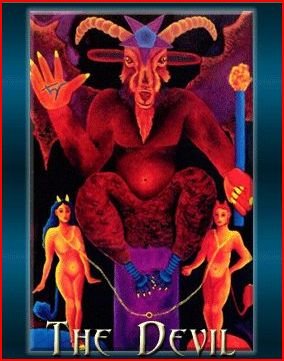
The devil or demon in our dreams usually represents the parts of our own urges and emotions we have repressed or do not feel in control of. The angers, fears or urges may even feel to us as if they are strong enough to control us, so we represent them as an external force pushing us to some sort of evil. In each of us there is also the potential for creativity or destruction. This is especially noticeable in connection with our fears, such as fear of illness. Such a fear, if based on imagination rather than a real cause, can still cause illness. In this sense our own mind can turn against us. The enemy of our own undirected fear may be pictured as the devil or an evil entity. See: archetype of the devil under ; demons; evil; aboriginal. See also: active/passive.
“The succubus, a female demon who seduced male dreamers. References to seductive demons, such as Lilith, had appeared in the Talmud but had not previously appeared in Christian writings. The Commentary – by Macrobius – became an extremely influential book and thirty-seven printed editions appeared before 1700. It was the most important and well-known dream book in medieval Europe. Its inclusion of the fear-inspiring sexual demons was to play a role in supporting the paranoia about evil spirits that developed during the later centuries.” Quoted from Our Dreaming Mind by Robert van de Castle.
Example: I’m 18 and recurrently dream my house is haunted or possessed by the devil. I am not religious, but in the dreams with the devil I try to remember prayers to scare him away. In every dream my family and I have to pack our bags and move back to the old house I lived in as a baby until seven. The dreams really frighten me and I can’t sleep. E. F. Teletext.
The struggle with something that appears exterior can be clearly seen in this dream. The influence of religion in giving ready made symbols to suggest there is an exterior evil that is invisible, but can powerfully influence one, is also clearly shown. And in actually facing the devil in ones dreams it turns out to be ones own emotions and desires that are not allowed or tuned back on themselves – thus devil spelt backwards is lived. It is the unlived or repressed urges that take on the image of a devil. “All you may know of heaven or hell is within your own self.” EC
Example: I was going mad. I was crawling around on my hands and knees and wailing and behaving in a most peculiar manner. I actually felt mad. But inside my head a tiny voice kept saying, ‘You aren’t completely insane yet – there’s still a chance.’ People around me kept saying to each other, ‘We think she’s possessed by devils.’ My sane voice then said ‘Make the sign of the cross, cast out the evil spirit.’ I kept trying to do that but my hands wouldn’t or couldn’t complete the sign. I woke still feeling disturbed. Margaret F.
The power and sense of being out of control is dramatised here, along with the resulting fear arising from feeling the controlling force as alien. If you take the images away and simply look at the situation, what is apparent is a huge conflict that Margaret is facing. The conflict clothes itself in imagery of the Devil because Margaret is afraid of whatever it is that is trying to express. This is a powerful internal conflict that is simply a struggle between the conscious self and the person’s own unexpressed potential.
Example: I was walking toward a house. It was quite dark, but not night. As I neared the house a number of demons or devils came at me menacingly, trying to stop me getting near the house. Although they made all the ghostly noises I wasn’t at all afraid of them. I felt they were a damned nuisance, and to show them I meant business I grabbed one and with my right hand I gripped its flesh and squeezed. It started to squeak in pain and I squeezed harder. At that point I was woken by my wife. I had hold of her belly and was squeezing madly with my right hand. Ben. C.
In this dream Ben shows a completely different response to the stereotype of fear. He is not afraid of his own anxieties or internal urges, but he hasn’t actually transformed them.
Example: Tell me where was the Devil? I do not understand. Jesus, why have we not been tempted? There is no answer – at least, not from outside. But something within me speaks. It . . – says – – . wait, I begin to hear. It says. . – You . . . were . . . the Devil. It was. . . you – – . who tempted me. Your fear, your loneliness, your dependence on things of the world, on people’s opinion, on wealth as a means of self-respect, on hate as a means to love – all these you tempted me with. Now you have left me for a season, for with God’s wider view given with the descent of the Dove, I showed you the illusion of your gods – the emptiness of your fears, the powerlessness of your determinations. The shadow cast by the knots tied in your heart, your head and your belly, was the Devil. Like children’s hands held between a candle and the wall, your pains, desolation’s, and terrors have cast grotesque shadows upon your consciousness, which you took to be real, and you lived according to their demands. By these shadows men are led to war, murder, theft, terrible ambition, lust, even madness. All mankind is possessed by these shadows – by this absence of the Light, the Life and the Love. I come, not to condemn them but to redeem. For you are your own devil, and your own angel. But my hour is not yet come; when it does I will redeem.
Example: Devil Snivel Havel – They are just words to describe human fears, fears put into us by a church thousands of years ago speaking of things it only had primitive words to describe what it saw. I have met the devil myself several times, sometimes in great fear, and then slowly in wonder and direct insight. In such meeting I saw and realise that devil was ‘lived’ spelt backwards. In other word it is the Light we are all born with that through fear or ignorance we have turned back on ourselves. In doing so we have created great chunks of stuff blocking the light causing depression, suicidal impulses, and all the many human pains and suffering. But it is not some evil person ‘doing it to us’ it is our own misguided actions that can be undone by understanding them.
Such feelings, such entrance of foreign and destructive forces, is seen by our unconscious as the devil, demons or even a vampire. They suck away the life force and create illness in your body. Recognising them is very important for your health and person wholeness. This is called a dybbuk in Jewish folklore. Remember that devil is lived spelled backwards, and evil is live backwards. They both suggest the turning of your life force back on itself.
Example: The Devil attacked a woman. He was invisible. The woman turned black as he raped her. She didn’t die. At this point I woke and went to the toilet. On returning to bed I continued the dream, particularly wondering what I was in conflict with in the image of the Devil. I found it disturbing and frightening to be confronted by such a powerful opponent. Partly because of the rape, I realised it was held back sexuality. I then approached the ‘black’ woman with tenderness and this transformed the Devil into available energy, sexual or emotional. I tried this again and again. Each time it worked, and I could observe the connection between the Devil and how they were repressed sexual feelings.
Fears of dream devils and demons are completely unfounded. That is because the dream is only a virtual reality that are self created images that can be changed. The following example shows how lack of fear changes the way we relate to our dreams – and of course how fear creates our awful images.
Example: Had a very unusual dream last night. I was in an outdoor environment. It seemed a bit dark, or maybe morbid is the right word. I was with other people but none of them stood out to remain in memory. There was a definite awareness though of being near to a place that was haunted, and that a man was in trouble in the haunted place.
I decided to go and see if I could sort out the problem. I walked down a slope to where the centre of the haunting existed. It was an open space with an old double-decker bus in it. The only person on the bus was a middle-aged man who was sitting on the top deck leaning out of a window on the right hand side of the bus. I stood beneath him and looked up. He was staring in a glazed way and didn’t see me. I could see and feel that he was being hit by fantasies or hallucinations by whatever was the source of the haunting. This invasion of his mind was grabbing his attention so fully that he wasn’t aware of his surrounding or of me. I was sure that if he went any deeper into this mind stuff he wouldn’t be able to pull out. I waved my hand in his line of vision and banged my hand on the bus to make a noise and get his attention. At first it didn’t seem as if I would bring him out of it, but after a while he looked at me.
I shouted at him to pull out. I said that he had a wife and some more years of his life to live, so why lose himself into this entrancement. This didn’t seem to grab him so I shouted again and said that he would eventually slip into this empty mind world anyway – at death – so why not live with his wife the remaining years of his life. I was sure that if he lost awareness he would let himself starve.
I was aware that what he desired was to slip away into the void, into the awareness of the one life in which he lost any awareness of self. But I banged and shouted and he became more ‘present’. I then felt I had to confront whatever was the source of the powerful ‘haunting’ that was pulling him into the inner mind. I turned away from the man and saw just to my right a short distance from the bus an animal that was the ‘haunter’. It was a mammal of no particular type – a bit like a mixture of dog, rat and guinea pig. It seemed very ordinary and tame, and stood looking at me. I walked toward it and stretched out my hand. It was a tan colour with short fur and gave a feeling of being okay to approach, so I touched it to stroke. This was okay and I was thinking there was no problem when the creature leapt at my throat in a flash of movement and ripped my throat out.
This sounds disturbing but I simply observed this and thought to myself that stroking and trying to be friendly was no way of dealing with this thing. It was as if I was in command of the imagery in that I simply formed another body. The only way that felt as if I might deal with the creature was to have the meditative state of holding on to the nothingness that was my centre, and not feeling panic at it’s attacks. In fact apart from the gory imagery, there was nothing to be frightened of, as the creature was only attacking my dream image of myself. As I wasn’t identified with this, it couldn’t hurt me. That was the end of the dream.
Here a woman comes face to face with the devil –
Recently I sat with a woman, Beth, while she explored her usually unconscious feelings and beliefs. Our unconscious dream action often portrays such inner feelings as an object or person, and in her exploration Beth met the Devil. When we dared to face and closely look at this image of evil, what she discovered was that her ancestors had lived in times of great persecution. Being people who had questioning minds, they wondered whether the persecution was in fact justified. Maybe there was something about them that was inferior and detestable. Those self doubts, and the negative feelings that arose from them, created an open door for what has been called the Devil – destructive emotions and urges, negative comparisons, and feelings of being an outsider. Once this is understood it is easy to see other things that leave a door open for evil to enter. They are childhood trauma or abuse, the attitudes and standards we often pick up – rather like infections – from others around us, and the cultural attitudes we live amidst. When this ‘devil’ enters us it can lead to self criticism, the denial of ones own talents and ‘light’, and in bad cases, crime, murder and the infliction of child abuse and trauma. |
 |
Knowing this, we can see that much advertising attempts to call these demons into action – Are wrinkles making you look old? – Can you no longer make love like you used to? – Lacking energy, zest, confidence, take this fantastic new formula – What will happen if you die leaving your loved ones uncared for? – What is holding you back – why not completely change your life by signing on to this $2000 guaranteed three day course? Defeat ageing, get rich, have fantastic sex, leave failure behind – you know the story. But what the adverts are reaching are the beliefs, fears or feelings that you are ageing, you no longer or never did have fantastic sex, you are childless or a failure. They are grabbing hold of the imagination already working in us that tells us we are doomed, failures, unloved and lonely. See Integration – Meeting yourself
Useful questions:
What relationship do I have with my own natural urges such as sex or eating?
Have I turned my own urges back on themselves, transforming ‘lived’ into ‘devil’ by a reverse process?
Can I dare to meet this devil and release the repressed energy as living flows of personal life and love?
See – Masters of Nightmares – Dreams are Virtual Realities – Take Everything into You – Techniques for Exploring your Dreams – The Secret of Time and Satan
Comments
I had a dream of lucifer slowly taking away ones I care about and when he was done, he slowly turned towards me, walked my way and went to touch my head and that’s when I woke up. I’ve searched so many websites and asked so many people and they’re all different and I don’t know who to believe! It spooked me really bad, please help me!
Hi – It would help you to understand your dreams, if you would read – https://dreamhawk.com/news/summing-up/ and also https://dreamhawk.com/dream-encyclopedia/features-found-on-site/ which has so much information in.
Nothing can replace your own ability to understand your dream. With a little effort you can do this by practising what is described in – https://dreamhawk.com/dream-encyclopedia/acting-on-your-dream/#BeingPerson or https://dreamhawk.com/dream-dictionary/getting-at-your-dreams-meaning/
Tony
Dear Natalie – There is masses you need to understand to grasp what you dream is presenting. In the first place how the mind works in presenting a dream. So to understand how dreams come about and realise what your dreams are telling you, it can help if you realise that just as your eyes do not directly allow you to see, but nerve impulses are sent to the brain where they are translated into living pictures. Nothing we sense in the world is directly known, but it is all impressions that are translated into a sense of smell, sight, hearing, etc. So when we dream about Lucifer communicating with us it can be distorted by our view of what Lucifer is – or our associations with what we have read, been told or have been led to believe. For dream images are all created by your associations. See https://dreamhawk.com/dream-encyclopedia/the-magical-dream-machine/
Also you must realise that whenever we dream its images are not like real life, because a dream is nothing like outer life where things could hurt you, but is an image like on a cinema screen that even if a gun is pointed at you and fired it can do no damage – except if you run in fear; so all the things that scare you are simply your own fears projected onto the screen of your sleeping mind. So you are creating your fear of Lucifer through your fear and the things that you have learnt.
But any thing evil in dreams often points to things you are struggling with and even repressing in yourself. Quoting from Secret of Time and Satan, “For (over and over again) there is nothing that is evil except because a man has not mastery over it; and there is no good thing that is not evil if it have mastery over a man; And there is no passion or power, or pleasure or pain, or created thing whatsoever, which is not ultimately for man and for his use-or which he need be afraid of, or ashamed at.
The ascetics and the self-indulgent divide things into good and evil-as it were to throw away the evil;
But things cannot be divided into good and evil; but all are good so soon as they are brought into subjection.
Please read https://dreamhawk.com/dream-dictionary/devil-demon-lucifer/ and https://dreamhawk.com/dream-encyclopedia/archetype-of-the-devil/ also https://dreamhawk.com/inner-life/secret-of-time-and-satan/
I dreamt i was in a building that in real life,I had to go to as a kid and later as a teen. which was a convent / nunnery then converted into a pub with guest rooms above but since been abandoned after many unknown people found buried round the grounds of this place.. in the dream I was down stairs, where the bar was but instead it had a white double bed and well lit by a lamp with an old lady I didn’t know but I seemed to be with her, she was kind,white hair
And fraile. It was night time. For some reason we had to stay the night. She took off her day clothes (even though she was still dressed)and put them away out side this room. Where it leads to go upstairs. It was pitch black. I didn’t want to go out there it scared me so much,it felt full of so much energy good and bad but the bad was strong and it was really bad. Then she pointed out the devil’s foot prints on the floor (Since I was peering into the dark from the lit room as I wanted to make sure nothing was coming In). I began to pray for all the good to protect me. The devil had been lurking and waiting in the dark outside the door when it had be closed.. she shut the door and we went to bed where she laid back to back with me. While laid down I couldn’t sleep as something was telling me the danger was coming through that door and once it came and the lights would go out we would never get out of that place.. it was going to get her then me. I told her we had to go it was going to kill her. She couldn’t keep the lights on for much longer. I was scared to walk the grounds to leave on my own. (In real life the grounds scared me and made feel I was not alone but not in a good way) She was scared to get off the grounds and go home alone. So I agreed to take her home.if she will leave with me right now.she then opened the door to get her clothes from the bit where it was dark( leading upstairs) as she was getting dress I felt something come she said it wasnt the evil yet instead an old grumpy man she said his words were STOP KNOCKING AT THE DOOR (Since she could hear what they say).. it felt like a words of warning but I said I havnt been knocking… I woke up after that terrified
Hi – It would help you to understand your dreams, if you would read – https://dreamhawk.com/news/summing-up/ and also https://dreamhawk.com/dream-encyclopedia/features-found-on-site/ which has so much information in.
Nothing can replace your own ability to understand your dream. With a little effort you can do this by practising what is described in – https://dreamhawk.com/dream-encyclopedia/acting-on-your-dream/#BeingPerson or https://dreamhawk.com/dream-dictionary/getting-at-your-dreams-meaning/
Tony
Kayleigh – Dreams take place in quite a different state of mind or dimensions than that of waking life. So the fears you felt and the door are not physical or even ghostly dangers, but symbolise what you fear. So whenever we dream its images are not like real life, because a dream is nothing like outer life where things could hurt you, but is an image like on a cinema screen that even if a gun is pointed at you and fired it can do no damage – except if you run in fear; so all the things that scare you are simply your own fears projected onto the screen of your sleeping mind.
Death in dreams means the same as it did to ancient people; the dying to one level of experience, and the passing into another. It seems the convent set a lot of frightening ideas and feelings in you and your dream was trying to help you deal with them. A door represents the barriers we build inside us that prevent us, like fears, from exploring our enormous potential. So it was fear stopping you from meeting what was beyond the door. Often it is experiences from childhood that we run from. See https://dreamhawk.com/approaches-to-being/opening-to-life/
Yesterday I had a dream that I was in a race at a park . At every turn I found my self with two paths to choose, one full of light and the other full of darkness. Unconsciously I always chose the dark path . Until I took control of my self and went to the path of light , where I found my mother and her friend. I wanted to escape from the park but it was like a puzzle. Later on I found two young kids, one was buff and blonde and the other was skinny and brown. I asked for help to escape the park and they agreed. We walked for a bit and we found ourselves around a pond. In front of the pond there were three rooms.The two kids gad a skateboard and they skated across the pond. The buff kid looked at e straight in the eye with glowing red eyes and then I woke up . For about 20 seconds I couldn’t breathe or move and my feet were burning hot
My daughter passed away at the age of 18 ever since I have dreamed that the devil and I are in battle. The first time he jerked me up by my feet. And hung me up side down. When I woke I could still feel his grasp around my ankle`s. One time he told me I`m coming for you Tracie and I said well you better get to me before I get to you. Then one dream I was fighting a demon. I was bashing it`s brain`s out with a bottle. I Love the Lord and I` am not afraid. But I do scream out for the Lord and some time`s it`s hard for me to get the word Lord out.
Hi – I am stopping from answering your posts fully – but will try to give hints; sometimes long ones because I quote from masses I have already put online. Also, I need to take time to update the site – dreamhawk.
It would help you to understand your dreams, if you would read – https://dreamhawk.com/approaches-to-being/questions-2/#Summing and also https://dreamhawk.com/dream-encyclopedia/features-found-on-site/ which has so much information in.
Nothing can replace your own ability to understand your dream. With a little effort you can do this by practising what is described in – https://dreamhawk.com/dream-encyclopedia/acting-on-your-dream/#BeingPerson or https://dreamhawk.com/dream-dictionary/getting-at-your-dreams-meaning/
Tony
Tracie – The trouble with dreams, they are not like everyday life, where things are outside you, but all the images, people, animals, places we see in our dreams, are simply your own feelings, fears, hopes and wonder projected onto the screen of your sleeping mind as images. So, it makes sense to take the image of your dream person, thing or animal back into you and own it. In that way, you are meeting and dealing with the things about yourself you are not owning or conscious of. That is why dreams are often difficult to understand, because we are hiding things from ourselves. To do this you can use Being the Person or Thing
The devil is most likely showing a great struggle you have with certain parts of your nature. Maybe you have a rigid line between what you judge as good and bad.
The damage such in-turned or negative emotions can do is enormous. Many years ago a woman who could hardly walk came to stay with my wife and I. She hobbled along using two sticks. Within a week, without any treatment, she could walk normally. She told us with great enthusiasm that she now knew what had caused her illness. Three years previously her son had married and had asked if he and his new wife could lodge in his parent’s house for a few weeks while they looked for a house of their own. His mother felt resentful that he and his wife had stayed for years and made no effort to move out. But being a Christian woman she kept her feelings to herself. She ended the story by saying, “Being on holiday away from the situation has allowed me to be free of the resentment, and this has healed my legs. So I know what I am going to do when I get home. I am going to tell my son and his wife to pack their things and move out.”
I had a dream that i was having sex with the devil and while we was having sex he was throwing stones on the wall with symbols on then there was a few rows of them and i woke up. Now i feel like im dreaming of this eithout dreaming of this please if you can help me understand this dream and the feeling of the dream recurring
Hi – I am stopping from answering your posts fully – but will try to give hints; sometimes long ones because I quote from masses I have already put online. Also, I need to take time to update the site – dreamhawk.
It would help you to understand your dreams, if you would read – https://dreamhawk.com/approaches-to-being/questions-2/#Summing and also https://dreamhawk.com/dream-encyclopedia/features-found-on-site/ which has so much information in.
Nothing can replace your own ability to understand your dream. With a little effort you can do this by practicing what is described in – https://dreamhawk.com/dream-encyclopedia/acting-on-your-dream/#BeingPerson or https://dreamhawk.com/dream-dictionary/getting-at-your-dreams-meaning/
Tony
A pity you didn’t remember any symbols, as they are dreams shorthand.
Also you didn’t say what your felt while having sex. Feelings are important in dreams.
If it has stayed with you while awake it shows that there is a breakthrough in your inner understanding. It is difficult to decide because you only wrote a sketch of your dream. You have not given enough information for me to understand your dream. Things to remember when writing to us with your dream:
• Write down anything that you think might have triggered the dream or links with it in some way.
• What you associate/feel about any person, animal of object in the dream is immensely important. See Working with associations
• Put in any insights you have about people or animals in your dream – it has to be the character of them as they appear in the dream.
• Please let us know your age and gender.
• Describe any emotions expressed or indicated in the dream.
The devil is only the other side of you that has not been lived out fully. See devil/lived a reflection spelt backwards. Not anything to be scared of. For whenever we dream its images are not like real life, because a dream is nothing like outer life where things could hurt you, but is an image like on a cinema screen, so that even if a gun is pointed at you and fired it can do no damage – except if you run in fear; so, all the things that scare you are simply your own fears projected onto the screen of your sleeping mind.
I had a dream yesterday where I was running around looking for something. I was very horny and then I think I had sex, and then I was running again. I found a picture of some old guy and as I was looking at it, I knew something was wrong with it. I started to get irritated and my crotch clenched and then first his mouth changed to sharp canines and then his whole face morphed and it was a demon, It’s features weren’t distinguishable, but I’m sure that I’ve seen the same features before. It had yellowish gold eyes that pierced, and a wide face that I could tell held terrifying features if he’d step into the light. Just like the last time I saw it, I wasn’t afraid, I was angry. This time I was so enraged I started trying to shred the face out of the picture with my nails. I chalked it up to my lust getting the better of me because I took a 1 year vow of celibacy and have remained abstinent since its expiration months ago. Growing up I have always had a lot of nightmares and a great majority of them were sexual in nature. In real life, I am not very sexual with other people, and have a lot of issues with trusting people enough to have sex. At 24 I’ve only been with a handful of guys and it’s been 5-6 years since I’ve had a boyfriend, but I’ve always had a big libido. My fear of the aftereffects of sex often stops me from going into a relationship, and now I feel awkward trying to date. I’m not super religious, but I am a Lutheran, and do believe in God and the devil, and I believe a demon of lust had visited me on several occasions in my dreams.
Hi – I must take time to upgrade the dream dictionary, so must halt from answering your posts – I started the revising in 2006, and haven’t neared the end yet. I believe someone else may start.
So, for a while I urge you to read https://dreamhawk.com/approaches-to-being/i-am-no-longer-interpreting-dreams/
Also, here are so ways you can find your dreams meaning – https://dreamhawk.com/approaches-to-being/questions-2/#Summing – https://dreamhawk.com/dream-dictionary/getting-at-your-dreams-meaning/ or https://dreamhawk.com/dream-encyclopedia/acting-on-your-dream/#BeingPerson and https://dreamhawk.com/approaches-to-being/opening-to-life/
Hundreds of questions about your dreams have already been answered if you scroll down to the very bottom of the page were people’s questions/comments were replied to. Also, see https://dreamhawk.com/approaches-to-being/questions-2/
Tony
I too remained celibate for 8 years, and it led to awful nightmares. Look at the catholic church whose priests are sworn to celibacy, some cannot manage it and have sex with smallboys, because women are forbidden.
The images of the devil are created from ypur inturned sexual feelings – for devil is lived spelt backwards. See https://dreamhawk.com/dream-encyclopedia/kundalini/